


 Vorschau anzeigen
 Versenden
 Teilen
 Details anzeigen
 Leitfaden

 Herunterladen
 Ähnliche Objekte
 Röntgenaufnahme
 Diashow
 Q&A
Q&A Statistiken
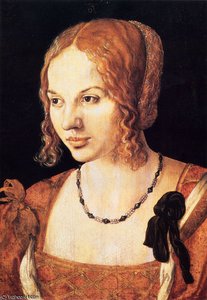
Self-Portrait


 Weiterlesen
Giclée / Kunstdruck
Giclée- oder Leinwanddruck in Museumsqualität mit schneller Produktion und flexiblen Veredelungsoptionen. ( Handgemalte Reproduktion bestellen Zum digitalen Bild wechseln)




P118B €10

P118H €10

P118W €10

P438Z €10

P508JH €12

P508YH €12

P805H €10

P805Z €10

P919BZ €10

P919G €10

P919XJ €10

P959ZH €10

P968JZ €12

W106C €8

W218G €10

W218JH €8

W218Y €10

W307PJ €10

W316G €10

W316PJ €8

W316Y €10

W398PJ €8

W4111J €10

W500HY €15

W500JH €15

W692G €12

W849H €8

W940BG €15

W953PJ €8




Wählen Sie aus unseren vordefinierten Formaten, die den ursprünglichen Proportionen des Kunstwerks entsprechen.

Geben Sie die benötigte Breite und Höhe an, damit der Druck perfekt in Ihren Rahmen oder an Ihre Wand passt. Ein Druck kann nur beschnitten, aber niemals größer als das Originalbild angefertigt werden; daher verliert ein Format mit anderen Proportionen einen Teil des Bildes. Wir senden Ihnen ein digitales Mockup zur Freigabe, bevor wir den Druck ausführen. Das auf dieser Seite gezeigte Bild zeigt nicht den tatsächlichen Beschnitt – dies ist nur im Mockup ersichtlich.
Weltweiter Versand () innerhalb von 2 Wochen statt der üblichen 4/5 Wochen. (29 Oktober)

Kostenloser weltweiter Expressversand

Hochwertige Leinenleinwand

Umfassender Versicherungsschutz beim Versand

Zollgebühren-Rückerstattungsgarantie

Garantie für exakte Farbtreue

100 Tage Rückgaberecht (nur bei Mängeln)

100% Geld-zurück-Garantie

Mengenrabatt verfügbar
 Die Glasoption ist nur für Größen unter 110 cm verfügbar.

Self-Portrait
Giclée / Kunstdruck
Format der Reproduktion
-


Endpreis
€ 56
A Portrait of Quiet Confidence: Albrecht Dürer's Self-Portrait
Albrecht Dürer’s 1493 self-portrait offers a rare and intimate glimpse into the mind of one of the most influential artists of the Northern Renaissance. Executed in stark black and white, this painting transcends mere representation; it is a carefully constructed statement of artistic ambition, personal identity, and burgeoning mastery. The image depicts a young Dürer, standing with an air of quiet confidence, his gaze directly engaging the viewer – a technique that immediately establishes a profound connection between artist and audience.
- Subject & Composition: The portrait focuses entirely on Dürer himself, presenting him as the central subject. His pose is deliberately formal, reflecting the conventions of portraiture at the time while subtly hinting at his intellectual curiosity. The inclusion of a plant in his hand adds an element of naturalism and perhaps symbolizes growth, knowledge, or the artist’s connection to the world around him.
- Technical Brilliance: Dürer's mastery of engraving and drawing is immediately apparent. The meticulous detail with which he renders the folds of his clothing, the texture of his hair, and the subtle nuances of his expression demonstrate a level of technical skill that was revolutionary for its time. The monochromatic palette amplifies this effect, forcing the viewer to focus entirely on form and line.
The Renaissance Mind: Context and Influences
Created in 1493, at the cusp of Dürer’s career, this self-portrait reflects the broader artistic currents of the Italian Renaissance, which had profoundly impacted Northern Europe. While Dürer remained firmly rooted in German traditions, he was deeply influenced by the humanist ideals and classical learning that were flourishing in Italy. This influence is evident in his intellectual pursuits – Dürer was a passionate collector of knowledge, studying mathematics, optics, and anatomy alongside his artistic practice. The portrait itself can be seen as an embodiment of this Renaissance spirit: a deliberate attempt to elevate the status of the artist and celebrate human achievement.
- Nuremberg’s Artistic Hub: Dürer's formative years were spent in Nuremberg, a thriving center of commerce and craftsmanship. This environment fostered a competitive spirit and encouraged innovation – qualities that undoubtedly contributed to Dürer’s success.
- Wolgemut’s Legacy: His early training under Michael Wolgemut, a master printmaker and illuminator, provided him with invaluable skills in woodcut and engraving, techniques he would later perfect.
Symbolism and Emotional Resonance
Beyond the technical brilliance, the portrait is laden with symbolic meaning. The red hat, a fashionable accessory of the period, could represent status or perhaps even Dürer’s ambition. The necklace suggests wealth and refinement, while the plant symbolizes growth and potential. Most importantly, Dürer's direct gaze invites us to contemplate his thoughts and feelings – a rare intimacy in portraiture of this era. The painting evokes a sense of quiet contemplation, intellectual rigor, and unwavering self-belief—qualities that defined Dürer’s extraordinary life and work.
- A Window into the Artist's Soul: This self-portrait is not simply a likeness; it is an assertion of Dürer’s identity as a creative genius, a scholar, and a man driven by an insatiable desire to understand and represent the world around him.
- Enduring Appeal: The painting’s timeless quality lies in its ability to connect with viewers across centuries – a testament to Dürer's artistic vision and his profound understanding of human nature.
Perfecting the Masterpiece: Reproduction Options
AllPaintingsStore offers meticulously crafted hand-painted reproductions of Albrecht Dürer’s ‘Self-Portrait,’ capturing every nuance of detail and tonal subtlety from the original engraving. Our skilled artisans employ traditional techniques, ensuring a faithful recreation that will grace your walls with timeless beauty. Choose from a range of sizes to perfectly complement your interior design aesthetic. Own a piece of art history – experience the legacy of Dürer firsthand.
Fragen & Antworten
Wie gesättigt ist die Farbpalette von "Self-Portrait"?
"Self-Portrait" von Albrecht Dürer zeichnet sich durch eine Gedämpft Sättigung aus.
Welche emotionale Stimmung vermittelt "Self-Portrait" von Albrecht Dürer?
"Self-Portrait" von Albrecht Dürer vermittelt eine Reflektierend emotionale Stimmung.
Wie wirkt die Helligkeit von "Self-Portrait" von Albrecht Dürer?
Insgesamt wird „Self-Portrait“ mit einer Helligkeit von Schattenhaft erfasst. Die wahrgenommene Helligkeit beschreibt, wie hell oder dunkel das Werk erscheint.
Ähnliche Kunstwerke




Künstlerbiografie
Albrecht Dürer: Leben und Vermächtnis
Frühes Leben und Ausbildung
Albrecht Dürer, eine herausragende Figur der deutschen Renaissance, wurde am 21. Mai 1471 in Nurnberg, Deutschland, geboren. Sein Vater, Albrecht Dürer der Ältere, war ein erfolgreicher Goldschmied, und es war in dieser künstlerischen Umgebung, dass sich bei dem jungen Albrecht die Neigung zum Kunsthandwerk entfaltete. Mit dreizehn Jahren begann er seine Ausbildung bei Michael Wolgemut, einem führenden Künstler in Nurnberg, wo er grundlegende Fähigkeiten in Malerei, Zeichnung und Holzschnitt erwarb. Ein Selbstporträt aus dem Jahr 1484, das sich im Albertina in Wien befindet, bietet beeindruckende Beweise für sein frühreifes Talent.
Aufstieg zur Prominenz und künstlerische Entwicklung
Bis zu seinem zwanzigsten Lebensjahr hatte sich Dürer als Meister des Holzschnitts etabliert und Anerkennung in ganz Europa erlangt. Er unternahm Reisen nach Italien, wo er die Werke von Renaissance-Meistern wie Raphael, Giovanni Bellini und Leonardo da Vinci kennenlernte. Diese Begegnungen beeinflussten seinen künstlerischen Stil nachhaltig und führten ihn dazu, klassische Motive und Techniken in seine nordeuropäische Ästhetik zu integrieren.
Schlüsselwerke und künstlerischer Stil
Dürers Œuvre umfasst eine breite Palette von Medien, darunter Gemälde, Radierungen, Holzschnitte und theoretische Schriften. Zu seinen bekanntesten Werken gehören:
- Die Apokalypse-Serie (1498): Eine Sammlung von vierzehn Holzschnitten, die das Buch der Offenbarung illustrieren und Dürers Können in diesem Medium zeigen, trotz seiner gotischen stilistischen Elemente.
- Melancholia I (1514): Vielleicht sein rätselhaftester Kupferstich, Melancholia I ist weiterhin Gegenstand intensiver wissenschaftlicher Analyse und Interpretation.
- St. Jerome in seinem Arbeitszimmer (1514): Eine meisterhafte Kupferätzung, die Dürers außergewöhnliche Beherrschung von Perspektive, Detail und symbolischer Darstellung demonstriert.
Dürers Stil ist durch akribische Realismus, präzise Draftsmanship und ein tiefes Verständnis von Anatomie und Perspektive gekennzeichnet. Er war auch Pionier bei der Verwendung von Aquarell als eigenständiges Medium.
Theoretische Beiträge
Über seine künstlerische Praxis hinaus leistete Dürer bedeutende Beiträge zur Kunsttheorie. Er verfasste mehrere Schriften über Geometrie, Proportionen und menschliche Anatomie, darunter Vier Bücher der menschlichen Proportion (1528). Diese Schriften demonstrieren seinen Glauben an die mathematischen Grundlagen der Kunst und sein Engagement für die Etablierung eines wissenschaftlichen Ansatzes zur künstlerischen Schaffung.
Vermächtnis und historische Bedeutung
Albrecht Dürers Einfluss auf die Kunstwelt ist unbestreitbar. Er schloss die Lücke zwischen nordeuropäischen Traditionen und italienischen Renaissance-Idealen, indem er klassische Motive in die nordeuropäische Kunst einführte, während er gleichzeitig ihren einzigartigen Charakter bewahrte. Seine theoretischen Schriften trugen dazu bei, den Status von Künstlern zu erhöhen und einen neuen intellektuellen Rahmen für künstlerliche Praxis zu etablieren. Er bleibt eine zentrale Figur in der Geschichte der Kunst und inspiriert bis heute Generationen von Künstlern mit seiner technischen Begabung, seinem innovativen Geist und seiner tiefgründigen Vision.
Einflüsse
- Michael Wolgemut
- Leonardo da Vinci
- Raphael
- Giovanni Bellini

Albrecht Dürer
1471 - 1528 , Italy
Kurzinfos
- Beeinflusste Künstler:
- Michael Wolgemut
- Raphael
- Giovanni Bellini
- Leonardo da Vinci
- Bemerkenswerte Werke:
- Apokalypse-Serie
- Melancholia I
- St. Hieronymus im Arbeitszimmer
- Geburtsdatum: 21. Mai 1471
- Geburtsort: Nürnberg, Italien
- Künstlerische Bewegung: Deutsche Renaissance
- Nationalität: Deutsch
- Sterbedatum: 1528
- Vollständiger Name: Albrecht Dürer
Ähnliche Artikel
Albrecht Dürer: Die 25 Meisterwerke des Renaissance-Genies – Für Kunstliebhaber & Ihr Zuhause
Entdecken Sie die 25 Meisterwerke von Albrecht Dürer! Tauchen Sie ein in die Welt der Renaissance, Holzschnitte & Kupferstiche. Finden Sie hochwertige Kunstdrucke und Reproduktionen für Ihr Zuhause auf AllPaintingsStore.com.

Die Top 10 berühmter Gemälde im Reich der dunklen Töne |
Entdecken Sie die Top 10 berühmter Gemälde, beherrscht von dunklen Tönen! Von Caravaggio bis Manet – erfahren Sie die Geschichten hinter Meisterwerken der Kunstgeschichte. Finden Sie Ihre perfekte Reproduktion auf .

Albrecht Dürer: Innovation und Selbstbildnis eines Renaissance-Meisters – Eine Untersuchung seines künstlerischen Vermächtnisses
Entdecken Sie das faszinierende Leben und Werk von Albrecht Dürer! Unsere Expertenanalyse beleuchtet seine Innovationen, Selbstporträts und seinen bleibenden Einfluss auf die Kunstgeschichte. Jetzt lesen!

25 Meisterwerke des British Museum: Eine Zeitreise durch die Menschheitsgeschichte
Entdecken Sie 25 Ikonen des British Museum, von Michelangelo bis Da Vinci. Finden Sie Meisterwerke auf AllPaintingsStore.com.

Weiße Meisterwerke: Die Top 10 berühmtesten Gemälde und ihre zeitlose Eleganz
Entdecken Sie die Top 10 berühmter Gemälde, dominiert von Weiß! Von Malewitsch bis Rothko – erfahren Sie Geschichten hinter ikonischen Kunstwerke und lassen Sie sich für Ihre Wohnraumgestaltung inspirieren. Kunstreproduktionen in Museumsqualiät auf


