Vorschau anzeigen
 Versenden
 Teilen
 Details anzeigen
 Leitfaden

 Herunterladen
 Ähnliche Objekte
 Röntgenaufnahme
 Diashow
 Q&A
Q&A Statistiken
Annunciation
 Oil On Canvas
- WallArt
- Sienese School
 1344
1344- Late Medieval
 127.0 x 120.0 cm
 Pinakothek Nazionale
 Weiterlesen
Giclée / Kunstdruck
Giclée- oder Leinwanddruck in Museumsqualität mit schneller Produktion und flexiblen Veredelungsoptionen. ( Handgemalte Reproduktion bestellen Zum digitalen Bild wechseln)




P118B €10

P118H €10

P118W €10

P438Z €10

P508JH €12

P508YH €12

P805H €10

P805Z €10

P919BZ €10

P919G €10

P919XJ €10

P959ZH €10

P968JZ €12

W106C €8

W218G €10

W218JH €8

W218Y €10

W307PJ €10

W316G €10

W316PJ €8

W316Y €10

W398PJ €8

W4111J €10

W500HY €15

W500JH €15

W692G €12

W849H €8

W940BG €15

W953PJ €8




Wählen Sie aus unseren vordefinierten Formaten, die den ursprünglichen Proportionen des Kunstwerks entsprechen.

Geben Sie die benötigte Breite und Höhe an, damit der Druck perfekt in Ihren Rahmen oder an Ihre Wand passt. Ein Druck kann nur beschnitten, aber niemals größer als das Originalbild angefertigt werden; daher verliert ein Format mit anderen Proportionen einen Teil des Bildes. Wir senden Ihnen ein digitales Mockup zur Freigabe, bevor wir den Druck ausführen. Das auf dieser Seite gezeigte Bild zeigt nicht den tatsächlichen Beschnitt – dies ist nur im Mockup ersichtlich.
Weltweiter Versand () innerhalb von 2 Wochen statt der üblichen 4/5 Wochen. (31 Oktober)

Kostenloser weltweiter Expressversand

Hochwertige Leinenleinwand

Umfassender Versicherungsschutz beim Versand

Zollgebühren-Rückerstattungsgarantie

Garantie für exakte Farbtreue

100 Tage Rückgaberecht (nur bei Mängeln)

100% Geld-zurück-Garantie

Mengenrabatt verfügbar
 Die Glasoption ist nur für Größen unter 110 cm verfügbar.

Annunciation
Giclée / Kunstdruck
Format der Reproduktion
-


Endpreis
€ 57
A Moment of Divine Revelation: Ambrogio Lorenzetti’s Annunciation
This exquisite hand-painted reproduction captures the profound serenity and spiritual significance of Ambrogio Lorenzetti's 1344 “Annunciation,” a cornerstone of Sienese art and a pivotal work bridging the medieval and early Renaissance periods. Measuring 127 x 120 cm, this depiction of Mary’s visitation by the Archangel Gabriel is more than just a religious scene; it’s a carefully constructed tableau brimming with symbolism and reflecting the artist's innovative approach to representing both human and divine realms.
- Subject Matter: The painting meticulously portrays the biblical narrative of the Annunciation – the moment when Gabriel announces to Mary that she will conceive and bear the Son of God.
- Composition: Lorenzetti masterfully employs a balanced composition, placing Mary seated on a bench, receiving the divine message, with the angel standing respectfully nearby. The inclusion of a dining table with a wine glass subtly introduces themes of earthly joy and anticipation alongside spiritual revelation.
The Artist’s Vision: Ambrogio Lorenzetti and Sienese Innovation
Ambrogio Lorenzetti (1290-1348), born in Siena, was a visionary artist deeply rooted in the traditions of his time yet possessed of an undeniable forward-thinking spirit. While contemporaries like Duccio and Simone Martini dominated the Sienese artistic landscape, Lorenzetti distinguished himself through a synthesis of Byzantine elegance with burgeoning naturalism – a characteristic that would define his unique style. His work reflects the intellectual ferment of the era, marked by a renewed interest in classical learning and a desire to represent the world with greater accuracy and emotional depth. Lorenzetti’s brother, Pietro Lorenzetti, often collaborated with him, creating a powerful artistic duo within Siena.
Technique and Materials: A Window into Medieval Art
Executed in tempera on panel, this reproduction faithfully recreates the techniques employed by Lorenzetti and his workshop. Tempera paint, derived from egg yolk, allowed for meticulous detail and vibrant colors – though somewhat less luminous than oil paints which would emerge later. The artist’s skillful use of layering and glazing creates a sense of depth and luminosity within the scene, particularly evident in the rendering of Mary's garments and the angel's wings. The attention to texture—the rough fabric of the bench, the polished surface of the table—demonstrates a commitment to realism that was becoming increasingly important in Sienese art.
Symbolism and Emotional Impact
Beyond its biblical narrative, the “Annunciation” is rich with symbolic meaning. The setting – a modestly furnished room – emphasizes Mary’s humility and vulnerability before the divine. The gesture of Gabriel presenting the lily (a symbol of purity) further underscores the sacred nature of the event. The overall effect is one of profound peace and contemplation, inviting viewers to reflect on themes of faith, hope, and redemption. This reproduction offers a tangible connection to this powerful work, allowing you to experience its beauty and spiritual resonance within your own space.
Fragen & Antworten
Verwendet "Annunciation" von Ambrogio Lorenzetti starke Kontraste oder sanfte Harmonien?
Die Farbkomposition von "Annunciation" von Ambrogio Lorenzetti vereint einen Bold Kontrast mit einer Strong Color Unity Harmonie.
Wie verbinden sich Medium und Bewegung in "Annunciation"?
"Annunciation" von Ambrogio Lorenzetti verbindet die Technik der Oil On Canvas mit dem Stil der Sienese School. Technik und Epoche beschreiben die Herstellung sowie die künstlerische Ausrichtung des Werkes.
Welcher Raum wird für die Präsentation von „Annunciation“ unter Berücksichtigung der Farbpalette empfohlen?
Die Earthy-Farben von "Annunciation" von Ambrogio Lorenzetti passen perfekt zum empfohlenen Raum: einem Living Room.
Ähnliche Kunstwerke


Künstlerbiografie
Frühes Leben und Hintergrund
- Name: Ambrogio Lorenzetti
- Geboren: Siena, Italien (ca. 1290)
- Gestorben: 1348 (wahrscheinlich an der Pest)
- Familie: Bruder des Malers Pietro Lorenzetti.
- Frühe Ausbildung: Einzelheiten sind spärlich, aber er erhielt wahrscheinlich eine Ausbildung innerhalb der sienesischer Kunsttradition.
Künstlerischer Stil und Einflüsse
- Sienese Schule: Lorenzetti war eine bedeutende Figur in der Sienese Schule des Malens, bekannt für ihren eleganten und dekorativen Stil.
- Byzantinischer Einfluss: Frühe Werke zeigen den Einfluss byzantinischer Kunst, die durch Frontalität und stilisierte Figuren gekennzeichnet ist.
- Klassische Einflüsse: Er zeigte Interesse an der klassischen Antike, was sich in seinen Studien der Skulptur und der Verwendung klassischer Motive zeigt.
- Naturalismus: Eine wichtige Entwicklung in Lorenzettis Stil war ein Wandel hin zum Naturalismus, der Figuren und Szenen mit größerer Realität darstellt als frühere Generationen. Dies stand im Gegensatz zum stärker stilisierten Ansatz früherer sienesischer Maler.
- Simone Martini: Beeinflusst von Simone Martini, einer weiteren führenden Figur der Sienese Schule.
- Giotto: Einige Gelehrte vermuten eine Verbindung zu Giottos Innovationen in Naturalismus und räumlicher Darstellung.
Hauptwerke und Errungenschaften
- Madonna mit Kind (1319): Ein frühes Werk, das byzantinischen Einfluss zeigt, aber auch seine sich entwickelnde naturalistische Tendenz andeutet.
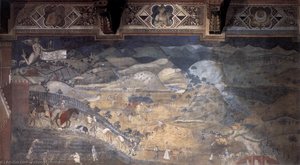
- Fresken im Palazzo Pubblico, Siena: Seine bedeutendste Leistung ist der Freskenzyklus in der Sala dei Nove ( Saal der Neun), der die Allegorie von guter und schlechter Regierung darstellt und Szenen veranschaulicht, die die Auswirkungen einer guten und schlechten Regierung auf Stadt und Land zeigen.
- Auswirkungen guter Regierung auf Stadt und Land: Eine bemerkenswerte Panorama-Darstellung der blühenden mittelalterlichen Gesellschaft, die als eine Enzyklopädie des täglichen Lebens gilt.
- Allegorie schlechter Regierung und ihre Auswirkungen auf Stadt und Land: Ein deutlicher Kontrast zum Fresko „gute Regierung“, das die Folgen von Korruption und Misswirtschaft veranschaulicht. Es zeigt eines der frühesten Darstellungen einer Sanduhr.
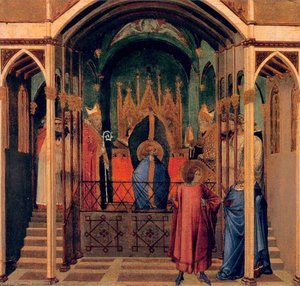
- Investitur des Heiligen Ludwig von Toulouse (1329): Ein Fresko, das seine wachsende Fähigkeit demonstriert, Perspektive und realistische Figuren darzustellen.
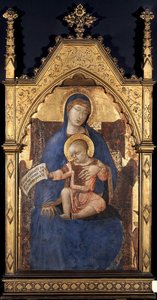
- Maestà (ca. 1335): Ein Altarbild, das eine dynamischere Interaktion zwischen der Jungfrau Maria und dem Kind zeigt und eine sich entwickelnde emotionale Ausdruckskraft widerspiegelt.
Entwicklung und Innovation
- Perspektive: Lorenzetti experimentierte mit Perspektive, wenn auch nicht in einer vollständig entwickelten Form; seine Versuche trugen zur Entwicklung der räumlichen Darstellung in der Malerei bei.
- Physiognomie: Er zeigte Interesse an der Physiognomie (der Lehre von den Gesichtszügen zur Bestimmung des Charakters) und verlieh seinen Figuren so psychologische Tiefe.
- Säkular Themen: Seine Fresken im Palazzo Pubblico markierten einen deutlichen Wandel hin zu säkularen Themen in der Kunst, was die wachsende Bedeutung des bürgerlichen Lebens und der Regierung widerspiegelte.
- Individualismus: Lorenzettis Werk demonstrierte ein Maß an künstlerischem Individualismus, das für seine Zeit ungewöhnlich war, da er seine eigene Vision verfolgte, anstatt sich strikt an die Patronage-Anforderungen zu halten.
Historische Bedeutung
- Vorläufer der Renaissance: Lorenzettis Innovationen in Naturalismus, Perspektive und säkularen Themen ebneten den Weg für die italienische Renaissance.
- Einfluss auf spätere Künstler: Seine Arbeit beeinflusste nachfolgende Generationen sienesischer und florentinischer Maler.
- Dokumentation des mittelalterlichen Lebens: Die Fresken im Palazzo Pubblico liefern unschätzbare Einblicke in die mittelalterliche Gesellschaft, Wirtschaft und Regierung.
- Einzigartige künstlerische Vision: Lorenzettis Fähigkeit, byzantinische Traditionen mit aufkommenden naturalistischen Trends zu verbinden, schuf ein einzigartiges und dauerhaftes künstlerisches Erbe.

Ambrogio Lorenzetti
1290 - 1348 , Italien
Kurzinfos
- Beeinflusste Künstler:
- Simone Martini
- Byzantinische Kunst
- Klassische Kunstformen
- Bemerkenswerte Werke:
- Allegorie der guten Regierung
- Allegorie der schlechten Regierung
- Madonna mit Kind (1319)
- Einsetzung des Hl. Ludwig von Toulouse
- Geburtsdatum: ca. 1290
- Geburtsort: Siena, Italien
- Künstlerische Richtung: Sieneser Schule, Frührenaissance
- Nationalität: Italienisch
- Sterbedatum: 1348
- Vollständiger Name: Ambrogio Lorenzetti
- Von Künstlern Beeinflusst: ['Italienische Renaissance-Künstler']
Ähnliche Artikel

Fresco Art Guide: Mastering the Timeless Technique of Wall Painting for Luxury Interior Design
Master the art of fresco for luxury hospitality design. Explore technical insights into historical wall painting and discover how professional-grade, large-scale reproductions can elevate hotel interiors with timeless Renaissance elegance.