100 Tage Geld-zurück-Garantie Weltweit kostenlose Lieferung
449.581Kunstwerke 30.617Künstlerinnen und Künstler 4.705Museen 32Sprachen
Währung
    Sprache
      Atelier · Gegründet 2015 · Paris, Frankreich
      AllPaintingsStore
      allpaintingsstore.com
      In echtem Maßstab anzeigen In AR an der Wand sehen Zum Druck wechseln Zum digitalen Bild wechseln Versenden als Grußkarte
      Details anzeigen Leitfaden öffnen Zu Favoriten hinzufügen Herunterladen Ähnliche Objekte Röntgenaufnahme Diashow Besucherstatistiken

      Mickey Mouse

      Andy Warhol's ikonischer 'Mickey Mouse' – eine Pop-Art-Reinterpretation des Disney-Helden. Erkunden Sie die Mythologie der Konsumkultur und Stars durch diese faszinierende SilkScreen-Reproduktion.

      Erkunden Sie Andy Warhols ikonische Pop Art (1928-1987) – Siebdrucke von Marilyn, Campbell's Suppendosen & Prominentenkultur. Entdecken Sie seinen bleibenden Einfluss auf die Kunst bei AllPaintingsStore.

      Die auf dieser Seite dargestellten Kunstwerke sind urheberrechtlich geschützt, was bedeutet, dass wir keine identische Reproduktion rechtmäßig erstellen oder verkaufen dürfen. Dieser Schutz wird durch internationale Abkommen wie die Berner Übereinkunft und durch nationale Gesetze, einschließlich derer, die von den ... festgelegt wurden US-Urheberrecht – Titel 17.

      Als respektvolle und rechtlich einwandfreie Alternative bieten wir individuelle, handgemalte Kunstwerke an, die vom Original inspiriert sind. Unsere geschickten und professionellen Künstler studieren sorgfältig den Stil, die Stimmung und das künstlerische Wesen des Originals, um ein neues, einzigartiges Werk zu schaffen, das dasselbe Gefühl hervorruft – während es zugleich eine eigenständige Originalschöpfung bleibt.

      Diese Methode entspricht vollumfänglich den Urheberrechtsbestimmungen, da sie keine Kopie oder Vervielfältigung des geschützten Kunstwerks darstellt. Stattdessen handelt es sich um eine kreative Neuinterpretation – ein neues Gemälde, das vom Original inspiriert, aber nicht identisch mit ihm ist.

      Handgefertigte Ölreproduktion

      Handgemaltes Ölgemälde auf Leinwand in Ihrer Wunschgröße und mit Rahmen, auf Bestellung von unseren Künstlern angefertigt. ( Zum Druck wechseln Zum digitalen Bild wechseln)

      Corner sample of the P118B picture frame: formgepresstes Polystyrol, 5 cm wide and 3 cm thick
      P118B 10
      Corner sample of the P118H picture frame: formgepresstes Polystyrol, 5 cm wide and 3 cm thick
      P118H 10
      Corner sample of the P118W picture frame: formgepresstes Polystyrol, 5 cm wide and 3 cm thick
      P118W 10
      Corner sample of the P438Z picture frame: formgepresstes Polystyrol, 5.5 cm wide and 3.5 cm thick
      P438Z 10
      Corner sample of the P508JH picture frame: formgepresstes Polystyrol, 7 cm wide and 3.5 cm thick
      P508JH 12
      Corner sample of the P508YH picture frame: formgepresstes Polystyrol, 7 cm wide and 3.5 cm thick
      P508YH 12
      Corner sample of the P805H picture frame: formgepresstes Polystyrol, 5 cm wide and 3.5 cm thick
      P805H 10
      Corner sample of the P805Z picture frame: formgepresstes Polystyrol, 5 cm wide and 3.5 cm thick
      P805Z 10
      Corner sample of the P919BZ picture frame: formgepresstes Polystyrol, 7 cm wide and 3.5 cm thick
      P919BZ 10
      Corner sample of the P919G picture frame: formgepresstes Polystyrol, 7 cm wide and 3.5 cm thick
      P919G 10
      Corner sample of the P919XJ picture frame: formgepresstes Polystyrol, 7 cm wide and 3.5 cm thick
      P919XJ 10
      Corner sample of the P959ZH picture frame: formgepresstes Polystyrol, 5 cm wide and 3 cm thick
      P959ZH 10
      Corner sample of the P968JZ picture frame: formgepresstes Polystyrol, 6 cm wide and 4 cm thick
      P968JZ 12
      Corner sample of the W106C picture frame: Massivholz, 5 cm wide and 3 cm thick
      W106C 8
      Corner sample of the W218G picture frame: Massivholz, 5 cm wide and 3 cm thick
      W218G 10
      Corner sample of the W218JH picture frame: Massivholz, 5 cm wide and 3 cm thick
      W218JH 8
      Corner sample of the W218Y picture frame: Massivholz, 5 cm wide and 3 cm thick
      W218Y 10
      Corner sample of the W307PJ picture frame: Massivholz, 6 cm wide and 3 cm thick
      W307PJ 10
      Corner sample of the W316G picture frame: Massivholz, 6 cm wide and 3 cm thick
      W316G 10
      Corner sample of the W316PJ picture frame: Massivholz, 6 cm wide and 3 cm thick
      W316PJ 8
      Corner sample of the W316Y picture frame: Massivholz, 6 cm wide and 3 cm thick
      W316Y 10
      Corner sample of the W398PJ picture frame: Massivholz, 5 cm wide and 3 cm thick
      W398PJ 8
      Corner sample of the W4111J picture frame: Massivholz, 6.5 cm wide and 3.5 cm thick
      W4111J 10
      Corner sample of the W500HY picture frame: Massivholz, 7 cm wide and 5 cm thick
      W500HY 15
      Corner sample of the W500JH picture frame: Massivholz, 7 cm wide and 5 cm thick
      W500JH 15
      Corner sample of the W692G picture frame: Massivholz, 8 cm wide and 4 cm thick
      W692G 12
      Corner sample of the W849H picture frame: Massivholz, 5 cm wide and 3 cm thick
      W849H 8
      Corner sample of the W940BG picture frame: Massivholz, 7.5 cm wide and 4.5 cm thick
      W940BG 15
      Corner sample of the W953PJ picture frame: Massivholz, 6 cm wide and 3.5 cm thick
      W953PJ 8

      Standardformat
      individuell anpassbar
      CM
      INCH

      Wählen Sie aus unseren vordefinierten Formaten, die den ursprünglichen Proportionen des Kunstwerks entsprechen.

      Breite
      Höhe

      Sie können Ihre eigenen Maße eingeben, um einen bestimmten Rahmen oder Platz auszufüllen. Wenn die gewählte Größe nicht den Proportionen des Originalbildes entspricht, werden wir das Kunstwerk entweder beschneiden oder das Gemälde durch zusätzliche, handgemalte Elemente erweitern. Ein digitales Mockup wird Ihnen zur Genehmigung zugesandt, bevor die Produktion beginnt.
      Bitte beachten Sie, dass die Bildschirmvorschau nicht die tatsächliche Beschneidung oder Erweiterung widerspiegelt. Nur das Mockup zeigt die endgültige Komposition exakt an.
      Obwohl Sondermaße verfügbar sind, empfehlen wir, eine Größe aus der vordefinierten Liste zu wählen, um die ursprünglichen Proportionen beizubehalten.

      Beispiele für Anpassungsmöglichkeiten: Gesicht durch Kundenfoto ersetzen; Haustier hinzufügen (z. B. Katze durch Hund ersetzen); eine versteckte Nachricht im Hintergrund einfügen; Hintergrundlandschaft oder -elemente ändern.
      Nach der Bestellung wird das AllPaintingsStore.com-Team dem Kunden Anweisungen per E-Mail zusenden und eine Mockup-Vorschau bereitstellen.

      Weltweiter Versand () in nur 3 bis 4 Wochen statt der üblichen 5 Wochen. (13 Oktober). Keine Kompromisse bei der Qualität.

      Kostenloser weltweiter Expressversand
      Hochwertige Leinenleinwand
      Vollständiger Versicherungsschutz beim Versand
      Zollgebühren-Rückerstattungsgarantie
      Garantie für exakte Farbtreue
      100-tägiges Rückgaberecht (nur bei Mängeln)
      100% Geld-zurück-Garantie
      Angebot für Mengenrabatt

      Gesamtpreis

      € 222

      Mickey Mouse

      Reproduktionsmedium

      Format der Reproduktion

      -

      Gesamtpreis

      € 222

      Kurzübersicht

      • Medium: Silkscreen with diamond dust
      • Year: 1981
      • Movement: Pop Art
      • Influences:
        • Mass media
        • Disney

      Kunst-Quiz

      Jede Frage hat nur eine richtige Antwort.

      Frage 1:
      Who is the artist behind the artwork featuring multiple depictions of Mickey Mouse?
      Frage 2:
      What artistic movement is Andy Warhol most closely associated with?
      Frage 3:
      The image description mentions a clock. What might the presence of a clock suggest about the artwork?
      Frage 4:
      What technique is commonly associated with Andy Warhol’s work, as evidenced in this piece?
      Frage 5:
      The 'Myths' series, to which this artwork belongs, features depictions of what?

      Andy Warhol’s ‘Mickey Mouse’: A Pop Icon Reimagined

      Andy Warhol’s “Mickey Mouse” isn't merely a depiction of Disney’s beloved cartoon character; it’s a profound meditation on celebrity, mass culture, and the very nature of iconography in the heart of the 20th century. Created in 1981 as part of his seminal “Myths” series, this silkscreen transcends simple representation, dissecting and elevating Mickey Mouse to the status of a high art subject – a bold statement about our relationship with manufactured desire and the relentless reproduction of images that define modern life. The image, often presented as a dynamic grid of subtly varying Mickeys, immediately resonates with viewers, tapping into a collective nostalgia for childhood innocence while simultaneously questioning its authenticity.

      Warhol’s masterful use of the silkscreen technique is integral to understanding the artwork's core message. Rejecting traditional notions of artistic originality and authorship, he embraced mechanical reproduction – a deliberate choice that mirrors the pervasive repetition inherent in advertising and popular media. The flat planes of color, applied with remarkable precision, create an almost graphic quality, devoid of brushstrokes or individualistic touch. This controlled execution underscores Warhol’s fascination with the industrial process and his desire to blur the boundaries between art and commerce. Adding a layer of shimmering glamour, he incorporated diamond dust into many versions of “Mickey Mouse,” transforming the image into something both familiar and undeniably luxurious – a commentary on the commodification of art itself.

      The ‘Myths’ Series: Exploring American Icons

      “Mickey Mouse” exists within the broader context of Warhol's "Myths" series, a collection designed to explore figures deeply embedded in the American psyche. These weren’t simply portraits; they were carefully selected icons – Superman, Santa Claus, Dracula, and countless others – representing idealized narratives, collective fantasies, and the enduring power of storytelling. Within this framework, Mickey Mouse isn't just a cartoon character; he embodies childhood innocence, American optimism, and the very essence of Disney’s brand. Warhol’s intervention transforms him into something more complex: a symbol of manufactured desire, relentlessly reproduced and endlessly consumed.

      The choice of subject matter was deliberate. Warhol, a lifelong collector of Disney animation cels, possessed a genuine appreciation for the artistry behind Mickey Mouse – yet his artistic treatment fundamentally alters the character’s perception. He doesn't present Mickey as a purely innocent figure; instead, he dissects him, replicates him, and elevates him to the status of a high art subject. This strategic juxtaposition invites us to consider how these seemingly harmless icons shape our perceptions and influence our values in a society saturated with images.

      Disney, Dreams, and American Mythology

      The “Myths” series as a whole delves into the foundational narratives that have shaped American culture. Warhol’s selection of figures reflects a deep understanding of the myths and legends that underpin the nation's identity – stories passed down through generations and endlessly reinterpreted in popular media. Mickey Mouse, within this context, becomes an embodiment of childhood dreams and the promise of a perfect world. Warhol’s engagement with Disney’s creation is particularly poignant, considering Disney’s own legacy as a master storyteller and innovator.

      Interestingly, Warhol's fascination with Disney extended beyond mere admiration; he actively sought to understand the mechanics of Disney animation, recognizing the intricate process behind creating these beloved characters. This pursuit of knowledge informs his artistic approach, allowing him to manipulate images and techniques in ways that both celebrate and critique the cultural phenomenon of Disney. The diamond dust application, for instance, adds a layer of artificiality, mirroring the manufactured nature of celebrity and consumerism.

      A Lasting Legacy: Warhol’s Impact on Contemporary Art

      Andy Warhol's “Mickey Mouse” remains an enduringly relevant artwork today, continuing to resonate with audiences across generations. It serves as a potent reminder of the artist’s profound impact on contemporary art, challenging conventional notions of artistic expression and paving the way for new forms of creative exploration. The work’s accessibility – its instantly recognizable imagery – makes it a compelling conversation starter and a striking addition to any collection. For interior designers seeking to inject a dose of Pop Art energy into modern living spaces, a reproduction of “Mickey Mouse” offers a playful yet sophisticated touch, embodying both nostalgia and critical commentary.

      Fragen & Antworten

      Aus welcher Schaffensperiode von Andy Warhol stammt "Mickey Mouse"?

      Mickey Mouse“ entstammt der Late Period von Andy Warhol. Diese Einordnung setzt das Werk in Bezug zur künstlerischen Entwicklung des Künstlers.

      Für welchen Raum wird "Mickey Mouse" von Andy Warhol aufgrund seiner Farben empfohlen?

      Mit seiner Dunkle Farbtöne-Palette wird "Mickey Mouse" von Andy Warhol für ein Wohnbereich empfohlen. Die Farben sind einer der Gründe für diese Empfehlung.

      Welche Stimmung und welche Emotion vermittelt "Mickey Mouse" von Andy Warhol?

      In "Mickey Mouse" begleitet eine Verspielt-Stimmung eine Nostalgisch Emotion.

      Für welchen Ort und welchen Zweck wird "Mickey Mouse" empfohlen?

      "Mickey Mouse" von Andy Warhol wird für Statement-Piece empfohlen, idealerweise in einem Wohnbereich. Verwendung und Raumgestaltung geben gemeinsam Aufschluss darüber, wo eine Reproduktion am besten zur Geltung kommt.

      Ist "Mickey Mouse" von Andy Warhol ein Gemälde, eine Zeichnung oder ein Druck?

      "Mickey Mouse" von Andy Warhol wird als Wandkunst klassifiziert. Die Kategorie beschreibt die Art des Kunstwerks, um das es sich beim Original handelt.

      Wo kann ich eine Vorschau von „Mickey Mouse“ sehen?

      Um eine Reproduktion von "Mickey Mouse" von Andy Warhol in der Vorschau zu sehen, öffnen Sie die Vorschau-Seite des Kunstwerks.

      Welche emotionale Stimmung begleitet den Stil der Pop Art-Epoche in „Mickey Mouse“?

      "Mickey Mouse" vermittelt eine Nostalgisch emotionale Stimmung innerhalb der Pop Art-Strömung.

      Welche Farbe sticht in "Mickey Mouse" am meisten hervor?

      Die dominante Farbe von "Mickey Mouse" von Andy Warhol ist Stahlblau (#3d97bc).


      Biografie des Künstlers

      Andy Warhol: Ein Leben in der Pop Art

      Frühes Leben und Ausbildung

      • Geboren: 6. August 1928, in Pittsburgh, Pennsylvania.
      • Warhols frühe Kindheit war von einer schweren Krankheit geprägt – Sydenham’s Chorea (St. Vitus’ Tanz) –, die zu langen Krankenhausaufenthalten führte und sein Interesse an Kunst förderte.
      • Er studierte Gestaltung am Carnegie Institute of Technology (jetzt Carnegie Mellon University) und schloss 1949 ab.
      • Nach seinem Abschluss zog er nach New York City, um eine Karriere als Werbefillustrator zu verfolgen.

      Kommerzielle Kunst und Anfängliche Karriere

      • Anfangs arbeitete Warhol in der Magazinillustration und im Anzeigenwesen und erlangte mit seinen markanten Linienzeichnungen für Modemagazine Erfolg.
      • Durch seine kommerzielle Arbeit entwickelte er ein tiefes Verständnis für Massenproduktion und visuelle Kommunikation, das seinen späteren künstlerischen Stil stark beeinflussen sollte.
      • Seine frühen Werke konzentrierten sich oft auf Alltagsgegenstände und Konsumgüter, was die Themen vorausahndete, die er in der Pop Art erkunden würde.

      Der Aufstieg der Pop Art

      • In den 1960er Jahren wurde Warhol zu einer führenden Figur der Pop-Art-Bewegung, die traditionelle Vorstellungen von Kunst in Frage stellte.
      • Die Pop Art nahm populäre Kultur – Werbung, Comicbücher und massenproduzierte Gegenstände – als legitimes Thema für künstlerischen Ausdruck an.
      • Wichtige Werke dieser Zeit sind: Campbell’s Soup Cans (1962) und Marilyn Diptych (1962).
      • Warhols Technik des Siebdrucks ermöglichte die Massenproduktion von Bildern, was den Konsumkultur widerspiegelte, die er darstellte.

      Die Fabrik und künstlerische Produktion

      • Warhol gründete “The Factory”, einen Studio-Raum, der zu einem Zentrum für Künstler, Musiker, Filmemacher und Prominente wurde.
      • Die Fabrik war nicht nur ein Arbeitsplatz, sondern auch eine Szene: Sie förderte die Zusammenarbeit und Experimente über verschiedene künstlerische Disziplinen hinweg.
      • Warhol nahm das Konzept von Kunst als Geschäft an und verwischte die Grenzen zwischen Hochkultur und Kommerzialismus.
      • Er erkundete Themen wie Prominenz, Tod und Katastrophen in seinem Werk und nutzte Wiederholung und kräftige Farben, um auffällige visuelle Effekte zu erzeugen.

      Wichtige Werke und künstlerischer Stil

      • Bekannte Werke: Che Guevara, Nan Kempner, Mona Lisa, Flowers, Ummalben Albumcover.
      • Warhols Stil ist durch den Einsatz von Siebdruck, kräftigen Farben und Wiederholung gekennzeichnet.
      • Er entwendete oft Bilder aus der Populärkultur, die er in ikonische Kunstwerke verwandelte.
      • Seine Porträts von Prominenten – Marilyn Monroe, Elvis Presley, Elizabeth Taylor – fangen die Faszination für Ruhm und Image in der amerikanischen Gesellschaft ein.

      Vermächtnis und historische Bedeutung

      • Warhols Werk hatte einen tiefgreifenden Einfluss auf die Kunstwelt, traditionelle Definitionen von Kunst in Frage gestellt und den Weg für neue künstlerische Bewegungen geebnet.
      • Er war auch eine bedeutende kulturelle Figur: bevor die Gay Liberation Movement entstand, lebte er offen als Homosexueller.
      • Seine Auseinandersetzung mit Konsumismus, Prominentenkultur und Massenmedien hallt bis heute nach.
      • Warhols Einfluss ist in der zeitgenössischen Kunst, Mode, Musik und im Film zu sehen.
      • Seine Werke werden in wichtigen Museen auf der ganzen Welt ausgestellt, darunter das Andy Warhol Museum in Pittsburgh.
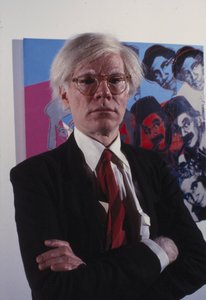
      Andy Warhol

      Andy Warhol

      1928 - 1987 , Vereinigte Staaten von Amerika

      Eckdaten zum Künstler

      • Bemerkenswerte Werke:
        • Campbell’s Suppendosen
        • Marilyn Diptych
        • Che Guevara
        • Blumen
        • Velvet Underground Albumcover
      • Geburtsdatum: 06. August 1928
      • Geburtsort: Pittsburgh, USA
      • Künstlerische Richtung: Pop Art
      • Nationalität: Amerikanisch
      • Todatum: 1987
      • Vollständiger Name: Andy Warhol
      Entdecken Sie Kunstwerke, die nach Themen, Stilen und Merkmalen sortiert sind.