


 In echtem Maßstab anzeigen
 Versenden als Grußkarte
 Teilen
 Details anzeigen
 Leitfaden öffnen

 Herunterladen
 Ähnliche Objekte
 Röntgenaufnahme
 Diashow
 Besucherstatistiken
David


 Mehr anzeigen
Handgefertigte Ölreproduktion
Handgemaltes Ölgemälde auf Leinwand in Ihrer Wunschgröße und mit Rahmen, auf Bestellung von unseren Künstlern angefertigt. ( Zum Druck wechseln Zum digitalen Bild wechseln)




P118B €10

P118H €10

P118W €10

P438Z €10

P508JH €12

P508YH €12

P805H €10

P805Z €10

P919BZ €10

P919G €10

P919XJ €10

P959ZH €10

P968JZ €12

W106C €8

W218G €10

W218JH €8

W218Y €10

W307PJ €10

W316G €10

W316PJ €8

W316Y €10

W398PJ €8

W4111J €10

W500HY €15

W500JH €15

W692G €12

W849H €8

W940BG €15

W953PJ €8




Wählen Sie aus unseren vordefinierten Formaten, die den ursprünglichen Proportionen des Kunstwerks entsprechen.

Geben Sie die Breite und die Höhe an, die Sie für Ihren Rahmen oder Ihre Wand benötigen. Da dieses Werk handgemalt ist, kann der Künstler bei einer anderen Form etwas mehr um das Bild herum malen oder etwas abschneiden – Sie entscheiden. Wir senden Ihnen ein digitales Mockup zur Freigabe, bevor mit dem Malen begonnen wird. Das auf dieser Seite gezeigte Bild stellt nicht das tatsächliche Ergebnis dar – dies tut nur das Mockup.
Nach der Bestellung wird das AllPaintingsStore.com-Team dem Kunden Anweisungen per E-Mail zusenden und eine Mockup-Vorschau bereitstellen.
Weltweiter Versand () in nur 3 bis 4 Wochen statt der üblichen 5 Wochen. (22 Oktober). Keine Kompromisse bei der Qualität.

Kostenloser weltweiter Expressversand

Hochwertige Leinenleinwand

Vollständiger Versicherungsschutz beim Versand

Zollgebühren-Rückerstattungsgarantie

Garantie für exakte Farbtreue

100-tägiges Rückgaberecht (nur bei Mängeln)

100% Geld-zurück-Garantie

Angebot für Mengenrabatt
 Die Glasoption ist nur für Größen unter 110 cm verfügbar.

David
Reproduktionsmedium
Format der Reproduktion
-


Gesamtpreis
€ 226
The Majesty of David: A Renaissance Masterpiece
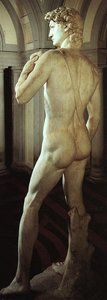
Michelangelo’s “David,” a colossal marble sculpture residing within the Galleria dell’Accademia in Florence, isn't merely a depiction of a biblical hero; it’s an embodiment of human potential, a testament to artistic innovation, and a profound meditation on strength and vulnerability. Completed between 1501 and 1504, this iconic work represents the pinnacle of Renaissance sculpture – a moment when classical ideals were reinterpreted through a distinctly humanist lens. The sheer scale of the statue, standing over seventeen feet tall, immediately commands attention, drawing the viewer into an intimate encounter with the figure’s intense gaze and palpable energy.
The sculpture captures David in the moments *before* his confrontation with Goliath, a crucial detail that elevates it beyond a simple narrative illustration. He's not triumphant, not yet victorious; instead, he embodies resolute contemplation, a young man grappling with immense responsibility and facing an overwhelming challenge. Notice the meticulous anatomical rendering – every muscle fiber, vein, and subtle curve of the body is painstakingly sculpted to achieve breathtaking realism. Michelangelo’s mastery lies in his ability to imbue this cold, hard marble with a sense of life, of movement, of deeply felt emotion. The contrapposto pose, where David's weight shifts subtly onto one leg, creates an exquisite balance and dynamism that seems to defy the static nature of stone.
The Techniques of Divine Creation
Michelangelo’s approach to sculpting “David” was revolutionary for its time. He began with a massive block of Carrara marble – a flawed, uneven piece deemed unsuitable for other projects. This seemingly discarded material became the foundation for one of art history's most celebrated works. The process itself involved an extraordinary level of skill and patience. Michelangelo employed a technique known as *spaccatura*, exploiting existing cracks within the marble to guide his carving. He worked with remarkable precision, using chisels, rasps, and other hand tools to gradually reveal the form hidden beneath the stone. The surface is polished to a breathtaking sheen, reflecting light in a way that enhances the sculpture’s luminosity and brings out the subtle nuances of color within the marble.
Crucially, Michelangelo didn't simply carve *from* the stone; he worked *with* it, responding to its inherent qualities. The rougher textures around the hands and feet hint at the raw material, while the polished torso speaks to the artist’s transformative power. This interplay between form and substance is a hallmark of his style – a demonstration of both technical virtuosity and artistic intuition.
Symbolism and Spiritual Resonance
“David” is rich in symbolic meaning, reflecting Renaissance ideals of civic virtue and human dignity. The biblical David, the shepherd boy who felled the giant Goliath with nothing but a sling and five stones, represents courage, faith, and the triumph of the underdog against overwhelming odds. In Florence during the early 16th century, this narrative resonated deeply with the city’s republican government, which saw itself as defending its freedom from tyranny – mirroring David's victory over Goliath. The statue was originally intended for the exterior of the Florence Cathedral but was ultimately placed in the Galleria dell’Accademia due to its overwhelming scale and impact.
Beyond its political significance, “David” also embodies a broader spiritual message. The youthful figure represents humanity’s potential for greatness, a reminder that even the most ordinary individual can achieve extraordinary things through faith, determination, and moral strength. The statue's nudity is not intended to be overtly sexual but rather symbolizes vulnerability and purity – David stands exposed before God, relying on his own inner resources.
A Timeless Legacy
Michelangelo’s “David” remains one of the most recognizable and beloved sculptures in the world. Its enduring appeal lies in its perfect balance of anatomical realism, emotional intensity, and symbolic depth. It's a work that continues to inspire awe and admiration centuries after its creation, serving as a powerful reminder of the transformative power of art and the boundless capacity of the human spirit. Reproductions, such as those offered by AllPaintingsStore.com, allow viewers to experience this masterpiece in their own homes, bringing a touch of Renaissance grandeur into any space.
Fragen & Antworten
Ist ein Download für "David" verfügbar?
Für „David“ steht ein Download zur Verfügung: Die Download-Seite des Kunstwerks bietet ein hochauflösender digitaler Bild-Download.
Ist "David" im Heimatland seines Künstlers verblieben?
Ja – das Kunstwerk befindet sich im Heimatland der Künstlerin / des Künstlers. Das Geburtsland von Donatello ist Italien, und das Museum, das das Original von „David“ beherbergt, befindet sich in Italien.
Wer ist der Urheber von "David" und welcher Stilrichtung ist das Werk zuzuordnen?
Donatello schuf „David“ im Rahmen der High Renaissance-Bewegung.
Ähnliche Kunstwerke



Biografie des Künstlers
Frühes Leben und Karriere
Donato di Niccolò di Betto Bardi, bekannt als Donatello, wurde um 1386 in Florenz, Italien geboren. Er studierte klassische Bildhauerei, was seine Entwicklung eines frühen Renaissance-Stils stark beeinflusste. Dieser neue Ansatz für Kunst und Kultur sollte schließlich zum Kennzeichen der florentinischen Renaissance werden.Schlüsselwerke und Innovationen
Donatellos berühmtestes Werk, David, war seit der Antike die erste freistehende nackte männliche Skulptur. Sie wurde von der Familie Medici in Auftrag gegeben und zeigte seinen innovativen Stil und seine technische Expertise. Zu den anderen bemerkenswerten Werken gehören:- St. Louis von Toulouse (jetzt im Museum der Basilika di Santa Croce), das einen klassischen Rahmen aufwies, der von Donatello entworfen wurde.
- Das Opfer des Isaak, geschaffen für den Campanile von Santa Maria del Fiore in Florenz, zeichnete sich durch starke Porträtdetails aus.
- Kreuzifix (1425) für Santa Croce, das Christus in einem Moment der Agonie darstellte.
Künstlerischer Stil und Vermächtnis
Donatellos Stil lässt sich in breite Phasen einteilen, beginnend mit der Entwicklung von Ausdruckskraft und klassischer Monumentalität. Seine Arbeit wurde nicht sofort von der Gemeinschaft akzeptiert, entwickelte sich aber schließlich zum beliebtesten und beeinflusste andere italienische Höfe und europäische Künstler. Wichtige Kunstbewegungen:Persönliches Leben und Arbeitsweise
Donatello war bekannt dafür, liebenswert und gutmütig zu sein, aber schlecht in der geschäftlichen Seite seiner Karriere. Er nahm oft mehr Aufträge an, als er bewältigen konnte, und vollendete Werke häufig verspätet oder übergab sie anderen Bildhauern. Bemerkenswerte Kunstwerke und Künstler:- Leonardo da Vinci: Ankündigung (Detail)
- Amico Aspertini: Statua di Pan/Leone che azzanna un cavallo
- Michelangelo Buonarroti: Tondo Pitt
Museen und Kunstsammlungen:
- Museo della Collegiata (Empoli, Italien): Ein verstecktes Juwel der Renaissance mit Werken von Francesco Botticini und Raffaello Botticini.
- Die frühe italienische Kunstbewegung der Renaissance

Donatello
1386 - 1466 , Italien
Eckdaten zum Künstler
- Beeinflusste Künstler:
- Leonardo da Vinci
- Michelangelo Buonarroti
- Bemerkenswerte Werke:
- David
- St. Louis von Toulouse
- Das Opfer des Isaak
- Kreuzifix (1425)
- Geburtsdatum: ca. 1386
- Geburtsort: Florenz, Italien
- Künstlerische Bewegung:
- Frührenaissance
- Florentiner Renaissance
- Künstlerische Einflüsse: ['Antike Skulptur']
- Nationalität: Italiener
- Sterbedatum: 1466
- Vollständiger Name: Donatello (Donato di Niccolò)
Verwandte Artikel

Bronze Sculpture Guide for Large-Scale Projects: Durability, Value, and Selection for Hospitality Designers
A professional guide for hotel designers and procurement managers on selecting large-scale bronze sculptures. Learn about durability, lost-wax casting, material value, and strategic integration for high-traffic hospitality and corporate environments.

Bronze Sculpture Guide: Durability, Value, and Selection for Large-Scale Hospitality Projects
A professional procurement guide for hotel designers on selecting large-scale bronze sculptures. Learn about durability, lost-wax casting, and strategic integration of high-value metal art into commercial hospitality projects.


