


 Vorschau anzeigen
 Versenden
 Teilen
 Details anzeigen
 Leitfaden

 Herunterladen
 Ähnliche Objekte
 Röntgenaufnahme
 Diashow
 Statistiken
St. Bartholomäus


 Weiterlesen
Giclée / Kunstdruck
Giclée- oder Leinwanddruck in Museumsqualität mit schneller Produktion und flexiblen Veredelungsoptionen. ( Handgemalte Reproduktion bestellen Zum digitalen Bild wechseln)




P118B €10

P118H €10

P118W €10

P438Z €10

P508JH €12

P508YH €12

P805H €10

P805Z €10

P919BZ €10

P919G €10

P919XJ €10

P959ZH €10

P968JZ €12

W106C €8

W218G €10

W218JH €8

W218Y €10

W307PJ €10

W316G €10

W316PJ €8

W316Y €10

W398PJ €8

W4111J €10

W500HY €15

W500JH €15

W692G €12

W849H €8

W940BG €15

W953PJ €8




Wählen Sie aus unseren vordefinierten Formaten, die den ursprünglichen Proportionen des Kunstwerks entsprechen.

Geben Sie die benötigte Breite und Höhe an, damit der Druck perfekt in Ihren Rahmen oder an Ihre Wand passt. Ein Druck kann nur beschnitten, aber niemals größer als das Originalbild angefertigt werden; daher verliert ein Format mit anderen Proportionen einen Teil des Bildes. Wir senden Ihnen ein digitales Mockup zur Freigabe, bevor wir den Druck ausführen. Das auf dieser Seite gezeigte Bild zeigt nicht den tatsächlichen Beschnitt – dies ist nur im Mockup ersichtlich.
Weltweiter Versand () innerhalb von 2 Wochen statt der üblichen 4/5 Wochen. (26 Oktober)

Kostenloser weltweiter Expressversand

Hochwertige Leinenleinwand

Umfassender Versicherungsschutz beim Versand

Zollgebühren-Rückerstattungsgarantie

Garantie für exakte Farbtreue

100 Tage Rückgaberecht (nur bei Mängeln)

100% Geld-zurück-Garantie

Mengenrabatt verfügbar
 Die Glasoption ist nur für Größen unter 110 cm verfügbar.

St. Bartholomäus
Giclée / Kunstdruck
Format der Reproduktion
-


Endpreis
€ 56
A Vision of Suffering and Faith: El Greco’s St. Bartholomew
Doménikos Theotokópoulos, universally known as El Greco (1541 – 1614), stands apart from his contemporaries as one of the most influential painters of the Spanish Renaissance—a distinction that transcends mere chronology. Born in Crete, then under Venetian rule, his artistic journey charted a path through Venice and Rome before finding its ultimate expression in Toledo, Spain, where he established his studio and produced some of his most enduring masterpieces. El Greco’s singular style, characterized by elongated figures and dramatic lighting, foreshadowed the expressive fervor of Expressionism and Cubism centuries later, cementing his place as a pivotal figure in art history.Stylistic Mastery: Mannerism & The El Greco Touch
El Greco firmly rooted himself within the *Mannerist* tradition—a movement that deliberately rejected the idealized beauty and harmonious balance championed by Renaissance artists. However, he elevated Mannerism to new heights through his intensely personal vision. The elongated figure of Saint Bartholomew dominates the composition, positioned centrally against a dark, undefined background – a technique characteristic of El Greco’s oeuvre. He departed decisively from Renaissance ideals of naturalism, prioritizing emotional impact and spiritual resonance over strict anatomical accuracy. This deliberate distortion serves not merely as stylistic flourish but as a conduit for conveying profound inner truths—a hallmark of El Greco's distinctive approach. Observe how the figure seems almost ethereal, lifted out of earthly constraints; this embodies his unwavering belief in transcendence.Technique and Materials: A Baroque Precursor
Executed in oil on canvas, “St. Bartholomew” showcases El Greco’s masterful manipulation of light and shadow—a technique known as *chiaroscuro*. Thick impasto creates a rich textural surface, particularly visible in the folds of Bartholomew’s robe, lending palpable realism to the painting's dramatic atmosphere. This tactile quality contributes significantly to the overall impression of grandeur and solemnity. The warm color palette—dominated by creamy whites, beiges, and browns contrasted with deep shadows—further enhances the emotive power of the artwork. While predating the full flowering of Baroque painting, El Greco’s bold compositional choices and expressive brushwork anticipated many key stylistic elements of the Baroque era.Symbolism & Iconography: A Martyr's Story
Saint Bartholomew is traditionally recognized as one of the twelve apostles, martyred for his unwavering faith—a narrative powerfully conveyed through visual symbolism. While El Greco doesn’t explicitly depict the gruesome details of Bartholomew’s flaying alive – a common motif in Renaissance art – the implied arrow wounds and the chained demon at Saint Bartholomew's feet serve as potent reminders of suffering endured for righteousness. The somber mood and Bartholomew’s introspective gaze communicate piety and fortitude in the face of adversity—themes central to El Greco’s artistic vision. The saint’s hands, clasped in prayer or resignation, emphasize his devotion and underscore the painting's spiritual significance.Historical Context: Toledo & The Spanish Golden Age
El Greco arrived in Toledo in 1577 and remained there until his death in 1614—a period coinciding with the zenith of the *Spanish Golden Age*, a time marked by unparalleled artistic creativity and cultural dynamism. Despite encountering resistance from some critics who questioned his unconventional style, El Greco garnered a devoted following and left an indelible mark on Spanish art. His work would subsequently inspire Expressionist and Cubist artists in the 20th century—a testament to its enduring influence and visionary originality. Consider how El Greco’s artistic explorations anticipated movements that would reshape Western art decades later; this underscores his position as a true innovator.Emotional Impact & Interior Design Considerations
“St. Bartholomew” evokes a profound sense of contemplation, sorrow, and unwavering faith—themes resonating deeply with viewers seeking inspiration or contemplating the beauty of timeless artistry. Its dramatic composition and luminous chiaroscuro create a striking focal point ideal for enhancing spaces characterized by neutral tones. A high-quality reproduction would be particularly effective in libraries, studies, or areas designed to foster introspection and spiritual reflection—a piece that transcends mere decoration; it’s an invitation to engage with the complexities of human emotion and the enduring power of religious symbolism.Fragen & Antworten
Welche Farben dominieren "St. Bartholomäus" von El Greco?
"St. Bartholomäus" zeichnet sich durch eine Erdig-Palette aus, die von Phthalogrün (#2b1e1e) dominiert wird.
Welches Druckformat wird für "St. Bartholomäus" von El Greco empfohlen?
Format Großformatig, Ausrichtung Hochformat: Dies ist die empfohlene Druckeinstellung für "St. Bartholomäus" von El Greco.
Welcher Künstler und welcher Stil stecken hinter "St. Bartholomäus"?
El Greco schuf „St. Bartholomäus“ im Rahmen der Barock-Bewegung.
Ähnliche Kunstwerke


Künstlerbiografie
**frühes Leben und Ausbildung**
El Greco (Doménikos Theotokopoulos), ein renommierter griechischer Maler, Bildhauer und Architekt, wurde 1541 in Kreta geboren, das damals unter venezianischer Herrschaft stand. Sein Geburtsname war Doménikos Theotokopoulos. El Grecos frühe Ausbildung als Ikonenmaler der kreter Schule, einem führenden Zentrum für byzantinische Kunst nach dem Fall des Reiches, legte den Grundstein für seine zukünftigen künstlerischen Bemühungen.**Künstlerische Entwicklung und Einflüsse**
El Gredos künstlerischer Stil wurde durch seine Reisen nach Venedig und Rom geprägt, wo er Manierismus- und Renaissance-Stile aufnahm, insbesondere von Tintoretto und Tizian beeinflusst. Seine Umsiedlung nach Toledo, Spanien, im Jahr 1577 markierte eine Periode fruchtbarer Schaffenskraft, die zu Meisterwerken wie Ansicht von Toledo und das Öffnen des fünften Siegels führte.**Bekannte Werke und Stil**
* Allegorie der Camaldulitenorden (Manierismus, Öl) – ein Zeugnis für El Gredos einzigartige Mischung aus byzantinischen Traditionen und westlichen stilistischen Elementen. * Fabel (Manierismus, Öl) – demonstriert seine Verwendung ungewöhnlicher, lebhafter Farben. * Giacomo Bosio (Manierismus, Öl) – zeigt El Gredos Meisterschaft im Manierismus-Stil.**Vermächtnis und Einfluss**
El Gredos dramatischer und expressiver Stil, der durch verlängerte Figuren und fantastische Pigmentierung gekennzeichnet ist, war eine Quelle der Inspiration für Dichter und Schriftsteller. Er gilt als Vorläufer des Expressionismus und Kubismus. Für mehr Informationen über das Leben und Werk von El Greco besuchen Sie [https://AllPaintingsStore.com/@/el-greco-(domenikos-theotokopoulos)](https://AllPaintingsStore.com/@/el-greco-(domenikos-theotokopoulos)).- **Betrachten Sie El Gredos Gemälde** unter [https://AllPaintingsStore.com/@@/85fr95-el-greco-(domenikos-theotokopoulos)-allegory-of-the-camaldolite-order](https://AllPaintingsStore.com/@@/85fr95-el-greco-(domenikos-theotokopoulos)-allegory-of-the-camaldolite-order)
- **Erfahren Sie mehr über das Leben und Werk von El Greco** unter [https://en.wikipedia.org/wiki/el_greco](https://en.wikipedia.org/wiki/el_greco)
- **Entdecken Sie das Hellenische Institut für byzantinische und post-byzantinische Studien**, das eine breite Palette von Artefakten umfasst, die das reiche künstlerische Erbe Byzants zu reflektieren, unter /de/art/show/art-d3b8bv-de/
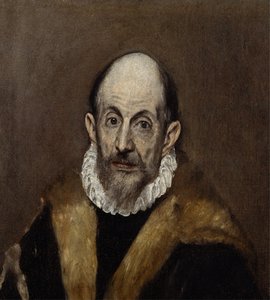
El Greco
1541 - 1614 , Griechenland
Kurzinfos
- Beeinflusste Künstler:
- Tintoretto
- Tizian
- Bemerkenswerte Werke:
- Grablegung des Grafen Orgaz
- Blick auf Toledo
- Öffnung des fünften Siegels
- Geburtsdatum: 1541
- Geburtsort: Kreta, Griechenland
- Künstlerische Richtung: Manierismus, Spanische Renaissance
- Nationalität: Griechisch-Spanisch
- Todatum: 1614
- Vollständiger Name: El Greco (Doménikos Theotokópoulos)
- Von Künstlern Beeinflusst: ['Byzantinische Traditionen']
Ähnliche Artikel

Discover the Divine: Inspiring Saint Anthony Artworks to Elevate Your Home Decor
Transform your home with the profound beauty of Saint Anthony artworks. Explore exquisite Baroque reproductions by Murillo and Zurbarán, hand-painted on 100% cotton canvas to bring divine serenity and timeless elegance to your interior design.

Mannerism Unveiled: The Dramatic Evolution of Renaissance Art and the Visionary Legacy of El Greco
Explore the dramatic transition from High Renaissance harmony to Mannerist tension. Discover how masters like El Greco redefined art through distortion and spiritual intensity. An expert guide for art enthusiasts seeking deep historical context and museum-quality inspiration.

El Greco: Spiritualität, Stil und Innovation – Das Vermächtnis eines Renaissance-Meisters
Entdecken Sie das faszinierende Werk von El Greco! Erfahren Sie mehr über seine einzigartigen Stilmerkmale, den Manierismus und sein spirituelles Vermächtnis. Expertenwissen zur Renaissance-Malerei.
El Greco: Die 25 Meisterwerke – Kunst für Ihr Zuhause | AllPaintingsStore
Entdecken Sie die 25 bedeutendsten Meisterwerke von El Greco! Erleben Sie die spirituelle Tiefe und den dramatischen Stil des griechischen Malers. Hochwertige Kunstdrucke & Inspiration für Ihr Zuhause auf AllPaintingsStore.com.

Barock Meisterwerke: Die 10 prägendsten Kunstwerke für Ihr Zuhause |
Entdecken Sie die 10 prägendsten Meisterwerke des Barock! Caravaggio, Rembrandt & Co. – Erfahren Sie die Geschichten hinter ikonischen Gemälde und finden Sie hochwertige Kunst Reproduktionen für Ihr Zuhause auf .


