Das Leben von Fernand Léger
Die Geschichte von Fernand Léger beginnt im Dorf Argentan, gelegen in der Region Orne in der Normandie. Er kam am 4. Februar 1881 als einziger Sohn in diese Welt. Seine frühen Jahre waren geprägt von der Stille der französischen Landschaft und der Gegenwart seiner Mutter, Marie-Adèle Daunou. Sein Vater, ein Mann, der seinen Lebensunterhalt als Viehhändler bestritt, verstarb, als Fernand noch ein kleiner Junge war, sodass das Kind von seiner Mutter in einem Haushalt aufgezogen wurde, der von ihrer Frömmigkeit und einer gewissen Bescheidenheit geprägt war.
Diese Erziehung in den ländlichen Landschaften der Normandie bot einen erdenden Kontrast zu dem Leben, das er schließlich in den pulsierenden Zentren der französischen Kultur führen sollte. Während seine Wurzeln an die Erde und die Physis des landwirtschaftlichen Lebens gebunden waren, fühlte sich sein Geist den Komplexitäten des modernen Zeitalters zugezogen. Schließlich weitete er seinen Einfluss weit über die Grenzen von Argentan hinaus aus und wurde zu einem Mann vieler Disziplinen. Er beschränkte sich nicht nur auf die Leinwand, sondern suchte stattdessen danach, seine Vision durch die Bildhauerei und die bewegten Bilder des Films auszudrücken.
Sein Leben war eine ständige Bewegung zwischen den organischen Texturen seiner Jugend und den strukturierten, mechanischen Rhythmen der Städte. Diese Dualität definierte seine gesamte Existenz, während er sich durch die Verschiebungen eines sich wandelnden Jahrhunderts bewegte. Sein Weg war niemals ein einfacher; er war gezeichnet von der Spannung zwischen der traditionellen Welt seiner Kindheit und dem rasanten, industriellen Puls der Zukunft, die er schließlich durch seine Kunst mitgestalten sollte.
Frühes Leben, Familie und Ausbildung
Die Wurzeln seiner Vision wurden in den ländlichen Landschaften von Argentan, in der Region Orne in der Normandie, Frankreich, gepflanzt. Geboren in einer Welt der Viehzucht, wurden seine frühen Jahre von der Physis des Bodens und den stetigen Rhythmen des landwirtschaftlichen Lebens geprägt. Diese Verwurzelung in der greifbaren, arbeitenden Welt sollte als stille Präsenz unter der Oberfläche seiner späteren, komplexeren Erkundungen bestehen bleiben. Als Einzelsohn wurde er von einer Mutter erzogen, die sowohl fromm als auch bescheiden war, und sein Weg wurde zunächst in Richtung der strukturierten Disziplin der Architektur gelenkt. Von 1897 bis 1899 widmete er sich diesem technischen Handwerk und lernte die Logik des Raumes sowie die Notwendigkeit präziser Zeichnungen kennen.
Um 1900 wurde die Anziehungskraft von der Stadt zu stark, um sie zu ignorieren, und er zog nach Paris. Er verdiente seinen Lebensunterhalt als Architekturentwerfer, eine Aufgabe, die ein geschultes Auge für Linie und Proportion erforderte. Während seine formale Ausbildung in der Architektur ein Fundament strukturellen Verständnisses bot, begann sein Herz, sich der Leinwand zuzuwenden. Er suchte den Zugang zur prestigeträchtigen École des Beaux-Arts, doch die Institution verlieh ihm nicht den offiziellen Status eines eingeschriebenen Studenten. Unbeirrt besuchte er die Schule als Gasthörer, absorbierte die Lehren der Meister und bewegte sich dabei an den Rändern des akademischen Establishments. Diese Studienzeit, die manchmal als eine Zeit der Suche beschrieben wird, war entscheidend für die Verfeinerung der technischen Fähigkeiten, die er schließlich nutzen sollte, um die Welt nach seinem eigenen Bild zu zerlegen und neu aufzubauen.
Der Einfluss von Cézanne und dem Kubismus
Ein tiefgreifender Wandel vollzog sich im Jahr 1907, als der Künstler in der Retrospektive von Cézanne im Salon d'Automne auf dessen Werk stieß. Diese Begegnung wirkte wie ein Katalysator, der ihn von den sanften Impressionen seiner Jugend wegführte und hin zu einer strukturelleren Wahrnehmung der Welt zog. Er begann, hinter die bloße Oberfläche der Dinge zu blicken, auf der Suche nach jener zugrunde liegenden Geometrie, die unsere Realität definiert. Bis 1909 festigte sich seine Präsenz in den kreativen Zirkeln von Paris, als er auf bedeutende Persönlichkeiten wie Alexander Archipenko, Jacques Lipchitz, Marc Chagall und Robert Delaunay traf. Diese Begegnungen waren weit mehr als bloßer sozialer Austausch; sie waren Kollisionen neuer Ideen, die maßgeblich die Richtung seiner sich entfaltenden künstlerischen Vision prägten.
Im Laufe der Jahre bewegte er sich zunehmend im Orbit der Puteaux-Gruppe, einem Künstlerkreis, der auch als Section d'Or bekannt war. Gemeinsam mit Jean Metzinger und Henri Le Fauconnier erkundete er die mathematischen und strukturellen Möglichkeiten dieser neuen, radikalen Formensprache. Dabei gab er sich nicht damit zufrieden, lediglich den Pfaden zu folgen, die andere bereits geebnet hatten; vielmehr suchte er nach seinem ganz eigenen Weg durch die zerklüfteten Ebenen und überlappenden Formen, die diese Ära definierten. Diese Phase intensiver Experimentierfreude mündete schließlich in seiner ersten großen Ausstellung beim Salon des indépendants im Jahr 1911, wo er das Werk Nudes in the Forest präsentierte.
- Nudes in the Forest (1911)
Krieg und die mechanische Periode
Das Chaos des Ersten Weltkriegs riss den Künstler aus den Ateliers von Paris und hinein in die unerbittliche Realität der Front. Von 1914 bis 1917 diente er in der französischen Armee und verbrachte zwei zermürbende Jahre in der Argonne. Dieser Konflikt war nicht bloß eine Kulisse für sein Leben, sondern eine transformative Kraft, die seine gesamte Wahrnehmung von Form grundlegend veränderte. Im Jahr 1916 forderte ein Giftgasangriff mit Senfgas fast sein Leben, was ihn zu einer langen Genesung zwang, während die Welt um ihn herum durch die schiere Gewalt industrieller Zerstörung neu geformt wurde. Selbst während eines kurzen Urlaubs im selben Jahr verspürte er den unbändigen Drang zu malen, woraus das Werk Soldat mit Pfeife hervorging. Dieses Gemälde fing das Gefühl einer neuen Realität ein, in der die menschliche Figur begann, die Qualitäten jener Maschinen anzunehmen, die das Schlachtfeld dominierten.
Bis 1917 hatte ein deutlicher Wandel seinen schöpferischen Geist erfasst, was den Beginn dessen markierte, was man später als seine mechanische Periode bezeichnen sollte. Er entdeckte eine seltsame, rhythmische Schönheit in den Werkzeugen und der Technologie der modernen Kriegsführung und der Industrie. Die glatten, röhrenförmigen Formen und die Präzision mechanischer Bauteile wurden zu seiner neuen visuellen Sprache. Er betrachtete diese Objekte nicht als kalt oder unpersönlich; stattdessen umarmte er ihre Stärke und ihre Fähigkeit, das Chaos der modernen Existenz zu ordnen. Der Krieg hatte die weichen Konturen seiner früheren Arbeiten weggeschliffen und sie durch eine scharfkantige, strukturelle Klarheit ersetzt, die den Stahl und die Kolben eines Zeitalters im Umbruch widerspiegelte.
Technik und Stil
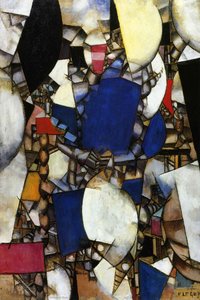
Sein Pinsel führte Bewegungen mit einer rhythmischen, fast industriellen Präzision aus, stets bestrebt, den Puls einer sich wandelnden Ära einzufangen. Er wandte sich von den weichen, verschwommenen Schatten der Vergangenheit ab und entschied sich stattdessen dafür, seine Kompositionen durch eine Sprache robuster, geometrischer Kraft aufzubauen. Dies führte zur Entwicklung einer ganz persönlichen Form des Kubismus, die von der Kritik als „Tubismus“ identifiziert wurde. In diesem Stil wurde die Welt durch röhrenförmige, konische und kubische Formen neu erdacht, wodurch ein Gefühl von Volumen entstand, das zugleich solide und dynamisch wirkte. Er malte nicht einfach nur Objekte; er suchte nach deren essenzieller, struktureller Logik.
Die Farben, die er wählte, waren ebenso selbstbewusst wie die Formen, die sie füllten. Er bevorzugte eine Palette, die von Primärfarben dominiert wurde, oft akzentuiert durch hartes Schwarz und Weiß, was dazu beitrug, die scharfen Konturen seiner Motive zu definieren. Anstatt sich auf den traditionellen Illusionismus zu verlassen, trug er die Farbe in kühnen, flächigen Ebenen auf. Häufig verwendete er einen dicken Impasto-Auftrag, eine Technik, welche die physische Präsenz des Mediums auf der Leinwand betonte. Dieser texturelle Ansatz stellte sicher, dass seine Werke geerdet und materiell wirkten – ein Spiegelbild der Maschinen und urbanen Strukturen, die er so sehr bewunderte. Seine Figuren nahmen oft geschmeidige, maschinenartig anmutende Formen an, die die Grenze zwischen der organischen menschlichen Gestalt und der technischen Präzision des modernen Zeitalters verwischten.
- Nudes in the Forest (1910)
- The Woman in Blue (1912)
- Soldier with a Pipe (1916)
- The Mechanic (1920)
Späte Jahre und Tod
Die sich wandelnden Gezeiten globaler Konflikte rissen den Künstler schließlich aus seinen Pariser Kreisen und führten ihn über den Atlantik. Zwischen 1940 und 1945 lebte er in den Vereinigten Staaten – eine Zeit, die ihm eine völlig neue Perspektive auf die moderne Welt eröffnete, die er so lange versucht hatte, auf die Leinwand zu bannen. Dieser Auslandsaufenthalt bot eine Atempause in seiner langen künstlerischen Evolution, einen Moment des Übergangs, bevor er schließlich in die Heimat zurückkehrte, in die vertraute Erde Frankreichs.
Mit seiner Rückkehr in die Heimat vollzog auch sein Privatleben einen bedeutenden Wandel. Im Februar 1952 heiratete er Nadia Khodasevich. Diese Verbindung markierte ein letztes Kapitel in seinem Leben, das von der fortwährenden Schöpfung seiner vielfältigen Werke geprägt war – von monumentalen Wandbildern bis hin zu zarten Glasmalereien. Selbst im hohen Alter blieb seine Anerkennung auf der internationalen Bühne ungebrochen. Im Jahr 1955 wurde er mit dem Grand Prix der São Paulo Biennale ausgezeichnet, eine hohe Ehre, die ihn im selben Jahr erreichte, in dem er von uns ging. Er verstarb am 17. August 1955 in Gif-sur-Yvette, Frankreich.
Vermächtnis und Einfluss
Fernand Léger hinterließ eine Spur, die weit über die Avantgarde-Kreise seiner eigenen Zeit hinausreichte. Indem er die Kluft zwischen abstrakter Kunst und figurativer Darstellung überbrückte, bot er Künstlern einen Weg, sich mit der modernen Welt auseinanderzusetzen, ohne das menschliche Subjekt gänzlich aufzugeben. Sein Ansatz ermöglichte einen Dialog zwischen der strukturellen Logik der Geometrie und der erkennbaren Präsenz von Menschen und Objekten. Diese Fähigkeit, einen Mittelweg zwischen dem rein Konzeptuellen und dem Greifbaren zu finden, half dabei, die Richtung vieler nachfolgender Kunstströmungen maßgeblich mitzugestalten.
Seine kühne Vereinfachung der Form und seine Faszination für die Ästhetik der Massenproduktion fungierten als Vorläufer der Pop-Art-Bewegung. Er sah eine ganz eigene Schönheit in der repetitiven, funktionalen Natur des Maschinenzeitalters – eine Perspektive, die später bei einer neuen Generation von Schöpfern Resonanz finden sollte. Künstler wie Roy Lichtenstein und Andy Warhol zogen eine klare Linie von seinen Experimenten mit kräftigen Umrisslinien und mechanischer Bildsprache hin zu ihren eigenen Erkundungen der Populärkultur. Er bereitete die visuelle Sprache für eine Ära vor, die letztlich genau jene industriellen und kommerziellen Elemente feiern sollte, die er einst auf die Leinwand zu übertragen suchte.
Wo man seine Werke heute erleben kann
Um der physischen Präsenz seiner Vision unmittelbar zu begegnen, lohnt sich eine Reise in den Süden Frankreichs, genauer gesagt nach Biot in den Alpes-Maritimes. Hier residiert das Musée National Fernand Léger, ein Ort, der sich ganz der Erforschung und Bewahrung seines schöpferischen Erbes gewidmet hat. Das Museum ist im Mas Saint-André untergebracht, einer Villa, die einst dem Künstler selbst gehörte. Innerhalb dieser Mauern und in den umgebenden Gärten finden seine polychromen Keramikskulpturen den idealen Rahmen, der es dem Betrachter ermöglicht, das Zusammenspiel seiner Formen mit dem Licht und dem Raum der mediterranen Landschaft zu erleben.
Jenseits dieses spezialisierten Heiligtums sind seine Leinwände und Skulpturen in verschiedenen bedeutenden Institutionen untergebracht. Das Musée d'Art et d'Histoire in Frankreich bewahrt eine Sammlung seiner Werke und sichert so seine Präsenz in der größeren Erzählung der französischen Kunst. Diese Bestände ermöglichen eine fortlaufende Untersuchung der Frage, wie er die Energie des Maschinenzeitalters in statische und doch pulsierende visuelle Formen übersetzte. Reisende, die nach seiner ganz eigenen Ästhetik suchen, können seine Spuren in mehreren bedeutenden Sammlungen finden, darunter:
Sein Einfluss hallt auch in den Werken anderer nach, doch die primäre Möglichkeit, sein direktes Schaffen Zeuge zu werden, bietet der Besuch dieser etablierten Depots. Ob man die kühnen, zylindrischen Formen in einem musealen Rahmen betrachtet oder seine Skulpturen in der Stille eines Gartens bewundert – der Betrachter begegnet stets derselben strukturellen Klarheit, die sein Lebenswerk definierte. Sein Vermächtnis bleibt in diesen spezifischen Orten verankert, wo die schweren, mechanischen Rhythmen seiner Gemälde für all jene bewahrt werden, die nach der Wahrheit seiner Geometrie suchen.


 Weiterlesen





 Zum Druck wechseln


 Bei Kunstwerken oder Reproduktionen, die an einer Seite größer als 105 cm (ca. 41 Zoll) sind, wird der Rahmen zerlegt als Bausatz geliefert. Diese Methode gewährleistet eine sichere Zustellung und verhindert Schäden während des Transports.


