


 In echtem Maßstab anzeigen
 Versenden als Grußkarte
 Teilen
 Details anzeigen
 Leitfaden öffnen

 Herunterladen
 Ähnliche Objekte
 Röntgenaufnahme
 Diashow
 Besucherstatistiken
Mechanical Elements on red background
 Acrylic
- WallArt
- Geometric Abstraction
 1924
1924 92.0 x 65.0 cm
 Mehr anzeigen
Giclée / Kunstdruck
Giclée- oder Leinwanddruck in Museumsqualität mit schneller Produktion und flexiblen Veredelungsoptionen. ( Handgemalte Reproduktion kaufen Zum digitalen Bild wechseln)




P118B €10

P118H €10

P118W €10

P438Z €10

P508JH €12

P508YH €12

P805H €10

P805Z €10

P919BZ €10

P919G €10

P919XJ €10

P959ZH €10

P968JZ €12

W106C €8

W218G €10

W218JH €8

W218Y €10

W307PJ €10

W316G €10

W316PJ €8

W316Y €10

W398PJ €8

W4111J €10

W500HY €15

W500JH €15

W692G €12

W849H €8

W940BG €15

W953PJ €8




Wählen Sie aus unseren vordefinierten Formaten, die den ursprünglichen Proportionen des Kunstwerks entsprechen.

Geben Sie die Breite und die Höhe an, die Sie benötigen, damit der Druck perfekt in Ihren Rahmen oder an Ihre Wand passt. Ein Druck kann nur beschnitten werden und niemals größer als das Originalbild gemacht werden; daher verliert ein Format mit einer anderen Proportion einen Teil des Bildes. Wir senden Ihnen ein digitales Mockup zur Freigabe, bevor wir den Druck ausführen. Das auf dieser Seite gezeigte Bild zeigt nicht den tatsächlichen Beschnitt – dies ist nur im Mockup ersichtlich.
Weltweiter Versand () innerhalb von 2 Wochen statt der üblichen 4/5 Wochen. (23 Oktober)

Kostenloser weltweiter Expressversand

Hochwertige Leinenleinwand

Vollständiger Versicherungsschutz beim Versand

Zollgebühren-Rückerstattungsgarantie

Garantie für exakte Farbtreue

100-tägiges Rückgaberecht (nur bei Mängeln)

100% Geld-zurück-Garantie

Angebot für Mengenrabatt
 Die Glasoption ist nur für Größen unter 110 cm verfügbar.

Mechanical Elements on red background
Giclée / Kunstdruck
Format der Reproduktion
-


Gesamtpreis
€ 56
A Bold Embrace of Mechanization: Exploring Fernand Léger’s “Mechanical Elements on Red Background”
Fernand Léger's "Mechanical Elements on Red Background," painted in 1924, isn’t merely a depiction of industrial forms; it’s an assertion of artistic conviction—a defiant refusal to abandon representational observation while simultaneously propelling itself into the realm of abstraction. This striking canvas embodies the spirit of its time, capturing the burgeoning fascination with technology and its transformative influence on human experience during the interwar years. Léger's vision wasn't simply about replicating machines; he sought to distill their essence—their rhythm, their energy, their geometric precision—into a visual language that resonated with both intellectual curiosity and visceral emotion.- Subject Matter: The painting presents a dynamic composition dominated by circles, triangles, squares, and rectangles – all rendered in bold reds against a stark crimson backdrop. These shapes aren’t randomly scattered; they are deliberately arranged to convey a sense of movement and interconnectedness, mirroring the ceaseless activity of factories and urban landscapes.
- Style: Léger's style is firmly rooted in Constructivism, an influential artistic movement that emerged from Russia following the October Revolution. Unlike Impressionism’s focus on fleeting impressions of light and color, Constructivism prioritized geometric abstraction as a means of expressing underlying structural principles—a belief that form dictated content.
Technique & Material Considerations
Léger employed a distinctive technique characterized by thick impasto – applying paint in layers with considerable texture. This physicality is crucial to conveying the feeling of industrial solidity and the relentless force of machinery. The artist utilized oil paints on canvas, meticulously blending colors to achieve maximum vibrancy and luminosity. Careful attention was paid to tonal variations within the red hues, creating depth and emphasizing the dramatic impact of the composition.Historical Context & Influences
“Mechanical Elements on Red Background” emerged during a period marked by unprecedented industrial expansion and societal upheaval. Léger’s work reflects the anxieties and aspirations surrounding this era—the fear of obsolescence alongside the optimism about technological progress. He drew inspiration from Futurism, another avant-garde movement that championed speed, dynamism, and the glorification of machines. However, Léger distinguished himself by grounding his abstraction in a careful observation of industrial forms, rejecting Futurist’s purely expressive impulses.Symbolic Resonance & Emotional Impact
The dominant red color isn't merely decorative; it symbolizes energy, passion, and the heat of industrial furnaces. The geometric shapes—circles, triangles, squares—represent fundamental building blocks of both nature and machine construction. Léger’s intention was to evoke a sense of awe and wonder at the transformative power of technology while simultaneously conveying an underlying feeling of melancholy – perhaps reflecting the displacement caused by rapid urbanization and industrialization. Ultimately, “Mechanical Elements on Red Background” invites contemplation on humanity's relationship with progress and its enduring fascination with form.Fragen & Antworten
Welche Art von Farben verwendet "Mechanical Elements on red background"?
Die Farbpalette von "Mechanical Elements on red background" von Fernand Léger wird als Earthy beschrieben. Es handelt sich um eine kompakte Beschreibung der Farben des Werkes.
Welche Farbe prägt die Komposition von "Mechanical Elements on red background" von Fernand Léger?
Die Farbe, die in „Mechanical Elements on red background“ am stärksten hervorsticht, ist Gray (#958e86). Die dominante Farbe ist hilfreich, um ein Kunstwerk auf eine Inneneinrichtung abzustimmen.
Welcher Kunstrichtung lässt sich "Mechanical Elements on red background" von Fernand Léger zuordnen?
"Mechanical Elements on red background" von Fernand Léger gehört der Strömung des Geometric Abstraction an. Diese Stilrichtung bildet den künstlerischen Kontext des Werkes.
Ähnliche Kunstwerke


Biografie des Künstlers
frühes Leben und Ausbildung
Fernand Légér, ein französischer Maler, Bildhauer und Filmemacher, wurde am 4. Februar 1881 in Argentan, Orne, Niedergermanien geboren. Sein Vater züchtete Rinder, und Légér erhielt zunächst eine Ausbildung als Architekt von 1897 bis 1899. Er zog dann im Jahr 1900 nach Paris und unterstützte sich dort als Architektenzeichner.Künstlerische Entwicklung
Légers frühe Werke wurden vom Impressionismus beeinflusst, wie in Le Jardin de ma Mère (Mein Muttergarten) (1905) zu sehen ist. Nach dem Besuch der Schule für dekorative Künste und der Académie Julian begann er ab seinem 25. Lebensjahr ernsthaft als Maler zu arbeiten. Sein Stil entwickelte sich zu einer persönlichen Form des Kubismus, der von Kritikern als "Tubism" bezeichnet wurde, da er sich auf zylindrische Formen konzentrierte.Kubismus und die Puteaux-Gruppe
Im Jahr 1910 stellte Légér im Salon d’Automne zusammen mit Jean Metzinger und Henri Le Fauconnier aus. Er schloss sich der Puteaux-Gruppe an, auch bekannt als die Section d’Or (die Goldene Proportion), zusammen mit anderen Künstlern wie Francis Picabia und Marcel Duchamp.Krieg und seine Auswirkungen auf Légers Werk
Légers Erfahrungen im Ersten Weltkrieg hatten einen erheblichen Einfluss auf sein Werk. Während seiner Zeit an der Front produzierte er Skizzen von Artilleriegeschützen, Flugzeugen und Soldaten. Sein Gemälde Soldat mit Pfeife (1916) spiegelt diese Zeit wider.Spätere Werke und Vermächtnis
Légers Nachkriegszeitliche Arbeiten, die von glatten, maschinellen Formen geprägt waren, verknüpften ihn mit der Tradition der französischen figurativen Malerei. Seine "animierten Landschaften" von 1921 zeigten Figuren und Tiere in harmonischen, stromlinienförmigen Formen.- Fernand Légers Werke auf AllPaintingsStore
- Mehr über Fernand Légér auf Wikipedia
- Entdecken Sie das Musée National Fernand Légér (Frankreich) mit AllPaintingsStore
- Die Sitzende Frau (100 x 81 cm, Tubism)
- Maschinenelement (Kubismus)
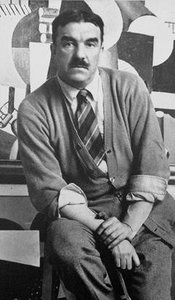
Fernand Léger
1881 - 1955 , Frankreich
Eckdaten zum Künstler
- Beeinflusste Kunstrichtungen: ['Pop Art']
- Beeinflusste Künstler: ['Paul Cézanne']
- Bemerkenswerte Werke:
- Die Sitzende Frau
- Maschinenelement
- Der Große Umzug
- Die Stadt
- Geburtsdatum: 04. Februar 1881
- Geburtsort: Argentan, Frankreich
- Künstlerische Richtung: Kubismus, Tubismus
- Nationalität: Französisch
- Sterbedatum: 1955
- Vollständiger Name: Fernand Léger
- Von Kunstbewegungen Beeinflusst: ['Cézannismus']
- Von Künstlern Beeinflusst: ['Impressionismus']
Verwandte Artikel

Cubism Explained: A Professional Guide to Geometric Abstraction for Modern Interior Design
Master the impact of Cubism in modern design. Our expert guide explores geometric abstraction, Picasso's legacy, and professional solutions for sourcing high-quality Cubist reproductions for hotels, corporate spaces, and luxury interiors.

Modern Geometry & Machine Age Beauty: A Collector's Guide to the Cubist Vision of Fernand Léger
Explore the profound geometric mastery of Fernand Léger. Discover how his 'Tubism' and Machine Age aesthetics redefined modern art, offering timeless inspiration for discerning collectors seeking to integrate Cubist dynamism into sophisticated contemporary interiors.

Neo-Abstract Art Trend Forecast: High-Impact Geometric Compositions for Contemporary Commercial Interiors
Elevate commercial interiors with Neo-Abstract art. Discover how high-impact geometric compositions and custom oil reproductions provide scalable, sophisticated design solutions for hotels, restaurants, and corporate spaces. Expert procurement for large-scale hospitality projects.


