- Startseite

- Auf Leinwand drucken lassen
- Fernand Léger
- Still life

 In echtem Maßstab anzeigen
 Versenden
 Teilen
 Details anzeigen

 Herunterladen
 Ähnliche Objekte
 Röntgenaufnahme
 Diashow starten
Still life


 Mehr anzeigen
Giclée / Kunstdruck
Giclée- oder Leinwanddruck in Museumsqualität mit schneller Produktion und flexiblen Veredelungsoptionen. ( Zur handgemalten Reproduktion wechseln Zum Bild wechseln)




P118B $10

P118H $10

P118W $10

P438Z $10

P508JH $12

P508YH $12

P805H $10

P805Z $10

P919BZ $10

P919G $10

P919XJ $10

P959ZH $10

P968JZ $12

W106C $8

W218G $10

W218JH $8

W218Y $10

W307PJ $10

W316G $10

W316PJ $8

W316Y $10

W398PJ $8

W4111J $10

W500HY $15

W500JH $15

W692G $12

W849H $8

W940BG $15

W953PJ $8




Wählen Sie aus unseren vordefinierten Formaten, die den ursprünglichen Proportionen des Kunstwerks entsprechen.

Sie können Ihre eigenen Maße eingeben, um ein bestimmtes Format oder einen speziellen Platz einzupassen. Wenn das von Ihnen gewählte Format nicht den Proportionen des Originalbildes entspricht, werden wir das Kunstwerk entweder beschneiden oder das Bild mit einem gespiegelten oder einfarbigen Rand erweitern. Ein digitaler Entwurf wird Ihnen zur Genehmigung zugesandt, bevor die Produktion beginnt.
Bitte beachten Sie, dass die Vorschau auf dem Bildschirm nicht den tatsächlichen Zuschnitt oder die Erweiterung widerspiegelt. Nur der Entwurf zeigt die endgültige Komposition präzise an.
Obwohl Sondermaße verfügbar sind, empfehlen wir die Auswahl eines Maßes aus der vordefinierten Liste, um die ursprünglichen Proportionen zu bewahren.
Weltweiter Versand () innerhalb von 2 Wochen statt der üblichen 4/5 Wochen. (1 August)

Kostenloser weltweiter Expressversand

Hochwertige Leinenleinwand

Vollumfänglicher Versicherungsschutz beim Versand

Zollgebühren-Rückerstattungsgarantie

Garantie für exakte Farbtreue

60 Tage Rückgaberecht (nur bei Mängeln)

100% Geld-zurück-Garantie

Angebot für Mengenrabatt
 Die Glasoption ist nur in Größen unter 110 cm verfügbar.

Still life
Giclée / Kunstdruck
Format der Reproduktion
-


Gesamtpreis
$ 64
Objektbeschreibung
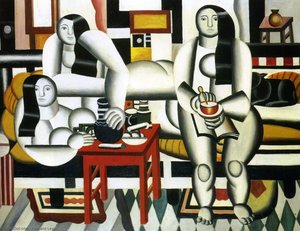
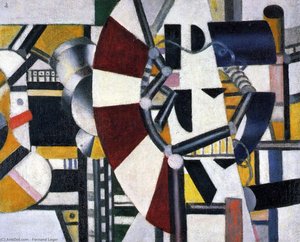
Fernand Léger’s Still Life with Candlestick: A Symphony of Form and Reflection
The Musée d'Art Moderne de Paris holds a treasure – Fernand Léger’s *Still Life with Candlestick*, painted in 1922. More than just an arrangement of objects on a tabletop, this artwork embodies Léger’s groundbreaking approach to modern art: integrating the dynamism of industrial machinery into a deceptively serene visual experience. It's a piece that continues to fascinate viewers today, prompting contemplation about beauty amidst technological advancement and offering invaluable insight into Léger’s artistic philosophy.A Bold Departure from Impressionism
Léger emerged from the fertile soil of Normandy’s agricultural traditions, yet he swiftly embraced the burgeoning influence of Cubism and Futurism. Unlike Impressionists who sought to capture fleeting moments of light and color—a preoccupation with sensory experience—Léger deliberately rejected illusionistic representation. Instead, he prioritized *form*, dissecting objects into geometric planes and reconstructing them in a fractured perspective that simultaneously acknowledges their materiality and disrupts conventional spatial perception. This stylistic choice wasn’t merely aesthetic; it was a conscious rejection of the perceived decadence of bourgeois culture and an affirmation of the transformative power of industrial progress.Technique and Materiality: Embracing Geometric Precision
The painting's execution is characterized by meticulous geometric precision. Léger employed a palette dominated by muted blues, ochres, and whites—colors that subtly reinforce the artwork’s contemplative mood despite its fractured composition. Thick brushstrokes contribute to the textural richness of the surface, emphasizing the physicality of the materials – particularly the plaster casts used to create the candlestick itself. These casts represent not just an artistic technique but also a symbolic gesture: Léger deliberately incorporated industrial casting methods into his oeuvre, demonstrating his belief that art could engage with and celebrate the realities of the modern world. The careful layering of paint creates depth without resorting to traditional shading techniques, furthering Léger’s commitment to abstraction while maintaining visual interest.Symbolism Beyond Decoration
Beyond its formal qualities, *Still Life with Candlestick* is laden with symbolic significance. The candlestick—a recurring motif in Léger's work—represents not merely illumination but also the enduring presence of tradition amidst the relentless march of time. Its geometric form echoes the shapes found in industrial machinery, highlighting Léger’s central preoccupation: reconciling beauty and functionality. Furthermore, the subdued color scheme evokes a sense of quiet contemplation, inviting viewers to consider the profound questions posed by modernity—questions about humanity's relationship with technology and its capacity for artistic expression.Emotional Resonance: A Quiet Triumph
Despite its fragmented visual language, *Still Life with Candlestick* possesses an undeniable emotional resonance. Léger’s masterful control of form and color achieves a remarkable feat – conveying profound ideas without resorting to sentimentalism. The artwork speaks to the viewer's intellect as much as it does to their senses, prompting reflection on themes of progress, memory, and artistic innovation. It stands as a testament to Léger’s conviction that abstraction could serve as a vehicle for exploring complex psychological states—a belief that solidified his legacy as one of the most influential artists of the 20th century. Its enduring appeal lies in its ability to capture the essence of an era while simultaneously offering a timeless meditation on beauty and contemplation.Ähnliche Kunstwerke


Künstlerbiografie
frühes Leben und Ausbildung
Fernand Légér, ein französischer Maler, Bildhauer und Filmemacher, wurde am 4. Februar 1881 in Argentan, Orne, Niedergermanien geboren. Sein Vater züchtete Rinder, und Légér erhielt zunächst eine Ausbildung als Architekt von 1897 bis 1899. Er zog dann im Jahr 1900 nach Paris und unterstützte sich dort als Architektenzeichner.Künstlerische Entwicklung
Légers frühe Werke wurden vom Impressionismus beeinflusst, wie in Le Jardin de ma Mère (Mein Muttergarten) (1905) zu sehen ist. Nach dem Besuch der Schule für dekorative Künste und der Académie Julian begann er ab seinem 25. Lebensjahr ernsthaft als Maler zu arbeiten. Sein Stil entwickelte sich zu einer persönlichen Form des Kubismus, der von Kritikern als "Tubism" bezeichnet wurde, da er sich auf zylindrische Formen konzentrierte.Kubismus und die Puteaux-Gruppe
Im Jahr 1910 stellte Légér im Salon d’Automne zusammen mit Jean Metzinger und Henri Le Fauconnier aus. Er schloss sich der Puteaux-Gruppe an, auch bekannt als die Section d’Or (die Goldene Proportion), zusammen mit anderen Künstlern wie Francis Picabia und Marcel Duchamp.Krieg und seine Auswirkungen auf Légers Werk
Légers Erfahrungen im Ersten Weltkrieg hatten einen erheblichen Einfluss auf sein Werk. Während seiner Zeit an der Front produzierte er Skizzen von Artilleriegeschützen, Flugzeugen und Soldaten. Sein Gemälde Soldat mit Pfeife (1916) spiegelt diese Zeit wider.Spätere Werke und Vermächtnis
Légers Nachkriegszeitliche Arbeiten, die von glatten, maschinellen Formen geprägt waren, verknüpften ihn mit der Tradition der französischen figurativen Malerei. Seine "animierten Landschaften" von 1921 zeigten Figuren und Tiere in harmonischen, stromlinienförmigen Formen.- Fernand Légers Werke auf AllPaintingsStore
- Mehr über Fernand Légér auf Wikipedia
- Entdecken Sie das Musée National Fernand Légér (Frankreich) mit AllPaintingsStore
- Die Sitzende Frau (100 x 81 cm, Tubism)
- Maschinenelement (Kubismus)
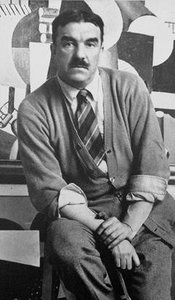
Fernand Léger
1881 - 1955 , Frankreich
Eckdaten zum Künstler
- Beeinflusste Kunstrichtungen: ['Pop Art']
- Beeinflusste Künstler: ['Paul Cézanne']
- Bemerkenswerte Werke:
- Die Sitzende Frau
- Maschinenelement
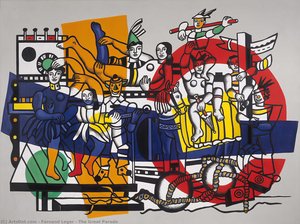
- Der Große Umzug
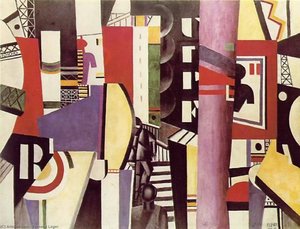
- Die Stadt
- Geburtsdatum: 04. Februar 1881
- Geburtsort: Argentan, Frankreich
- Künstlerische Richtung: Kubismus, Tubismus
- Nationalität: Französisch
- Sterbedatum: 1955
- Vollständiger Name: Fernand Léger
- Von Kunstbewegungen Beeinflusst: ['Cézannismus']
- Von Künstlern Beeinflusst: ['Impressionismus']
Verwandte Artikel

Modern Geometry & Machine Age Beauty: A Collector's Guide to the Cubist Vision of Fernand Léger
Explore the profound geometric mastery of Fernand Léger. Discover how his 'Tubism' and Machine Age aesthetics redefined modern art, offering timeless inspiration for discerning collectors seeking to integrate Cubist dynamism into sophisticated contemporary interiors.