


 Vorschau anzeigen
 Versenden
 Teilen
 Details anzeigen
 Leitfaden

 Herunterladen
 Ähnliche Objekte
 Röntgenaufnahme
 Diashow
 Statistiken
Zwei Männer

 Weiterlesen
Handgefertigte Ölreproduktion
Handgemaltes Ölgemälde auf Leinwand in Ihrer Wunschgröße und mit Rahmen, auf Bestellung von unseren Künstlern angefertigt. ( Zum Druck wechseln Zum digitalen Bild wechseln)




P118B €10

P118H €10

P118W €10

P438Z €10

P508JH €12

P508YH €12

P805H €10

P805Z €10

P919BZ €10

P919G €10

P919XJ €10

P959ZH €10

P968JZ €12

W106C €8

W218G €10

W218JH €8

W218Y €10

W307PJ €10

W316G €10

W316PJ €8

W316Y €10

W398PJ €8

W4111J €10

W500HY €15

W500JH €15

W692G €12

W849H €8

W940BG €15

W953PJ €8




Wählen Sie aus unseren vordefinierten Formaten, die den ursprünglichen Proportionen des Kunstwerks entsprechen.

Geben Sie die Breite und die Höhe an, die Sie für Ihren Rahmen oder Ihre Wand benötigen. Da dieses Werk handgemalt ist, kann der Künstler bei einer anderen Form etwas mehr um das Bild herum malen oder etwas abschneiden – Sie entscheiden. Wir senden Ihnen ein digitales Mockup zur Freigabe, bevor mit dem Malen begonnen wird. Das auf dieser Seite gezeigte Bild stellt nicht das tatsächliche Ergebnis dar – dies tut nur das Mockup.
Nach der Bestellung wird das AllPaintingsStore.com-Team dem Kunden Anweisungen per E-Mail zusenden und eine Mockup-Vorschau bereitstellen.
Weltweiter Versand () in nur 3 bis 4 Wochen statt der üblichen 5 Wochen. (26 Oktober). Keine Kompromisse bei der Qualität.

Kostenloser weltweiter Expressversand

Hochwertige Leinenleinwand

Umfassender Versicherungsschutz beim Versand

Zollgebühren-Rückerstattungsgarantie

Garantie für exakte Farbtreue

100 Tage Rückgaberecht (nur bei Mängeln)

100% Geld-zurück-Garantie

Mengenrabatt verfügbar
 Die Glasoption ist nur für Größen unter 110 cm verfügbar.

Zwei Männer
Art der Reproduktion
Format der Reproduktion
-


Endpreis
€ 226
Fernand Léger’s “Two Men”: A Study in Modern Connection
Fernand Léger’s “Two Men” stands as a cornerstone of modernist painting, embodying the spirit of Tubism and capturing a poignant glimpse into the anxieties and aspirations of the early 20th century. This striking black and white photograph doesn't merely depict two figures; it presents an exploration of human connection amidst the burgeoning influence of industrialization – a theme that resonates powerfully even today. The artwork’s subtle gestures and geometric forms invite contemplation on time, presence, and the beauty found in simplicity.Stylistic Innovation: Tubism & Beyond
Léger revolutionized painting with his development of Tubism, a distinctive offshoot of Cubism that deliberately rejected fragmentation for more streamlined cylindrical shapes. Unlike Picasso and Braque’s fractured perspectives, Léger sought to distill form to its essence, prioritizing solidity and monumentality. “Two Men” exemplifies this approach brilliantly. Notice how the figures are constructed from bold lines and geometric volumes—a deliberate departure from traditional realism—creating a visual language that anticipates elements of Pop Art with its focus on everyday life and industrial aesthetics. The artist’s intention wasn't to represent reality accurately but rather to convey an emotional truth through abstracted shapes.Historical Context: The Machine Age & Human Connection
Created during the tumultuous period of the Machine Age, “Two Men” reflects Léger’s fascination with technological advancement while simultaneously grappling with its impact on human experience. Léger wasn't simply documenting the changing landscape; he was wrestling with questions about identity and purpose in a world increasingly dominated by machines. The painting subtly communicates this tension—the figures are positioned within a room, defined not just by space but also by their interaction, suggesting that even amidst mechanization, human connection remains paramount. Léger’s artistic vision stemmed from his formative years spent working as an agricultural laborer, providing him with a grounding perspective on the realities of rural life and contrasting it with the dynamism of the industrial future he sought to portray.Decoding the Symbolism
The symbolism embedded within “Two Men” is multilayered and open to interpretation, enriching its aesthetic impact. The prominent clock hanging above the figures serves as a visual reminder of mortality—a preoccupation common in art during this era—but also hints at the pressure of modern life’s relentless pace. More profoundly, the gesture of one man's hand resting gently on the other’s arm speaks volumes about companionship and support. This quiet moment captures the essence of human connection, conveying tenderness and reassurance amidst a backdrop of geometric abstraction. Léger skillfully utilizes these symbols to elevate the painting beyond mere visual representation, inviting viewers to contemplate deeper themes of existence and relationships.A Legacy of Bold Vision
Fernand Léger’s “Two Men” remains an enduring testament to his artistic genius—a pioneering work that foreshadowed movements like Pop Art and solidified his place as one of the most influential figures in 20th-century art history. Its simplicity, combined with its masterful use of Tubism's geometric language, continues to inspire artists and collectors alike, ensuring that Léger’s vision of a harmonious blend between human emotion and industrial form endures for generations to come.Fragen & Antworten
Welche Farbe sticht in "Zwei Männer" am meisten hervor?
Die Farbe, die in „Zwei Männer“ am stärksten hervorsticht, ist Rosiges Braun (#c0b19c). Die dominante Farbe ist hilfreich, um ein Kunstwerk auf eine Inneneinrichtung abzustimmen.
Welche Farben dominieren "Zwei Männer" von Fernand Léger?
"Zwei Männer" zeichnet sich durch eine Neutrale Töne-Palette aus, die von Rosiges Braun (#c0b19c) dominiert wird.
Wer ist der Künstler hinter "Zwei Männer"?
Der Künstler hinter „Zwei Männer“ ist Fernand Léger. Das Werk ist unter dem Namen von Fernand Léger katalogisiert.
Ähnliche Kunstwerke


Künstlerbiografie
frühes Leben und Ausbildung
Fernand Légér, ein französischer Maler, Bildhauer und Filmemacher, wurde am 4. Februar 1881 in Argentan, Orne, Niedergermanien geboren. Sein Vater züchtete Rinder, und Légér erhielt zunächst eine Ausbildung als Architekt von 1897 bis 1899. Er zog dann im Jahr 1900 nach Paris und unterstützte sich dort als Architektenzeichner.Künstlerische Entwicklung
Légers frühe Werke wurden vom Impressionismus beeinflusst, wie in Le Jardin de ma Mère (Mein Muttergarten) (1905) zu sehen ist. Nach dem Besuch der Schule für dekorative Künste und der Académie Julian begann er ab seinem 25. Lebensjahr ernsthaft als Maler zu arbeiten. Sein Stil entwickelte sich zu einer persönlichen Form des Kubismus, der von Kritikern als "Tubism" bezeichnet wurde, da er sich auf zylindrische Formen konzentrierte.Kubismus und die Puteaux-Gruppe
Im Jahr 1910 stellte Légér im Salon d’Automne zusammen mit Jean Metzinger und Henri Le Fauconnier aus. Er schloss sich der Puteaux-Gruppe an, auch bekannt als die Section d’Or (die Goldene Proportion), zusammen mit anderen Künstlern wie Francis Picabia und Marcel Duchamp.Krieg und seine Auswirkungen auf Légers Werk
Légers Erfahrungen im Ersten Weltkrieg hatten einen erheblichen Einfluss auf sein Werk. Während seiner Zeit an der Front produzierte er Skizzen von Artilleriegeschützen, Flugzeugen und Soldaten. Sein Gemälde Soldat mit Pfeife (1916) spiegelt diese Zeit wider.Spätere Werke und Vermächtnis
Légers Nachkriegszeitliche Arbeiten, die von glatten, maschinellen Formen geprägt waren, verknüpften ihn mit der Tradition der französischen figurativen Malerei. Seine "animierten Landschaften" von 1921 zeigten Figuren und Tiere in harmonischen, stromlinienförmigen Formen.- Fernand Légers Werke auf AllPaintingsStore
- Mehr über Fernand Légér auf Wikipedia
- Entdecken Sie das Musée National Fernand Légér (Frankreich) mit AllPaintingsStore
- Die Sitzende Frau (100 x 81 cm, Tubism)
- Maschinenelement (Kubismus)
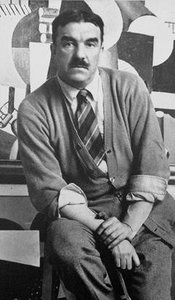
Fernand Léger
1881 - 1955 , Frankreich
Kurzinfos
- Beeinflusste Kunstrichtungen: ['Pop Art']
- Beeinflusste Künstler: ['Paul Cézanne']
- Bemerkenswerte Werke:
- Die Sitzende Frau
- Maschinenelement
- Der Große Umzug
- Die Stadt
- Geburtsdatum: 04. Februar 1881
- Geburtsort: Argentan, Frankreich
- Künstlerische Richtung: Kubismus, Tubismus
- Nationalität: Französisch
- Sterbedatum: 1955
- Vollständiger Name: Fernand Léger
- Von Kunstbewegungen Beeinflusst: ['Cézannismus']
- Von Künstlern Beeinflusst: ['Impressionismus']
Ähnliche Artikel

Cubist Expression: A Professional Guide to Integrating Geometric Abstraction into Modern Hospitality Design
Elevate hospitality interiors with Cubist art. Our expert guide explores integrating geometric abstraction into hotel design through high-quality, large-scale oil reproductions and custom multi-panel commissions tailored for professional designers and procurement managers.

Modern Geometry & Machine Age Beauty: A Collector's Guide to the Cubist Vision of Fernand Léger
Explore the profound geometric mastery of Fernand Léger. Discover how his 'Tubism' and Machine Age aesthetics redefined modern art, offering timeless inspiration for discerning collectors seeking to integrate Cubist dynamism into sophisticated contemporary interiors.

Cubist Portraits: A Professional Guide to Integrating Geometric Abstraction into Modern Hospitality Design
Elevate hospitality interiors with Cubist portraits. Our expert guide for hotel designers explores integrating geometric abstraction into modern spaces through high-quality, scalable oil reproductions and custom multi-panel solutions for large-scale architectural projects.


