


 In echtem Maßstab anzeigen
 Versenden als Grußkarte
 Teilen
 Details anzeigen
 Leitfaden öffnen

 Herunterladen
 Ähnliche Objekte
 Röntgenaufnahme
 Diashow
 Besucherstatistiken
Boy Blowing Bubbles
 Acrylic On Canvas
- WallArt
- Dutch Golden Age
 1663
1663 184.0 x 257.0 cm
 Kunstpalast
 Mehr anzeigen
Giclée / Kunstdruck
Giclée- oder Leinwanddruck in Museumsqualität mit schneller Produktion und flexiblen Veredelungsoptionen. ( Handgemalte Reproduktion kaufen Zum digitalen Bild wechseln)




P118B €10

P118H €10

P118W €10

P438Z €10

P508JH €12

P508YH €12

P805H €10

P805Z €10

P919BZ €10

P919G €10

P919XJ €10

P959ZH €10

P968JZ €12

W106C €8

W218G €10

W218JH €8

W218Y €10

W307PJ €10

W316G €10

W316PJ €8

W316Y €10

W398PJ €8

W4111J €10

W500HY €15

W500JH €15

W692G €12

W849H €8

W940BG €15

W953PJ €8




Wählen Sie aus unseren vordefinierten Formaten, die den ursprünglichen Proportionen des Kunstwerks entsprechen.

Geben Sie die Breite und die Höhe an, die Sie benötigen, damit der Druck perfekt in Ihren Rahmen oder an Ihre Wand passt. Ein Druck kann nur beschnitten werden und niemals größer als das Originalbild gemacht werden; daher verliert ein Format mit einer anderen Proportion einen Teil des Bildes. Wir senden Ihnen ein digitales Mockup zur Freigabe, bevor wir den Druck ausführen. Das auf dieser Seite gezeigte Bild zeigt nicht den tatsächlichen Beschnitt – dies ist nur im Mockup ersichtlich.
Weltweiter Versand () innerhalb von 2 Wochen statt der üblichen 4/5 Wochen. (25 Oktober)

Kostenloser weltweiter Expressversand

Hochwertige Leinenleinwand

Vollständiger Versicherungsschutz beim Versand

Zollgebühren-Rückerstattungsgarantie

Garantie für exakte Farbtreue

100-tägiges Rückgaberecht (nur bei Mängeln)

100% Geld-zurück-Garantie

Angebot für Mengenrabatt
 Die Glasoption ist nur für Größen unter 110 cm verfügbar.

Boy Blowing Bubbles
Giclée / Kunstdruck
Format der Reproduktion
-


Gesamtpreis
€ 56
A Moment Frozen in Time: Frans van Mieris’ ‘Boy Blowing Bubbles’
Frans van Mieris' “Boy Blowing Bubbles,” painted in 1663, isn’t merely a portrait; it’s a carefully constructed tableau of Dutch Golden Age life, brimming with subtle symbolism and an exquisite attention to detail that defines the artist’s signature style. Housed within the Mauritshuis in The Hague, this captivating scene invites us into a world where innocence dances alongside contemplation, and the ephemeral beauty of childhood is juxtaposed against deeper philosophical questions about mortality and the passage of time.
The ‘Fijnschilder’ Technique: A Masterclass in Illusion
Van Mieris was a leading figure in the “fijnschilder” movement, a group of Dutch painters known for their meticulous realism and mastery of illusionistic techniques. He achieved this through painstaking layering of glazes – incredibly thin washes of paint applied over dry layers – creating an astonishingly lifelike surface that seems to shimmer with depth and texture. Observe the delicate rendering of the boy’s skin, the subtle folds in his clothing, and the way the light catches on the bubbles themselves. Van Mieris didn't simply depict; he constructed a convincing illusion of reality, employing techniques borrowed from both painting and drawing – a testament to his rigorous training under Gerrit Dou.
Symbolism Woven into the Scene: A Tapestry of Meaning
The composition is rich with layered symbolism, reflecting the intellectual currents of 17th-century Holland. The boy, seemingly lost in a simple pleasure – blowing bubbles – represents fleeting joy and innocence. However, the artist subtly introduces an undercurrent of melancholy. The woman behind him, dressed in luxurious fabrics, holds a baby, suggesting motherhood and domesticity, yet her gaze is distant, hinting at the burdens of responsibility. The dog, a symbol of loyalty, stands attentively beside her, perhaps representing steadfastness amidst uncertainty. Even the objects within the room – the vases overflowing with flowers, the clock measuring the relentless march of time, and the window offering a glimpse to an unseen world – contribute to this complex web of meaning.
Contextualizing the Image: The ‘Paragone’ and the Illusion of Space
“Boy Blowing Bubbles” exists within the broader context of the “paragone,” a heated debate in 17th-century Europe concerning the relative merits of painting versus sculpture. Van Mieris, through his masterful manipulation of perspective and texture, powerfully demonstrated painting’s ability to create convincing illusions of space and depth – a skill that directly challenged the perceived superiority of three-dimensional sculpture. The window itself serves as a visual metaphor for this illusionistic prowess, inviting the viewer to step into the scene and contemplate its intricacies. The artist deliberately employs techniques reminiscent of Renaissance perspective, elevating painting’s status within the artistic hierarchy.
Beyond its technical brilliance and symbolic depth, “Boy Blowing Bubbles” evokes a profound sense of nostalgia for a bygone era – a poignant reminder of childhood's fleeting beauty and the inevitable passage of time. It is a work that continues to resonate with viewers today, offering a glimpse into the complexities of human experience and the enduring power of art to capture a single, unforgettable moment.
- Artist: Frans van Mieris the Elder
- Date: 1663
- Location: Mauritshuis, The Hague
- Medium: Oil on Panel
Learn more about the artwork at the Mauritshuis
Fragen & Antworten
Welche Druckgröße und welches Format werden für „Boy Blowing Bubbles“ empfohlen?
Format Medium, Ausrichtung Portrait: Dies ist die empfohlene Druckeinstellung für "Boy Blowing Bubbles" von Frans van Mieris.
Wie intensiv sind die Farben von "Boy Blowing Bubbles"?
"Boy Blowing Bubbles" von Frans van Mieris ist mit einer Sättigung von Muted und einer Intensität von Monochromatic festgehalten.
Welche Gemeinsamkeiten weist "Boy Blowing Bubbles" mit dem restlichen Werk von Frans van Mieris auf?
"Boy Blowing Bubbles" gehört zu Frans van Mieriss Werk der Dutch Golden Age-Epoche, dessen dokumentierte Themen unter anderem dutch golden age realism, symbolic moral interpretation, paragone competition influence, illusionistic depth techniques, van mieris’ detailed portraits umfassen.
Ähnliche Kunstwerke


Biografie des Künstlers
Frans van Mieris der Ältere: Ein Leben im Detail
- Geboren: Leiden, Niederlande (1635)
- Gestorben: 1681
Frans van Mieris der Ältere war ein bedeutender niederländischer Genre-Maler des Goldenen Zeitalters, bekannt für seine akribische Detailgenauigkeit und seinen raffinierten Stil. Geboren in Leiden als Sohn von Jan Bastiaensz van Mieris, einem Goldschmied, zeigte Frans zunächst eine Begabung für das Zeichnen anstatt in den Fußstapfen seines Vaters zu treten. Die frühe Ausbildung unter Abraham Toorenvliet, gefolgt von der Unterweisung durch Gerrit Dou, formte seine künstlerische Grundlage.
Künstlerische Entwicklung und Stil
- Frühe Einflüsse: Gerrit Dou und Abraham van den Tempel beeinflussten Frans’ frühe Arbeiten maßgeblich.
- "Fijnschilder"-Technik: Van Mieris wurde ein Meister der "Fijnschilder"-Technik, die sich durch extrem feine Details, glatte Pinselstriche und einen Fokus auf kleinformatige Gemälde auszeichnete. Diese Technik betonte den Realismus und die detaillierten Darstellungen von Texturen wie Satin und Samt.
- Themenwahl: Er stellte häufig Szenen des wohlhabenden Bürgertums dar – aufwendige Innenräume, elegante Zusammenkünfte und Porträts – und illustrierte so die Gewohnheiten und Kleidung der Oberschicht. Wiederkehrende Motive waren Austernessen, Ärzte, die Patienten untersuchen, und Frauen, die sich häuslichen Tätigkeiten widmen.
- Entwicklung des Stils: Während er anfänglich den Stil Gerrit Dous nachahmte, entwickelte Van Mieris allmählich einen eigenen unverwechselbaren Ansatz und löste sich von übermäßiger Detailgenauigkeit hin zu einem größeren Fokus auf Charakterinteraktion und Erzählungen innerhalb seiner Szenen. Seine späteren Werke wiesen manchmal dunklere Töne im Vergleich zu seinen früheren, helleren Arbeiten auf.
Wichtige Errungenschaften und bemerkenswerte Werke
- Arztbesuch (1657): Gilt als eines seiner frühesten datierten und bedeutendsten Werke, das seine wachsende Unabhängigkeit von Dous Stil zeigt.
- Selbstporträt mit einer Cittern: Ein eindrucksvolles Selbstporträt, das sein Können in der Darstellung prunkvoller Kleidung und dem Einfangen eines Sinns für Persönlichkeit demonstriert.
- Porträt seiner Frau, Cunera van der Cock: Ein beeindruckendes Beispiel für Porträts, das Realismus und Chiaroscuro hervorhebt.
- Allegorische Gemälde: Van Mieris fertigte auch allegorische Werke an, wie z. B. eines, das Laster wie Trinken, Rauchen und Glücksspiel darstellt, was seine Vielseitigkeit demonstriert.
Vermächtnis und historische Bedeutung
- Familienvermögen: Frans van Mieris’ Einfluss erstreckte sich auf seine Familie; sein Sohn Willem van Mieris (1662–1747) und sein Enkel Frans van Mieris der Jüngere (1689–1763) wurden ebenfalls angesehene Genre-Maler und setzten die Familientradition fort.
- Imitationen: Die Popularität von Van Mieris’ Stil führte zu zahlreichen Imitationen, vor allem durch A. D. Snaphaan, der in Leipzig arbeitete und vom Hof von Anhalt-Dessau gefördert wurde.
- Beitrag zur niederländischen Malerei des Goldenen Zeitalters: Frans van Mieris spielte eine entscheidende Rolle bei der Gestaltung der "Fijnschilder"-Bewegung innerhalb der niederländischen Malerei des Goldenen Zeitalters und leistete damit einen bedeutenden Beitrag zum Fokus der Ära auf akribische Details und realistische Darstellungen des Alltagslebens und der Oberschicht. Seine Werke werden für sein technisches Können und seine aufschlussreiche Darstellung der Kultur des 17. Jahrhunderts geschätzt.
Spätere Jahre und Wiederentdeckung
- Förderung: Van Mieris genoss die Förderung bedeutender Persönlichkeiten, darunter Erzherzog Leopold und Cosimo III. de’ Medici.
- Gestohlenes Kunstwerk: Ein Selbstporträt wurde aus der Art Gallery of New South Wales in Sydney, Australien, gestohlen, was den bleibenden Wert und Reiz seiner Werke unterstreicht.

Frans van Mieris
1635 - 1681 , Niederlande
Eckdaten zum Künstler
- Beeinflusste Künstler:
- Willem van Mieris
- Frans van Mieris der Jüngere
- Bemerkenswerte Werke:
- Porträt von Florentius Schuyl
- Selbstbildnis mit Zither
- Frau vor dem Spiegel
- Arztbesuch
- Geburtsdatum: 1635
- Geburtsort: Leiden, Niederlande
- Künstlerische Bewegung: Fijnschilder
- Künstlerische Einflüsse:
- Gerrit Dou
- Abraham van den Tempel
- Nationalität: Niederländisch
- Sterbedatum: 1681
- Vollständiger Name: Frans van Mieris der Ältere
Verwandte Artikel
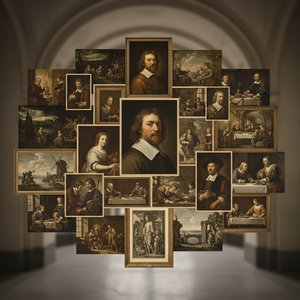
Rembrandts Meisterwerke: Die Top 25 Kunstwerke für Ihr Zuhause | AllPaintingsStore
Entdecken Sie Rembrandts 25 berühmteste Kunstwerke! Tauchen Sie ein in die Welt des Barock, Licht und Schatten & historischer Porträts. Hochwertige Reproduktionen für Ihr Zuhause – jetzt auf AllPaintingsStore.com!

Mastering Light & Shadow: A Journey Through the Dutch Golden Age's Luminous Legacy
Embark on a cultural journey through the Dutch Golden Age. Explore the masterful interplay of light and shadow in 17th-century masterpieces, from Rembrandt to Vermeer, and discover how this era of profound realism continues to inspire fine art collectors today.
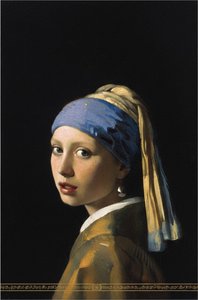
Die 10 Meisterwerke des Goldenen Zeitalters der niederländischen Malerei |
Entdecken Sie die 10 Meisterwerke des Niederländischen Goldenen Zeitalters! Von Rembrandt bis Vermeer – erleben Sie Kunstgeschichte, Techniken & Emotionen. Hochwertige Gemäldereproduktionen für Ihr Zuhause auf .

Golden Light & Dutch Skies: The Timeless Magic of Dutch Golden Age Landscapes
Discover the breathtaking beauty of Dutch Golden Age landscapes. Explore the mastery of light, chiaroscuro, and 17th-century realism through an expert art history lens, celebrating the enduring legacy of the Dutch Masters for discerning collectors and art lovers.

Illuminating Innovation: Exploring the Dutch Golden Age of Painting
Explore the Dutch Golden Age of painting with AllPaintingsStore. Discover Rembrandt, Vermeer & other Masters. Learn about key characteristics, iconic artworks, and lasting influence. Expert insights for collectors & enthusiasts.


