


 Vorschau anzeigen
 Versenden
 Teilen
 Details anzeigen
 Leitfaden

 Herunterladen
 Ähnliche Objekte
 Röntgenaufnahme
 Diashow
 Q&A
Q&A Statistiken
A Foxhound


 Weiterlesen
Giclée / Kunstdruck
Giclée- oder Leinwanddruck in Museumsqualität mit schneller Produktion und flexiblen Veredelungsoptionen. ( Handgemalte Reproduktion bestellen Zum digitalen Bild wechseln)




P118B €10

P118H €10

P118W €10

P438Z €10

P508JH €12

P508YH €12

P805H €10

P805Z €10

P919BZ €10

P919G €10

P919XJ €10

P959ZH €10

P968JZ €12

W106C €8

W218G €10

W218JH €8

W218Y €10

W307PJ €10

W316G €10

W316PJ €8

W316Y €10

W398PJ €8

W4111J €10

W500HY €15

W500JH €15

W692G €12

W849H €8

W940BG €15

W953PJ €8




Wählen Sie aus unseren vordefinierten Formaten, die den ursprünglichen Proportionen des Kunstwerks entsprechen.

Geben Sie die benötigte Breite und Höhe an, damit der Druck perfekt in Ihren Rahmen oder an Ihre Wand passt. Ein Druck kann nur beschnitten, aber niemals größer als das Originalbild angefertigt werden; daher verliert ein Format mit anderen Proportionen einen Teil des Bildes. Wir senden Ihnen ein digitales Mockup zur Freigabe, bevor wir den Druck ausführen. Das auf dieser Seite gezeigte Bild zeigt nicht den tatsächlichen Beschnitt – dies ist nur im Mockup ersichtlich.
Weltweiter Versand () innerhalb von 2 Wochen statt der üblichen 4/5 Wochen. (1 November)

Kostenloser weltweiter Expressversand

Hochwertige Leinenleinwand

Umfassender Versicherungsschutz beim Versand

Zollgebühren-Rückerstattungsgarantie

Garantie für exakte Farbtreue

100 Tage Rückgaberecht (nur bei Mängeln)

100% Geld-zurück-Garantie

Mengenrabatt verfügbar
 Die Glasoption ist nur für Größen unter 110 cm verfügbar.

A Foxhound
Giclée / Kunstdruck
Format der Reproduktion
-


Endpreis
€ 57
The Soul Beneath the Surface: Stubbs’s Anatomical Mastery
In the quiet intensity of George Stubbs’s “A Foxhound,” one finds much more than a mere sporting portrait; one encounters a profound dialogue between scientific rigor and the burgeoning spirit of Romanticism. Created around 1760, this masterpiece serves as a window into the mind of an artist who refused to see the natural world as anything less than a complex, breathing marvel. Stubbs, a self-taught visionary, did not merely observe his subjects; he sought to understand their very essence through the meticulous study of anatomy. His experiences dissecting horses under the guidance of surgeons instilled in him a rare precision, allowing him to render the musculature and skeletal structure of the foxhound with an almost startling clarity. When viewing this work, the observer is struck by how the physical weight of the animal is balanced by an ethereal lightness, as if the dog’s very breath could be felt through the canvas.
The technique employed in this piece is a symphony of texture and light. Stubbs utilizes subtle, masterful brushstrokes to capture the tactile reality of the hound's coat, creating an illusion of softness and depth that invites the eye to linger. The interplay of light across the dog’s form does more than define its shape; it breathes life into the scene, suggesting a moment frozen in time. This mastery of chiaroscuro—the dramatic contrast between light and shadow—elevates the subject from a simple animal study to a dramatic protagonist. For the collector or interior designer, this painting offers a sophisticated focal point that commands attention through its quiet strength and technical excellence, making it an ideal centerpiece for spaces that value classical elegance and intellectual depth.
A Narrative of Instinct and the Sublime
Beyond the anatomical perfection lies a deeper, more emotive narrative. The foxhound is depicted in a state of heightened alertness, its head held high as it pursues an unseen scent or listens to a distant sound. This sense of anticipation creates a palpable tension within the composition, drawing the viewer into the dog's psychological landscape. In this way, Stubbs bridges the gap between the Enlightenment’s obsession with empirical truth and the Romantic era’s fascination with instinct and the sublime. The presence of other elements in the background—the subtle suggestion of another canine and the delicate movement of birds—adds layers of environmental complexity, suggesting a vast, living ecosystem that exists just beyond the frame.
Symbolically, the foxhound embodies virtues that have long resonated within British culture: courage, loyalty, and an unyielding perseverance. To possess a reproduction of this work is to bring these qualities into one's environment. The painting does not merely decorate a wall; it enriches a room with a sense of history and a connection to the enduring rhythms of nature. Whether placed in a traditional study adorned with leather-bound books or a contemporary gallery-style living space, “A Foxhound” acts as an anchor of stability and grace. It is a testament to the idea that true beauty is found when the precision of science meets the boundless emotion of the human spirit.
Fragen & Antworten
Unter welchen Pseudonymen oder Alternativnamen ist George Stubbs bekannt?
Weitere unter denen George Stubbs, Schöpfer von „A Foxhound“, bekannt ist, umfassen Georg Stubbs.
Wie verbinden sich Kontrast und Harmonie in "A Foxhound"?
Die Farbanalyse von "A Foxhound" von George Stubbs offenbart einen Bold Kontrast und eine Strong Color Unity Harmonie.
Ist "A Foxhound" typisch für das Werk von George Stubbs?
"A Foxhound" stellt horses, anatomy, painting, landscape, baroque art, animal art, dog breed dar, während die dokumentierten Themen von George Stubbs animal anatomy, romantic vision, baroque style, portraiture legacy, scientific observation sind. Ein Vergleich der beiden zeigt, wie das Werk mit den üblichen Sujets des Künstlers in Verbindung steht.
Ähnliche Kunstwerke


Künstlerbiografie
Frühes Leben und Ausbildung
George Stubbs, ein renommierter englischer Maler, wurde am 25. August 1724 in Liverpool, im Vereinigten Königreich, geboren. Seine frühen Jahre waren von einer spärlichen Aufzeichnung seiner Aktivitäten bis zum Alter von 35 Jahren geprägt, wobei die meisten Informationen aus den Memoiren von Ozias Humphry stammen, die auf Gesprächen mit Stubbs im Jahr 1794 basieren. Stubbs begann seine künstlerische Laufbahn im Alter von 15 Jahren und arbeitete zunächst unter seinem Vater, einem Ledergerber. Später suchte er das Gespräch mit Hamlet Winstanley, einem Maler und Kupferstecher aus Lancashire, um eine kurze Lehrzeit zu absolvieren. Dieser kurze Aufenthalt ermöglichte es ihm, die Sammlung in Knowsley Hall zu studieren.Künstlerische Entwicklung und bemerkenswerte Werke
Stubbs' Leidenschaft für Anatomie führte ihn 1744 nach York, wo er unter dem Chirurgen Charles Atkinson im York County Hospital studierte. Eines seiner frühesten erhaltenen Werke ist eine Reihe von Illustrationen für John Burtons Lehrbuch über Hebammenkunst, das 1751 veröffentlicht wurde. Im Jahr 1756 mietete Stubbs einen Bauernhof in Lincolnshire und verbrachte 18 Monate mit der Sektion von Pferden, unterstützt von seiner Lebensgefährtin Mary Spencer. Dies führte zur Veröffentlichung der Anatomie des Pferdes im Jahr 1766, wobei die Originalzeichnungen heute im Royal Academy aufbewahrt werden. Stubbs' Arbeit wurde bald von führenden aristokratischen Mäzenen erkannt, darunter der 3. Herzog von Richmond, der 1759 drei große Gemälde in Auftrag gab. Dies markierte den Beginn seiner erfolgreichen Karriere, wobei Werke für mehrere Herzöge und Lords entstanden, die mit dem Kauf eines Hauses in Marylebone, London, gipfelten.Vermächtnis und bemerkenswerte Gemälde
Stubbs' berühmtestes Werk ist Whistlejacket, ein Gemälde eines eleganten Pferdes, das vom 2. Marquess of Rockingham in Auftrag gegeben wurde und sich heute in der National Gallery in London befindet. Dieses und zwei weitere Gemälde für Rockingham brechen mit der Konvention, da sie schlichte Hintergründe aufweisen.- Whistlejacket, ein Vollblutrennpferd, das sich auf seinen Hinterbeinen erhebt, zeigt Stubbs' unvergleichliche Fähigkeit, die Essenz von Pferden einzufangen.
- Betrachten Sie Stubbs' Kunstwerke unter https://AllPaintingsStore.com/@/george_stubbs
- Erkunden Sie die Sammlung der National Gallery in London, die Stubbs' bemerkenswerte Werke zeigt, unter /de/art/show/art-8xyffg-de/
- Erfahren Sie mehr über Stubbs' Leben und Werk auf Wikipedia unter https://de.wikipedia.org/wiki/George_Stubbs
Studien zur Anatomie
Stubbs, der bis zum Alter von 16 Jahren im väterlichen Gerberei- und Ledergeschäft arbeitete, war der Umgang mit Tierkadavern nicht fremd, und laut seinen eigenen Aussagen interessierte er sich schon früh für Anatomie. 1745 zog er nach York, wo er in den späten 1740er Jahren ein Studium der Anatomie im York County Hospital aufnahm und bald selbst Anatomie unterrichtete. Dort sezierte er eine im Kindbett verstorbene Frau und fertigte Zeichnungen des Fötus an. Diese frühen Versuche fehlten jedoch die Präzision seiner späteren anatomischen Zeichnungen: dargestellt sind auf den Bildtafeln keine Föten, sondern eher ausgewachsene Säuglinge. Diese Zeichnungen dienten als Grundlage für seine Illustrationen zu John Burtons „Essays towards a Complete New System of Midwifery“. Das Buch wurde 1751 veröffentlicht, ohne Stubbs als Autor der Bildtafeln zu nennen. Nach seiner Rückkehr aus Italien mietete er das Haus in Lincolnshire, wo er von 1756 bis 1758 Pferde sezierte. Nachdem die Pferde durch einen Schnitt in die Halsvene (vena jugularis) ausgeblutet waren, wurde ein flüssiges Wachs injiziert, um den Verlauf der Gefäße während des Sezierens besser zu erkennen. Der Kadaver wurde danach an einer Spezialkonstruktion an der Decke aufgehängt.
George Stubbs
1724 - 1806 , Vereinigtes Königreich
Kurzinfos
- Bemerkenswerte Werke:
- Whistlejacket
- Löwe Angriff auf ein Pferd
- Die Grosvenor Hunt
- Ein Schwarzbeiger Wasserhund
- Geburtsdatum: 25. August 1724
- Geburtsort: Liverpool, Vereinigtes Königreich
- Künstlerische Richtung: Romantik, Tierporträt
- Nationalität: Britisch
- Sterbedatum: 10. Juli 1806
- Vollständiger Name: George Stubbs
Ähnliche Artikel

Beastly Brushstrokes: A Historical Journey Through Animal Painting & Aesthetic Movements
Explore the rich history of animal painting across cultures & movements. Discover iconic artists, symbolism, collecting trends & expert art consultation at AllPaintingsStore.com.
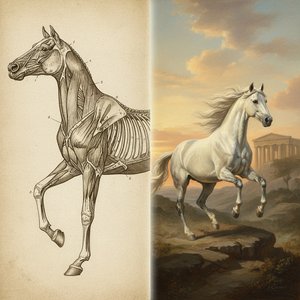
George Stubbs: Anatomische Präzision und romantische Vision in der britischen Kunst des 18. Jahrhunderts
Entdecken Sie das faszinierende Werk von George Stubbs – ein Meister der Tierporträts und Pionier anatomischer Studien. Erfahren Sie mehr über seine einzigartige Verbindung von Kunst und Wissenschaft in unserer Expertenanalyse.

Animalia: Die bleibende Präsenz von Tieren in Kunst und Innenarchitektur
Entdecken Sie die faszinierende Welt der Animalia! Von historischen Tierdarstellungen bis zur modernen Innenarchitektur – wir bieten Expertise, hochwertige Reproduktionen & Kunstberatung.

Georges Seurat: Die 25 Meisterwerke des Pointillismus für Ihr Zuhause | AllPaintingsStore
Entdecken Sie die 25 ikonischsten Meisterwerke von Georges Seurat! Tauchen Sie ein in die Welt des Pointillismus, der Farbtheorie und des Impressionismus. Hochwertige Kunst reproduzieren für Ihr Zuhause – jetzt auf AllPaintingsStore.com!

Meister des Kubismus: Die 25 bedeutendsten Kunstwerke von Georges Braque
Entdecken Sie die 25 Meisterwerke von Georges Braque und den Kubismus. Erleben Sie Weltklasse-Reproduktionen auf AllPaintingsStore.com.


