In echtem Maßstab anzeigen
 Versenden
 Teilen
 Details anzeigen

 Herunterladen
 Ähnliche Objekte
 Röntgenaufnahme
 Diashow starten
Ludorff

 Mehr anzeigen
Giclée / Kunstdruck
Giclée- oder Leinwanddruck in Museumsqualität mit schneller Produktion und flexiblen Veredelungsoptionen. ( Zur handgemalten Reproduktion wechseln Zum Bild wechseln)




P118B $10

P118H $10

P118W $10

P438Z $10

P508JH $12

P508YH $12

P805H $10

P805Z $10

P919BZ $10

P919G $10

P919XJ $10

P959ZH $10

P968JZ $12

W106C $8

W218G $10

W218JH $8

W218Y $10

W307PJ $10

W316G $10

W316PJ $8

W316Y $10

W398PJ $8

W4111J $10

W500HY $15

W500JH $15

W692G $12

W849H $8

W940BG $15

W953PJ $8




Wählen Sie aus unseren vordefinierten Formaten, die den ursprünglichen Proportionen des Kunstwerks entsprechen.

Sie können Ihre eigenen Maße eingeben, um ein bestimmtes Format oder einen speziellen Platz einzupassen. Wenn das von Ihnen gewählte Format nicht den Proportionen des Originalbildes entspricht, werden wir das Kunstwerk entweder beschneiden oder das Bild mit einem gespiegelten oder einfarbigen Rand erweitern. Ein digitaler Entwurf wird Ihnen zur Genehmigung zugesandt, bevor die Produktion beginnt.
Bitte beachten Sie, dass die Vorschau auf dem Bildschirm nicht den tatsächlichen Zuschnitt oder die Erweiterung widerspiegelt. Nur der Entwurf zeigt die endgültige Komposition präzise an.
Obwohl Sondermaße verfügbar sind, empfehlen wir die Auswahl eines Maßes aus der vordefinierten Liste, um die ursprünglichen Proportionen zu bewahren.
Weltweiter Versand () innerhalb von 2 Wochen statt der üblichen 4/5 Wochen. (5 August)

Kostenloser weltweiter Expressversand

Hochwertige Leinenleinwand

Vollumfänglicher Versicherungsschutz beim Versand

Zollgebühren-Rückerstattungsgarantie

Garantie für exakte Farbtreue

60 Tage Rückgaberecht (nur bei Mängeln)

100% Geld-zurück-Garantie

Angebot für Mengenrabatt
 Die Glasoption ist nur in Größen unter 110 cm verfügbar.

Ludorff
Giclée / Kunstdruck
Format der Reproduktion
-


Gesamtpreis
$ 64
Objektbeschreibung
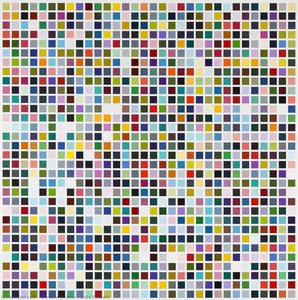
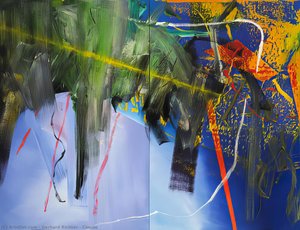
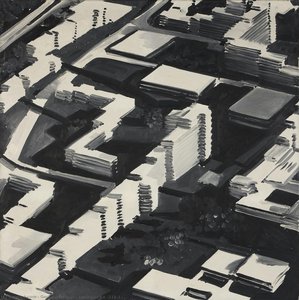
Ludorff – A Fragmented Landscape of Color
Gerhard Richter’s “Ludorff,” a striking abstract expressionist painting, presents an arresting visual experience—a seemingly simple arrangement of squares bursting with vibrant hues that belies a complex exploration of memory and perception. Created in 1968, this piece encapsulates the spirit of Richter's formative years amidst the turbulent backdrop of post-war Germany, mirroring his own internal struggle to reconcile idyllic recollections with the realities of division.
- Style: Abstract Expressionism – Richter’s signature style prioritizes spontaneity and emotional resonance over representational accuracy. He eschews meticulous detail, opting instead for a textured surface achieved through layering and blending techniques.
- Technique: Richter employs a method he termed “Photographic Painting,” where he begins with photographic prints as inspiration. These prints are then overlaid with layers of pigment—often applied in a semi-transparent manner—creating an illusionistic effect that simultaneously references and transcends the original image. The resulting surface is characterized by subtle variations in color and tone, capturing the ephemeral quality of visual experience.
- Color Palette: Dominated by shades of orange, punctuated by splashes of yellow, blue, green, pink, purple and red, “Ludorff” embodies Richter’s fascination with color theory. The artist meticulously charts color relationships—complementary hues juxtaposed against analogous tones—to generate a harmonious yet dynamic composition.
The painting's visual impact is undeniably captivating. However, its significance extends beyond mere aesthetic pleasure. Richter himself has described “Ludorff” as representing "a landscape of memory," reflecting his preoccupation with capturing fleeting impressions and reconstructing past experiences. The fragmented squares symbolize the fractured nature of recollection—the impossibility of perfectly recreating a moment in time—while simultaneously conveying a sense of openness and possibility.
Considered within the broader context of Richter’s oeuvre, “Ludorff” stands as a cornerstone of his exploration into photographic representation and its limitations. It exemplifies his commitment to confronting existential questions about identity and perception, mirroring the anxieties prevalent during the Cold War era. This artwork continues to inspire dialogue about art's role in conveying emotion and capturing the elusive essence of human experience.
- Historical Context: Richter’s work emerged during a period marked by profound social and political upheaval—the division of Germany following World War II, the rise of consumer culture, and the anxieties surrounding nuclear proliferation. His artistic practice reflects these concerns, questioning established conventions and challenging viewers to reconsider their understanding of reality.
- Symbolism: The squares themselves serve as potent symbols – representing individual fragments of experience, mirroring the fractured landscape of post-war Germany, and hinting at the elusive nature of memory itself. Richter’s deliberate use of color contributes to this symbolic dimension, conveying emotions and moods that transcend literal depiction.
Ähnliche Kunstwerke




Künstlerbiografie
**frühes Leben und Ausbildung**
Gerhard Richter, ein renommierter deutscher visueller Künstler, wurde am 9. Februar 1932 in einem Krankenhaus in Dresden-Neustadt, Dresden, Sachsen, geboren. Er wuchs in Reichenau, Niederschlesien (heute Bogatynia, Polen), und Waltersdorf (Zittauer Gebirge) im oberen Lusatianenländischen Land auf. Richards Vater, Horst Richter, war Mathematik- und Physikstudent an der Technischen Hochschule in Dresden.**Künstlerische Karriere**
Richter begann seine künstlerische Reise als Geselle für einen Schaukunstmaler und studierte später an der Dresdner Kunstakademie. Seine frühen Arbeiten wurden von den Stilen von Picasso und Jean Arp beeinflusst, was sich in seinen abstrakten und fotorealistischen Gemälden zeigt. Im Jahr 1957 arbeitete Richter als Meisterschüler an der Akademie und nahm Aufträge für das damalige Staatliche Gebiet der DDR entgegen.**Bekannte Werke und Leistungen**
* Abstraktes Bild (2012) erzielte einen Rekordverkaufspreis für ein Gemälde eines lebenden Künstlers von 34 Millionen Dollar (£21 Millionen). * Domplatz, Mailand (Kathedralplatz, Mailand) (1968) wurde in New York für 37,1 Millionen Dollar (£24,4 Millionen) verkauft. * Abstraktes Bild (2015) wurde bei der Sotheby's Contemporary Evening Sale für 44,52 Millionen Dollar (£30,4 Millionen) versteigert.**Künstlerischer Stil und Bewegung**
Richards Werke zeichnen sich durch ihre Vielseitigkeit aus, die abstrakte und fotorealistische Stile verbindet. Zusammen mit Sigmar Polke führte er den Begriff Kapitalistischer Realismus, einen Anti-Stil der Kunst, der die bildliche Kürze des Werbebildes übernimmt.**Privatleben**
Richter heiratete Marianne Eufinger im Jahr 1957 und hatte eine Tochter. Später heiratete er Isa Genzken im Jahr 1982 und Sabine Moritz im Jahr 1995, mit der er zwei Söhne und eine Tochter hatte. **Hinweis:** Dieser Artikel basiert auf den bereitgestellten Informationen und ist möglicherweise keine umfassende Biografie. Für detailliertere Informationen besuchen Sie bitte die verlinkten Quellen.
Gerhard Richter
1932 - , Deutschland
Eckdaten zum Künstler
- Bemerkenswerte Werke:
- Abstraktes Bild (2012)
- Domplatz, Mailand (1968)
- S. mit Kind (1995)
- Geburtsdatum: 09. Februar 1932
- Geburtsort (Stadt, Land): Dresden, Deutschland
- Künstler Oder Bewegungen, Die Von Diesem Künstler Beeinflusst Wurden: ['Zeitgenössische Maler']
- Künstler, Die Diesen Künstler Beeinflussten:
- Pablo Picasso
- Jean Arp
- Künstlerische Bewegung/Stil:
- Abstrakte Kunst
- Fotorealismus
- Nationalität: Deutsch
- Vollständiger Name: Gerhard Richter
Verwandte Artikel

Geometrische Abstraktion: Die 10 Meisterwerke, die Kunstgeschichte prägten | AllPaintingsStore.com
Entdecken Sie die 10 Meisterwerke der geometrischen Abstraktion! Von Kandinsky bis Mondrian – erleben Sie die Geschichte, Farben & Formen dieser revolutionären Kunstrichtung. Hochwertige Kunstreproduktionen auf AllPaintingsStore.com

Die Sublimität der Farbe: Mark Rothkos emotionale Landschaften des Abstrakten Expressionismus
Entdecken Sie die tiefgründige Welt von Mark Rothko und dem Abstrakten Expressionismus. Expertenanalyse der Farbfeldmalerei, ihre emotionale Tiefe & bleibenden Einfluss. Jetzt lesen!

The Resonance of Boldness: Exploring Emotional Impact & Artistic Techniques in Color-Dominant Works
Explore the powerful impact of color in art history! Discover how master artists evoked emotion & built movements through bold palettes. Expert insights for collectors – AllPaintingsStore.

The Enduring Appeal of Geometric Patterns in Art: A Historical & Contemporary Exploration
Explore the captivating history of geometric abstraction in art, from ancient roots to contemporary masters. Expert insights for collectors & enthusiasts. Discover key artists, movements & investment potential.
Beatrice Parsons: A Study in Abstract Expressionism & the Poetics of Color Field Painting
Explore the captivating world of Beatrice Parsons, a pioneering British abstract expressionist. Discover her journey from garden watercolors to evocative color field paintings and learn about her place within art history.