


 Vorschau anzeigen
 Versenden
 Teilen
 Details anzeigen
 Leitfaden

 Herunterladen
 Ähnliche Objekte
 Röntgenaufnahme
 Diashow
 Q&A
Q&A Statistiken
Mann Nackt


 Weiterlesen
Giclée / Kunstdruck
Giclée- oder Leinwanddruck in Museumsqualität mit schneller Produktion und flexiblen Veredelungsoptionen. ( Handgemalte Reproduktion bestellen Zum digitalen Bild wechseln)




P118B €10

P118H €10

P118W €10

P438Z €10

P508JH €12

P508YH €12

P805H €10

P805Z €10

P919BZ €10

P919G €10

P919XJ €10

P959ZH €10

P968JZ €12

W106C €8

W218G €10

W218JH €8

W218Y €10

W307PJ €10

W316G €10

W316PJ €8

W316Y €10

W398PJ €8

W4111J €10

W500HY €15

W500JH €15

W692G €12

W849H €8

W940BG €15

W953PJ €8




Wählen Sie aus unseren vordefinierten Formaten, die den ursprünglichen Proportionen des Kunstwerks entsprechen.

Geben Sie die benötigte Breite und Höhe an, damit der Druck perfekt in Ihren Rahmen oder an Ihre Wand passt. Ein Druck kann nur beschnitten, aber niemals größer als das Originalbild angefertigt werden; daher verliert ein Format mit anderen Proportionen einen Teil des Bildes. Wir senden Ihnen ein digitales Mockup zur Freigabe, bevor wir den Druck ausführen. Das auf dieser Seite gezeigte Bild zeigt nicht den tatsächlichen Beschnitt – dies ist nur im Mockup ersichtlich.
Weltweiter Versand () innerhalb von 2 Wochen statt der üblichen 4/5 Wochen. (29 Oktober)

Kostenloser weltweiter Expressversand

Hochwertige Leinenleinwand

Umfassender Versicherungsschutz beim Versand

Zollgebühren-Rückerstattungsgarantie

Garantie für exakte Farbtreue

100 Tage Rückgaberecht (nur bei Mängeln)

100% Geld-zurück-Garantie

Mengenrabatt verfügbar
 Die Glasoption ist nur für Größen unter 110 cm verfügbar.

Mann Nackt
Giclée / Kunstdruck
Format der Reproduktion
-


Endpreis
€ 56
Gustav Klimt’s Early Exploration of Form and Emotion: “Male Nude” (1883)
The year 1883 marks a pivotal moment in the artistic trajectory of Gustav Klimt, a period defined by rigorous academic training interwoven with the nascent exploration of his signature style. “Male Nude,” a remarkably intimate study housed within the collections of AllPaintingsStore.com and other prestigious institutions like The Art Institute of Chicago, offers a compelling glimpse into this formative phase. It’s not merely a depiction of the human form; rather, it's an early manifestation of Klimt’s burgeoning interest in capturing psychological depth alongside formal precision – a characteristic that would later define his groundbreaking oeuvre. This painting stands as a testament to the influence of the Imperial Royal Arts and Crafts School in Vienna, where Klimt honed his technical skills under Ferdinand Laufberger, yet simultaneously reveals a desire to move beyond simple imitation towards a more personal and expressive language.
The composition itself is deceptively straightforward. A male nude, positioned against a neutral backdrop, occupies the central space. His posture – slightly turned to the right, with his hands resting on his head – exudes a quiet contemplation, a subtle vulnerability that belies the inherent strength of the figure. Notably, he’s engaged in an action: scratching or touching his face, a gesture laden with ambiguity. Is it an expression of discomfort, frustration, or perhaps simply a moment of self-awareness? Klimt masterfully utilizes this small detail to draw the viewer into the subject's internal world. The placement of several boxes nearby adds another layer of intrigue; they could represent burdens, anxieties, or even the tools of his artistic craft – a visual metaphor for the challenges and rewards of creative endeavor.
Academic Roots and Emerging Style
Klimt’s early work was undeniably shaped by the academic traditions he encountered at the Vienna Kunstgewerbeschule. The influence of the prevailing teaching methods is evident in the careful rendering of musculature, the precise execution of anatomical details, and the overall adherence to classical principles of composition. However, even within this framework, Klimt demonstrates a remarkable sensitivity to light and shadow, creating a subtle sense of volume and depth. The use of oil paint on canvas is typical for the period, allowing for rich colors and nuanced textures – though Klimt’s palette here leans towards muted tones, suggesting a deliberate restraint that would later explode into the vibrant golds and patterns characteristic of his mature style.
Crucially, this painting represents a crucial bridge between Klimt's formal training and his eventual departure from academic conventions. While he respected the technical skills imparted by Laufberger, he was clearly driven to explore new avenues of expression. The subtle psychological nuances present in “Male Nude” – the gesture of the hand, the ambiguous facial expression – foreshadow the emotional intensity that would become a hallmark of Klimt’s later works. It's a deliberate move away from purely representational art towards something more subjective and evocative.
Symbolism and Emotional Resonance
The painting is rich in symbolic potential, though its meaning remains open to interpretation. The act of scratching the face could be seen as an attempt to erase or conceal emotions – perhaps a struggle with identity or self-doubt. The boxes, positioned close together, might symbolize confinement, restriction, or the weight of societal expectations. Klimt’s use of light and shadow further enhances this sense of ambiguity, creating a mood that is both melancholic and introspective.
Considering Klimt's biography – his upbringing marked by financial instability and frequent moves – it’s not surprising that his art often grapples with themes of vulnerability, isolation, and the search for meaning. “Male Nude” embodies these concerns beautifully, offering a poignant meditation on the human condition. It is a work that invites contemplation, prompting viewers to consider the complexities of emotion and the enduring power of the human form.
A Reproduction Worth Admiring
AllPaintingsStore.com offers meticulously crafted hand-painted reproductions of “Male Nude,” ensuring that you can experience Klimt’s masterpiece in stunning detail and vibrant color. Our skilled artists replicate the nuances of Klimt's brushwork, capturing the subtle textures and atmospheric effects with remarkable accuracy. Whether displayed as a statement piece in your home or office, or as an investment in a significant work of art history, this reproduction provides a tangible connection to one of Klimt’s earliest and most compelling explorations of form and emotion. Explore our collection today and bring this evocative image into your space.
Fragen & Antworten
Wie lässt sich der urheberrechtliche Status von "Mann Nackt" von Gustav Klimt erklären?
"Mann Nackt" von Gustav Klimt ist gemeinfrei – das Urheberrecht ist abgelaufen. Die Urheberrechtsfristen werden ab dem Todesjahr des Künstlers berechnet, und Gustav Klimt verstarb im Jahr 1918.
Welche Platzierung passt zum Format von "Mann Nackt" von Gustav Klimt?
Format (Hochformat) und der empfohlene Raum (Wohnbereich) sind die beiden Platzierungshinweise für "Mann Nackt" von Gustav Klimt.
Wann wurde "Mann Nackt" geschaffen und welcher Stilrichtung lässt es sich zuordnen?
"Mann Nackt" entstand im Jahr 1883 im Rahmen der Vienna Secession-Bewegung.
Ähnliche Kunstwerke


Künstlerbiografie
Gustav Klimt: Leben, Kunst und Vermächtnis
Frühes Leben und Ausbildung (1862-1883)
- Geboren am 14. Juli 1862 in Baumgarten, nahe Wien, Österreich.
- Sohn von Ernst Klimt, einem Goldschmied, und Anna Finster. Die Familie sah sich mit finanziellen Schwierigkeiten konfrontiert, was zu häufigen Umzügen innerhalb Wiens führte.
- Früben Talent: Zeigte schon früh zeichnerische Fähigkeiten, die durch den Beruf seines Vaters und familiäre künstlerische Neigungen gefördert wurden.
- Er studierte 1876 an der Wiener Kunstgewerbeschule (Schule für Angewandte Künste) Architekturmalerei bei Ferdinand Laufberger. Dies bot eine solide technische Ausbildung, aber auch die Exposition gegenüber traditionellen akademischen Stilen.
- Im Jahr 1877 gründete er mit seinem Bruder Ernst und Franz von Matsch die „Gesellschaft der Künstler“ und sichere Aufträge für dekorative Wandmalereien und Decken.
Die Gesellschaft der Künstler und Früher Erfolg (1883-1900)
- Arbeitete weiterhin mit der „Gesellschaft der Künstler“ nach dem Verlassen der Kunstgewerbeschule und erhielt Anerkennung für dekorative Projekte wie Wandmalereien im Theater von Karlsbad und Treppenhäuser im Burgtheater in Wien.
- Tragte zur Dekoration des Kunsthistorischen Museums in Wien bei, demonstrierte technische Fertigkeit, deutete aber auch auf ein Verlangen hin, künstlerische Zwänge zu brechen.
Die Decke der Universität Wien und Kontroversen (1900)
- Erfuhr um 1900 eine prestigeträchtige Beauftragung, Deckenmalereien für den Großen Saal der Universität Wien zu malen, die Philosophie, Jurisprudenz und Theologie darstellten.
- Kontroverse Werke: Die Wandmalereien, insbesondere *Philosophie*, wurden von Kritikern als provokativ und sogar pornografisch angesehen, was zu öffentlicher Empörung führte.
- Klimt lehnte nach der Kontroverse weitere öffentliche Aufträge ab und markierte damit einen Wendepunkt in seiner Karriere.
Die „Goldene Phase“ und künstlerische Reife (1901-1918)
- Betrat seine „goldene Phase“, die durch den luxuriösen Einsatz von Blattgold inspiriert vom byzantinischen Mosaik und mittelalterlichen illuminierten Handschriften gekennzeichnet war.
- Wichtige Werke: *Der Kuss* (1907-1908) veranschaulicht den opulenten Stil und die symbolische Fülle dieser Ära.
- *Porträts:* Porträts wie *Portrait of Adele Bloch-Bauer I* (1907) wurden sehr begehrt und zeigten seine Fähigkeit, sowohl physische Erscheinung als auch psychologische Tiefe einzufangen.
- Integriert zunehmend dekorative Elemente in Kompositionen und verwischte die Grenzen zwischen Malerei und Ornamentik.
Einflüsse und künstlerischer Stil
- Hans Makart: Frühe Bewunderung für den führenden Historienmaler Wiens beeinflusste seine anfängliche akademische Ausbildung.
- Japanische Kunst (Japonismus): Wurde tief von japanischen Holzschnitten beeinflusst, insbesondere durch ihre flache Perspektive, dekorative Muster und Betonung der Linie.
- Byzantinische Kunst: Der Einsatz von Blattgold und reicher Ornamentik in byzantinischen Mosaiken hatte einen tiefgreifenden Einfluss auf seine „goldene Phase.”
- Stilmerkmale: Ein einzigartiges Zusammenspiel von Symbolismus, Jugendstil und dekorativen Elementen; kräftige Farben, komplizierte Muster und sinnliche Darstellungen der weiblichen Form.
Späte Jahre und Vermächtnis (1918)
- Malte weiterhin produktiv bis zu seinem Tod am 6. Februar 1918 durch einen Schlaganfall.
- Seine späteren Werke erforschten abstraktere Formen und Landschaften und zeigten eine kontinuierliche künstlerische Entwicklung.
- Historische Bedeutung: Wird als eine der wichtigsten Figuren in der österreichischen Kunstgeschichte und als einer führenden Vertreter des Wiener Secessions anerkannt. Seine Gemälde erzielen hohe Preise auf Auktionen, und sein Einfluss ist in der zeitgenössischen Kunst und im Design zu sehen.
- Das Kunsthistorische Museum Wien beherbergt eine bedeutende Sammlung seiner Werke und sichert so das Vermächtnis, das weiterhin inspiriert.
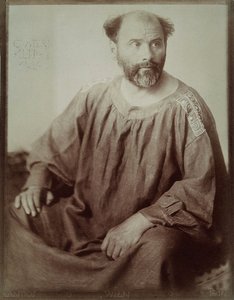
Gustav Klimt
1862 - 1918 , Österreich
Kurzinfos
- Beeinflusste Künstler: ['Egon Schiele']
- Bemerkenswerte Werke:
- Der Kuss
- Adele Bloch-Bauer I
- Geburtsdatum: 1862-07-14
- Geburtsort: Baumgarten, Österreich
- Künstlerische Einflüsse:
- Hans Makart
- Japanische Kunst
- Byzantinische Kunst
- Künstlerische Richtung: Wiener Secession
- Nationalität: Österreichisch
- Todatum: 1918-02-06
- Vollständiger Name: Gustav Klimt
Ähnliche Artikel

The Vienna Secession: A Golden Revolution of Modernism and the Legacy of Gustav Klimt
Explore the profound impact of the Vienna Secession movement. Discover how visionaries like Gustav Klimt revolutionized modern art through symbolism, gold leaf, and the concept of Gesamtkunstwerk in this expert-led historical guide.

The Vienna Secession: A Rebellion of Form & Spirit in Fin-de-Siècle Art
Discover the revolutionary Vienna Secession art movement! Explore Klimt, Olbrich & more. Learn about its history, characteristics & lasting influence on modern art. High-quality reproductions available.

Gustav Klimt: Eine goldene Ära der Sinnlichkeit und Symbolik in der Wiener Kunst
Entdecken Sie Gustav Klimts faszinierende Welt! Erfahren Sie mehr über die Wiener Secession, seine sinnlichen Porträts und die 'Goldene Phase'. Expertenwissen & hochwertige Reproduktionen auf AllPaintingsStore.
Goldene Meisterwerke: Die 25 besten Kunstwerke von Gustav Klimt
Erleben Sie Klimts goldene Meisterwerke der Wiener Secession. Entdecken Sie alle Highlights auf AllPaintingsStore.com.

Art Nouveau Meisterwerke: Die 10 prägendsten Kunstwerke für Ihr Zuhause |
Entdecken Sie die 10 prägendsten Art Nouveau Meisterwerke! Von Mucha bis Klimt – erfahren Sie die Geschichten hinter ikonischen Gemälde & dekorativer Kunst. Hochwertige Kunstdrucke online kaufen auf


