


 In echtem Maßstab anzeigen
 Versenden als Grußkarte
 Teilen
 Details anzeigen
 Leitfaden öffnen

 Herunterladen
 Ähnliche Objekte
 Röntgenaufnahme
 Diashow
 Besucherstatistiken
Messaline

 Mehr anzeigen
Giclée / Kunstdruck
Giclée- oder Leinwanddruck in Museumsqualität mit schneller Produktion und flexiblen Veredelungsoptionen. ( Handgemalte Reproduktion kaufen Zum digitalen Bild wechseln)




P118B €10

P118H €10

P118W €10

P438Z €10

P508JH €12

P508YH €12

P805H €10

P805Z €10

P919BZ €10

P919G €10

P919XJ €10

P959ZH €10

P968JZ €12

W106C €8

W218G €10

W218JH €8

W218Y €10

W307PJ €10

W316G €10

W316PJ €8

W316Y €10

W398PJ €8

W4111J €10

W500HY €15

W500JH €15

W692G €12

W849H €8

W940BG €15

W953PJ €8




Wählen Sie aus unseren vordefinierten Formaten, die den ursprünglichen Proportionen des Kunstwerks entsprechen.

Sie können Ihre eigenen Maße eingeben, um ein bestimmtes Format oder einen speziellen Platz einzupassen. Wenn das von Ihnen gewählte Format nicht den Proportionen des Originalbildes entspricht, werden wir das Kunstwerk entweder beschneiden oder das Bild mit einem gespiegelten oder einfarbigen Rand erweitern. Ein digitaler Entwurf wird Ihnen zur Genehmigung zugesandt, bevor die Produktion beginnt.
Bitte beachten Sie, dass die Vorschau auf dem Bildschirm nicht den tatsächlichen Zuschnitt oder die Erweiterung widerspiegelt. Nur der Entwurf zeigt die endgültige Komposition präzise an.
Obwohl Sondermaße verfügbar sind, empfehlen wir die Auswahl eines Maßes aus der vordefinierten Liste, um die ursprünglichen Proportionen zu bewahren.
Weltweiter Versand () innerhalb von 2 Wochen statt der üblichen 4/5 Wochen. (11 Oktober)

Kostenloser weltweiter Expressversand

Hochwertige Leinenleinwand

Vollständiger Versicherungsschutz beim Versand

Zollgebühren-Rückerstattungsgarantie

Garantie für exakte Farbtreue

100-tägiges Rückgaberecht (nur bei Mängeln)

100% Geld-zurück-Garantie

Angebot für Mengenrabatt
 Die Glasoption ist nur für Größen unter 110 cm verfügbar.

Messaline
Giclée / Kunstdruck
Format der Reproduktion
-


Gesamtpreis
€ 55
A Vision of Divine Vulnerability: Exploring Gustave Moreau’s “Messaline”
- Subject Matter & Narrative:
- Style & Technique:
- Historical Context & Symbolism:
- Emotional Resonance & Artistic Legacy:
Subject Matter & Narrative:
Gustave Moreau’s “Messaline” presents a captivating tableau centered around the Roman goddess Venus, portrayed as being cradled by two figures—a masterful depiction of feminine vulnerability juxtaposed against masculine strength. The scene unfolds within an opulent interior setting, hinting at mythological narratives and elevating Venus to a position of regal importance. More than just a portrait, it’s a carefully constructed allegory designed to provoke contemplation on themes of beauty, desire, and the sacred feminine. The inclusion of a knife-bearing figure adds an element of tension and intrigue, suggesting potential danger lurking beneath the surface of idealized serenity—a subtle disruption that underscores the complexities inherent in portraying divine figures.Style & Technique:
Moreau’s artistic approach firmly establishes him as a cornerstone of Symbolist painting. Rejecting the objective realism championed by his contemporaries, he embraced a deliberately stylized aesthetic characterized by luminous color palettes and intricate ornamentation. The painting utilizes tempera on canvas—a technique favored for its durability and ability to achieve rich hues—allowing Moreau to meticulously build up layers of pigment to create textures that mimic marble and drapery. His meticulous attention to detail extends beyond mere representation; he employs symbolic motifs and decorative patterns to imbue the artwork with spiritual significance, mirroring the influence of Byzantine iconography. The artist’s masterful manipulation of light and shadow contributes significantly to the painting's ethereal atmosphere, enhancing its dramatic impact and conveying a profound sense of mystery.Historical Context & Symbolism:
“Messaline” emerged during the Symbolist movement—a reaction against Impressionism’s focus on sensory experience and an embrace of psychological introspection. Influenced by Nietzschean philosophy and Wagnerian opera, Moreau sought to express inner emotions and spiritual truths through symbolic imagery rather than literal depiction. Venus embodies ideals of beauty and purity, yet her vulnerability is countered by the protective embrace of the men—representing masculine guardianship and divine grace. The knife symbolizes discord or potential threat, highlighting the precarious balance between harmony and conflict within mythological narratives. Moreau’s deliberate use of decorative elements draws inspiration from Byzantine art, reflecting a broader interest in exploring spiritual symbolism and conveying profound emotional depth.Emotional Resonance & Artistic Legacy:
Moreau's “Messaline” transcends mere visual representation; it evokes a powerful emotional response rooted in its exploration of themes like desire, vulnerability, and divine grace. The painting’s luminous colors and intricate ornamentation captivate the viewer’s senses, transporting them to a realm of mythic grandeur. Its enduring appeal lies in its ability to resonate with audiences across generations—a testament to Moreau's profound understanding of human psychology and his unwavering commitment to artistic innovation. Today, reproductions of “Messaline” continue to inspire artists and designers alike, serving as a reminder that true beauty resides not only in outward appearance but also in the depth of inner contemplation and symbolic expression.Fragen & Antworten
Welche Leuchtkraft weist "Messaline" von Gustave Moreau auf?
Die für "Messaline" von Gustave Moreau aufgezeichnete Luminanz beträgt Soft Shadow.
In welche Farbtönung tendiert "Messaline"?
"Messaline" tendiert zu einem Amber to Saffron Farbton.
Wer verkauft handgemalte Kopien von "Messaline" von Gustave Moreau?
Eine handgemalte Reproduktion von "Messaline" von Gustave Moreau können Sie direkt auf diese Seite bestellen: eine handgemalte Ölreproduktion auf Leinenleinwand, auf Bestellung gefertigt.
Ist "Messaline" als Kunstdruck erhältlich?
"Messaline" ist als ein Fine Art Print auf Baumwollkanvas oder Archiv-Leinwandpapier erhältlich. Bestellungen können in der von Ihnen gewünschten Größe auf diese Seite aufgegeben werden.
Wer hat "Messaline" erschaffen?
"Messaline" wird Gustave Moreau zugeschrieben.
Wie kann ich eine Reproduktion von "Messaline" von Gustave Moreau in der Vorschau ansehen?
Um eine Reproduktion von "Messaline" von Gustave Moreau in der Vorschau zu sehen, öffnen Sie die Vorschau-Seite des Kunstwerks.
Aus welchem Land stammt das Symbolist Painting-Werk „Messaline"]?
"Messaline" wurde von Gustave Moreau geschaffen, der in Frankreich geboren wurde, und ist der Symbolist Painting-Bewegung zuzuordnen. Die Herkunft des Künstlers verbindet das Werk mit der Symbolist Painting, wie sie von Künstlern aus Frankreich praktiziert wird.
Ähnliche Kunstwerke


Biografie des Künstlers
**frühes Leben und Ausbildung**
Gustav Moreau, ein französischer Künstler, wurde am 6. April 1826 in Paris geboren. Er erhielt eine traditionelle akademische Ausbildung in der Malerei an der École des Beaux-Arts und zeigte von frühester Kindheit eine Begabung für Zeichnen.**Die Symbolismusbewegung**
Moreaus Werk, das durch allegorische und mythologische Themen geprägt ist, machte ihn zu einem führenden Symbolistenmaler, insbesondere in den 1890er Jahren. Seine Kunst (und der Symbolismus im Allgemeinen) verlor an Beliebtheit, wurde aber seit den 1960er Jahren neu bewertet und Moreau gilt heute als einer der wichtigsten Symbolistenmaler.**Bekannte Werke und Ausstellungen**
* Salomé im Gefängnis (Gemälde von 'Gustav Moreau') ist ein bemerkenswertes Beispiel für seine Arbeit und zeigt seine Meisterschaft im Symbolismus. * Das Selbstporträt (Gemälde von 'Gustav Moreau') ist eine weitere kraftvolle Darstellung des Künstlers selbst.**Musée Gustave Moreau**
Das Nationalmuseum Gustave Moreau (Musée Gustave Moreau Paris, Frankreich) in Paris ist dem Werk Moreaus gewidmet und beherbergt über 1.200 Gemälde, Aquarelle und Zeichnungen. Das Museum ist ein Zeugnis seines künstlerischen Erbes.**Vermächtnis und Einfluss**
Moreaus Einfluss auf die Symbolismusbewegung ist unbestreitbar. Er lehrte an der École des Beaux-Arts und beeinflusste namhafte Künstler wie Henri Matisse und Georges Rouault. Seine zurückgezogene Art hat seinen Einfluss auf die Kunstwelt nicht gemindert.- Entdecken Sie mehr über das Leben und Werk von Gustav Moreau auf AllPaintingsStore.com
- Erkunden Sie das Nationalmuseum Gustave Moreau und seine beeindruckende Sammlung von Kunstwerken auf Musée Gustave Moreau Paris, Frankreich
- Erfahren Sie mehr über die Symbolismusbewegung und ihre Bedeutung für die Kunstgeschichte auf die Symbolismus-Kunstbewegung
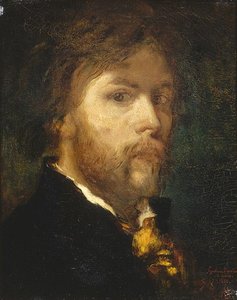
Gustave Moreau
1826 - 1898 , Frankreich
Eckdaten zum Künstler
- Beeinflusste Künstler:
- Henri Matisse
- Georges Rouault
- Bemerkenswerte Werke:
- Salomé im Gefängnis
- Selbstporträt
- Jupiter und Semele
- Orpheus
- Die Erscheinung
- Geburtsdatum: 6. April 1826
- Geburtsort: Paris, Frankreich
- Künstlerische Einflüsse:
- Eugène Delacroix
- Michelangelo
- Leonardo da Vinci
- Künstlerischer Stil: Symbolismus
- Nationalität: Französisch
- Sterbedatum: 1898
- Vollständiger Name: Gustave Moreau
Verwandte Artikel

Öl auf Leinwand: Eine historische und technische Erkundung eines zeitlosen künstlerischen Mediums
Entdecken Sie die faszinierende Welt der Ölmalerei! Von historischen Techniken bis zur modernen Anwendung – wir bieten Expertenwissen, Restaurierungstipps und hochwertige Reproduktionen. Jetzt informieren!

Gustave Moreau: Der Enigmatische Visionär des Symbolismus und Wegbereiter moderner Fantasy-Kunst
Entdecken Sie das faszinierende Werk Gustave Moreaus, des wichtigsten Vertreters des Symbolismus! Analysen, Biografien und Einblicke in seine mythologischen Gemälde. Jetzt lesen!

The Enduring Legacy of Oil on Canvas: Technique, History & Aesthetic Impact
Explore the rich history & techniques of oil painting – from Renaissance masters to Impressionism. Discover pigments, layering methods, and why this timeless medium endures. Expert insights for artists & art enthusiasts.

The Enduring Legacy of Classicism: Principles, Evolution & Influence in Western Art
Explore the enduring legacy of Classicism in Western art! Discover its historical context, key principles, iconic masterpieces & lasting influence. Learn about Renaissance and Neoclassical movements with AllPaintingsStore.

Timeless Elegance: The Ultimate Buyer's Guide to Choosing Classical Portraits for Sophisticated Interiors
Discover how to select the perfect classical portrait for your home. Our expert guide explores matching art styles to interiors, choosing between hand-painted oils and Giclée prints, and transforming personal photos into timeless masterpieces with professional artistry.


