


 Vorschau anzeigen
 Versenden
 Teilen
 Details anzeigen
 Leitfaden

 Herunterladen
 Ähnliche Objekte
 Röntgenaufnahme
 Diashow
 Statistiken
The Five Senses
 Oil
Oil- WallArt
- Baroque
 1638
1638- Early Modern
 55.0 x 68.0 cm
 Musée Des Beaux
 Weiterlesen
Handgefertigte Ölreproduktion
Handgemaltes Ölgemälde auf Leinwand in Ihrer Wunschgröße und mit Rahmen, auf Bestellung von unseren Künstlern angefertigt. ( Zum Druck wechseln Zum digitalen Bild wechseln)




P118B €10

P118H €10

P118W €10

P438Z €10

P508JH €12

P508YH €12

P805H €10

P805Z €10

P919BZ €10

P919G €10

P919XJ €10

P959ZH €10

P968JZ €12

W106C €8

W218G €10

W218JH €8

W218Y €10

W307PJ €10

W316G €10

W316PJ €8

W316Y €10

W398PJ €8

W4111J €10

W500HY €15

W500JH €15

W692G €12

W849H €8

W940BG €15

W953PJ €8




Wählen Sie aus unseren vordefinierten Formaten, die den ursprünglichen Proportionen des Kunstwerks entsprechen.

Geben Sie die Breite und die Höhe an, die Sie für Ihren Rahmen oder Ihre Wand benötigen. Da dieses Werk handgemalt ist, kann der Künstler bei einer anderen Form etwas mehr um das Bild herum malen oder etwas abschneiden – Sie entscheiden. Wir senden Ihnen ein digitales Mockup zur Freigabe, bevor mit dem Malen begonnen wird. Das auf dieser Seite gezeigte Bild stellt nicht das tatsächliche Ergebnis dar – dies tut nur das Mockup.
Nach der Bestellung wird das AllPaintingsStore.com-Team dem Kunden Anweisungen per E-Mail zusenden und eine Mockup-Vorschau bereitstellen.
Weltweiter Versand () in nur 3 bis 4 Wochen statt der üblichen 5 Wochen. (25 Oktober). Keine Kompromisse bei der Qualität.

Kostenloser weltweiter Expressversand

Hochwertige Leinenleinwand

Umfassender Versicherungsschutz beim Versand

Zollgebühren-Rückerstattungsgarantie

Garantie für exakte Farbtreue

100 Tage Rückgaberecht (nur bei Mängeln)

100% Geld-zurück-Garantie

Mengenrabatt verfügbar
 Die Glasoption ist nur für Größen unter 110 cm verfügbar.

The Five Senses
Art der Reproduktion
Format der Reproduktion
-


Endpreis
€ 226
A Symphony of Sensation: The Artistry of Jacques Linard
In the quiet, contemplative realm of 17th-century French still life, few works capture the delicate interplay between the physical world and the metaphysical soul as masterfully as Jacques Linard’s The Five Senses. Painted in 1638, this exquisite composition serves as more than a mere collection of objects; it is a poetic meditation on human perception. As one gazes upon the canvas, the viewer is invited into a meticulously arranged world where every element—from the soft curve of an orange to the reflective surface of a mirror—whispers a story of beauty and transience. Linard, a pioneer of the French still life tradition, utilizes a rich, Baroque sensibility to transform a simple tabletop scene into a profound sensory experience that resonates across centuries.
The composition is a masterclass in balance and depth. At the heart of the painting lies a bountiful arrangement of fruit, where the vibrant hues of apples and oranges contrast beautifully with the deep, succulent tones of clustered grapes. These organic forms are anchored by the presence of two elegant vases, which provide vertical structure to the scene, while an open book rests upon the table, suggesting the intellectual pursuit of knowledge that accompanied the era's scientific curiosity. The inclusion of a clock hanging subtly on the wall serves as a poignant memento mori, a gentle reminder of the relentless passage of time that governs all living things. This layering of objects creates a rhythmic flow that guides the eye through a landscape of textures and light.
Symbolism and the Mirror of Reality
What elevates this work from a traditional still life to a masterpiece of symbolic depth is Linard’s use of reflection and light. The presence of a mirror within the scene is particularly striking; it does not merely duplicate the fruit arrangement but adds a complex dimension of spatial illusion, pulling the viewer deeper into the painted reality. This technique reflects the 17th-century fascination with optics and the way light defines our understanding of form. Through the mirror, the artist explores the concept of truth versus appearance, inviting us to question the boundaries between what is seen and what is felt.
Every element in The Five Senses acts as a conduit for one of the human senses: the sweetness of the fruit evokes taste, the vibrant colors stir sight, the tactile presence of the textures suggests touch, the implied aroma of ripening fruit hints at smell, and the silent, scholarly atmosphere of the book and clock evokes the internal rhythm of hearing and thought. For the discerning collector or interior designer, this painting offers a sophisticated narrative that transcends simple decoration. It is an intellectual centerpiece, perfect for spaces that value quiet contemplation, classical elegance, and the enduring power of historical storytelling.
A Timeless Addition to the Modern Interior
For those seeking to infuse their living spaces with a sense of history and soulful grace, a high-quality reproduction of Linard’s work provides an unparalleled opportunity. The painting’s palette—rich in earthy tones, warm golds, and deep botanical greens—complements a wide array of interior styles, from the stately grandeur of a traditional library to the muted, organic textures of contemporary minimalist design. Owning such a piece is not merely about displaying art; it is about curating an atmosphere of refinement and intellectual depth.
As a hand-painted tribute to one of France's most significant early still-life masters, this reproduction captures the meticulous brushwork and luminous glazing that define Linard’s original technique. It brings the light of 1638 into the modern home, offering a window into a world where every object holds a secret, and every shadow tells a story of the enduring human experience.
Fragen & Antworten
Wie verbinden sich Kontrast und Harmonie in "The Five Senses"?
Die Farbkomposition von "The Five Senses" von Jacques Linard vereint einen Statement Kontrast mit einer Softly Mixed Palette Harmonie.
Welche emotionale Stimmung vermittelt "The Five Senses" von Jacques Linard?
„The Five Senses“ vermittelt ein Reflective Gefühl. Der emotionale Ton beschreibt den Eindruck, den das Werk hinterlässt.
In welche Phase von Jacques Linards Schaffen lässt sich "The Five Senses" einordnen?
"The Five Senses" repräsentiert die Mature Period von Jacques Linard.
Ähnliche Kunstwerke


Künstlerbiografie
Ein Pionier der französischen Stillleben: Die Welt von Jacques Linard
Jacques Linard, ein Name, der vielleicht nicht so sofort erkennbar ist wie einige seiner barocken Zeitgenossen, nimmt eine zentrale Position in der Entwicklung des Stilllebenmalerischen im Frankreich des 17. Jahrhunderts ein. Geboren in Troyes im Jahr 1597 und gestorben in Paris im Jahr 1645, dokumentierte Linard nicht bloß Objekte; er webte poetische Meditationen über Schönheit, Vergänglichkeit und die aufkeimende wissenschaftliche Neugier seiner Zeit. Seine frühen Jahre sind noch immer von einem gewissen Geheimnis umgeben, wenngleich wir wissen, dass sein Vater, Jehan Linard, ebenfalls Maler in Troyes war, was auf eine anfängliche künstlerische Verankerung im Familienatelier hindeutet. Aufzeichnungen verorten ihn bereits in den 1620er Jahren in Paris, wo er sich schnell als geschickter Künstler etablierte und Teil der pulsierenden Kunstgemeinschaft wurde, die um die Île de la Cité und später Saint-Nicolas-des-Champs gruppiert war. Seine Heirat im Jahr 1626 mit Marguerite Tréhoire, Tochter des Pariser Meistermalers Romain Tréhoire, festigte seine Verbindungen in der Kunstwelt weiter. Bis 1631 hatte er den prestigeträchtigen Titel *Peintre et Valet de Chambre du Roi* unter Ludwig XIII. errungen, eine Position, die ihm sowohl Anerkennung als auch finanzielle Stabilität verschaffte.Von flämischen Wurzeln zu französischer Eleganz
Linards künstlerische Entwicklung war tief von der Tradition des nordeuropäischen Realismus beeinflusst, insbesondere durch die exquisiten Stillleben des Jan Bruegel des Älteren. Die akribische Detailverliebtheit, die leuchtenden Farben und die sorgfältige Anordnung der Objekte, welche Bruegel auszeichnet, sind in Linards frühen Werken deutlich sichtbar. Doch er war kein bloßer Kopist. Er durchdrang seine Gemälde mit einer unverwechselbar französischen Sensibilität – einer verfeinerten Eleganz und Klarheit, die ihn von seinen flämischen Vorgängern abhob. Während die niederländischen Meister gleichzeitig das Stillleben mit ihrem Hyperrealismus und ihrer symbolischen Tiefe revolutionierten, fand Linard eine einzigartige Nische, indem er akribische Beobachtung mit poetischer Grazie verband. Seine Kompositionen zeigen oft ein harmonisches Gleichgewicht von Licht und Schatten und schaffen so eine Atmosphäre stiller Kontemplation. Er gehörte zu den ersten in Frankreich, die thematische Anordnungen um die „Fünf Sinne“ und die „Vier Elemente“ erforschten und alltägliche Gegenstände zu allegorischen Darstellungen der menschlichen Erfahrung wurden.Die Sprache der Objekte: Symbolik und Bedeutung
Linards Stillleben sind weit entfernt von bloßen Abbildungen von Früchten, Blumen oder Muscheln. Sie sind durchzogen von einer reichen Schicht an Symbolik, die die intellektuellen Strömungen seiner Zeit widerspiegelt. Exotische Früchte wie Pfirsiche und Trauben waren nicht nur optisch ansprechend; sie standen für Überfluss, Wohlstand und sogar sinnliches Vergnügen. Muscheln, geschätzt als *mirabilia* – seltene und faszinierende Objekte, gesammelt von Kennern –, evozierten Luxus, Reisen und die Wunder der Natur. Koralle, mit ihrer Ähnlichkeit zu Blutgefäßen, trug religiöse Konnotationen und symbolisierte Christi Opfer sowie Schutz vor dem Bösen. Die Einbeziehung musikalischer Instrumente oder Spielkarten deutete auf die flüchtige Natur irdischer Freuden hin. Seine Gemälde laden Betrachter nicht nur ein, ihre Schönheit zu bewundern, sondern auch tiefere Themen wie Sterblichkeit, Spiritualität und den Lauf der Zeit zu meditieren. Diese subtile, doch tiefgründige Symbolik unterscheidet sein Werk von rein dekorativen Stillleben.Ein bleibendes Vermächtnis: Die Inspiration einer Generation
Obwohl heute nur rund fünfzig Werke eindeutig Linard zugeschrieben werden können, war sein Einfluss auf die französische Malerei beträchtlich. Ihm wird die Pionierarbeit des thematischen Stilllebens in Frankreich zugeschrieben und er inspirierte Künstler wie Louise Moillon, die zu der gefeiertsten weiblichen Stilllebenmalerin ihrer Ära wurde. Linards Fähigkeit, akribischen Realismus mit poetischer Eleganz zu verbinden, setzte einen neuen Maßstab für das Genre. Seine Kompositionen zeichneten sich oft durch zarte Pinselführung und lebendige Farben aus und schufen eine Atmosphäre stiller Kontemplation, die bei zeitgenössischen Zuschauern Anklang fand. Werke wie „Korb voller Blumen“, heute im Louvre zu sehen, demonstrieren seine Beherrschung der Technik und sein ausgeprägtes Auge für Details. Das auf einem Kelch in einem Gemälde eingravierte Gedicht – ein Vers des berühmten chinesischen Dichters Su Shi – offenbart ein breiteres kulturelles Bewusstsein und eine intellektuelle Neugier. Seine Bilder handelten nicht nur davon, was sie darstellten; es ging darum, wie diese Darstellungen mit einer größeren Welt des Wissens, der Schönheit und der Bedeutung verbunden waren. Linards Vermächtnis liegt nicht nur in seinen wunderschönen Schöpfungen, sondern auch in seiner Rolle als Katalysator für den Aufschwung des Stilllebenmalerischen im 17. Jahrhundert in Frankreich.
Jacques Linard
1597 - 1645 , Frankreich
Kurzinfos
- Artistic Movement Or Style: Nordrealismus, Barock
- Artists Or Movements Influenced By This Artist: ['Louise Moillon']
- Artists Who Influenced This Artist: ['Jan Brueghel']
- Date Of Birth: 1597
- Date Of Death: 1645
- Full Name: Jacques Linard
- Nationality: Französisch
- Notable Artworks:
- Korb voller Blumen
- Fünf Sinne
- Vier Elemente
- Place Of Birth: Troyes, Frankreich
Ähnliche Artikel

Simon Vouet: Vom italienischen Barock zum französischen Klassizismus – Eine künstlerische Reise
Entdecken Sie das Leben und Werk von Simon Vouet, dem Pionier des italienischen Barock in Frankreich! Erfahren Sie mehr über seinen künstlerischen Werdegang, seine wichtigsten Gemälde und seinen nachhaltigen Einfluss auf die französische Malerei. Jetzt lesen!
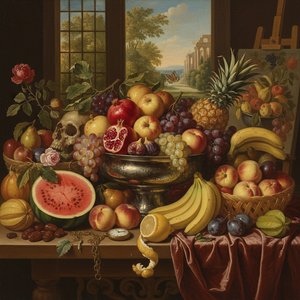
The Bountiful Still Life: Symbolism & Artistic Representation of Fruit Across Art History
Explore the rich history of still life painting & the symbolism of fruit across art movements. Discover masterpieces from Caravaggio to Cézanne with AllPaintingsStore – expert guidance & museum-quality reproductions.

Nature's Bounty: The Timeless Allure and Art History of Fruit Still Life Paintings
Discover the profound beauty of fruit still life paintings. Explore the rich symbolism, Baroque mastery, and timeless allure of nature's bounty through an art-historical lens, perfect for collectors and enthusiasts of classical fine art.

Barocke Pracht: Wie Sie Opulenz und Emotionen in zeitgenössische Innenräume bringen
Entdecken Sie die Pracht des Barock! Expertenratgeber für luxuriöse Innenräume mit barocken Elementen. Inspiration, Tipps & hochwertige Kunst bei .

Nature's Bounty: The Art History of Fruit Arrangement Masterpieces and the Baroque Still Life Tradition
Explore the profound beauty of fruit arrangement masterpieces. From Dutch Golden Age opulence to Baroque chiaroscuro, discover the art history, symbolism, and timeless elegance of classical still life paintings for the discerning collector.


