


 Vorschau anzeigen
 Versenden
 Teilen
 Details anzeigen
 Leitfaden

 Herunterladen
 Ähnliche Objekte
 Röntgenaufnahme
 Diashow
 Q&A
Q&A Statistiken
Napoleon in His Study


 Weiterlesen
Giclée / Kunstdruck
Giclée- oder Leinwanddruck in Museumsqualität mit schneller Produktion und flexiblen Veredelungsoptionen. ( Handgemalte Reproduktion bestellen Zum digitalen Bild wechseln)




P118B €10

P118H €10

P118W €10

P438Z €10

P508JH €12

P508YH €12

P805H €10

P805Z €10

P919BZ €10

P919G €10

P919XJ €10

P959ZH €10

P968JZ €12

W106C €8

W218G €10

W218JH €8

W218Y €10

W307PJ €10

W316G €10

W316PJ €8

W316Y €10

W398PJ €8

W4111J €10

W500HY €15

W500JH €15

W692G €12

W849H €8

W940BG €15

W953PJ €8




Wählen Sie aus unseren vordefinierten Formaten, die den ursprünglichen Proportionen des Kunstwerks entsprechen.

Geben Sie die benötigte Breite und Höhe an, damit der Druck perfekt in Ihren Rahmen oder an Ihre Wand passt. Ein Druck kann nur beschnitten, aber niemals größer als das Originalbild angefertigt werden; daher verliert ein Format mit anderen Proportionen einen Teil des Bildes. Wir senden Ihnen ein digitales Mockup zur Freigabe, bevor wir den Druck ausführen. Das auf dieser Seite gezeigte Bild zeigt nicht den tatsächlichen Beschnitt – dies ist nur im Mockup ersichtlich.
Weltweiter Versand () innerhalb von 2 Wochen statt der üblichen 4/5 Wochen. (29 Oktober)

Kostenloser weltweiter Expressversand

Hochwertige Leinenleinwand

Umfassender Versicherungsschutz beim Versand

Zollgebühren-Rückerstattungsgarantie

Garantie für exakte Farbtreue

100 Tage Rückgaberecht (nur bei Mängeln)

100% Geld-zurück-Garantie

Mengenrabatt verfügbar
 Die Glasoption ist nur für Größen unter 110 cm verfügbar.

Napoleon in His Study
Giclée / Kunstdruck
Format der Reproduktion
-


Endpreis
€ 56
Napoleon in His Study: A Portrait of Power and Reflection
Jacques Louis David’s “Napoleon in His Study,” completed in 1812, stands as a cornerstone of Neoclassicism—a movement that sought to recapture the grandeur and moral seriousness of ancient Greece and Rome. More than just an aesthetically pleasing depiction, this monumental canvas offers a profound glimpse into the mind of Napoleon Bonaparte himself, encapsulating his ambition, intellect, and the weighty responsibilities borne by the Emperor who reshaped Europe.
Artistic Context: The late 18th century witnessed a dramatic shift away from the opulent Baroque style towards Neoclassicism. Artists like David rejected Rococo’s frivolity, favoring instead clarity, restraint, and idealized forms rooted in classical ideals. David's meticulous draftsmanship—a hallmark of his oeuvre—was driven by an unwavering belief in portraying truth through beauty, mirroring the philosophical currents of Enlightenment thinkers who championed reason and virtue.
- Subject Matter: The painting portrays Napoleon Bonaparte seated at a desk adorned with two clocks, symbolizing time’s relentless march and the urgency of leadership.
- Composition: David employs a masterful pyramidal composition, grounding Napoleon's figure and directing the viewer's gaze upwards towards his commanding presence.
- Lighting & Shadow (Chiaroscuro): The dramatic use of chiaroscuro—the interplay between light and dark—creates depth and dimensionality, highlighting Napoleon’s face and uniform with remarkable realism.
Symbolism: Beyond its formal elements, “Napoleon in His Study” is laden with symbolic significance. Napoleon's posture exudes confidence and authority, reflecting his unwavering conviction in his own destiny. The book he holds represents not merely erudition but also strategic thinking—a crucial component of his military prowess. Even the seemingly insignificant vase positioned centrally may symbolize the Emperor’s patronage of culture and art, underscoring his desire to elevate France to its former glory.
Technique: David's meticulous attention to detail is evident in every brushstroke—from the subtle folds of Napoleon’s uniform to the texture of the desk surface. He achieved this level of realism through painstaking preparatory sketches and a methodical layering process, ensuring that each element contributes to the overall impression of grandeur and solemn contemplation. The painting exemplifies the Neoclassical commitment to accuracy and emotional resonance.
Legacy: “Napoleon in His Study” continues to inspire artists and scholars alike. It serves as a testament to David’s artistic genius and his ability to capture the spirit of an era—a pivotal moment in European history marked by revolution, ambition, and the enduring fascination with idealized leadership. Its influence can be seen in countless subsequent portraits and artworks that strive for similar levels of psychological insight and stylistic elegance.
Fragen & Antworten
Welche Atmosphäre würde eine Reproduktion von "Napoleon in His Study" von Jacques-Louis David in einen Raum bringen?
Mit seiner Edel und klassisch Stimmung wird „Napoleon in His Study“ für ein Wohnbereich empfohlen.
Wie alt war Jacques-Louis David, als „Napoleon in His Study“ geschaffen wurde?
Jacques-Louis David schuf „Napoleon in His Study“ im Alter von 64. Der Künstler wurde 1748 geboren, und das Werk datiert auf 1812.
Welches Format hat "Napoleon in His Study"?
"Napoleon in His Study" von Jacques-Louis David hat ein Hochformatig-Format. Das Format beschreibt die Proportionen der Komposition.
Ähnliche Kunstwerke


Künstlerbiografie
Jacques-Louis David: Ein Leben in Kunst und Revolution
Frühes Leben und Ausbildung
Jacques-Louis David, geboren am 30. August 1748 in Paris, Frankreich, war eine zentrale Figur bei der Übergangs von Rokoko zu Neoklassizismus. Sein Vater, ebenfalls Jacques-Louis David, war Knopfmacher und starb, als junger David neun Jahre alt war. Er wurde von seinem Onkel, einem Kirchenkurat, aufgezogen, der sein künstlerisches Talent erkannte und förderte. David begann zunächst mit François Boucher, einem führenden Maler des Rokoko-Stils, aber fand Bouchers Arbeit lächerlich. Später studierte er bei Joseph-Marie Vien, dessen Betonung auf Historienmalerei und klassische Themen tiefer in Davids sich entwickelnde ästhetische Sensibilitäten resonierte. Er verfolgte unerbittlich Perfektion und versuchte (und scheiterte mehrmals) an der prestigeträchtigen Prix de Rome-Stipendienprüfung.Künstlerische Entwicklung & Neoklassischer Stil
Davids künstlerischer Stil entwickelte sich im Laufe seiner Karriere erheblich. Frühe Werke zeigten Spuren von Rokoko-Einflüssen, aber er übernahm allmählich einen strengeren und disziplinierteren Ansatz, inspiriert vom klassischen Altertum. Er lehnte die prunkvolle Dekoration und spielerischen Themen des Rokokos in Richtung Klarheit, Ordnung und moralische Ernsthaftigkeit ab. Sein Engagement für den Neoklassizismus wurde durch archäologische Entdeckungen in Pompeji und Herculaneum angeheizt, die Künstlern neue Einblicke in die römische Kunst und Architektur der Antike gaben. Zu seinen wichtigsten Merkmalen seines Stils gehören präzise Draftsmanship, dramatische Beleuchtung und ein Fokus auf historische oder mythologische Themen, die von bürgerlicher Tugend geprägt sind.Die Französische Revolution & Revolutionary Art
David wurde tief in das politische Umfeld der Französischen Revolution involviert. Er war ein glühender Unterstützer des revolutionären Ausrags und ein enger Mitarbeiter von Maximilien Robespierre. Diese Periode markierte einen Wendepunkt in seiner Karriere, als er begann, Gemälde zu schaffen, die republikanische Ideale feierten und revolutionäre Helden glorifizierten. “Das Eid der Horatii” (1784), obwohl vor der Revolution, deutete auf ihre Themen von Opferbereitschaft und bürgerlicher Pflicht hin. Während des Terrors diente David im Komitee für öffentliche Sicherheit und unterschrieb sogar das Todesurteil Robespierre. Seine Gemälde aus dieser Zeit, wie z. B. “Der Tod des Marat” (1793), wurden zu mächtigen Symbolen der revolutionären Märtyrertum.Das Napoleonische Zeitalter & Imperial Commissions
Nach dem Sturz Robespierres passte David geschickt an die neue politische Landschaft unter Napoleon Bonaparte an. Er wurde Napoleons offizieller Hofmaler und erhielt zahlreiche Aufträge, um Napoleons Siege und Errungenschaften zu würdigen. Seine Gemälde aus dieser Zeit, darunter “Napoleon überquert die Alpen” (1801-1805) und “Die Krönung Napoleons” (1807), sind in großem Maßstab und akribisch detailliert und zeigen Napoleon als einen heroischen Führer. Er integrierte wärmere venezianische Farben in seine Palette während dieser Zeit, die eine Verschiebung des Stils widerspiegelten, während er seine neoklassische Präzision beibehielt.Exil & Spätere Jahre
Nach der Restauration von 1814 wurde Davids Verbindung zum napoleonischen Regime zum Ziel der Verfolgung. Er entschied sich, sich 1816 in Brüssel zur Exil zu begeben, wo er bis zu seinem Tod am 29. Dezember 1825 weiter malte und unterrichtete. Trotz politischer Herausforderungen blieb er einflussreich und produzierte weiterhin bedeutende Werke wie “Mars wird von Venus und den drei Gräzen entwaffnet” (1824).Vermächtnis & Einfluss
Jacques-Louis Davids Vermächtnis reicht weit über seine eigene künstlerische Produktion hinaus. Er war ein hoch einflussreicher Lehrer, der zahlreiche Schüler ausbildete, darunter Jean-Auguste-Dominique Ingres, einen der wichtigsten neoklassischen Maler des 19. Jahrhunderts. Sein Fokus auf Draftsmanship, Komposition und historische Genauigkeit hatte nachhaltigen Einfluss auf die französische Kunst. Darüber hinaus beeinflussten seine ausdrucksstarken Verzerrungen von Form und Raum spätere Künstler wie Henri Matisse und Pablo Picasso. Davids Werk wird weiterhin für seine dramatische Kraft, intellektuelle Ernsthaftigkeit und zeitlose Relevanz gefeiert.Wichtige Errungenschaften & Historische Bedeutung
- Etablierte Neoklassizismus als den vorherrschenden Stil in der französischen Malerei.
- Schuf ikonische Bilder, die den Geist der Französischen Revolution und des Napoleonischen Zeitalters einfingen.
- Diente als mächtiger Propagandist für sowohl revolutionäre als auch kaiserliche Regime.
- Bildete eine Generation einflussreicher Künstler aus, die sein Erbe fortsetzte.
- Seine Werke sind Eckpfeiler von Museumssammlungen auf der ganzen Welt, darunter das Musée d'Art et d'Histoire und das Art Institute of Chicago.
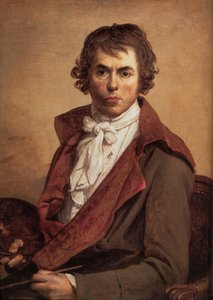
Jacques-Louis David
1748 - 1800 , Frankreich
Kurzinfos
- Beeinflusste Künstler:
- Jean-Auguste-Dominique Ingres
- Henri Matisse
- Pablo Picasso
- Bemerkenswerte Werke:
- Schwur der Horatier
- Marats Tod
- Napoleon am Alpenpass
- Die Krönung Napoleons
- Sabinenfrauen
- Geburtsdatum: 30. August 1748
- Geburtsort: Paris, Frankreich
- Künstlerische Bewegung: Neoklassizismus
- Künstlerische Einflüsse: ['Joseph-Marie Vien']
- Nationalität: Französisch
- Todatum: 29. Dezember 1825
- Vollständiger Name: Jacques-Louis David
Ähnliche Artikel

Anne-Louis Girodet: Bridging Neoclassicism & Romanticism with Emotional Truth
Explore the captivating world of Anne-Louis Girodet, a pivotal figure bridging Neoclassicism & Romanticism. Discover his masterpieces and unique artistic vision with AllPaintingsStore.

Klassizismus vs. Romantik: Der epische Kampf zwischen Vernunfmt und Gefühl in der Kunstgeschichte
Erleben Sie den tiefgreifenden Konflikt zwischen Vernunft und Gefühl in der Kunstgeschichte. Jetzt die Epochen entdecken!

The Revival of Antiquity: Exploring Ideals of Beauty & Power in Neoclassical Portraiture
Explore the captivating world of Neoclassical portraiture! Discover the power & ideals behind masterpieces by David, Girodet & more. Expert analysis, custom reproductions & art appraisal at AllPaintingsStore.

Jacques-Louis David: Neoklassizistische Ideale und der Geist einer Revolution – Leben, Werk und Vermächtnis eines Meistermalers
Entdecken Sie das Leben und Werk von Jacques-Louis David, dem führenden Maler des Neoklassizismus! Erfahren Sie mehr über seine Rolle in der Französischen Revolution und sein bleibendes Vermächtnis für die Kunstgeschichte. Expertenwissen & detaillierte Analysen.

Illuminating the Enlightenment: Artistic Expression in 18th-Century Europe
Explore the artistic brilliance of the Enlightenment era! Discover Rococo's elegance & Neoclassicism’s virtue with expert insights into 18th-century masterpieces. Learn about David, Kauffmann & more.


