


 In echtem Maßstab anzeigen
 Versenden als Grußkarte
 Teilen
 Details anzeigen
 Leitfaden öffnen

 Herunterladen
 Ähnliche Objekte
 Röntgenaufnahme
 Diashow
 Besucherstatistiken
Pride (sketch)

 Mehr anzeigen
Handgefertigte Ölreproduktion
Handgemaltes Ölgemälde auf Leinwand in Ihrer Wunschgröße und mit Rahmen, auf Bestellung von unseren Künstlern angefertigt. ( Zum Druck wechseln Zum digitalen Bild wechseln)




P118B €10

P118H €10

P118W €10

P438Z €10

P508JH €12

P508YH €12

P805H €10

P805Z €10

P919BZ €10

P919G €10

P919XJ €10

P959ZH €10

P968JZ €12

W106C €8

W218G €10

W218JH €8

W218Y €10

W307PJ €10

W316G €10

W316PJ €8

W316Y €10

W398PJ €8

W4111J €10

W500HY €15

W500JH €15

W692G €12

W849H €8

W940BG €15

W953PJ €8




Wählen Sie aus unseren vordefinierten Formaten, die den ursprünglichen Proportionen des Kunstwerks entsprechen.

Geben Sie die Breite und die Höhe an, die Sie für Ihren Rahmen oder Ihre Wand benötigen. Da dieses Werk handgemalt ist, kann der Künstler bei einer anderen Form etwas mehr um das Bild herum malen oder etwas abschneiden – Sie entscheiden. Wir senden Ihnen ein digitales Mockup zur Freigabe, bevor mit dem Malen begonnen wird. Das auf dieser Seite gezeigte Bild stellt nicht das tatsächliche Ergebnis dar – dies tut nur das Mockup.
Nach der Bestellung wird das AllPaintingsStore.com-Team dem Kunden Anweisungen per E-Mail zusenden und eine Mockup-Vorschau bereitstellen.
Weltweiter Versand () in nur 3 bis 4 Wochen statt der üblichen 5 Wochen. (22 Oktober). Keine Kompromisse bei der Qualität.

Kostenloser weltweiter Expressversand

Hochwertige Leinenleinwand

Vollständiger Versicherungsschutz beim Versand

Zollgebühren-Rückerstattungsgarantie

Garantie für exakte Farbtreue

100-tägiges Rückgaberecht (nur bei Mängeln)

100% Geld-zurück-Garantie

Angebot für Mengenrabatt
 Die Glasoption ist nur für Größen unter 110 cm verfügbar.

Pride (sketch)
Reproduktionsmedium
Format der Reproduktion
-


Gesamtpreis
€ 225
The Unsettling Gaze of “Pride”
James Ensor’s “Pride,” a preliminary sketch from his ambitious “Deadly Sins” series, isn't merely a depiction of a gathering; it’s a carefully constructed tableau brimming with psychological tension and veiled social critique. The black-and-white photograph captures the raw energy of an early iteration – a glimpse into Ensor’s creative process before the final, more polished etchings emerged. The scene unfolds within a dimly lit interior, dominated by a central figure—a man standing apart from the throng of formally dressed individuals surrounding him. This isolation immediately draws our attention, suggesting a sense of judgment or perhaps even alienation. The figures themselves are rendered with an unsettling directness; their faces largely obscured by masks – not literal theatrical disguises, but symbolic representations of hidden identities and societal facades.
Ensor’s masterful use of line and shadow creates a palpable atmosphere of unease. Notice the sharp angles of the architecture, the exaggerated proportions of the figures, and the unsettling arrangement of birds scattered throughout the composition. These avian elements aren't simply decorative; they contribute to the overall sense of chaos and disruption, hinting at anxieties about morality and the intrusion of the natural world into a structured social environment. The sketch’s immediacy—the visible pencil strokes, the smudges of charcoal—underscores Ensor’s deliberate rejection of academic formality, aligning him with the burgeoning Expressionist movement that would soon challenge traditional artistic conventions.
A Portrait of Victorian Society – and its Discontents
Created in 1904, “Pride” is deeply rooted within the social anxieties of late Victorian England. Ensor was a keen observer of his native Ostend, Belgium, and he frequently used his art to expose the hypocrisy and superficiality of bourgeois society. The meticulously dressed men – their suits, ties, and carefully constructed postures – represent the rigid expectations and constraints imposed upon individuals by societal norms. The sketch’s title itself, “Pride,” is a deliberate provocation, suggesting that this gathering isn't about genuine connection or celebration but rather an exercise in outward appearances and self-importance. The birds, often associated with freedom and instinct, seem to be mocking the rigid formality of the scene, further emphasizing the disconnect between appearance and reality.
Considering Ensor’s broader body of work, particularly his “Deadly Sins” series, "Pride" can be interpreted as a commentary on vanity, greed, and envy – vices that were considered central to Victorian morality. The sketch's stark monochrome palette amplifies the sense of moral judgment, stripping away any potential distractions and focusing our attention on the underlying tensions within the scene. It’s a powerful reminder that beneath the veneer of respectability often lurks a darker, more unsettling truth.
Technique and Artistic Innovation
Ensor's technique in this sketch is remarkably expressive, anticipating the bold graphic style he would later develop in his etchings. He employs a rapid, gestural approach, utilizing loose lines and varying pressures to create a dynamic sense of movement and emotion. The use of charcoal allows for a rich range of tonal values, contributing to the dramatic lighting effects within the composition. Notably, this sketch served as a preliminary study for the final, more elaborate etchings in the “Deadly Sins” portfolio, demonstrating Ensor’s iterative process – constantly refining his ideas and experimenting with different approaches before committing them to paper.
The influence of Symbolism is evident in Ensor's use of symbolism and his interest in exploring psychological states. He was deeply influenced by the works of Gustave Moreau and Odilon Redon, both prominent figures within the Symbolist movement. However, unlike many of his contemporaries, Ensor pushed beyond purely decorative symbolism, imbuing his work with a distinctly unsettling and often grotesque quality. “Pride” exemplifies this approach – it’s not simply a representation of a scene but an exploration of human nature and its darker impulses.
A Timeless Reflection on Human Nature
“Pride,” in its raw sketch form, offers a profound insight into the artist's vision and his enduring fascination with the complexities of human behavior. It’s a work that continues to resonate today, prompting us to question our own assumptions about social appearances, moral values, and the masks we wear in everyday life. AllPaintingsStore is proud to offer high-quality reproductions of this captivating sketch, allowing you to experience Ensor's unsettling genius firsthand. Whether displayed as a statement piece in your home or studied for its historical significance, “Pride” remains a powerful testament to the enduring legacy of James Ensor.
Fragen & Antworten
Wie intensiv sind die Farben von "Pride (sketch)"?
Die Farben von "Pride (sketch)" von James Ensor weisen eine Balanced Soft Sättigung mit einer Vivid Intensität auf.
Wie fügt sich „Pride (sketch)“ in die Themen und den Stil von James Ensor ein?
"Pride (sketch)" teilt mit anderen Werken von James Ensor den Expressionism-Stil sowie die wiederkehrenden Themen: masks, disguise, social critique, carnival, satire, societal norms, belgian folklore, dark humor.
Für welchen Ort und welchen Zweck wird "Pride (sketch)" empfohlen?
"Pride (sketch)" von James Ensor wird für Statement empfohlen, idealerweise in einem Living Room. Verwendung und Raumgestaltung geben gemeinsam Aufschluss darüber, wo eine Reproduktion am besten zur Geltung kommt.
Ähnliche Kunstwerke


Biografie des Künstlers
frühes Leben und künstlerische Reise
James Sidney Edward, Baron Ensor, ein prominenter belgischer Maler und Grafiker, wurde am 13. April 1860 in Ostend, Belgien, geboren. Sein frühes Leben war von einem vielfältigen kulturellen Hintergrund geprägt, mit einem englischen Vater, James Frederic Ensor, und einer belgischen Mutter, Maria Catherina Haegheman. Ensor zeigte wenig Interesse an traditionellen akademischen Studien und verließ die Schule mit fünfzehn Jahren, um sich der Kunst zu widmen, zunächst bei lokalen Malern und später am Académie Royale des Beaux-Arts in Brüssel.Künstlerischer Stil und Themen
Ensor's künstlerischer Stil war durch seine Auseinandersetzung mit dem Unterbewusstsein und traumhaften Bildern gekennzeichnet, der die Expressionismus und Surrealismus maßgeblich beeinflusste. Seine Gemälde zeigten oft bizarre Motive, darunter Karnevale, Masken, Puppenspiel, Skelette und fantastische Allegorien. Bekannte Werke sind Die Schändlichen Masken (1883) und Skelette kämpfen um eine gehängte Person (1891), die seine einzigartige Mischung aus Groteskem und Fantasievollem zeigen.Anerkennung und Vermächtnis
Trotz anfänglicher Ablehnung gewann Ensor's Werk allmählich Anerkennung und Anklang. Bis 1920 war er das Thema bedeutender Ausstellungen; im Jahr 1929 wurde er zum Baron durch König Albert ernannt, und 1933 erhielt er die Légion d’honneur. Sein Vermächtnis als Pionier der modernen Kunst ist in seinem Einfluss auf nachfolgende künstlerische Bewegungen, einschließlich Expressionismus und Surrealismus, erkennbar.Wichtige Werke und Ausstellungen
* Die Intrige (90 x 150 cm, Koninklijk Museum voor Schone Kunsten, Antwerpen, Belgien) * Die Qualen des Heiligen Antonius (1887, heute im Besitz der Sammlung des Museum of Modern Art, New York)- Erfahren Sie mehr über das Leben und Werk von James Ensor auf AllPaintingsStore: James Ensor
- Entdecken Sie das Museum Mu.Zee in Ostend, Belgien, das eine Sammlung belgischer Kunst von 1830 bis heute beherbergt auf AllPaintingsStore: Entdecken Sie das Museum Mu.Zee in Ostend, Belgien
- Erfahren Sie mehr über Malerei des Symbolismus und seinen Einfluss auf Expressionismus und Surrealismus auf Wikipedia: Symbolistische Malerei
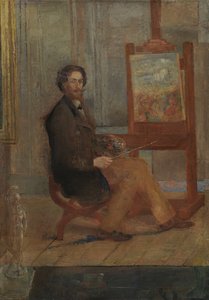
James Ensor
1860 - 1949 , Belgien
Eckdaten zum Künstler
- Beeinflusste Künstler:
- Pieter Bruegel der Ältere
- Francisco Goya
- Bemerkenswerte Werke:
- Die Schmählichen Masken
- Christus in Brüssel
- Tribulationen des Heiligen Antonius
- Geburtsdatum: 1860-04-13
- Geburtsort: Ostende, Belgien
- Künstlerische Richtung: Expressionismus, Symbolismus
- Nationalität: Belgisch
- Todatum: 1949-11-19
- Vollständiger Name: James Ensor
- Von Künstlern Beeinflusst: ['']
Verwandte Artikel
Sir Alfred James Munnings: Die 25 Meisterwerke des Pferdebildes | AllPaintingsStore
Entdecken Sie die 25 Meisterwerke von Sir Alfred James Munnings! Erleben Sie seine beeindruckenden Pferdebilder, geprägt vom Impressionismus und Realismus. Hochwertige Kunstdrucke & Reproduktionen auf AllPaintingsStore.com – für elegante Wandkunst & stilvolles Interieurdesign.

James Ensor und die groteske Vision: Gesellschaftskritik und künstlerische Innovation
Entdecken Sie James Ensors faszinierende Welt der Groteske! Analysieren Sie seine Gesellschaftskritik, den Einfluss des Symbolismus und seinen einzigartigen Stil. Expertenwissen zur modernen Kunst.
Unveiling the Mystery: A Journey Through the World's Most Iconic Mask Artworks
Embark on a profound journey through the world's most iconic mask artworks. Explore the spiritual depth, intricate craftsmanship, and rich cultural heritage of global traditions, from Chhau to Gomira, in this expert-led exploration of ancestral artistry and symbolic beauty.
James Abbott McNeill Whistler: Die 25 Meisterwerke für Ihr Zuhause | AllPaintingsStore
Entdecken Sie die 25 Meisterwerke von James Abbott McNeill Whistler! Von den berühmten Nocturnes bis zu ikonischen Porträts – erleben Sie Ästhetizismus, Impressionismus & Tonalismus. Hochwertige Reproduktionen auf AllPaintingsStore.com.

The Eloquent Line: Exploring the Artistic Significance of Sketches Across Movements and Media
Explore the profound artistic significance of sketches throughout history. From Renaissance masters to modern innovators like Van Gogh & Guston, discover how these foundational works reveal technique, emotion, and vision. Learn more at AllPaintingsStore.


