


 Vorschau anzeigen
 Versenden
 Teilen
 Details anzeigen
 Leitfaden

 Herunterladen
 Ähnliche Objekte
 Röntgenaufnahme
 Diashow
 Statistiken
Self Portrait
 Oil On Canvas
- WallArt
- Romantic Landscape
 1830
1830- 19th Century
 76.0 x 64.0 cm
 Yale Center for British Art
 Weiterlesen
Giclée / Kunstdruck
Giclée- oder Leinwanddruck in Museumsqualität mit schneller Produktion und flexiblen Veredelungsoptionen. ( Handgemalte Reproduktion bestellen Zum digitalen Bild wechseln)




P118B €10

P118H €10

P118W €10

P438Z €10

P508JH €12

P508YH €12

P805H €10

P805Z €10

P919BZ €10

P919G €10

P919XJ €10

P959ZH €10

P968JZ €12

W106C €8

W218G €10

W218JH €8

W218Y €10

W307PJ €10

W316G €10

W316PJ €8

W316Y €10

W398PJ €8

W4111J €10

W500HY €15

W500JH €15

W692G €12

W849H €8

W940BG €15

W953PJ €8




Wählen Sie aus unseren vordefinierten Formaten, die den ursprünglichen Proportionen des Kunstwerks entsprechen.

Geben Sie die benötigte Breite und Höhe an, damit der Druck perfekt in Ihren Rahmen oder an Ihre Wand passt. Ein Druck kann nur beschnitten, aber niemals größer als das Originalbild angefertigt werden; daher verliert ein Format mit anderen Proportionen einen Teil des Bildes. Wir senden Ihnen ein digitales Mockup zur Freigabe, bevor wir den Druck ausführen. Das auf dieser Seite gezeigte Bild zeigt nicht den tatsächlichen Beschnitt – dies ist nur im Mockup ersichtlich.
Weltweiter Versand () innerhalb von 2 Wochen statt der üblichen 4/5 Wochen. (25 Oktober)

Kostenloser weltweiter Expressversand

Hochwertige Leinenleinwand

Umfassender Versicherungsschutz beim Versand

Zollgebühren-Rückerstattungsgarantie

Garantie für exakte Farbtreue

100 Tage Rückgaberecht (nur bei Mängeln)

100% Geld-zurück-Garantie

Mengenrabatt verfügbar
 Die Glasoption ist nur für Größen unter 110 cm verfügbar.

Self Portrait
Giclée / Kunstdruck
Format der Reproduktion
-


Endpreis
€ 56
A Gaze Into the Soul: James Ward's Self Portrait
To stand before this self-portrait of James Ward is to encounter not merely a likeness, but a profound meditation on the passage of time and the enduring spirit of artistic creation. Painted in 1830, this work captures the artist at a mature juncture—a moment where experience has etched itself onto the countenance. The subject gazes out with an unwavering intensity, his white beard and mustache framing a face that speaks volumes without uttering a single word. It is a direct confrontation between the viewer and the creator, inviting us into the quiet, thoughtful chambers of his own self-awareness.
Technique and Compositional Depth
Ward’s mastery is evident in the meticulous rendering of texture, particularly visible in the depiction of skin and hair. The artist employed a technique that allows for both intimate detail—allowing one to trace the lines around the eyes or the subtle fall of the beard—and a broader sense of atmosphere. Notice how the background curtain serves not as mere backdrop, but as an element that adds palpable depth to the composition. This careful use of setting anchors the figure while simultaneously pushing the viewer's focus back to the arresting directness of his gaze. The close-up nature of the portrait ensures that every nuance of expression is magnified for our contemplation.
Historical Echoes of British Romanticism
Dating from 1830, this painting sits squarely within the rich currents of early Victorian and late Georgian artistic sensibilities, deeply influenced by the spirit of British Romanticism. While Ward was celebrated for his animal studies and landscapes, this portrait reveals a different facet: the intellectual depth of the professional artist. The stern yet contemplative expression reflects an era grappling with industrial change and shifting definitions of genius. It is a testament to the individual vision set against the backdrop of a rapidly evolving cultural landscape.
Symbolism of Self-Reflection
The act of painting oneself has always been fraught with symbolic weight. Here, James Ward presents himself not just as an aging man, but as an enduring artistic persona. The direct stare can be interpreted as both challenge and invitation—a silent acknowledgment that the art itself is inseparable from the hand that wields the brush. It symbolizes the artist's relationship with his own craft: a life spent observing, interpreting, and ultimately, recording the human condition.
Bringing the Masterpiece Home
For those who wish to incorporate this powerful piece of history into their own space, acquiring a high-quality reproduction allows one to possess this palpable connection to 19th-century genius. Whether placed in a formal study or a richly decorated drawing-room, this portrait serves as more than decoration; it acts as a conversation starter, an intellectual anchor that speaks to the enduring power of self-examination and artistic dedication.
Fragen & Antworten
Mit welcher Technik wurde "Self Portrait" erstellt?
Das Medium von "Self Portrait" von James Ward ist Oil On Canvas. Die Reproduktionen zielen darauf ab, die Optik dieser Technik wiederzugeben.
Aus welchem Land stammt das Romantic Landscape-Werk „Self Portrait“?
"Self Portrait" verbindet die Romantic Landscape-Bewegung durch den Geburtsort ihres Schöpfers mit Vereinigtes Königreich.
Welcher Phase der Karriere von James Ward ist „Self Portrait“ (1830) zuzuordnen?
"Self Portrait", entstanden im Jahr 1830, stammt aus der Mature Period von James Ward.
Ähnliche Kunstwerke


Künstlerbiografie
James Ward: A Life in British Art
James Ward (1769-1859) war ein bedeutender britischer Maler, der für seine fesselnden Tiermalereien, romantischen Landschaften und aufschlussreichen Porträts bekannt ist. Obwohl er oft von Zeitgenossen überschattet wurde, hatte sein einzigartiger Stil und seine Fähigkeiten einen erheblichen Einfluss auf die Entwicklung der britischen Kunst im 19. Jahrhundert.
Frühes Leben und Ausbildung
James Ward wurde am 23. Oktober 1769 in London, Vereinigte Königreich, geboren und war der jüngere Bruder des Stahlschnitters William Ward. Seine frühen künstlerischen Neigungen wurden in einem kreativen Familienumfeld gefördert. Obwohl er eine gewisse formale Ausbildung erhielt, war seine Entwicklung weitgehend selbstgesteuert und stark von Beobachtung und Übung geprägt.
Künstlerische Entwicklung & Einflüsse
Wards Karriere lässt sich konventionell in zwei unterschiedliche Perioden hinsichtlich des Einflusses unterteilen. Zunächst bis etwa 1803 ähnelten seine Werke denen seines Schwagers, George Morland, gekennzeichnet durch Genreszenen und einen Fokus auf das Alltagsleben. In dieser Zeit wurde er zutiefst vom Barockmeister Peter Paul Rubens inspiriert und übernahm eine dynamischere Komposition, eine reiche Farbpalette und eine dramatische Verwendung von Licht und Schatten.
Bemerkenswerte Werke & Künstlerischer Stil
Wards einzigartiger Stil unterschied ihn von vielen Zeitgenossen. Er zeichnete sich in verschiedenen Genres aus, darunter Historienmalerei, Porträtmalerei, Landschaftsmalerei und Tiermalerei. Zu seinen bekanntesten Werken gehören:
- Gordale Scar (1814/15): Gilt als sein Meisterwerk, diese dramatische Darstellung einer Yorkshire-Schlucht veranschaulicht die sublimen Qualitäten des englischen Romantismus.
- The Deer Stealer (1823): In Auftrag gegeben von Theophilus Levett, zeigt dieses Gemälde Wards Geschicklichkeit in Erzählung und Tierdarstellung.
- John Levett Hunting at Wychnor, Staffordshire (1817): Ein Porträt eines seiner Mäzene, das seine Fähigkeit demonstriert, sowohl Ähnlichkeit als auch Atmosphäre einzufangen.
Seine Gemälde zeichnen sich durch eine sorgfältige Detailgenauigkeit aus, insbesondere bei der Darstellung von Tieren, kombiniert mit einer romantischen Sensibilität, die die Schönheit und Kraft der Natur betont.
Aufträge & Ausstellungen
Ward genoss die Förderung prominenter Persönlichkeiten wie Theophilus Levett, was zu zahlreichen Aufträgen führte. Er stellte seine Werke regelmäßig bei der Royal Academy aus und erlangte Anerkennung für sein Können und Originalität. Seine Aufnahme als Mitglied im Jahr 1811 festigte seinen Status innerhalb des britischen Kunstestablishment.
Späteres Leben & Vermächtnis
Ward malte bis zu einem Schlaganfall im Jahr 1855 weiterhin produktiv, der seine Karriere beendete. Er verstarb am 17. November 1859 in relativer Armut trotz seines früheren Erfolgs.
Trotz finanzieller Schwierigkeiten später im Leben ist James Wards Einfluss auf die britische Kunst unbestreitbar. Seine einzigartige Mischung aus Realismus und Romantik ebnete den Weg für zukünftige Generationen von Tiermalern und Landschaftskünstlern. Seine Werke befinden sich heute in renommierten Sammlungen wie Tate Britain und dem Yale Center for British Art.
Historische Bedeutung
James Ward nimmt eine bedeutende Position innerhalb des Übergangs von der Neoklassik zur Romantik in der britischen Kunst ein. Er schloss die Lücke zwischen traditioneller Genresmalerei und dem wachsenden Interesse an Landschaft und Naturalismus und hinterließ ein Vermächtnis fesselnder Werke, die weiterhin inspirieren und erfreuen.

James Ward
1769 - 1859 , Vereinigtes Königreich
Kurzinfos
- Artistic Movement Or Style: Romantik
- Artists Who Influenced This Artist:
- George Morland
- Peter Paul Rubens
- Date Of Birth: 23. Oktober 1769
- Full Name: James Ward
- Nationality: Englisch
- Notable Artworks:
- Gordale Scar
- Die Deer Stealer
- John Levett Hunting at Wychnor
- Place Of Birth: London, Vereinigtes Königreich
Ähnliche Artikel

James Ward: A Study in British Romantic Landscape and Animal Painting
Explore the captivating world of James Ward (1769-1859), a master of British Romantic landscape & animal painting. Discover his iconic 'Gordale Scar' and exquisite portraits – a timeless art investment. Learn about his influences, style, and enduring legacy.
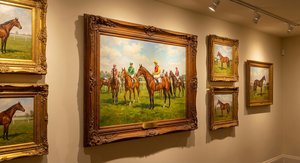
Sir Alfred James Munnings: Die 25 Meisterwerke des Pferdebildes | AllPaintingsStore
Entdecken Sie die 25 Meisterwerke von Sir Alfred James Munnings! Erleben Sie seine beeindruckenden Pferdebilder, geprägt vom Impressionismus und Realismus. Hochwertige Kunstdrucke & Reproduktionen auf AllPaintingsStore.com – für elegante Wandkunst & stilvolles Interieurdesign.
James Abbott McNeill Whistler: Die 25 Meisterwerke für Ihr Zuhause | AllPaintingsStore
Entdecken Sie die 25 Meisterwerke von James Abbott McNeill Whistler! Von den berühmten Nocturnes bis zu ikonischen Porträts – erleben Sie Ästhetizismus, Impressionismus & Tonalismus. Hochwertige Reproduktionen auf AllPaintingsStore.com.

Öl auf Leinwand: Eine historische und technische Erkundung eines zeitlosen künstlerischen Mediums
Entdecken Sie die faszinierende Welt der Ölmalerei! Von historischen Techniken bis zur modernen Anwendung – wir bieten Expertenwissen, Restaurierungstipps und hochwertige Reproduktionen. Jetzt informieren!

The Enduring Legacy of Oil on Canvas: Technique, History & Aesthetic Impact
Explore the rich history & techniques of oil painting – from Renaissance masters to Impressionism. Discover pigments, layering methods, and why this timeless medium endures. Expert insights for artists & art enthusiasts.


