100 Tage Geld-zurück-Garantie Weltweit kostenlose Lieferung
449.581Kunstwerke 30.615Künstlerinnen und Künstler 4.660Museen 32Sprachen
Währung
    Sprache
      Atelier · Gegründet 2015 · Paris, Frankreich
      AllPaintingsStore
      allpaintingsstore.com
      In echtem Maßstab anzeigen In AR an der Wand sehen Zum Druck wechseln Zum digitalen Bild wechseln Versenden als Grußkarte
      Details anzeigen Leitfaden öffnen Zu Favoriten hinzufügen Herunterladen Ähnliche Objekte Röntgenaufnahme Diashow Besucherstatistiken

      Voltaire

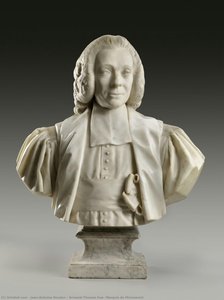
      Jean-Antoine Houdons beeindruckender Marmeliebust von Voltaire fängt den Geist des Aufklärers ein. Entdecken Sie die Details dieses ikonischen Porträts und erleben Sie die Brillanz der Philosophie.

      Entdecken Sie Jean-Antoine Houdon (1741-1828), den Meister des französischen Neoklassizismus! Bewundern Sie seine ikonischen Büsten von Aufklärungsfiguren wie Washington & Franklin.

      Handgefertigte Ölreproduktion

      Handgemaltes Ölgemälde auf Leinwand in Ihrer Wunschgröße und mit Rahmen, auf Bestellung von unseren Künstlern angefertigt. ( Zum Druck wechseln Zum digitalen Bild wechseln)

      Corner sample of the P118B picture frame: formgepresstes Polystyrol, 5 cm wide and 3 cm thick
      P118B 10
      Corner sample of the P118H picture frame: formgepresstes Polystyrol, 5 cm wide and 3 cm thick
      P118H 10
      Corner sample of the P118W picture frame: formgepresstes Polystyrol, 5 cm wide and 3 cm thick
      P118W 10
      Corner sample of the P438Z picture frame: formgepresstes Polystyrol, 5.5 cm wide and 3.5 cm thick
      P438Z 10
      Corner sample of the P508JH picture frame: formgepresstes Polystyrol, 7 cm wide and 3.5 cm thick
      P508JH 12
      Corner sample of the P508YH picture frame: formgepresstes Polystyrol, 7 cm wide and 3.5 cm thick
      P508YH 12
      Corner sample of the P805H picture frame: formgepresstes Polystyrol, 5 cm wide and 3.5 cm thick
      P805H 10
      Corner sample of the P805Z picture frame: formgepresstes Polystyrol, 5 cm wide and 3.5 cm thick
      P805Z 10
      Corner sample of the P919BZ picture frame: formgepresstes Polystyrol, 7 cm wide and 3.5 cm thick
      P919BZ 10
      Corner sample of the P919G picture frame: formgepresstes Polystyrol, 7 cm wide and 3.5 cm thick
      P919G 10
      Corner sample of the P919XJ picture frame: formgepresstes Polystyrol, 7 cm wide and 3.5 cm thick
      P919XJ 10
      Corner sample of the P959ZH picture frame: formgepresstes Polystyrol, 5 cm wide and 3 cm thick
      P959ZH 10
      Corner sample of the P968JZ picture frame: formgepresstes Polystyrol, 6 cm wide and 4 cm thick
      P968JZ 12
      Corner sample of the W106C picture frame: Massivholz, 5 cm wide and 3 cm thick
      W106C 8
      Corner sample of the W218G picture frame: Massivholz, 5 cm wide and 3 cm thick
      W218G 10
      Corner sample of the W218JH picture frame: Massivholz, 5 cm wide and 3 cm thick
      W218JH 8
      Corner sample of the W218Y picture frame: Massivholz, 5 cm wide and 3 cm thick
      W218Y 10
      Corner sample of the W307PJ picture frame: Massivholz, 6 cm wide and 3 cm thick
      W307PJ 10
      Corner sample of the W316G picture frame: Massivholz, 6 cm wide and 3 cm thick
      W316G 10
      Corner sample of the W316PJ picture frame: Massivholz, 6 cm wide and 3 cm thick
      W316PJ 8
      Corner sample of the W316Y picture frame: Massivholz, 6 cm wide and 3 cm thick
      W316Y 10
      Corner sample of the W398PJ picture frame: Massivholz, 5 cm wide and 3 cm thick
      W398PJ 8
      Corner sample of the W4111J picture frame: Massivholz, 6.5 cm wide and 3.5 cm thick
      W4111J 10
      Corner sample of the W500HY picture frame: Massivholz, 7 cm wide and 5 cm thick
      W500HY 15
      Corner sample of the W500JH picture frame: Massivholz, 7 cm wide and 5 cm thick
      W500JH 15
      Corner sample of the W692G picture frame: Massivholz, 8 cm wide and 4 cm thick
      W692G 12
      Corner sample of the W849H picture frame: Massivholz, 5 cm wide and 3 cm thick
      W849H 8
      Corner sample of the W940BG picture frame: Massivholz, 7.5 cm wide and 4.5 cm thick
      W940BG 15
      Corner sample of the W953PJ picture frame: Massivholz, 6 cm wide and 3.5 cm thick
      W953PJ 8

      Standardformat
      individuell anpassbar
      CM
      INCH

      Wählen Sie aus unseren vordefinierten Formaten, die den ursprünglichen Proportionen des Kunstwerks entsprechen.

      Breite
      Höhe

      Geben Sie die Breite und die Höhe an, die Sie für Ihren Rahmen oder Ihre Wand benötigen. Da dieses Werk handgemalt ist, kann der Künstler bei einer anderen Form etwas mehr um das Bild herum malen oder etwas abschneiden – Sie entscheiden. Wir senden Ihnen ein digitales Mockup zur Freigabe, bevor mit dem Malen begonnen wird. Das auf dieser Seite gezeigte Bild stellt nicht das tatsächliche Ergebnis dar – dies tut nur das Mockup.

      Beispiele für Anpassungsmöglichkeiten: Gesicht durch Kundenfoto ersetzen; Haustier hinzufügen (z. B. Katze durch Hund ersetzen); eine versteckte Nachricht im Hintergrund einfügen; Hintergrundlandschaft oder -elemente ändern.
      Nach der Bestellung wird das AllPaintingsStore.com-Team dem Kunden Anweisungen per E-Mail zusenden und eine Mockup-Vorschau bereitstellen.

      Weltweiter Versand () in nur 3 bis 4 Wochen statt der üblichen 5 Wochen. (22 Oktober). Keine Kompromisse bei der Qualität.

      Kostenloser weltweiter Expressversand
      Hochwertige Leinenleinwand
      Vollständiger Versicherungsschutz beim Versand
      Zollgebühren-Rückerstattungsgarantie
      Garantie für exakte Farbtreue
      100-tägiges Rückgaberecht (nur bei Mängeln)
      100% Geld-zurück-Garantie
      Angebot für Mengenrabatt

      Gesamtpreis

      € 226

      Voltaire

      Reproduktionsmedium

      Format der Reproduktion

      -

      Gesamtpreis

      € 226

      Kurzübersicht

      • Artist: Jean-Antoine Houdon
      • Medium: Marmor
      • Title: Voltaire
      • Artistic Stil: Neoklassizistisch

      Kunst-Quiz

      Jede Frage hat nur eine richtige Antwort.

      Frage 1:
      Welcher Künstler schuf die Marmorbüste "Voltaire"?
      Frage 2:
      Welche Epoche repräsentiert hauptsächlich die Kunst von Jean-Antoine Houdon?
      Frage 3:
      Welche Technik wurde wahrscheinlich bei der Erstellung der Marmorbüste verwendet?
      Frage 4:
      Welche Aussage trifft am besten auf die Farbgebung der Darstellung zu?
      Frage 5:
      Welche Emotion vermittelt das leichtes Lächeln auf Voltaire's Gesicht?

      Jean-Antoine Houdon’s “Voltaire”: A Portrait of Enlightenment

      The photograph before us presents not merely an image, but a profound distillation of the spirit of the Enlightenment – Jean-Antoine Houdon's masterful sculpture of Voltaire. This three-quarter view portrait transcends the simple act of likeness; it captures the very essence of the philosopher’s intellect, his measured demeanor, and a subtle hint of ironic wisdom that has captivated viewers for centuries. Houdon, a pivotal figure bridging the Rococo and Neoclassical eras, possessed an extraordinary ability to imbue his subjects with psychological depth, moving beyond mere representation towards a genuine exploration of character. The sculpture, originally crafted from pristine white marble, stands as a testament to this skill – a tangible embodiment of Voltaire’s legacy.

      The composition is strikingly direct and centered. Voltaire occupies the majority of the frame, his gaze meeting the viewer with an almost unsettling intensity. This deliberate focus draws our attention immediately to his face, meticulously rendered with an astonishing level of detail. The subtle curve of his lips, hinting at a wry amusement, combined with the thoughtful set of his brow, speaks volumes about his sharp intellect and philosophical approach to life. The dark marble pedestal, intricately carved with classical motifs, provides a grounding counterpoint to Voltaire’s figure, anchoring him within a framework of established artistic tradition while simultaneously elevating him beyond it.

      Neoclassical Realism and the Pursuit of Essence

      Houdon's style is firmly rooted in Neoclassicism, an aesthetic movement that sought to revive the ideals of ancient Greece and Rome. However, Houdon’s approach was far from a slavish imitation; instead, he employed classical principles – particularly those relating to proportion and idealized forms – to achieve a remarkably realistic portrayal. The smooth, polished surface of the marble suggests a painstaking process of sculpting and finishing, reflecting the artist's dedication to capturing every nuance of texture and form. The lighting in the photograph, carefully controlled to minimize harsh shadows, further enhances this sense of realism, allowing subtle details—the wrinkles around Voltaire’s eyes, the delicate lines of his hands—to emerge with clarity.

      The use of line is equally deliberate. The contours of Voltaire's face are defined with precision, while the folds in his clothing subtly suggest movement and volume. The pedestal exhibits a restrained elegance through its curved and decorative elements, adding visual interest without disrupting the overall sense of balance and harmony. Houdon’s technique involved an intimate understanding of human anatomy, meticulously studied to ensure that every feature was rendered accurately and convincingly. This commitment to realism is evident in the sculpture's ability to evoke a strong emotional response – a feeling of recognition, perhaps even kinship, with this iconic figure of the Enlightenment.

      Symbolism and the Philosopher’s Legacy

      The slight smile on Voltaire’s face is arguably the most compelling element of the portrait. It isn't a boisterous laugh, but rather a subtle expression of intelligence, wisdom, and perhaps even a touch of ironic detachment. This carefully crafted gesture speaks volumes about Voltaire’s philosophical outlook – his ability to dissect complex ideas with clarity and precision while maintaining a skeptical perspective on human folly. The sculpture as a whole embodies the core tenets of the Enlightenment: reason, skepticism, tolerance, and a commitment to individual liberty.

      Voltaire himself was a champion of these ideals, using his writing—satirical essays, philosophical treatises, and historical works—to challenge established norms and advocate for social reform. His portrait by Houdon serves as a powerful reminder of his enduring legacy – a testament to the transformative power of ideas and the importance of critical thinking. The sculpture’s placement within an ornate pedestal further elevates Voltaire's status, suggesting that he is not merely a man, but a figure of profound intellectual significance. It invites contemplation on the nature of knowledge, the pursuit of truth, and the ongoing struggle for freedom of thought.

      A Reproduction Worthy of Display

      AllPaintingsStore offers meticulously crafted hand-painted reproductions of this iconic sculpture, allowing you to bring this masterpiece into your home or office. Each reproduction is created by skilled artists who have studied Houdon’s original work with the utmost care, ensuring that every detail—from the texture of the marble to the subtle nuances of Voltaire's expression—is faithfully reproduced. Whether you are an art collector, a design enthusiast, or simply someone seeking a piece of history, a AllPaintingsStore reproduction of “Voltaire” is a timeless addition to any collection.

      Fragen & Antworten

      Wie kann ich das Bild von "Voltaire" von Jean-Antoine Houdon herunterladen?

      Das Bild von "Voltaire" von Jean-Antoine Houdon kann auf der Download-Seite des Kunstwerks heruntergeladen werden: ein hochauflösender digitaler Bild-Download.

      Wo finde ich einen Leitfaden zu „Voltaire“?

      Eine Leitfaden-Seite ist für "Voltaire" von Jean-Antoine Houdon verfügbar: ein druckbares Infoblatt zum Kunstwerk, konzipiert für Schüler und den Einsatz im Unterricht.

      Was ist die dominierende Farbe von "Voltaire" von Jean-Antoine Houdon?

      Die Farbe, die in „Voltaire“ am stärksten hervorsticht, ist Phthalogrün (#262626). Die dominante Farbe ist hilfreich, um ein Kunstwerk auf eine Inneneinrichtung abzustimmen.


      Biografie des Künstlers

      Jean-Antoine Houdon: Ein Meister des neoklassischen Porträts

      • Geboren: Versailles, Frankreich (1741)
      • Gestorben: 1828

      Jean-Antoine Houdon gilt als eine zentrale Figur der französischen Neoklassik-Skulptur und wird für seine bemerkenswert realistischen und psychologisch tiefgründigen Porträtbüsten und -statuen gefeiert. Seine Karriere erstreckte sich über die Epoche der Aufklärung, in der er das Aussehen von bedeutenden Philosophen, Erfindern, Politikern und Adeligen festhielt und ein Vermächtnis hinterließ, das bis heute Ehrfurcht und Bewunderung hervorruft.

      Frühes Leben und künstlerische Ausbildung

      • Formale Bildung: Houdon trat 1752 in die Académie Royale de Peinture et de Sculpture ein. Er studierte unter den renommierten Bildhauern René-Michel Slodtz, Jean-Baptiste Lemoyne und Jean-Baptiste Pigalle und verfeinerte seine Fähigkeiten in klassischen Techniken.
      • École Royale des Élèves Protégés: Von 1761 bis 1764 vertiefte er seine Ausbildung an der École Royale des Élèves Protégés, einer angesehenen Institution für talentierte junge Künstler.
      • Prix de Rome: Im Jahr 1761 erreichte Houdon einen bedeutenden Meilenstein, indem er den Prix de Rome gewann. Dieser Preis ermöglichte ihm eine Reise nach Italien und das Studium der klassischen Kunst vor Ort, eine prägende Erfahrung, die seinen künstlerischen Stil tiefgreifend beeinflusste.

      Hauptwerke und künstlerischer Stil

      • Neoklassizistischer Realismus: Houdons Skulpturen zeichnen sich durch ihren außergewöhnlichen Realismus und ihre Liebe zum Detail aus. Er fing nicht nur die körperlichen Merkmale, sondern oft auch das psychologische Wesen seiner Sujets präzise ein und überstieg damit bloße Ähnlichkeit, um Persönlichkeit und Intellekt zu vermitteln.
      • Bemerkenswerte Porträts: Zu seinen berühmtesten Werken gehören Porträts von Denis Diderot (eine Terrakottaskulptur), Benjamin Franklin, Jean-Jacques Rousseau, Voltaire, Molière, George Washington (in Auftrag gegeben von der Virginia General Assembly), Thomas Jefferson, Louis XVI, Robert Fulton und Napoleon Bonaparte. Diese Darstellungen bieten unschätzbare Einblicke in das Leben und die Zeit dieser einflussreichen Persönlichkeiten.
      • "Muscleman Sideview": Diese Bronzeskulptur veranschaulicht Houdons Faszination für die Anatomie und seine Fähigkeit, die menschliche Form in einem neoklassizistischen Stil darzustellen.
      • Einfluss auf amerikanische Ikonographie: Houdons Skulptur von George Washington diente als Vorlage für Stiche, die während des späten 19. und frühen 20. Jahrhunderts auf zahlreichen US-amerikanischen Briefmarken verwendet wurden und so seinen Beitrag zur amerikanischen Ikonographie festigten.

      Anerkennung und Späteres Leben

      • Ehrungen und Auszeichnungen: Houdon erhielt im Laufe seiner Karriere weitreichende Anerkennung. Er wurde 1804 zum Chevalier de la Légion d'Honneur und 1809 zum Chevalier de l'Empire ernannt, was seinen geschätzten Status innerhalb der französischen Gesellschaft unterstrich.
      • Fortsetzung der künstlerischen Tätigkeit: Selbst später im Leben schuf Houdon weiterhin bedeutende Werke, was seine bleibende Hingabe an sein Handwerk demonstrierte.
      • Tod und Vermächtnis: Er starb am 15. Juli 1828 in Paris und wurde auf dem Friedhof Montparnasse beigesetzt. Seine Skulpturen werden bis heute für ihren künstlerischen Wert und ihre historische Bedeutung hoch geschätzt und bieten unschätzbare Einblicke in die Epoche der Aufklärung.

      Historische Bedeutung und Einfluss

      Jean-Antoine Houdons Beitrag zur Kunstgeschichte ist unbestreitbar. Er erhob die Porträtplastik zu neuen Höhen des Realismus und der psychologischen Tiefe und beeinflusste Generationen von Künstlern. Seine Fähigkeit, das Wesen seiner Sujets – ihren Intellekt, Charakter und sogar ihre Verletzlichkeiten – einzufangen, machte ihn zu einem gefragten Künstler unter den führenden Persönlichkeiten seiner Zeit. Seine Arbeit bietet ein einzigartiges visuelles Zeugnis der Epoche der Aufklärung und bewahrt die Abbilder jener, die das westliche Denken und die Kultur prägten.

      Jean-Antoine Houdon

      Jean-Antoine Houdon

      1741 - 1828 , Frankreich

      Eckdaten zum Künstler

      • Bemerkenswerte Werke:
        • Muscleman Sideview
        • George Washington
        • Denis Diderot
        • Louis XVI
        • Jean-Jacques Rousseau
        • Büste von Mirabeau
      • Geburtsdatum: 1741
      • Geburtsort: Versailles, Frankreich
      • Künstlerische Bewegung: Neoklassizismus
      • Künstlerische Einflüsse:
        • René-Michel Slodtz
        • Jean-Baptiste Lemoyne
        • Jean-Baptiste Pigalle
      • Nationalität: Französisch
      • Sterbedatum: 1828
      • Vollständiger Name: Jean-Antoine Houdon
      Entdecken Sie Kunstwerke, die nach Themen, Stilen und Merkmalen sortiert sind.