

Romanticism · 1822
Cloud Study (John Constable, 1822)
Cloud Study ist ein Werk von John Constable (1776–1837). Es stammt aus dem Jahr 1822. Es gehört zur Romanticism-Strömung. Es ist aus Oil gefertigt. Es befindet sich im Yale Center for British Art in New Haven, Vereinigte Staaten von Amerika. Die Maße sind 28.6 × 48.3 cm.
- 1822
- Oil
- 28.6 × 48.3 cm
- Yale Center for British Art, New Haven

 Vorschau anzeigen

 Druckversion kaufen
 Versenden
 Teilen
 Datenblatt


 Herunterladen
 Ähnliche Objekte
 Röntgenaufnahme
 Diashow
 Fragen & Antworten

 Statistiken
Cloud Study: Eckdaten
- Titel
- Cloud Study
- Künstler
- John Constable (1776–1837)
- Geburtsjahr des Künstlers
- East Bergholt, Vereinigtes Königreich
- Datum
- 1822
- Medium
- Oil
- Maße
- 28.6 × 48.3 cm
- Ausstellungsort
- Yale Center for British Art, New Haven, Vereinigte Staaten von Amerika
- Bewegung
- Romanticism
- Epoche
- 19th Century
- Motiv
- clouds, sky, blue sky, white clouds, gray clouds, texture
Was zeigt Cloud Study?
Identification of Cloud Study by John Constable
Cloud Study is an oil on paper study executed by John Constable in 1821. This work focuses on the atmospheric movement of the sky, capturing the transient nature of light and vapor. It belongs to the Romanticism movement of the 19th century.
The piece is part of the Paul Mellon Collection and is currently held at the Yale Center for British Art in New Haven. It represents a period of intense observation for the artist, specifically regarding the meteorological conditions of the English landscape.
Composition and Visual Elements of the Sky
The composition focuses on atmospheric sky and cloud formations, utilizing a palette of blue, gray, and white. Swirling strokes and soft white vapor create a sense of movement across the expanse. These elements interact with cream tones and charcoal to define the shifting structures of the clouds. The arrangement emphasizes the weight and volume of the vaporous forms against the blue sky.
Texture is central to the visual experience, as the interplay of light and shadow defines the cloudscapes. While the primary focus remains on the sky, the composition includes glimpses of landscape, such as trees and dark foliage, which provide a sense of scale and grounding to the celestial activity. The interaction between the gray clouds and the lighter, white highlights suggests a dynamic, changing atmosphere.
Technique and Physical Materials Used
Executed in oil on paper laid on board, the work demonstrates a commitment to the immediacy of plein air study. The artist employs an impasto-like technique to build physical weight upon the surface, creating a tactile presence that mimics the density of vapor. These thick applications of paint allow for a direct engagement with the medium, capturing the transient nature of light and atmosphere through material substance.
The surface is defined by expressive brushstrokes and fluid, gestural movements. Layered textures emerge from the application of pigment, utilizing swirling strokes to suggest the motion of the sky. This method relies on a sophisticated handling of light and shadow to provide volume to the cloud formations. The result is a surface that prioritizes the physical reality of the paint to convey the shifting conditions of the atmosphere.
Documented Interpretations and Scholarly Debates
Scholarly discussion often centers on the extent to which meteorological science influenced the artist's approach to the sky. A significant debate concerns the impact of Luke Howard’s cloud classification system, published in the early 19th century. Some researchers suggest that familiarity with these scientific categorizations resulted in a more balanced light, increased freshness, and a heightened sense of realism in the artist's work during this period.
However, this connection remains contested. While some argue that these studies represent a shift toward scientific naturalism, others maintain that the works produced at Hampstead Heath between 1821 and 1822 were never actually utilized in later, larger compositions. This tension raises questions about the functional purpose of such studies—whether they were intended as direct preparatory tools for major landscapes or as independent investigations into the transient nature of the atmosphere.
Related Works by the Same Artist
Constable’s preoccupation with atmospheric conditions is evident in several other studies from the same period. His investigations into the sky continued through 1821 and 1822, resulting in works such as Cloud Study, Hampstead, Tree at Right (1821) and a separate Cloud Study held in the National Museum in Warsaw, dated about 1822.
His larger compositions often integrated these meteorological observations to establish a sense of place. Notable examples include The Hay Wain (1821) and Salisbury Cathedral from the Meadows (1831). These works demonstrate how his study of light and vapor informed his approach to the English landscape.
Wo befindet sich Cloud Study heute?
Yale Center for British Art
New Haven, Vereinigte Staaten von Amerika
Die Geschichte des Yale Center for British Art Gegründet im Jahr 1966, nimmt das Yale Center for British Art einen bedeutenden Platz in New Haven, Connecticut, in den Vereinigten Staaten von Amerika ein. Die Institution geht auf ein Geschenk einer außergewöhnlichen Sammlung zurück, die von Paul Mellon zusammengetragen wurde. Dieses Fundament transformierte die Landschaft der britischen Kunstwissenschaft in der Region und schuf ein dauerhaftes Zuhause für Werke, die die Entwicklung der visuellen Identität einer ganzen Nation nachzeichnen.


Cloud Study: Bilddateien

John Constable, Cloud Study (1822), Yale Center for British Art. Gemeinfreiheit
Farben mit dem Original abgeglichen, Datei von einem Digitalexperten retuschiert.
Hochauflösendes Bild kaufenFragen zu Cloud Study
Wo kann man "Cloud Study" von John Constable heute besichtigen?
"Cloud Study" von John Constable wird im Yale Center for British Art, New Haven, Vereinigte Staaten von Amerika ausgestellt. Die Museumsangabe bezieht sich auf das Originalwerk, nicht auf Reproduktionen.
In welchem Jahr wurde "Cloud Study" von John Constable geschaffen?
"Cloud Study" von John Constable entstand im Jahr 1822.
In welcher Technik wurde "Cloud Study" von John Constable ausgeführt?
Das Medium von "Cloud Study" von John Constable ist Oil. Die Reproduktionen zielen darauf ab, die Optik dieser Technik wiederzugeben.
Welche Maße hat das Originalwerk "Cloud Study"?
Das Originalwerk "Cloud Study" hat die Maße 28.6 x 48.3cm. Die Originalmaße dienen als hilfreiche Orientierungshilfe bei der Wahl der Reproduktionsgröße.
Welche Motive sind in "Cloud Study" von John Constable zu sehen?
Die Motive von "Cloud Study" sind clouds, sky, blue sky, white clouds, gray clouds, texture.
Ist "Cloud Study" von John Constable gemeinfrei?
Die urheberrechtliche Situation für "Cloud Study" von John Constable: Das Werk ist gemeinfrei – das Urheberrecht ist abgelaufen. Dies bestimmt, ob Reproduktionen des Bildes frei erstellt werden dürfen.
Wer ist der Künstler hinter "Cloud Study"?
"Cloud Study" wird John Constable zugeschrieben.
Welcher Kunstrichtung lässt sich "Cloud Study" von John Constable zuordnen?
„Cloud Study“ ist ein Werk der Romanticism. Die Stilrichtung gibt die künstlerische Tradition an, der das Werk angehört.
In welche Phase von John Constables Schaffen lässt sich "Cloud Study" einordnen?
"Cloud Study" repräsentiert die Mature Period von John Constable.
Über John Constable
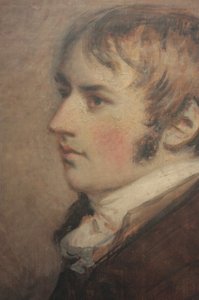
1776–1837, Vereinigtes Königreich
John Constable
Frühes Leben, Familie und Ausbildung John Constable wurde im Jahr 1776 in dem Dorf East Bergholt in Suffolk geboren. Als zweiter Sohn von Golding und Ann (Watts) Constable wuchs er in einem Umfeld auf, das tief von der lokalen Wirtschaft geprägt war. Sein Vater war ein wohlhabender Getreide- und Kohlehändler, dem auch die Flatford Mill gehörte. Diese enge Verbindung zum Fluss und zum lokalen Handel bedeutete, dass die Rhythmen des Wassers und die Bewegung der Waren untrennbar mit dem täglichen Leben seines Haushalts verwoben waren.
Alle Werke von John Constable, mit Größen und Preisen → Künstlerprofil Berühmte Werke von John Constable
Weitere Werke von John Constable
 Die Heufeld1821
 Ansicht des Salisburyer Doms vom Bischofsgarten1823
 Salisbury Kathedrale
 Der Hay Wain (Detail)1821

Lesevorschläge zu Cloud Study
 25 Meisterwerke: Die Highlights des Yale Center for British ArtEntdecken Sie 25 Ikonen der britischen Romantik von Constable bis Turner. Erleben Sie Meisterwerke auf AllPaintingsStore.com.
 Ethereal Skies: The Curated Collector's Guide to Cloudscape Masterpieces and Atmospheric GrandeurDiscover the sublime beauty of cloudscape masterpieces. From Impressionist light to atmospheric depth, explore a curated journey through fi…
 Die 25 besten Kunstwerke von John Constable: Meister der englischen LandschaftEntdecken Sie die 25 besten Werke von John Constable und die englische Romantik. Meisterwerke auf AllPaintingsStore.com online erleben.