


 Vorschau anzeigen
 Versenden
 Teilen
 Details anzeigen
 Leitfaden

 Herunterladen
 Ähnliche Objekte
 Röntgenaufnahme
 Diashow
 Q&A
Q&A Statistiken
Atlantic Codex (Codex Atlanticus), f. 1069 recto.


 Weiterlesen
Giclée / Kunstdruck
Giclée- oder Leinwanddruck in Museumsqualität mit schneller Produktion und flexiblen Veredelungsoptionen. ( Handgemalte Reproduktion bestellen Zum digitalen Bild wechseln)




P118B €10

P118H €10

P118W €10

P438Z €10

P508JH €12

P508YH €12

P805H €10

P805Z €10

P919BZ €10

P919G €10

P919XJ €10

P959ZH €10

P968JZ €12

W106C €8

W218G €10

W218JH €8

W218Y €10

W307PJ €10

W316G €10

W316PJ €8

W316Y €10

W398PJ €8

W4111J €10

W500HY €15

W500JH €15

W692G €12

W849H €8

W940BG €15

W953PJ €8




Wählen Sie aus unseren vordefinierten Formaten, die den ursprünglichen Proportionen des Kunstwerks entsprechen.

Geben Sie die benötigte Breite und Höhe an, damit der Druck perfekt in Ihren Rahmen oder an Ihre Wand passt. Ein Druck kann nur beschnitten, aber niemals größer als das Originalbild angefertigt werden; daher verliert ein Format mit anderen Proportionen einen Teil des Bildes. Wir senden Ihnen ein digitales Mockup zur Freigabe, bevor wir den Druck ausführen. Das auf dieser Seite gezeigte Bild zeigt nicht den tatsächlichen Beschnitt – dies ist nur im Mockup ersichtlich.
Weltweiter Versand () innerhalb von 2 Wochen statt der üblichen 4/5 Wochen. (30 Oktober)

Kostenloser weltweiter Expressversand

Hochwertige Leinenleinwand

Umfassender Versicherungsschutz beim Versand

Zollgebühren-Rückerstattungsgarantie

Garantie für exakte Farbtreue

100 Tage Rückgaberecht (nur bei Mängeln)

100% Geld-zurück-Garantie

Mengenrabatt verfügbar
 Die Glasoption ist nur für Größen unter 110 cm verfügbar.

Atlantic Codex (Codex Atlanticus), f. 1069 recto.
Giclée / Kunstdruck
Format der Reproduktion
-


Endpreis
€ 57
The Atlantic Codex (Codex Atlanticus), f. 1069 recto: A Window into Leonardo’s Mechanical Mind
Within the vast archives of the Biblioteca Ambrosiana in Milan resides a treasure unlike any other – folio 1069 recto from Leonardo da Vinci's *Codex Atlanticus*. This monochrome sketch, rendered on aged parchment with meticulous precision, isn’t merely a drawing; it’s a direct portal into the mind of one of history’s most brilliant polymaths. Dating back to 1482, this page encapsulates Leonardo’s relentless pursuit of knowledge across disciplines – engineering, mechanics, hydraulics, and even philosophy – revealing a visionary far ahead of his time.
The image is dominated by a densely packed network of interconnected designs: gears, pulleys, levers, and other complex contraptions arranged seemingly at random. There's no single focal point; instead, the viewer is invited to trace the intricate pathways of Leonardo’s thought process. Thin lines, indicative of careful drafting with pen or stylus, define geometric shapes – circles, squares, triangles – representing the fundamental components of his inventive mind. The texture of the parchment itself adds a layer of authenticity and historical weight, evoking the atmosphere of a scholar's workspace centuries ago.
Renaissance Technical Drawing: A Style Defined by Precision
This sketch exemplifies the distinctive style of Renaissance technical drawing, prioritizing accuracy and detail over purely aesthetic considerations. Leonardo’s approach wasn’t about creating a beautiful image; it was about documenting and understanding complex systems. The deliberate lack of shading or color emphasizes the schematic nature of the design, focusing attention on the precise relationships between its elements. This technique reflects the prevailing scientific spirit of the era – an obsession with observation, measurement, and rational analysis.
The dry sketching method employed—likely using charcoal or ink—highlights Leonardo’s preference for direct representation. Unlike later artistic styles that layered paint to create illusionistic depth, Leonardo sought to capture reality through a series of carefully drawn lines, creating a sense of tangible construction. The rudimentary perspective further reinforces the sketch's preliminary status – a working model rather than a finished rendering, revealing the iterative nature of Leonardo’s creative process.
Symbolism and the Pursuit of Knowledge
More than just a collection of mechanical designs, folio 1069 recto embodies Leonardo’s profound intellectual curiosity. The drawings depict a range of ambitious projects – devices for breathing underwater with a float, machines to lift and pump water, and even colossal cochleas intended to draw water from rivers. These weren't idle fantasies; they were tangible explorations of possibilities, reflecting Leonardo’s desire to harness the power of nature through ingenious engineering.
The *Codex Atlanticus* as a whole represents Leonardo’s relentless pursuit of knowledge and understanding through observation and design. It is a testament to his belief that art and science are not separate disciplines but rather complementary pathways to truth. This single folio offers a rare glimpse into the mind of a genius, inviting us to contemplate the boundless potential of human ingenuity and the enduring legacy of Leonardo da Vinci.
Fragen & Antworten
In welche Phase von Leonardo da Vincis Schaffen lässt sich "Atlantic Codex (Codex Atlanticus), f. 1069 recto." einordnen?
„Atlantic Codex (Codex Atlanticus), f. 1069 recto.“ entstammt der Mature Period von Leonardo da Vinci. Diese Einordnung setzt das Werk in Bezug zur künstlerischen Entwicklung des Künstlers.
Kann ich "Atlantic Codex (Codex Atlanticus), f. 1069 recto." von Leonardo da Vinci vor dem Kauf an meiner eigenen Wand sehen?
"Atlantic Codex (Codex Atlanticus), f. 1069 recto." von Leonardo da Vinci kann mithilfe der AR-Vorschau-Seite des Kunstwerks mit Augmented Reality auf einem kompatiblen Gerät direkt an Ihrer eigenen Wand vorab betrachtet werden.
Kann man "Atlantic Codex (Codex Atlanticus), f. 1069 recto." von Leonardo da Vinci als Diashow ansehen?
"Atlantic Codex (Codex Atlanticus), f. 1069 recto." von Leonardo da Vinci kann als Diashow auf der Diashow-Seite des Kunstwerks betrachtet werden.
Ähnliche Kunstwerke


Künstlerbiografie
Leonardo da Vinci: Leben und Vermächtnis
Frühes Leben und Ausbildung (1452-1482)
Leonardo di ser Piero da Vinci (geboren am 15. April 1452 – gestorben am 2. Mai 1519) wurde unerwünscht in der Nähe von Vinci, in der Republik Florenz, geboren. Seine frühe Ausbildung umfasste Lesen, Schreiben und Rechnen, obwohl eine formale Lateinschule später erfolgte. Mit vierzehn Jahren begann er eine Lehre bei Andrea del Verrocchio, einem führenden florentinischen Künstler. Diese intensive Ausbildung ließ ihn in die Malerei, Bildhauerei und technische Künste eintauchen – legte den Grundstein für sein vielseitiges Genie.
Erster Mailänder Zeitraum (1482-1499)
Im Jahr 1482 trat Leonardo dem Dienst von Ludovico Sforza, Herzog von Mailand, bei. Er war nicht nur Künstler; er diente als Ingenieur, Architekt und Bildhauer am Hof. In dieser Zeit entwarf er Militärbefestigungen, aufwendige Bühnenbilder und Skulpturen (viele unvollendet). Eine monumentale Beauftragung zu dieser Zeit war Die letzten Tage des Judas I., ein Fresko, das in der Refektorium des Klosters Santa Maria delle Grazie gemalt wurde – ein Werk, das die westliche Kunst nachhaltig beeinflussen sollte.
Rückkehr nach Florenz und Meisterwerke der Hochrenaissance (1500-1506)
Nach der französischen Invasion Mailands im Jahr 1499 kehrte Leonardo während eines Höhepunktes der künstlerischen Entwicklung nach Florenz zurück. Obwohl er weniger Werke produzierte als zuvor, waren ihre Auswirkungen enorm. In dieser Zeit begann die Arbeit an Mona Lisa (La Gioconda), dem berühmtesten Gemälde weltweit, und seine Techniken wurden weiter verfeinert.
Spätere Jahre und französisches Gönnertum (1506-1519)
Leonas späte Jahre waren von Reisen zwischen Florenz, Mailand und Rom geprägt, wo er für seine Expertise begehrt war, aber oft Projekte unvollständig ließ. Im Jahr 1516 nahm er die Einladung von König Franz I. an, um in der Nähe von Amboise in Frankreich im Château du Clos Lucé zu leben und zu arbeiten. Er starb dort im Jahr 1519 und hinterließ ein großes Vermächtnis aus künstlerlicher und wissenschaftlicher Forschung.
Einflüsse und künstlerische Entwicklung
- Frühe Einflüsse umfassten seinen Lehrer Verrocchio und die breitere florentinische künstlerische Tradition.
- Ein tiefes Interesse an Beobachtung trieb ihn dazu, die natürliche Welt akribisch zu studieren.
- Er ging von traditioneller religiöser Ikonographie ab und bevorzugte realistische Darstellungen menschlicher Emotionen und Anatomie.
- Seine Entwicklung der Sfumato-Technik – einer Methode, die subtile Schattierungen verwendet, um verschwommenen Umrissen und atmosphärischer Perspektive zu erzeugen – revolutionierte die Malerei und trug wesentlich zu seinem charakteristischen Stil bei.
Wichtige Leistungen
- Malerei: Mona Lisa, Die letzten Tage des Judas I., Jungfrau mit dem Leuchtstern, Verkündigung
- Zeichnung & Skizzen: Umfangreiche anatomische Studien, Ingenieurdesigns (Flugmaschinen, Waffen), botanische Illustrationen
- Wissenschaft & Technik: Pionierarbeit in der Anatomie, Optik, Hydraulik, Geologie und Kartographie. Konzipierte Erfindungen, die um Jahrhunderte voraus waren.
Historische Bedeutung
Leonas Einfluss auf die Kunstgeschichte ist unermesslich. Seine Gemälde werden für ihren Realismus, ihre psychologische Tiefe und ihre innovativen Techniken gefeiert. Er erhob den Status von Künstlern von geschickten Handwerkern zu intellektuellen Figuren. Über seine künstlerischen Leistungen hinaus haben seine wissenschaftlichen Untersuchungen und Erfindungen viele moderne Entdeckungen vorweggenommen. Er bleibt ein Symbol menschlicher Neugier, Kreativität und der Suche nach Wissen – eine wahre Verkörperung des Geistes der Renaissance. Sein Vermächtnis inspiriert bis heute Ehrfurcht und Faszination, festigt seinen Platz als eine der bemerkenswertesten Figuren der Geschichte.
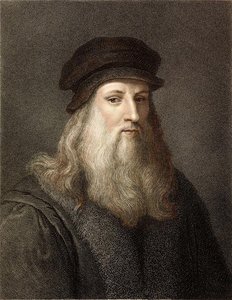
Leonardo da Vinci
1452 - 1519 , Italien
Kurzinfos
- Beeinflusste Künstler: ['Andrea del Verrocchio']
- Bemerkenswerte Werke:
- Mona Lisa
- Das letzte Abendmahl
- Verkündigung
- Jungfrau mit dem Leuchtstern
- Geburtsdatum: 15. April 1452
- Geburtsort: Vicenza, Italien
- Künstlerische Bewegung: Hochrenaissance
- Nationalität: Italienisch
- Todatum: 2. Mai 1519
- Vollständiger Name: Leonardo da Vinci
Ähnliche Artikel

Licht, Anatomie und Harmonie: Ein fundierter Vergleich von Leonardo, Michelangelo und Raffael
Erfahren Sie alles über die Meisterschaft von Leonardo, Michelangelo und Raffael. Jetzt die Tiefe der Hochrenaissance entdecken!


