


 In echtem Maßstab anzeigen
 Versenden als Grußkarte
 Teilen
 Details anzeigen
 Leitfaden öffnen

 Herunterladen
 Ähnliche Objekte
 Röntgenaufnahme
 Diashow
 Besucherstatistiken
Neptun

 Mehr anzeigen
Handgefertigte Ölreproduktion
Handgemaltes Ölgemälde auf Leinwand in Ihrer Wunschgröße und mit Rahmen, auf Bestellung von unseren Künstlern angefertigt. ( Zum Druck wechseln Zum digitalen Bild wechseln)




P118B €10

P118H €10

P118W €10

P438Z €10

P508JH €12

P508YH €12

P805H €10

P805Z €10

P919BZ €10

P919G €10

P919XJ €10

P959ZH €10

P968JZ €12

W106C €8

W218G €10

W218JH €8

W218Y €10

W307PJ €10

W316G €10

W316PJ €8

W316Y €10

W398PJ €8

W4111J €10

W500HY €15

W500JH €15

W692G €12

W849H €8

W940BG €15

W953PJ €8




Wählen Sie aus unseren vordefinierten Formaten, die den ursprünglichen Proportionen des Kunstwerks entsprechen.

Sie können Ihre eigenen Maße eingeben, um einen bestimmten Rahmen oder Platz auszufüllen. Wenn die gewählte Größe nicht den Proportionen des Originalbildes entspricht, werden wir das Kunstwerk entweder beschneiden oder das Gemälde durch zusätzliche, handgemalte Elemente erweitern. Ein digitales Mockup wird Ihnen zur Genehmigung zugesandt, bevor die Produktion beginnt.
Bitte beachten Sie, dass die Bildschirmvorschau nicht die tatsächliche Beschneidung oder Erweiterung widerspiegelt. Nur das Mockup zeigt die endgültige Komposition exakt an.
Obwohl Sondermaße verfügbar sind, empfehlen wir, eine Größe aus der vordefinierten Liste zu wählen, um die ursprünglichen Proportionen beizubehalten.
Nach der Bestellung wird das AllPaintingsStore.com-Team dem Kunden Anweisungen per E-Mail zusenden und eine Mockup-Vorschau bereitstellen.
Weltweiter Versand () in nur 3 bis 4 Wochen statt der üblichen 5 Wochen. (11 Oktober). Keine Kompromisse bei der Qualität.

Kostenloser weltweiter Expressversand

Hochwertige Leinenleinwand

Vollständiger Versicherungsschutz beim Versand

Zollgebühren-Rückerstattungsgarantie

Garantie für exakte Farbtreue

100-tägiges Rückgaberecht (nur bei Mängeln)

100% Geld-zurück-Garantie

Angebot für Mengenrabatt
 Die Glasoption ist nur für Größen unter 110 cm verfügbar.

Neptun
Reproduktionsmedium
Format der Reproduktion
-


Gesamtpreis
€ 222
Leonardo da Vinci’s “Neptune”: A Dance of Power and Poseidon
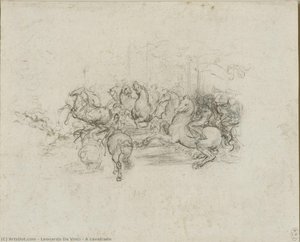
Leonardo da Vinci's "Neptun," often referred to simply as "Neptune," is not merely a painting; it’s a dramatic embodiment of Roman mythology, rendered with an arresting intensity that speaks volumes about the artist’s mastery of composition, light, and psychological depth. Completed around 1482, this charcoal drawing on black chalk offers a glimpse into da Vinci's early explorations of figure work and his fascination with classical themes – specifically, the turbulent power of the sea god Poseidon. Unlike many of his later, more polished works, “Neptun” retains a raw energy, a sense of immediacy that reflects its status as a preliminary study rather than a finished masterpiece.
The scene depicts Neptune, king of the gods and ruler of the oceans, seated upon a shell-shaped rock. He’s not presented in the idealized form often found in Renaissance sculpture; instead, da Vinci captures him with a palpable sense of authority and even a hint of brooding intensity. His posture is deliberately forceful, his gaze fixed ahead as if commanding the waves themselves. The figure is rendered with rapid, confident strokes – a characteristic of Leonardo’s working method – revealing the underlying structure beneath the surface. Notice how he uses hatching to create texture and volume, particularly in the folds of his drapery and the swirling patterns of the sea.
A Symphony of Movement: Technique and Composition
Da Vinci's technique is immediately striking. The charcoal is applied with a remarkable degree of spontaneity, creating a dynamic sense of movement that contrasts sharply with the static quality often associated with Renaissance art. He masterfully employs hatching – closely spaced parallel lines – to build up tones and create an illusion of depth and texture. The use of light and shadow is particularly effective in conveying the drama of the scene; the dark background emphasizes Neptune’s form, while strategically placed highlights draw attention to his face and hands.
Compositionally, “Neptun” is a tour de force. The figure dominates the frame, yet he's not isolated. The swirling waves, depicted with loose, expressive strokes, create a sense of chaos and power that mirrors Neptune’s dominion over the sea. The inclusion of Amphitrite, Neptune’s consort, riding on his back, adds another layer of visual interest and reinforces the theme of royal authority. The placement of the birds – one soaring above, another diving below – subtly connects the earthly realm with the divine, suggesting a broader cosmic order.
Symbolism and Mythological Resonance
“Neptun” is deeply rooted in Roman mythology, drawing upon centuries of tradition surrounding Poseidon. The shell-shaped rock serves as Neptune’s throne, symbolizing his connection to the sea – the very essence of his power. The turbulent waves are not merely decorative; they represent the unpredictable and potentially destructive forces that lie beneath the surface. The presence of birds, often associated with divine messengers or omens, adds a layer of symbolic complexity.
Interestingly, da Vinci’s depiction deviates slightly from traditional portrayals of Neptune. He doesn't present him as a benevolent protector; instead, he captures a more formidable and even somewhat menacing figure – a god who commands respect through sheer force of will. This nuanced portrayal reflects da Vinci’s broader interest in exploring the complexities of human nature and the darker aspects of the divine.
A Legacy of Artistic Innovation
Despite its status as an early study, “Neptun” reveals da Vinci's burgeoning genius and his willingness to experiment with new techniques. It demonstrates his ability to capture not just the physical appearance of a subject but also their psychological state – a skill that would become increasingly central to his later work. Reproductions of this captivating drawing offer a unique opportunity to appreciate da Vinci’s artistic process and to witness firsthand the genesis of one of the most iconic images in Western art history. Its raw energy and dramatic composition continue to resonate with viewers today, reminding us of the enduring power of classical mythology and the boundless creativity of Leonardo da Vinci.
Fragen & Antworten
Wie intensiv sind die Farben in "Neptun" von Leonardo da Vinci?
"Neptun" von Leonardo da Vinci weist eine Vivid Farbintensität auf.
Wer verkauft handgemalte Kopien von "Neptun" von Leonardo da Vinci?
Eine handgemalte Reproduktion von "Neptun" von Leonardo da Vinci können Sie direkt auf diese Seite bestellen: eine handgemalte Ölreproduktion auf Leinenleinwand, auf Bestellung gefertigt.
Inwiefern steht das Sujet von „Neptun“ in Beziehung zu den üblichen Themen von Leonardo da Vinci?
"Neptun" stellt mythology, sea, neptune, horse, renaissance, figure, composition, marine dar, während die dokumentierten Themen von Leonardo da Vinci classical mythology, renaissance ideals, religious symbolism, divine power, allegorical representation, humanism, da vinci’s exploration of form, masterpiece sind. Ein Vergleich der beiden zeigt, wie das Werk mit den üblichen Sujets des Künstlers in Verbindung steht.
Wer ist der Urheber von "Neptun" und welcher Stilrichtung ist das Werk zuzuordnen?
"Neptun" wurde von Leonardo da Vinci im Stil der High Renaissance geschaffen. Künstler und Epoche bestimmen die Tradition des Werkes.
Ist "Neptun" als Kunstdruck erhältlich?
"Neptun" ist als ein Fine Art Print auf Baumwollkanvas oder Archiv-Leinwandpapier erhältlich. Bestellungen können in der von Ihnen gewünschten Größe auf diese Seite aufgegeben werden.
Wer hat "Neptun" erschaffen?
"Neptun" wurde von Leonardo da Vinci geschaffen. Die Informationen auf dieser Seite beschreiben das Originalwerk von Leonardo da Vinci.
Welche allgemeine Stimmung vermittelt "Neptun" von Leonardo da Vinci?
"Neptun" hat eine Elegant Atmosphäre.
Ähnliche Kunstwerke




Biografie des Künstlers
Leonardo da Vinci: Leben und Vermächtnis
Frühes Leben und Ausbildung (1452-1482)
Leonardo di ser Piero da Vinci (geboren am 15. April 1452 – gestorben am 2. Mai 1519) wurde unerwünscht in der Nähe von Vinci, in der Republik Florenz, geboren. Seine frühe Ausbildung umfasste Lesen, Schreiben und Rechnen, obwohl eine formale Lateinschule später erfolgte. Mit vierzehn Jahren begann er eine Lehre bei Andrea del Verrocchio, einem führenden florentinischen Künstler. Diese intensive Ausbildung ließ ihn in die Malerei, Bildhauerei und technische Künste eintauchen – legte den Grundstein für sein vielseitiges Genie.
Erster Mailänder Zeitraum (1482-1499)
Im Jahr 1482 trat Leonardo dem Dienst von Ludovico Sforza, Herzog von Mailand, bei. Er war nicht nur Künstler; er diente als Ingenieur, Architekt und Bildhauer am Hof. In dieser Zeit entwarf er Militärbefestigungen, aufwendige Bühnenbilder und Skulpturen (viele unvollendet). Eine monumentale Beauftragung zu dieser Zeit war Die letzten Tage des Judas I., ein Fresko, das in der Refektorium des Klosters Santa Maria delle Grazie gemalt wurde – ein Werk, das die westliche Kunst nachhaltig beeinflussen sollte.
Rückkehr nach Florenz und Meisterwerke der Hochrenaissance (1500-1506)
Nach der französischen Invasion Mailands im Jahr 1499 kehrte Leonardo während eines Höhepunktes der künstlerischen Entwicklung nach Florenz zurück. Obwohl er weniger Werke produzierte als zuvor, waren ihre Auswirkungen enorm. In dieser Zeit begann die Arbeit an Mona Lisa (La Gioconda), dem berühmtesten Gemälde weltweit, und seine Techniken wurden weiter verfeinert.
Spätere Jahre und französisches Gönnertum (1506-1519)
Leonas späte Jahre waren von Reisen zwischen Florenz, Mailand und Rom geprägt, wo er für seine Expertise begehrt war, aber oft Projekte unvollständig ließ. Im Jahr 1516 nahm er die Einladung von König Franz I. an, um in der Nähe von Amboise in Frankreich im Château du Clos Lucé zu leben und zu arbeiten. Er starb dort im Jahr 1519 und hinterließ ein großes Vermächtnis aus künstlerlicher und wissenschaftlicher Forschung.
Einflüsse und künstlerische Entwicklung
- Frühe Einflüsse umfassten seinen Lehrer Verrocchio und die breitere florentinische künstlerische Tradition.
- Ein tiefes Interesse an Beobachtung trieb ihn dazu, die natürliche Welt akribisch zu studieren.
- Er ging von traditioneller religiöser Ikonographie ab und bevorzugte realistische Darstellungen menschlicher Emotionen und Anatomie.
- Seine Entwicklung der Sfumato-Technik – einer Methode, die subtile Schattierungen verwendet, um verschwommenen Umrissen und atmosphärischer Perspektive zu erzeugen – revolutionierte die Malerei und trug wesentlich zu seinem charakteristischen Stil bei.
Wichtige Leistungen
- Malerei: Mona Lisa, Die letzten Tage des Judas I., Jungfrau mit dem Leuchtstern, Verkündigung
- Zeichnung & Skizzen: Umfangreiche anatomische Studien, Ingenieurdesigns (Flugmaschinen, Waffen), botanische Illustrationen
- Wissenschaft & Technik: Pionierarbeit in der Anatomie, Optik, Hydraulik, Geologie und Kartographie. Konzipierte Erfindungen, die um Jahrhunderte voraus waren.
Historische Bedeutung
Leonas Einfluss auf die Kunstgeschichte ist unermesslich. Seine Gemälde werden für ihren Realismus, ihre psychologische Tiefe und ihre innovativen Techniken gefeiert. Er erhob den Status von Künstlern von geschickten Handwerkern zu intellektuellen Figuren. Über seine künstlerischen Leistungen hinaus haben seine wissenschaftlichen Untersuchungen und Erfindungen viele moderne Entdeckungen vorweggenommen. Er bleibt ein Symbol menschlicher Neugier, Kreativität und der Suche nach Wissen – eine wahre Verkörperung des Geistes der Renaissance. Sein Vermächtnis inspiriert bis heute Ehrfurcht und Faszination, festigt seinen Platz als eine der bemerkenswertesten Figuren der Geschichte.
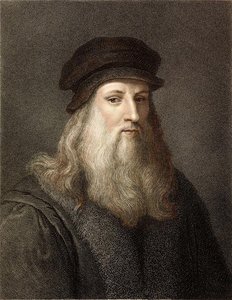
Leonardo da Vinci
1452 - 1519 , Italien
Eckdaten zum Künstler
- Beeinflusste Künstler: ['Andrea del Verrocchio']
- Bemerkenswerte Werke:
- Mona Lisa
- Das letzte Abendmahl
- Verkündigung
- Jungfrau mit dem Leuchtstern
- Geburtsdatum: 15. April 1452
- Geburtsort: Vicenza, Italien
- Künstlerische Bewegung: Hochrenaissance
- Nationalität: Italienisch
- Todatum: 2. Mai 1519
- Vollständiger Name: Leonardo da Vinci
Verwandte Artikel

Mastering Charcoal: A Professional Guide to Texture and Depth for Large-Scale Interior Art Commissions
Discover professional techniques for mastering charcoal texture and depth. An expert guide for hotel designers and procurement managers looking to integrate high-impact monochrome art into large-scale hospitality projects with precision and scale.


