


 Vorschau anzeigen
 Versenden
 Teilen
 Details anzeigen
 Leitfaden

 Herunterladen
 Ähnliche Objekte
 Röntgenaufnahme
 Diashow
 Q&A
Q&A Statistiken
Saint Jerome
 Acryl auf Leinwand
- Wandkunst
- Leonardo da Vinci
 1480
1480- Renaissance
 103.0 x 107.0 cm
 Weiterlesen
Giclée / Kunstdruck
Giclée- oder Leinwanddruck in Museumsqualität mit schneller Produktion und flexiblen Veredelungsoptionen. ( Handgemalte Reproduktion bestellen Zum digitalen Bild wechseln)




P118B €10

P118H €10

P118W €10

P438Z €10

P508JH €12

P508YH €12

P805H €10

P805Z €10

P919BZ €10

P919G €10

P919XJ €10

P959ZH €10

P968JZ €12

W106C €8

W218G €10

W218JH €8

W218Y €10

W307PJ €10

W316G €10

W316PJ €8

W316Y €10

W398PJ €8

W4111J €10

W500HY €15

W500JH €15

W692G €12

W849H €8

W940BG €15

W953PJ €8




Wählen Sie aus unseren vordefinierten Formaten, die den ursprünglichen Proportionen des Kunstwerks entsprechen.

Geben Sie die benötigte Breite und Höhe an, damit der Druck perfekt in Ihren Rahmen oder an Ihre Wand passt. Ein Druck kann nur beschnitten, aber niemals größer als das Originalbild angefertigt werden; daher verliert ein Format mit anderen Proportionen einen Teil des Bildes. Wir senden Ihnen ein digitales Mockup zur Freigabe, bevor wir den Druck ausführen. Das auf dieser Seite gezeigte Bild zeigt nicht den tatsächlichen Beschnitt – dies ist nur im Mockup ersichtlich.
Weltweiter Versand () innerhalb von 2 Wochen statt der üblichen 4/5 Wochen. (28 Oktober)

Kostenloser weltweiter Expressversand

Hochwertige Leinenleinwand

Umfassender Versicherungsschutz beim Versand

Zollgebühren-Rückerstattungsgarantie

Garantie für exakte Farbtreue

100 Tage Rückgaberecht (nur bei Mängeln)

100% Geld-zurück-Garantie

Mengenrabatt verfügbar
 Die Glasoption ist nur für Größen unter 110 cm verfügbar.

Saint Jerome
Giclée / Kunstdruck
Format der Reproduktion
-


Endpreis
€ 56
Saint Jerome: A Masterpiece of Renaissance Emotion
Leonardo da Vinci’s *Saint Jerome in the Wilderness*, completed around 1480–1490, stands as one of the most poignant and psychologically complex paintings of the High Renaissance. Housed in the Pinacoteca Vaticana Museum, this unfinished masterpiece transcends mere representation; it embodies Leonardo's profound understanding of human emotion and his innovative artistic techniques—a testament to his genius that continues to captivate audiences centuries later.The painting depicts Saint Jerome as an elderly man seated upon a stone wall or fireplace, bathed in the ethereal glow of sfumato – Da Vinci’s signature blending technique – which softens contours and imbues the scene with an atmosphere of serene contemplation. Behind him unfolds a landscape reminiscent of Tuscany, featuring distant mountains shrouded in mist and a solitary building, subtly reinforcing the saint's isolation and spiritual quest.
- Composition & Symbolism: The trapezoidal arrangement of Jerome’s figure is deliberately unsettling, contrasting with the flowing lines of the lion at his feet—a symbol of strength and divine providence. The crucifix held in Jerome’s right hand serves as a focal point for contemplation, representing Christ's sacrifice and guiding Jerome’s spiritual journey.
- Artistic Techniques: Da Vinci employed oil on panel, utilizing thin glazes to achieve remarkable luminosity and textural detail. His meticulous observation of anatomy is evident in the depiction of Jerome’s musculature—a breakthrough achievement for Renaissance art that foreshadowed his later masterpieces.
- Historical Context: Painted during Leonardo's formative years, *Saint Jerome* reflects the artistic fervor of the era, influenced by artists like Pietro Perugino and emphasizing humanist ideals. It represents a pivotal moment in Da Vinci’s artistic development, establishing him as a pioneer of sfumato and psychological realism.
- Conservation & Restoration: The painting suffered significant damage after Da Vinci's death when it was cut into five pieces. Recent restoration efforts have painstakingly pieced together the fragments, preserving this invaluable artwork for future generations.
More than just a portrait of Saint Jerome, this painting is an exploration of inner turmoil and spiritual devotion—a reflection of Leonardo’s own personal struggles during his time in Milan. The unsettling gaze of Jerome captures the essence of penitence and underscores Da Vinci's ability to convey profound emotion through subtle visual cues.
Leonardo da Vinci: Anatomical Precision & Artistic Innovation
Da Vinci’s meticulous anatomical studies informed his artistic practice, as evidenced by the exquisitely rendered musculature in Jerome’s neck—a groundbreaking achievement for Renaissance art. His mastery of sfumato revolutionized painting technique, creating a hazy effect that lends depth and volume to the scene while simultaneously conveying an atmosphere of profound contemplation.
A Window into Renaissance Spirituality
*Saint Jerome* embodies the humanist spirit of the High Renaissance, reflecting Leonardo’s fascination with human psychology and his belief in the transformative power of art. Its enduring appeal lies not only in its technical brilliance but also in its ability to evoke empathy and inspire contemplation—a timeless masterpiece that continues to resonate with viewers today.
Experiencing Saint Jerome: Reproductions by AllPaintingsStore
- Saint Jerome by Leonardo Da Vinci
- List of works by Leonardo da Vinci
- The Pinacoteca Vaticana Museum of the Vatican City
For those seeking to immerse themselves in the beauty and craftsmanship of Leonardo Da Vinci’s *Saint Jerome*, AllPaintingsStore offers exceptional handmade oil painting reproductions—a chance to own a piece of art history.
Fragen & Antworten
Welche Form und Maße hat "Saint Jerome" von Leonardo da Vinci?
"Saint Jerome" von Leonardo da Vinci hat die Proportionen eines Hochformat-Werks mit einer Größe von 103 x 107 cm.
Ist "Saint Jerome" von Leonardo da Vinci ein Gemälde, eine Zeichnung oder ein Druck?
Im Katalog ist "Saint Jerome" von Leonardo da Vinci als Wandkunst geführt. Die Kategorie hilft dabei, ähnliche Werke zu finden.
Welchem Künstler wird "Saint Jerome" zugeschrieben?
"Saint Jerome" wurde von Leonardo da Vinci geschaffen. Die Informationen auf dieser Seite beschreiben das Originalwerk von Leonardo da Vinci.
Ähnliche Kunstwerke


Künstlerbiografie
Leonardo da Vinci: Leben und Vermächtnis
Frühes Leben und Ausbildung (1452-1482)
Leonardo di ser Piero da Vinci (geboren am 15. April 1452 – gestorben am 2. Mai 1519) wurde unerwünscht in der Nähe von Vinci, in der Republik Florenz, geboren. Seine frühe Ausbildung umfasste Lesen, Schreiben und Rechnen, obwohl eine formale Lateinschule später erfolgte. Mit vierzehn Jahren begann er eine Lehre bei Andrea del Verrocchio, einem führenden florentinischen Künstler. Diese intensive Ausbildung ließ ihn in die Malerei, Bildhauerei und technische Künste eintauchen – legte den Grundstein für sein vielseitiges Genie.
Erster Mailänder Zeitraum (1482-1499)
Im Jahr 1482 trat Leonardo dem Dienst von Ludovico Sforza, Herzog von Mailand, bei. Er war nicht nur Künstler; er diente als Ingenieur, Architekt und Bildhauer am Hof. In dieser Zeit entwarf er Militärbefestigungen, aufwendige Bühnenbilder und Skulpturen (viele unvollendet). Eine monumentale Beauftragung zu dieser Zeit war Die letzten Tage des Judas I., ein Fresko, das in der Refektorium des Klosters Santa Maria delle Grazie gemalt wurde – ein Werk, das die westliche Kunst nachhaltig beeinflussen sollte.
Rückkehr nach Florenz und Meisterwerke der Hochrenaissance (1500-1506)
Nach der französischen Invasion Mailands im Jahr 1499 kehrte Leonardo während eines Höhepunktes der künstlerischen Entwicklung nach Florenz zurück. Obwohl er weniger Werke produzierte als zuvor, waren ihre Auswirkungen enorm. In dieser Zeit begann die Arbeit an Mona Lisa (La Gioconda), dem berühmtesten Gemälde weltweit, und seine Techniken wurden weiter verfeinert.
Spätere Jahre und französisches Gönnertum (1506-1519)
Leonas späte Jahre waren von Reisen zwischen Florenz, Mailand und Rom geprägt, wo er für seine Expertise begehrt war, aber oft Projekte unvollständig ließ. Im Jahr 1516 nahm er die Einladung von König Franz I. an, um in der Nähe von Amboise in Frankreich im Château du Clos Lucé zu leben und zu arbeiten. Er starb dort im Jahr 1519 und hinterließ ein großes Vermächtnis aus künstlerlicher und wissenschaftlicher Forschung.
Einflüsse und künstlerische Entwicklung
- Frühe Einflüsse umfassten seinen Lehrer Verrocchio und die breitere florentinische künstlerische Tradition.
- Ein tiefes Interesse an Beobachtung trieb ihn dazu, die natürliche Welt akribisch zu studieren.
- Er ging von traditioneller religiöser Ikonographie ab und bevorzugte realistische Darstellungen menschlicher Emotionen und Anatomie.
- Seine Entwicklung der Sfumato-Technik – einer Methode, die subtile Schattierungen verwendet, um verschwommenen Umrissen und atmosphärischer Perspektive zu erzeugen – revolutionierte die Malerei und trug wesentlich zu seinem charakteristischen Stil bei.
Wichtige Leistungen
- Malerei: Mona Lisa, Die letzten Tage des Judas I., Jungfrau mit dem Leuchtstern, Verkündigung
- Zeichnung & Skizzen: Umfangreiche anatomische Studien, Ingenieurdesigns (Flugmaschinen, Waffen), botanische Illustrationen
- Wissenschaft & Technik: Pionierarbeit in der Anatomie, Optik, Hydraulik, Geologie und Kartographie. Konzipierte Erfindungen, die um Jahrhunderte voraus waren.
Historische Bedeutung
Leonas Einfluss auf die Kunstgeschichte ist unermesslich. Seine Gemälde werden für ihren Realismus, ihre psychologische Tiefe und ihre innovativen Techniken gefeiert. Er erhob den Status von Künstlern von geschickten Handwerkern zu intellektuellen Figuren. Über seine künstlerischen Leistungen hinaus haben seine wissenschaftlichen Untersuchungen und Erfindungen viele moderne Entdeckungen vorweggenommen. Er bleibt ein Symbol menschlicher Neugier, Kreativität und der Suche nach Wissen – eine wahre Verkörperung des Geistes der Renaissance. Sein Vermächtnis inspiriert bis heute Ehrfurcht und Faszination, festigt seinen Platz als eine der bemerkenswertesten Figuren der Geschichte.
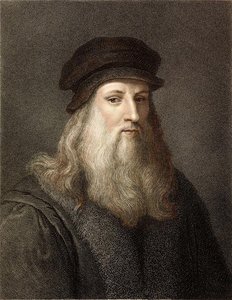
Leonardo da Vinci
1452 - 1519 , Italien
Kurzinfos
- Beeinflusste Künstler: ['Andrea del Verrocchio']
- Bemerkenswerte Werke:
- Mona Lisa
- Das letzte Abendmahl
- Verkündigung
- Jungfrau mit dem Leuchtstern
- Geburtsdatum: 15. April 1452
- Geburtsort: Vicenza, Italien
- Künstlerische Bewegung: Hochrenaissance
- Nationalität: Italienisch
- Todatum: 2. Mai 1519
- Vollständiger Name: Leonardo da Vinci
Ähnliche Artikel

Leonardo da Vinci: Synthese von Kunst, Wissenschaft und menschlicher Beobachtung – Eine Renaissance-Meisterleistung für den Kenner
Entdecken Sie Leonardo da Vincis revolutionäre Kunst und Wissenschaft! Expertenanalyse seiner Meisterwerke, Techniken wie Sfumato & Chiaroscuro. Für Kenner und Sammler.

Die 25 beeindruckendsten Meisterwerke des Louvre in Paris: Ein Muss für Kunstliebhaber
Entdecken Sie die 25 größten Meisterwerke des Louvre, von Da Vinci bis Delacroix. Erleben Sie zeitlose Kunst auf AllPaintingsStore.com.

Die 25 bedeutendsten Meisterwerke der Uffizien in Florenz
Erleben Sie die Meisterwerke der Uffizien von Botticelli bis Da Vinci. Entdecken Sie alle Schätze auf AllPaintingsStore.com.

Meisterwerke der Genialität: Die 25 besten Kunstwerke von Leonardo da Vinci
Entdecke die 25 größten Meisterwerke von Leonardo da Vinci und die Magie der Renaissance. Alle Schätze online auf AllPaintingsStore.com erleben.
Renaissance Humanismus: Die 10 Meisterwerke, die eine Epoche prägten – Kunst für Ihr Zuhause
Entdecken Sie die 10 Meisterwerke der Renaissance Humanismus! Von Leonardo da Vinci bis Michelangelo – erfahren Sie die Geschichten hinter ikonischen Gemälden & Skulpturen. Finden Sie Ihre perfekte Reproduktion auf AllPaintingsStore.com.


