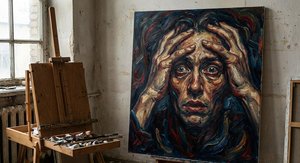
1948. Acryl auf Leinwand.

§ 1Catalogue data


Dieses Kunstwerk ist urheberrechtlich geschützt
Die auf dieser Seite dargestellten Kunstwerke sind urheberrechtlich geschützt, was bedeutet, dass wir keine identische Reproduktion rechtmäßig erstellen oder verkaufen dürfen. Dieser Schutz wird durch internationale Abkommen wie die Berner Übereinkunft und durch nationale Gesetze, einschließlich derer, die von den US-Urheberrecht – Titel 17.
Als respektvolle und rechtlich einwandfreie Alternative bieten wir individuelle, handgemalte Kunstwerke an, die vom Original inspiriert sind. Unsere geschickten und professionellen Künstler studieren sorgfältig den Stil, die Stimmung und das künstlerische Wesen des Originals, um ein neues, einzigartiges Werk zu schaffen, das dasselbe Gefühl hervorruft – während es zugleich eine eigenständige Originalschöpfung bleibt.
Diese Methode entspricht vollumfänglich den Urheberrechtsbestimmungen, da sie keine Kopie oder Vervielfältigung des geschützten Kunstwerks darstellt. Stattdessen handelt es sich um eine kreative Neuinterpretation – ein neues Gemälde, das vom Original inspiriert, aber nicht identisch mit ihm ist.
 Mehr erfahren
§ 2Abstract
Beschreibung des Sammlerstücks
Entdecken Sie "Der Baum des Lebens" von Marc Chagall – ein traumhaftes Surrealismus Gemälde voller Farbe und Symbolik! Lassen Sie sich inspirieren und finden Sie hochwertige Reproduktionen auf AllPaintingsStore.com.
Künstlerbiografie
Entdecken Sie Marc Chagall (1887-1985): Russische und französische Künstler, der für lebendige Kubist- und Symbolist-Gemälde, jüdische Folklore-Themen und atemberaubende Glasmalerei bekannt ist. Erkunden Sie sein Erbe! #MarcChagall
§ 3Commentary
A Surreal Descent into Memory: Exploring Marc Chagall’s “The Tree of Life”
Marc Chagall's "The Tree of Life," painted in 1948, isn’t merely a visual spectacle; it’s an invitation to wander through the landscapes of dreams and recollection. Created during a period marked by profound artistic experimentation and deeply rooted personal reflection—a time mirroring the anxieties and aspirations of postwar Europe—this monumental canvas embodies Chagall's signature style: a breathtaking fusion of Impressionism, Expressionism, and Fauvist influences that prioritizes emotion over precise representation. The painting depicts a man cradling a woman in his arms as they ascend a towering tree, bathed in an ethereal glow. Surrounding them are figures engaged in various activities—some gazing upwards with wonder, others interacting peacefully—creating a tableau brimming with life and movement. An umbrella punctuates the scene, hinting at both meteorological conditions and perhaps a more poignant suggestion of protection or vulnerability amidst the expansive sky.Style & Technique: Chromatic Harmony and Fluid Brushstrokes
Chagall’s masterful technique distinguishes “The Tree of Life” from many contemporary works. He eschewed academic conventions, favoring instead bold color palettes—primarily yellows, blues, reds, and greens—that pulsate with vibrancy and luminosity. These colors aren't blended smoothly; rather, they are applied in thick, expressive brushstrokes that convey a palpable sense of energy and spontaneity. This deliberate disregard for meticulous detail aligns perfectly with Chagall’s artistic philosophy: to capture not what the eye sees but what the soul feels. The artist utilized tempera on canvas, a medium known for its durability and ability to achieve brilliant hues—a testament to his unwavering commitment to conveying emotion through color and texture.Symbolism Rooted in Folklore & Faith
The imagery within “The Tree of Life” is laden with symbolism drawn from Chagall’s Jewish heritage and folklore traditions. The tree itself represents life, fertility, and connection to the divine—a motif recurrent throughout Chagall's oeuvre. Its branches reach upwards towards heaven, symbolizing aspiration and spiritual transcendence. The woman cradled in the man’s arms embodies maternal love and nurturing, while their ascent signifies a journey toward wholeness and unity. Recurring figures like doves—symbols of peace—and stylized animals contribute to the painting’s rich tapestry of imagery. Notably, the inclusion of a clock and a book adds layers of meaning, referencing time and knowledge – elements central to Chagall's contemplation of human experience.Historical Context & Artistic Legacy
Painted in the aftermath of World War II, “The Tree of Life” reflects the pervasive atmosphere of uncertainty and hope that characterized the era. Chagall’s artistic explorations during this period coincided with a broader movement toward Surrealism, fueled by artists like Dalí and Ernst—a stylistic rebellion against rational thought and championed as a means of accessing subconscious realms. Yet, Chagall remained steadfastly independent, forging his own path rooted in deeply personal memories and spiritual convictions. “The Tree of Life” stands as an enduring emblem of Chagall’s artistic vision—a testament to the transformative power of imagination and the ability of art to convey profound emotional truths. Its vibrant colors and dynamic composition continue to inspire viewers today, cementing its place among the most celebrated paintings of the 20th century.Fragen & Antworten
Wer ist der Urheber von "Der Baum des Lebens" und aus welchem Jahr stammt das Werk?
„Der Baum des Lebens“ stammt von Marc Chagall und wird auf 1948 datiert.
Ist "Der Baum des Lebens" von Marc Chagall im Hoch-, Quer- oder Quadratformat angeordnet?
"Der Baum des Lebens" von Marc Chagall ist eine Komposition im Hochformat-Format. Die Proportionen sollten vor der Wahl der Druckgröße überprüft werden.
Welchem Künstler wird "Der Baum des Lebens" zugeschrieben?
Der Künstler hinter „Der Baum des Lebens“ ist Marc Chagall. Das Werk ist unter dem Namen von Marc Chagall katalogisiert.


 Zum Druck wechseln


 Bei Kunstwerken oder Reproduktionen, die an einer Seite größer als 105 cm (ca. 41 Zoll) sind, wird der Rahmen zerlegt als Bausatz geliefert. Diese Methode gewährleistet eine sichere Zustellung und verhindert Schäden während des Transports.