


 In echtem Maßstab anzeigen
 Versenden als Grußkarte
 Teilen
 Details anzeigen
 Leitfaden öffnen

 Herunterladen
 Ähnliche Objekte
 Röntgenaufnahme
 Diashow
 Besucherstatistiken
Untitled 13


 Mehr anzeigen
Die auf dieser Seite dargestellten Kunstwerke sind urheberrechtlich geschützt, was bedeutet, dass wir keine identische Reproduktion rechtmäßig erstellen oder verkaufen dürfen. Dieser Schutz wird durch internationale Abkommen wie die Berner Übereinkunft und durch nationale Gesetze, einschließlich derer, die von den ... festgelegt wurden US-Urheberrecht – Titel 17.
Als respektvolle und rechtlich einwandfreie Alternative bieten wir individuelle, handgemalte Kunstwerke an, die vom Original inspiriert sind. Unsere geschickten und professionellen Künstler studieren sorgfältig den Stil, die Stimmung und das künstlerische Wesen des Originals, um ein neues, einzigartiges Werk zu schaffen, das dasselbe Gefühl hervorruft – während es zugleich eine eigenständige Originalschöpfung bleibt.
Diese Methode entspricht vollumfänglich den Urheberrechtsbestimmungen, da sie keine Kopie oder Vervielfältigung des geschützten Kunstwerks darstellt. Stattdessen handelt es sich um eine kreative Neuinterpretation – ein neues Gemälde, das vom Original inspiriert, aber nicht identisch mit ihm ist.
Handgefertigte Ölreproduktion
Handgemaltes Ölgemälde auf Leinwand in Ihrer Wunschgröße und mit Rahmen, auf Bestellung von unseren Künstlern angefertigt. ( Zum Druck wechseln Zum digitalen Bild wechseln)




P118B €10

P118H €10

P118W €10

P438Z €10

P508JH €12

P508YH €12

P805H €10

P805Z €10

P919BZ €10

P919G €10

P919XJ €10

P959ZH €10

P968JZ €12

W106C €8

W218G €10

W218JH €8

W218Y €10

W307PJ €10

W316G €10

W316PJ €8

W316Y €10

W398PJ €8

W4111J €10

W500HY €15

W500JH €15

W692G €12

W849H €8

W940BG €15

W953PJ €8




Wählen Sie aus unseren vordefinierten Formaten, die den ursprünglichen Proportionen des Kunstwerks entsprechen.

Geben Sie die Breite und die Höhe an, die Sie für Ihren Rahmen oder Ihre Wand benötigen. Da dieses Werk handgemalt ist, kann der Künstler bei einer anderen Form etwas mehr um das Bild herum malen oder etwas abschneiden – Sie entscheiden. Wir senden Ihnen ein digitales Mockup zur Freigabe, bevor mit dem Malen begonnen wird. Das auf dieser Seite gezeigte Bild stellt nicht das tatsächliche Ergebnis dar – dies tut nur das Mockup.
Nach der Bestellung wird das AllPaintingsStore.com-Team dem Kunden Anweisungen per E-Mail zusenden und eine Mockup-Vorschau bereitstellen.
Weltweiter Versand () in nur 3 bis 4 Wochen statt der üblichen 5 Wochen. (23 Oktober). Keine Kompromisse bei der Qualität.

Kostenloser weltweiter Expressversand

Hochwertige Leinenleinwand

Vollständiger Versicherungsschutz beim Versand

Zollgebühren-Rückerstattungsgarantie

Garantie für exakte Farbtreue

100-tägiges Rückgaberecht (nur bei Mängeln)

100% Geld-zurück-Garantie

Angebot für Mengenrabatt
 Die Glasoption ist nur für Größen unter 110 cm verfügbar.

Untitled 13
Reproduktionsmedium
Format der Reproduktion
-


Gesamtpreis
€ 227
A Symphony of Quietude: Exploring Mark Rothko’s ‘Untitled 13’
Mark Rothko (ROTH-koh; Markus Yakovlevich Rothkowitz until 1940; September 25, 1903 – February 25, 1970) was an American abstract painter. He is best known for his color field paintings that depicted irregular and painterly rectangular regions of color, which he produced from 1949 to 1970. Although Rothko did not personally subscribe to any one school, he is associated with the American abstract expressionism movement of modern art. Born to a Jewish family in Dvinsk (now Daugavpils), Latvia, then part of the Russian Empire, Rothko emigrated with his parents and siblings to the United States, arriving at Ellis Island in late 1913. From there, he crossed the country, to join Jacob and the elder brothers, in Portland, Oregon. Jacob’s death, a few months later, of colon cancer, left the family without financial support. Sonia operated a cash register, while Markus worked in one of his uncle's warehouses, selling newspapers to employees. His father's death also led Rothko to sever his ties with religion. After he had mourned his father’s death for almost a year at a local synagogue, he vowed never to set foot in one again. He learned his fourth language, English, and became an active member of the Jewish community center, where he proved adept at political discussions. Like his father, Rothko was passionate about issues such as workers' rights and contraception. At the time, Portland was a center of revolutionary activity in the U.S. and the region where the revolutionary syndicalist union Industrial Workers of the World (I"Deconstructing the Composition
The canvas is divided into three distinct horizontal bands, a hallmark of Rothko’s later work. These aren't merely blocks of color; they are carefully modulated fields of blue and grey, layered upon one another to create an atmospheric depth. The uppermost band presents a slightly brighter, more saturated blue, its surface alive with visible brushstrokes – evidence of the artist’s physical engagement with the canvas. This vibrancy gradually softens as the eye descends into the middle band, a muted blue-grey that feels almost ethereal in its smoothness. Finally, the composition is grounded by a pale, near-white grey at the bottom, providing a sense of stability and quietude. The absence of defined edges encourages the colors to bleed into one another, fostering a feeling of boundless space.Technique & Materials
Rothko’s technique in ‘Untitled 13’ is characterized by its deliberate simplicity and masterful control of oil paint. He employed layers of thin washes, building up luminosity and subtle tonal variations. The *impasto* brushwork, particularly noticeable in the upper band, adds a tactile quality to the painting, reminding us of its materiality. This isn't about precise representation; it’s about the expressive potential of paint itself – its texture, viscosity, and ability to capture light.Historical Context & Artistic Evolution
Born Marcus Rothkowitz in Latvia in 1903, Rothko immigrated to the United States as a child. His early life was marked by the anxieties of a Jewish family living within the Pale of Settlement, shadowed by pogroms and political unrest. This atmosphere instilled a deep sensitivity to human suffering, a theme that would resonate throughout his oeuvre. The 1940s saw Rothko experimenting with mythological themes and Surrealism to express tragedy. By the late 1940s, he had arrived at his signature style: large-scale canvases featuring rectangular blocks of color. This period coincided with a broader shift in American art towards abstraction, as artists sought new ways to express universal human experiences in the wake of World War II. Rothko’s work stands alongside that of Barnett Newman and Clyfford Still as foundational examples of Color Field painting.Symbolism & Emotional Resonance
While Rothko resisted explicit interpretations of his work, it's undeniable that his paintings evoke powerful emotional responses. The large scale encourages viewers to become immersed in the color fields, experiencing them almost physically. ‘Untitled 13’ doesn’t depict a specific subject; rather, it *is* an experience – one of contemplation, serenity, and perhaps even melancholy. The subtle shifts in tone and texture create a sense of ambiguity, allowing each viewer to project their own feelings and associations onto the canvas. Rothko aimed to create paintings that were akin to religious experiences, offering moments of transcendence and self-discovery.Interior Design & Collecting Considerations
The minimalist aesthetic and calming color palette of ‘Untitled 13’ make it a versatile piece for interior design. It would serve as a striking focal point in a modern living room, bedroom, or office space. Its subdued tones complement a variety of décor styles, from Scandinavian minimalism to mid-century modern. As a collectible work by one of the most important artists of the 20th century, owning a high-quality reproduction of ‘Untitled 13’ is an investment in both artistic heritage and aesthetic beauty. It's a piece that invites quiet reflection and adds a touch of intellectual sophistication to any environment. Photo Description: --Overall Impression-- The artwork is a large-scale abstract painting dominated by layered blocks of color. It presents a minimalist aesthetic with a focus on texture and subtle tonal shifts. Compositionally, the piece is divided into three distinct horizontal bands of varying shades of blue and grey. The top band features a slightly brighter, more saturated blue with visible brushstrokes and textural irregularities. The middle band is a softer, muted blue-grey, exhibiting a smoother surface. The bottom band is a pale, almost white-grey, providing a grounding element to the composition. Lines are primarily implied through the application of paint rather than defined edges; shapes are largely rectangular and blocky. Texture is a key feature, achieved through thick impasto brushwork that creates a palpable sense of physicality. Lighting appears diffuse, suggesting an even illumination across the surface. Perspective is flattened due to the abstract nature of the work, lacking traditional depth cues. The subject matter is purely visual – an exploration of color and texture. There are no discernible symbolic or emotional elements beyond a feeling of quiet contemplation. The style leans towards Abstract Expressionism with influences from Color Field painting. The technique involves layering paint and utilizing visible brushstrokes to build up the surface. Materials used appear to be oil paints on canvas, judging by the texture and appearance. Size: Unknown Date: Unknown ARTIST INFORMATION: ================== Artist: Mark Rothko Birth Year: 1903 Death Year: 1970 Birth City: Daugavpils Birth Country: Latvia Biography:Early Life and the Seeds of Artistic Vision
Mark Rothko, born Markus Yakovlevich Rothkowitz in Dvinsk, Latvia, then part of the Russian Empire, carried within him from the outset a sense of displacement that would profoundly shape his artistic journey. His father, Jacob (Yakov) Rothkowitz, was a pharmacist and intellectual who initially provided his children with a secular and political, rather than religious, upbringing. According to Rothko, his Marxist father was “violently anti-religious”. In an environment where Jews were often blamed for many of the evils that befell Russia, Rothko's early childhood was plagued by fear. The 1913 immigration to Portland, Oregon, represented not just a geographical shift but a cultural upheaval for the young Rothko. While Jacob Rothkowitz’s income was modest, the family was highly educated (“We were a reading family”, Rothko's sister recalled), and Rothko spoke Lithuanian Yiddish (Litvish), Hebrew and Russian. Following his father’s return to the Orthodox Judaism of his own youth, Rothko, the youngest of four siblings, was sent to the cheder at age five, where he studied the Talmud, although his elder siblings had been educated in the public school system.Fragen & Antworten
Wie schafft "Untitled 13" das Gleichgewicht zwischen Hell und Dunkel?
"Untitled 13" von Mark Rothko weist eine Helligkeit von strahlend mit einer Luminanz von Gesamthelligkeit auf.
Welcher Raum passt farblich zu "Untitled 13" von Mark Rothko?
Mit seiner Monochrom-Palette wird "Untitled 13" von Mark Rothko für ein Wohnbereich empfohlen. Die Farben sind einer der Gründe für diese Empfehlung.
Welche Atmosphäre würde eine Reproduktion von "Untitled 13" von Mark Rothko in einen Raum bringen?
Die Serenität Atmosphäre von "Untitled 13" von Mark Rothko passt perfekt zu dem empfohlenen Ort: einem Wohnbereich.


Biografie des Künstlers
frühes Leben und Einflüsse
Mark Rothko (Marcus Rothkowitz), ein renommierter amerikanischer Künstler, wurde am 25. September 1903 in Dwinisk, Lettland, geboren. Seine Familie immigrierte als Kind, gerade zehn Jahre alt, in die Vereinigten Staaten. Diese kulturelle Veränderung beeinflusste später seinen künstlerischen Stil.künstlerische Entwicklung
Rothkos frühe Werke waren durch den **abstrakten Expressionismus** geprägt, einen Stil, der die Prozesshaftigkeit der Kunstschaffung betonte und nicht das Endprodukt. Seine Gemälde, wie No. 18 (1948) und Untitled (1948), zeigten seinen einzigartigen Ansatz für Farbe und Form.- **Farbfeld:** Rothkos Verwendung von kräftigen, rechteckigen Farbflächen, oft in scharfem Kontrast zueinander, erzeugte ein Gefühl von Tiefe und Emotion.
- **Organische Struktur:** Seine Gemälde wirkten lebendig, als wären die Farben lebendige Wesen.
Bemerkenswerte Werke und Ausstellungen
- No. 10 (1950), ein Gemälde, das einen bedeutenden Wandel in Rothkos Stil markierte, befindet sich heute im Besitz der Museum of Modern Arts.
- Die Seagram-Muralen, eine Reihe von Gemälden, die für das Restaurant Four Seasons angefertigt wurden, zeigten Rothkos Fähigkeit, seinen Stil an verschiedene Umgebungen anzupassen.
- No. 3 (1950), ein Gemälde, das Rothkos Verwendung von kräftigen, rechteckigen Farbflächen veranschaulicht.
Spätes Leben und Vermächtnis
Rothkos Leben war von Kämpfen mit psychischen Problemen und einer turbulenten Ehe geprägt. Er starb am 25. Februar 1970 im Alter von 66 Jahren. Trotz seiner Herausforderungen hinterließ Rothko einen unauslöschlichen Eindruck in der Kunstwelt. Ochre and Red on Red (Farbfeld), ein Gemälde, das Rothkos einzigartigen Ansatz für Farbe zeigt, befindet sich in der Sammlung von AllPaintingsStore.com. Mark Rothkos Wikipedia-Seite bietet weitere Einblicke in sein Leben und seinen künstlerischen Stil.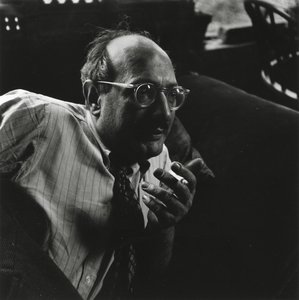
Mark Rothko
1903 - 1970 , Lettland
Eckdaten zum Künstler
- Beeinflusste Künstler: ['Minimalistische Kunst']
- Bemerkenswerte Werke:
- Nr. 18 (1948)
- Nr. 10 (1950)
- Seagram-Wandbilder
- Nr. 3 (1950)
- Einflüsse:
- Surrealismus
- Marxistische Philosophie
- Geburtsdatum: 25. September 1903
- Geburtsort: Daugavpils, Lettland
- Künstlerische Bewegung: Abstrakter Expressionismus
- Nationalität: Amerikanisch
- Todatum: 25. Februar 1970
- Vollständiger Name: Mark Rothko / Marcus Rothkowitz
Verwandte Artikel

Color Field Painting: The Emotional Power of Pure Abstraction and Chromatic Depth
Explore the profound emotional depth of Color Field painting. Discover the history of mid-century abstraction, from Rothko to Newman, and learn how pure color transforms the viewer's experience through our expert art history guide.

Mark Rothkos Meisterwerke: Die Top 25 für Kunstliebhaber | AllPaintingsStore
Entdecken Sie die 25 Meisterwerke von Mark Rothko! Tauchen Sie ein in die Welt der abstrakten Kunst, des Expressionismus und der Farbfeldmalerei. Hochwertige Kunstdrucke & Reproduktionen auf AllPaintingsStore.com – für Ihre Wohnräume.
Die Top 10 Gemälde in Schattierungen von 'Slate Blue': Kunst für Ihr Zuhause
Entdecken Sie die Top 10 Gemälde in faszinierenden 'Slate Blue' Tönen! Von Monet bis Manet – erleben Sie Kunstgeschichte und lassen Sie sich von Meisterwerken inspirieren. Hochwertige Kunstdrucke auf

Abstrakter Expressionismus: Die 10 Meisterwerke, die eine Kunstbewegung prägten |
Entdecken Sie die 10 Meisterwerke des Abstrakten Expressionismus! Von Jackson Pollock bis Mark Rothko – erfahren Sie die Geschichten hinter ikonischen Gemälde und finden Sie hochwertige Reproduktionen für Ihr Zuhause. Jetzt bei entdecken!

Die Sublimität der Farbe: Mark Rothkos emotionale Landschaften des Abstrakten Expressionismus
Entdecken Sie die tiefgründige Welt von Mark Rothko und dem Abstrakten Expressionismus. Expertenanalyse der Farbfeldmalerei, ihre emotionale Tiefe & bleibenden Einfluss. Jetzt lesen!


