


 In echtem Maßstab anzeigen
 Versenden als Grußkarte
 Teilen
 Details anzeigen
 Leitfaden öffnen

 Herunterladen
 Ähnliche Objekte
 Röntgenaufnahme
 Diashow
 Besucherstatistiken
Lynn Meadows


 Mehr anzeigen
Giclée / Kunstdruck
Giclée- oder Leinwanddruck in Museumsqualität mit schneller Produktion und flexiblen Veredelungsoptionen. ( Handgemalte Reproduktion kaufen Zum digitalen Bild wechseln)




P118B €10

P118H €10

P118W €10

P438Z €10

P508JH €12

P508YH €12

P805H €10

P805Z €10

P919BZ €10

P919G €10

P919XJ €10

P959ZH €10

P968JZ €12

W106C €8

W218G €10

W218JH €8

W218Y €10

W307PJ €10

W316G €10

W316PJ €8

W316Y €10

W398PJ €8

W4111J €10

W500HY €15

W500JH €15

W692G €12

W849H €8

W940BG €15

W953PJ €8




Wählen Sie aus unseren vordefinierten Formaten, die den ursprünglichen Proportionen des Kunstwerks entsprechen.

Geben Sie die Breite und die Höhe an, die Sie benötigen, damit der Druck perfekt in Ihren Rahmen oder an Ihre Wand passt. Ein Druck kann nur beschnitten werden und niemals größer als das Originalbild gemacht werden; daher verliert ein Format mit einer anderen Proportion einen Teil des Bildes. Wir senden Ihnen ein digitales Mockup zur Freigabe, bevor wir den Druck ausführen. Das auf dieser Seite gezeigte Bild zeigt nicht den tatsächlichen Beschnitt – dies ist nur im Mockup ersichtlich.
Weltweiter Versand () innerhalb von 2 Wochen statt der üblichen 4/5 Wochen. (24 Oktober)

Kostenloser weltweiter Expressversand

Hochwertige Leinenleinwand

Vollständiger Versicherungsschutz beim Versand

Zollgebühren-Rückerstattungsgarantie

Garantie für exakte Farbtreue

100-tägiges Rückgaberecht (nur bei Mängeln)

100% Geld-zurück-Garantie

Angebot für Mengenrabatt
 Die Glasoption ist nur für Größen unter 110 cm verfügbar.

Lynn Meadows
Giclée / Kunstdruck
Format der Reproduktion
-


Gesamtpreis
€ 56
A Symphony of Light and Marsh – Exploring Martin Johnson Heade’s “Lynn Meadows”
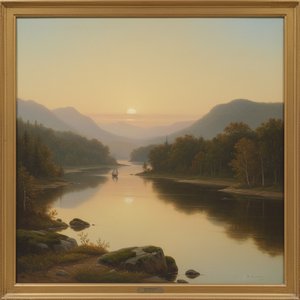
Martin Johnson Heade's "Lynn Meadows," painted in 1863, isn’t merely a depiction of a marsh landscape; it’s an immersion into a specific moment of time, a carefully orchestrated dialogue between light, color, and the quiet drama of nature. This painting, now meticulously reproduced for art lovers worldwide, offers a glimpse into the heart of Luminism – a movement that sought to capture the ephemeral qualities of light and atmosphere with remarkable subtlety and grace. Heade, a master of this style, wasn’t interested in grand vistas or heroic subjects; instead, he focused on the intimate details of the natural world, particularly the serene beauty of coastal marshes.
The scene unfolds before us as a horizontal expanse dominated by the muted browns and greens of the marsh itself. A prominent bridge, rendered with delicate precision, acts as a visual anchor, drawing the eye into the heart of the composition. The foreground is populated with figures – likely laborers engaged in their daily tasks – adding a subtle layer of human presence to this otherwise solitary landscape. However, these individuals are deliberately understated, almost dissolving into the surrounding environment, reinforcing the painting’s overall sense of tranquility and timelessness. The color palette is remarkably restrained, relying on soft washes of ochre, umber, and sage green, creating an atmosphere of hazy warmth and diffused light – a hallmark of Luminist technique.
Luminism: Capturing the Essence of Light
Heade’s work falls squarely within the Luminist movement, which flourished in America during the mid-19th century. Unlike their Hudson River School counterparts who often depicted dramatic mountain scenes and heroic narratives, Luminists were primarily concerned with capturing the fleeting effects of light on natural subjects. They eschewed heavy brushwork and detailed rendering in favor of loose, atmospheric strokes that suggested movement and transparency. This approach allowed them to convey the subtle shifts in color and tone as sunlight filtered through clouds or reflected off water surfaces. Heade’s “Lynn Meadows” exemplifies this philosophy perfectly – it's less about a literal representation of the marsh and more about evoking its feeling, its mood, its very essence.
The painting’s historical context is equally important to understanding its significance. Painted in 1863, during the American Civil War, “Lynn Meadows” offers a poignant contrast to the turmoil of the nation. It's a scene of quiet contemplation and resilience – a reminder of the enduring beauty of nature even amidst times of great upheaval. The bridge itself can be interpreted as a symbol of connection and progress, linking the human world with the natural one.
Technique and Materials: A Master’s Touch
Heade employed oil paints on canvas, utilizing a technique characterized by thin layers of color applied in rapid succession. This layering creates a remarkable sense of luminosity – as if the light itself is emanating from the surface of the painting. The brushstrokes are loose and expressive, yet carefully controlled to create a harmonious composition. The artist’s mastery of glazing techniques allows him to build up depth and dimension with subtle variations in color and tone. Close examination reveals the meticulous attention to detail – the texture of the reeds, the ripples on the water, the shadows cast by the bridge.
Symbolism and Emotional Resonance
Beyond its technical brilliance, “Lynn Meadows” is rich in symbolism. The setting sun evokes a sense of transition and closure, suggesting both the end of one day and perhaps even the end of an era. The figures working in the foreground represent the enduring connection between humanity and nature – a reminder that we are part of this intricate ecosystem. Ultimately, the painting’s emotional impact is profoundly serene and contemplative, inviting viewers to pause, reflect, and appreciate the simple beauty of the natural world. It's a piece that speaks to our deepest longing for peace and tranquility, offering a moment of respite from the complexities of modern life.
Fragen & Antworten
Welche Druckgröße wird für "Lynn Meadows" von Martin Johnson Heade empfohlen?
Die empfohlene Druckgröße für "Lynn Meadows" von Martin Johnson Heade ist Large.
Wie verbinden sich Kontrast und Harmonie in "Lynn Meadows"?
In "Lynn Meadows" wird ein Statement Kontrast mit einer Strong Color Unity Harmonie gepaart.
Welche Atmosphäre vermittelt "Lynn Meadows"?
"Lynn Meadows" hat eine Serene Atmosphäre.
Ähnliche Kunstwerke


Biografie des Künstlers
Frühes Leben und Ausbildung
Martin Johnson Heade, ein amerikanischer Maler, wurde am 11. August 1819 in Lumberville, Pennsylvania, geboren. Seine frühen Jahre waren von einer starken Neigung zur Kunst geprägt, was ihn dazu veranlasste, unter der Anleitung von Edward Hicks und möglicherweise Thomas Hicks zu studieren. Diese grundlegende Ausbildung legte den Grundstein für seine zukünftigen künstlerischen Bestrebungen.Künstlerische Karriere
Heades künstlerische Karriere lässt sich grob in mehrere Phasen einteilen, die jeweils durch eine deutliche Verschiebung seines Themas und Stils gekennzeichnet sind. Zunächst konzentrierte er sich auf Porträts, wobei sein früheste bekannte Arbeit ein Porträt aus dem Jahr 1839 war. Anschließend reiste er nach Europa, wo er verschiedenen künstlerischen Einflüssen ausgesetzt war.- Heades Werk zeigte zunehmend Interesse an Landschaftsmalerei, insbesondere nachdem er Künstler der Hudson River School wie John Frederick Kensett und Benjamin Champney getroffen hatte.
- Seine Reisen nach Brasilien (1863-1864) und anschließende Reisen nach Nicaragua, Kolumbien, Panama und Jamaika (1866 und 1870) beeinflussten seine Arbeit tiefgreifend und führten zu einer Reihe kleiner Gemälde mit Darstellung von Kolibris.
- Heades späte Jahre in St. Augustine, Florida, waren durch einen verstärkten Fokus auf Stillleben gekennzeichnet, insbesondere Magnolienblüten, die auf Samtstoff gelegt wurden.
Stil und Bekannte Werke
Heades Stil ist durch einen romantischen Ansatz zu seinen Motiven gekennzeichnet, wobei oft das Zusammenspiel von Licht und Schatten betont wird. Seine bekanntesten Werke umfassen Darstellungen der Küstenmarschlandschaften Neuenglands, was dazu geführt hat, dass einige Historiker ihn als Luministen-Maler kategorisieren.- Heades Werk ist heute Teil bedeutender Museen und Sammlungen, darunter die Martin Johnson Heade Sammlung auf https://AllPaintingsStore.com/@/martin-johnson-heide.
- Einige seiner bemerkenswerten Gemälde, wie zum Beispiel "Forked Tailed Woodnymph", sind in der Sammlung auf AllPaintingsStore zu finden.
- Für weitere Informationen über Heades Leben und Werk besuchen Sie bitte die Wikipedia-Seite über Martin Johnson Heade.
Vermächtnis
Obwohl Martin Johnson Heade zu Lebzeiten nicht weithin bekannt war, hat seine Arbeit seit den 1940er Jahren die Aufmerksamkeit von Gelehrten und Sammlern erregt. Heute gilt er als ein bedeutender amerikanischer Künstler, wobei seine Gemälde gelegentlich an unerwarteten Orten wie auf Flohmärkten oder in Garagenverkäufen entdeckt werden. Wichtige Punkte: * Geboren: 11. August 1819, Lumberville, Pennsylvania * Gestorben: 4. September 1904 * Bekannte Werke: Marschlandschaftsbilder, Meeresblicke, Darstellungen tropischer Vögel, Lotusblüten und Stillleben * Stil: Romantischer Ansatz mit Fokus auf Licht und Schatten, kategorisiert als Luministen-Maler * Sammlungen: Bedeutende Museen und die Martin Johnson Heade Sammlung auf AllPaintingsStore
Martin Johnson Heade
1819 - 1904 , Vereinigte Staaten von Amerika
Eckdaten zum Künstler
- Beeinflusste Künstler:
- John Frederick Kensett
- Benjamin Champney
- Bemerkenswerte Werke:
- Forked Tailed Woodnymph
- Salt Marsh Landscapes
- Magnolienblütenstillleben
- Geburtsdatum: 11. August 1819
- Geburtsort: Lumberville, USA
- Künstlerische Bewegung: Luminismus
- Nationalität: Amerikanisch
- Sterbedatum: 4. September 1904
- Vollständiger Name: Martin Johnson Heade
Verwandte Artikel
David Johnson: A Luminist Master of the Hudson River School & Beyond
Explore the captivating landscapes of David Johnson, a key figure in the Hudson River School & Luminism movement. Discover his artistic evolution, legacy, and how to collect his works with AllPaintingsStore.

Evocations of Place: A Historical Journey Through Landscape Art
Explore the rich history of landscape art with AllPaintingsStore. Discover renowned artists, movements like Impressionism & Romanticism, and expert guidance for collecting timeless pieces. Find your perfect serene escape today!

John Constable: Die 25 Meisterwerke des englischen Landschaftsgenies – AllPaintingsStore
Entdecken Sie die 25 Meisterwerke von John Constable! Erleben Sie englische Landschaftsmalerei vom Hay Wain bis zur Stour Valley. Hochwertige Reproduktionen & Kunst für Ihr Zuhause auf AllPaintingsStore.com.

Martin Johnson Heade: Luminismus, amerikanische Identität und das poetische Stillleben
Entdecken Sie das Werk von Martin Johnson Heade! Erfahren Sie mehr über den Luminismus, seine Landschaftsmalerei und die poetischen Stillleben dieses amerikanischen Meisters. Kunstexperten-Analyse & hochwertige Reproduktionen.

Romantische Landschaften: Die 10 Meisterwerke, die eine Epoche prägten | AllPaintingsStore
Entdecken Sie die 10 Meisterwerke der Romantischen Landschaftsmalerei! Von Caspar David Friedrich bis Turner – erleben Sie die Kunst, Emotion & Natur. Hochwertige Reproduktionen auf AllPaintingsStore.com


