


 Vorschau anzeigen
 Versenden
 Teilen
 Details anzeigen
 Leitfaden

 Herunterladen
 Ähnliche Objekte
 Röntgenaufnahme
 Diashow
 Statistiken
Untitled (9)
 Acrylic
- WallArt
- Surrealist Expression
 1949
1949 23.0 x 19.0 cm
 Weiterlesen
Die auf dieser Seite dargestellten Kunstwerke sind urheberrechtlich geschützt, was bedeutet, dass wir keine identische Reproduktion rechtmäßig erstellen oder verkaufen dürfen. Dieser Schutz wird durch internationale Abkommen wie die Berner Übereinkunft und durch nationale Gesetze, einschließlich derer, die von den US-Urheberrecht – Titel 17.
Diese Methode entspricht vollumfänglich den Urheberrechtsbestimmungen, da sie keine Kopie oder Vervielfältigung des geschützten Kunstwerks darstellt. Stattdessen handelt es sich um eine kreative Neuinterpretation – ein neues Gemälde, das vom Original inspiriert, aber nicht identisch mit ihm ist.
Giclée / Kunstdruck
Giclée- oder Leinwanddruck in Museumsqualität mit schneller Produktion und flexiblen Veredelungsoptionen. ( Handgemalte Reproduktion bestellen Zum digitalen Bild wechseln)




P118B €10

P118H €10

P118W €10

P438Z €10

P508JH €12

P508YH €12

P805H €10

P805Z €10

P919BZ €10

P919G €10

P919XJ €10

P959ZH €10

P968JZ €12

W106C €8

W218G €10

W218JH €8

W218Y €10

W307PJ €10

W316G €10

W316PJ €8

W316Y €10

W398PJ €8

W4111J €10

W500HY €15

W500JH €15

W692G €12

W849H €8

W940BG €15

W953PJ €8




Wählen Sie aus unseren vordefinierten Formaten, die den ursprünglichen Proportionen des Kunstwerks entsprechen.

Geben Sie die benötigte Breite und Höhe an, damit der Druck perfekt in Ihren Rahmen oder an Ihre Wand passt. Ein Druck kann nur beschnitten, aber niemals größer als das Originalbild angefertigt werden; daher verliert ein Format mit anderen Proportionen einen Teil des Bildes. Wir senden Ihnen ein digitales Mockup zur Freigabe, bevor wir den Druck ausführen. Das auf dieser Seite gezeigte Bild zeigt nicht den tatsächlichen Beschnitt – dies ist nur im Mockup ersichtlich.
Weltweiter Versand () innerhalb von 2 Wochen statt der üblichen 4/5 Wochen. (26 Oktober)

Kostenloser weltweiter Expressversand

Hochwertige Leinenleinwand

Umfassender Versicherungsschutz beim Versand

Zollgebühren-Rückerstattungsgarantie

Garantie für exakte Farbtreue

100 Tage Rückgaberecht (nur bei Mängeln)

100% Geld-zurück-Garantie

Mengenrabatt verfügbar
 Die Glasoption ist nur für Größen unter 110 cm verfügbar.

Untitled (9)
Giclée / Kunstdruck
Format der Reproduktion
-


Endpreis
€ 56
Exploring the Surreal Landscape of Max Ernst’s “Untitled (9)”
The painting "Untitled (9)" by Max Ernst, created in 1949, isn't merely a visual spectacle; it’s an invitation into a realm where logic yields to dreamlike imagery and subconscious impulses dictate artistic expression. Measuring just 23 x 19 cm, this deceptively compact canvas holds within it the expansive anxieties and intellectual ferment of the Surrealist movement—a movement Ernst himself helped pioneer. The artwork immediately captivates with its stark simplicity: a dominant crimson hue serves as backdrop for a central white circle, punctuated by smaller circles dispersed across the surface like constellations charting an uncharted territory.- Style and Technique: Ernst’s approach aligns perfectly with Dada and Surrealism's rejection of rational thought. He employed a technique known as “frottage,” where he rubbed textured surfaces—such as wood grain or fabric—onto paper, transferring their patterns onto the canvas. This process deliberately disrupts conventional artistic methods, mirroring the disruption of accepted societal values that characterized the era.
- Historical Context: The painting emerged during a period profoundly shaped by the aftermath of World War II and the looming shadow of the Cold War. Surrealism arose as a reaction to the trauma and disillusionment experienced by artists grappling with the horrors of conflict, seeking refuge in the subconscious mind as a source of creative inspiration.
- Symbolism: The prominent white circle embodies purity and contemplation—a counterpoint to the turbulent crimson background. However, its placement alongside numerous smaller circles introduces an element of fragmentation and multiplicity, hinting at the complexities of human experience and the elusive nature of truth. Furthermore, the engraving of a fish on the left side adds another layer of symbolic significance; fish often represent fertility, regeneration, and spiritual enlightenment—themes prevalent in Surrealist art.
A Dialogue Between Mind and Matter
Ernst’s artistic philosophy centered on the belief that art should transcend mere representation, striving instead to evoke emotion and provoke contemplation. “Untitled (9)” exemplifies this ambition beautifully—it doesn't depict a recognizable scene but rather presents an internal landscape rendered in visual form. The artist deliberately eschewed traditional compositional rules, prioritizing intuition over calculation. This decision reflects the Surrealists’ fascination with automatism—the spontaneous creation of images without conscious control—a method Ernst championed as a means of accessing the subconscious and bypassing rational inhibitions.- Emotional Impact: The painting's unsettling juxtaposition of color and form generates a palpable sense of unease, prompting viewers to confront their own anxieties and uncertainties. Yet, amidst this tension lies an underlying serenity—a suggestion that beauty can be found even in the face of darkness.
Beyond Technique: Embracing Surrealist Ideals
Ultimately, “Untitled (9)”’s enduring appeal resides not solely in its masterful execution but also in its embodiment of the core tenets of Surrealism. Ernst sought to liberate art from the constraints of reason and logic, believing that true creativity flourished when artists relinquished control over their imagination. This painting stands as a powerful reminder that art can serve as a conduit for exploring profound psychological truths—a legacy that continues to inspire artists and collectors alike.Fragen & Antworten
Welches Format und welche Größe hat "Untitled (9)"?
"Untitled (9)" von Max Ernst ist eine Komposition im Format Portrait, die im Original die Maße 23 x 19 cm aufweist.
Warum ist der Urheberrechtsstatus von "Untitled (9)" so, wie er ist?
"Untitled (9)" von Max Ernst ist noch urheberrechtlich geschützt. Die Schutzfrist des Urheberrechts beginnt mit dem Tod des Künstlers im Jahr 1976.
Ist die Abbildung von "Untitled (9)" von Max Ernst gemeinfrei?
Was das Urheberrecht betrifft, so ist "Untitled (9)" noch urheberrechtlich geschützt.
Ähnliche Kunstwerke


Künstlerbiografie
Max Ernst: Ein Leben im Surrealismus
Frühes Leben und Ausbildung
- Geboren: 1. April 1891 in Brühl, Deutschland.
- Ernsts Vater, Philipp Ernst, war Lehrer für Gehörlose und Amateurmaler, der Maxes frühes Interesse an Kunst förderte.
- Von 1909 studierte er Philosophie, Kunstgeschichte, Literatur, Psychologie und Psychiatrie an der Universität Bonn.
- Dieser vielfältige akademische Hintergrund beeinflusste seine späteren künstlerischen Erkundungen maßgeblich.
Künstlerische Entwicklung & Einflüsse
- Ein einschneidendes Ereignis war die Sonderbund-Ausstellung in Köln (1912), wo er Werke von Pablo Picasso, Vincent van Gogh, und Paul Gauguin entdeckte.
- Im Jahr 1914 lernte er Hans Arp kennen, der eine lebenslange Freundschaft schloss, die seine künstlerische Reise maßgeblich prägte.
- Der Erste Weltkrieg hatte einen tiefgreifenden Einfluss auf Ernst; seine Erfahrungen als Soldat führten zu Enttäuschung und einer kritischen Sicht auf die Gesellschaft.
- Er ließ sich von den Schriften Sigmund Freuds beeinflussen und erkundete Themen des Unterbewusstseins in seiner Kunst.
Dada & Surrealismus
- Nach dem Ersten Weltkrieg wurde Ernst eine Schlüsselfigur der Kölner Dada-Gruppe, die sich gegen traditionelle künstlerische Konventionen aussprach.
- Er entwickelte innovative Techniken wie Frottage (Erhitzen von Bleistift auf texturierte Oberflächen) und Grattage (Abkratzen von Farbe, um darunterliegende Schichten freizulegen).
- In den 1920er Jahren trat er der Surrealistischen Bewegung in Paris bei und arbeitete mit Künstlern wie Paul Éluard zusammen.
- Seine Werke dieser Zeit erforschten traumhafte Bilder und psychologische Themen.
Wichtige Werke & Techniken
- Frottage: Eine Technik zur Erzeugung von Texturen und unerwarteten Bildern, die in vielen seiner Werke zu sehen ist.
- Collage: Ernst verwendete häufig Collage, um disparate Elemente zu kombinieren und surreale Kompositionen zu schaffen.
- Bekannte Werke:
- Die gesamte Stadt
- Euclides
- Von diesem sollen nichts wissen
- Wald und Taube
- Seine Gemälde zeigen oft symbolische Bilder, darunter Vögel (insbesondere seinen Pseudonym Loplop), Landschaften und verstörende Gegenüberstellungen.
Spätes Leben & Vermächtnis
- Ernst zog während des Zweiten Weltkriegs in die Vereinigten Staaten, wo er weiter malte und mit neuen Techniken experimentierte.
- Nach dem Krieg kehrte er nach Frankreich zurück und blieb bis zu seinem Tod am 1. April 1976 in Paris aktiv.
- Historische Bedeutung: Max Ernsts Beiträge zu Dada und Surrealismus waren bahnbrechend. Er stellte künstlerische Normen in Frage, erforschte das Unterbewusstsein und entwickelte innovative Techniken, die Künstler bis heute inspirieren.
- Er gilt als eine der wichtigsten und einflussreichsten Figuren der Kunst des 20. Jahrhunderts.
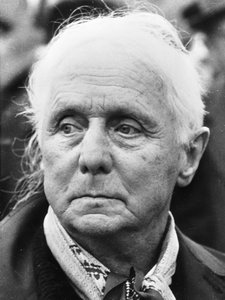
Max Ernst
1891 - 1976 , Deutschland
Kurzinfos
- Artistic Movement Or Style: Dadaismus & Surrealismus
- Artists Who Influenced This Artist:
- Pablo Picasso
- Vincent van Gogh
- Paul Gauguin
- Sigmund Freud
- Date Of Birth: 1. April 1891
- Date Of Death: 1. April 1976
- Full Name: Max Ernst
- Nationality: Deutsch
- Notable Artworks:
- Die gesamte Stadt
- Euclides
- Wald und Taube
- Der Elefant Celebes
- Place Of Birth (City And Country): Brühl, Deutschland
Ähnliche Artikel

Echoes of Time: Exploring the Enduring Appeal & Historical Context of Vintage Art Prints
Explore the captivating world of vintage art prints! Discover their history, collecting tips & enduring appeal. Expert insights on chromolithography and building a legacy collection with AllPaintingsStore.

The Enduring Legacy of Fine Art Prints: Technique, History & Aesthetic Impact
Explore the rich history & techniques of fine art prints. Discover investment potential, assess authenticity, and learn how to preserve your collection with expert guidance. Trusted insights for discerning collectors.

Crimson Threads of Narrative: Exploring Symbolism & Representation in Artworks Featuring the Red Dress
Explore the rich symbolism of the red dress in art history! From ancient power displays to iconic portraits like Cézanne’s 'Madame Cezanne', discover the cultural and artistic significance behind this captivating color. Expert analysis & insights.

Giclée Prints: Archival Quality & Aesthetic Nuances for the Discerning Collector
Explore the world of giclée prints with AllPaintingsStore. Learn about archival quality, aesthetic nuances & investment potential. Expert guidance for discerning art collectors seeking museum-quality reproductions and lasting value.

Giclée Prints Explained: The Ultimate Guide to Museum-Quality Art Reproductions
Master the nuances of Giclée printing with our expert guide. Discover how pigment-based inks and museum-grade substrates create fade-resistant, high-fidelity art reproductions designed for discerning collectors seeking unparalleled quality and longevity.


