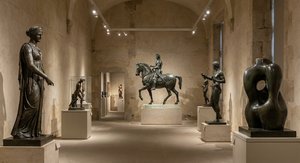
1519. Acryl auf Leinwand. Galleria dell’Accademia.

§ 1Katalogdaten


§ 2Abstrakt
Beschreibung des Sammlerstücks
Ein beeindruckendes Marmorskulptur von Michelangelo Buonarroti aus dem Jahr 1525-1530, Teil des Göttlichen Julius II., zeigt einen jungen Mann und verkörpert die Schönheit der Renaissance.
 Weiterlesen
Künstlerbiografie
Michelangelo (1475-1564): Renaissance Meister! Entdecken Sie ikonische Skulpturen wie David & Pietà, Fresken der Sixtinischen Kapelle und seinen Einfluss auf die Hochrenaissance und Manierismus Kunst.
§ 3Kommentar
A Testament to Ideal Beauty: Michelangelo’s *Slave*
The marble sculpture known as *Slave* (young), created between 1525 and 1530 by Michelangelo Buonarroti, stands as a poignant emblem of the High Renaissance's preoccupation with human form and spiritual contemplation. More than just an anatomical study—though undeniably masterful in its depiction—it embodies Michelangelo’s profound understanding of gesture and emotion, capturing a moment poised between repose and yearning. This remarkable piece resides within the Galleria dell'Accademia in Florence, offering visitors a direct encounter with one of the artist’s most celebrated works.The Anatomical Precision – A Renaissance Breakthrough
Michelangelo’s anatomical prowess was unparalleled during his lifetime, fueled by an obsessive dedication to observation and dissection—practices considered controversial at the time. The *Slave* exemplifies this commitment, showcasing an exquisitely rendered musculature that anticipates the advancements of modern anatomy. Michelangelo meticulously studied human cadavers, painstakingly reconstructing skeletal structures and muscle groups with astonishing accuracy. This anatomical knowledge isn’t merely technical; it serves as a vehicle for conveying inner turmoil—the statue's outstretched arms and slightly bent legs communicate a palpable tension, suggesting an unspoken desire or struggle. The sculptor skillfully utilizes contrapposto – the balanced weight shift of the torso – to achieve this dynamic pose, creating a visual illusion of movement despite the stone’s immobility.Commissioned for Papal Glory: Context Within the Medici Patronage
The sculpture was commissioned by Pope Julius II as part of a larger project commemorating Saint Luke—the Evangelist and patron saint of physicians—for the Basilica di San Pietro in Rome. This commission reflects the papal ambition to elevate Rome’s prestige during a period marked by political instability and artistic fervor. Michelangelo's involvement underscores the importance of humanist ideals within the Vatican, where artists were tasked with glorifying God through representations of human dignity and beauty. The sculpture’s placement alongside other monumental works commissioned by Julius II—including *Moses* and *Pieta*—demonstrates the Pope’s unwavering belief in the transformative power of art as a tool for spiritual expression.Symbolism Beyond Representation: Gesture and Emotion
Beyond its anatomical precision, *Slave* resonates with symbolic significance. The figure's posture conveys vulnerability yet simultaneously exudes strength – an embodiment of the human spirit grappling with existential questions. Michelangelo deliberately avoids depicting facial features, focusing instead on conveying emotion through gesture and musculature. This stylistic choice elevates the sculpture beyond mere physical likeness, inviting viewers to contemplate themes of suffering, aspiration, and divine grace. The statue’s gaze is directed upwards, suggesting a yearning for transcendence—a reflection of Renaissance artists' fascination with classical ideals of beauty and virtue.A Legacy Enduring Through Reproduction
Today, reproductions of Michelangelo’s *Slave* adorn homes and galleries worldwide, ensuring that its timeless elegance continues to inspire awe. AllPaintingsStore.com offers exceptional quality prints that faithfully capture the sculpture’s nuanced textures and subtle tonal variations—allowing art enthusiasts to experience Michelangelo's genius firsthand. Explore our curated collection and bring a piece of Renaissance history into your space.Fragen & Antworten
Welcher Kunstrichtung lässt sich "Schüler" von Michelangelo Buonarroti zuordnen?
Die mit "Schüler" von Michelangelo Buonarroti verbundene Stilrichtung ist High Renaissance. Diese Klassifizierung ordnet das Werk in den Kontext verwandter Künstler und Kunstwerke ein.
Welche Technik und welcher Stil charakterisieren "Schüler" von Michelangelo Buonarroti?
"Schüler" ist in Acryl auf Leinwand im Stil der High Renaissance-Epoche gefertigt.
In welcher Ausrichtung liegt "Schüler" von Michelangelo Buonarroti vor?
Das Format von „Schüler“ ist Hochformatig. Dies ist hilfreich bei der Planung, wo eine Reproduktion platziert werden soll.
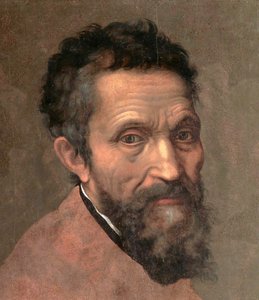


 Zum Druck wechseln


 Bei Kunstwerken oder Reproduktionen, die an einer Seite größer als 105 cm (ca. 41 Zoll) sind, wird der Rahmen zerlegt als Bausatz geliefert. Diese Methode gewährleistet eine sichere Zustellung und verhindert Schäden während des Transports.