


 Vorschau anzeigen
 Versenden
 Teilen
 Details anzeigen
 Leitfaden

 Herunterladen
 Ähnliche Objekte
 Röntgenaufnahme
 Diashow
 Q&A
Q&A Statistiken
The Golden Cell


 Weiterlesen
Giclée / Kunstdruck
Giclée- oder Leinwanddruck in Museumsqualität mit schneller Produktion und flexiblen Veredelungsoptionen. ( Handgemalte Reproduktion bestellen Zum digitalen Bild wechseln)




P118B €10

P118H €10

P118W €10

P438Z €10

P508JH €12

P508YH €12

P805H €10

P805Z €10

P919BZ €10

P919G €10

P919XJ €10

P959ZH €10

P968JZ €12

W106C €8

W218G €10

W218JH €8

W218Y €10

W307PJ €10

W316G €10

W316PJ €8

W316Y €10

W398PJ €8

W4111J €10

W500HY €15

W500JH €15

W692G €12

W849H €8

W940BG €15

W953PJ €8




Wählen Sie aus unseren vordefinierten Formaten, die den ursprünglichen Proportionen des Kunstwerks entsprechen.

Geben Sie die benötigte Breite und Höhe an, damit der Druck perfekt in Ihren Rahmen oder an Ihre Wand passt. Ein Druck kann nur beschnitten, aber niemals größer als das Originalbild angefertigt werden; daher verliert ein Format mit anderen Proportionen einen Teil des Bildes. Wir senden Ihnen ein digitales Mockup zur Freigabe, bevor wir den Druck ausführen. Das auf dieser Seite gezeigte Bild zeigt nicht den tatsächlichen Beschnitt – dies ist nur im Mockup ersichtlich.
Weltweiter Versand () innerhalb von 2 Wochen statt der üblichen 4/5 Wochen. (30 Oktober)

Kostenloser weltweiter Expressversand

Hochwertige Leinenleinwand

Umfassender Versicherungsschutz beim Versand

Zollgebühren-Rückerstattungsgarantie

Garantie für exakte Farbtreue

100 Tage Rückgaberecht (nur bei Mängeln)

100% Geld-zurück-Garantie

Mengenrabatt verfügbar
 Die Glasoption ist nur für Größen unter 110 cm verfügbar.

The Golden Cell
Giclée / Kunstdruck
Format der Reproduktion
-


Endpreis
€ 57
A Glimpse into the Subconscious Mind
Odilon Redon’s The Golden Cell, painted in 1892, is not merely a portrait; it is an invitation into the labyrinthine corridors of the human psyche. The subject—a woman rendered with striking blue tones against a luminous, almost ethereal yellow background—captures a moment suspended between deep thought and quiet revelation. Her downward gaze suggests introspection, as if she is contemplating secrets only visible in the stillness of her own mind. Redon, forever drawn to the unseen realms of imagination, uses this composition to transport the viewer beyond the tangible reality into a space rich with symbolic weight.
Symbolism and the Allure of Blue
The interplay of color is central to the painting's mesmerizing effect. The vibrant blue dominating the woman’s attire and features contrasts sharply yet harmoniously with the radiant yellow ground, creating an immediate visual tension that draws the eye inward. In Symbolist art, such colors often carry profound emotional resonance. Blue frequently speaks to melancholy, spirituality, or mystery, while gold tones suggest enlightenment or a sacred enclosure—the titular "Golden Cell." This juxtaposition hints at a soul contained within a moment of brilliant, yet perhaps isolating, contemplation. The elongated neck adds an almost sculptural quality to the figure, emphasizing her thoughtful detachment from the bustling world outside the canvas.
Mastery in Technique and Style
As a key exponent of Symbolism, Redon eschewed the straightforward narratives of academic art for something more suggestive and dreamlike. While his early work explored etching and lithography, The Golden Cell showcases his painterly ability to evoke atmosphere. The technique allows the edges to soften, blurring the line between solid form and surrounding ether. It is a masterful handling of light against shadow, giving the entire piece an almost phosphorescent quality. For those who appreciate art that whispers rather than shouts its meaning, this work exemplifies the delicate balance between detailed portraiture and pure emotional abstraction.
Creating an Atmosphere for Modern Spaces
For collectors and interior designers alike, The Golden Cell offers more than just aesthetic beauty; it provides a focal point of profound contemplation. Its rich, jewel-toned palette—the deep blues against the warm gold—makes it exceptionally versatile. Imagine this piece anchoring a drawing-room or a study, where its enigmatic presence encourages conversation and quiet reflection. Owning a high-quality reproduction allows one to bring this specific mood of sophisticated mystery into your personal sanctuary, transforming a mere wall into a portal to Redon’s imaginative world.
Fragen & Antworten
Wer hat "The Golden Cell" geschaffen und in welchem Stil ist es gehalten?
"The Golden Cell" wurde von Odilon Redon im Stil der Symbolism geschaffen. Künstler und Epoche bestimmen die Tradition des Werkes.
Wie ist "The Golden Cell" kunsthistorisch einzuordnen?
"The Golden Cell" von Odilon Redon gehört der Strömung des Symbolism innerhalb der 19th Century-Epoche an. Zusammen verleihen sie dem Werk seinen Platz in der Kunstgeschichte.
Welche Farbe sticht in "The Golden Cell" am meisten hervor?
Midnight Blue (#2b2f6b) ist die dominierende Farbe von "The Golden Cell" von Odilon Redon.
Ähnliche Kunstwerke


Künstlerbiografie
Frühes Leben und Karriere
Odilon Redon, geboren am 20. April 1840 in Bordeaux, Aquitanien, aus einer wohlhabenden Familie, war ein französischer Symbolistischer Maler, Grafiker, Zeichner und Pastellkünstler. Der junge Bertrand-Jean Redon erhielt von seiner Mutter Odile den Spitznamen "Odilon". Seine künstlerische Reise begann früh; bereits mit zehn Jahren gewann er einen Zeichenpreis in der Schule. Er zeigte schon früh Talent und Leidenschaft für die Kunst.Künstlerische Entwicklung
Redons frühe Studien in Architektur führten zu einer kurzen Tätigkeit unter Jean-Léon Gérôme im Jahr 1864. Seine wahre künstlerische Berufung offenbarte sich jedoch bald. Er widmete sich der Bildhauerei und verfeinerte später seine Fähigkeiten in der Radierung und Lithographie unter Rodolphe Bresdin. Diese Zeit war entscheidend für die Entwicklung seines einzigartigen Stils, der von Fantasie und Mysterium geprägt ist. Seine frühen Werke waren oft düster und introspektiv.Hauptwerke und Einflüsse
Redons Werk wurde stark von östlicher Kultur beeinflusst. "Der Tod des Buddha" (1899) zeugt von seinem Interesse an hinduistischer und buddhistischer Kultur. "Jakob und der Engel" (1905) ist ein Beweis für seine Japonismus-Einflüsse, die sich in seinen Kompositionen und Farbwahlen widerspiegeln. Er entwickelte eine Faszination für Hinduismus und Buddhismus, die zunehmend in seinen Werken sichtbar wurde. Die Auftragsarbeiten für Baron Robert de Domecy, 17 dekorative Paneele für das Château de Domecy-sur-le-Vault, markierten einen Übergang von ornamentaler zu abstrakter Malerei. Seine Porträts der Baroness de Domecy und ihrer Tochter Jeanne sind bemerkenswerte Beispiele seiner Arbeit in dieser Phase.Auszeichnungen und Vermächtnis
Redon wurde 1903 die Legion d'Honneur verliehen, eine Anerkennung seines künstlerischen Beitrags. Seine Popularität stieg mit der Veröffentlichung eines Katalogs von Radierungen und Lithographien durch André Mellerio im Jahr 1913, gefolgt von einer umfassenden Ausstellung auf der New Yorker Armory Show. Redons Werk gilt als Vorläufer des Surrealismus und beeinflusste nachfolgende Künstlergenerationen maßgeblich. Seine Erkundung des menschlichen Geistes und sein Interesse an östlichen Kulturen inspirieren weiterhin Künstler und Kunstliebhaber.Bedeutung in der Kunstgeschichte
Odilon Redons bahnbrechende Arbeit im Symbolismus hat ihre Spuren in der Welt der Kunst hinterlassen. Seine "Noirs", die frühen Holzschnitte und Lithographien in Schwarz-Weiß, waren revolutionär für seine Zeit. Er trug dazu bei, die Grenzen der traditionellen Malerei zu erweitern und den Weg für neue künstlerische Ausdrucksformen zu ebnen. Sein Werk wird heute weithin anerkannt und geschätzt als ein wichtiger Beitrag zur Entwicklung des modernen Kunstverständnisses. Seine Fähigkeit, Traumwelten und innere Emotionen auf Leinwand festzuhalten, macht ihn zu einem einzigartigen Künstler seiner Zeit.
Odilon Redon
1840 - 1916 , Frankreich
Kurzinfos
- Beeinflusste Künstler: ['Surrealismus']
- Bemerkenswerte Werke:
- Wächtergeist der Wasser
- Dans le Rêve
- Der Tod des Buddha
- Jakob und der Engel
- Einflüsse:
- Rodolphe Bresdin
- Charles Baudelaire
- Edgar Allan Poe
- Geburtsdatum: 20. April 1840
- Geburtsort: Bordeaux, Frankreich
- Künstlerische Bewegung: Symbolismus
- Nationalität: Französisch
- Sterbedatum: 6. Juli 1916
- Vollständiger Name: Odilon Redon
Ähnliche Artikel

The Golden Hue: Exploring Symbolism & Emotion in Yellow Art
Explore the rich symbolism & emotional power of yellow in art history! From Van Gogh to Kandinsky, discover how artists used this vibrant hue. Expert analysis & high-quality reproductions at AllPaintingsStore.
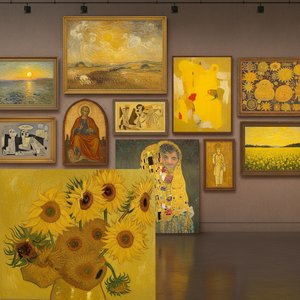
Chromgelb in der Kunstgeschichte: Die 10 berühmtesten Gemälde & ihre Meister
Entdecken Sie die 10 berühmtesten Gemälde, dominiert von der leuchtenden Farbe Chromgelb! Von Van Gogh bis Monet – erfahren Sie Geschichten hinter Meisterwerken & finden Sie Ihre perfekte Kunst-Reproduktion auf AllPaintingsStore.com.

The Allure of Azure: Exploring the Symbolic & Aesthetic Depths of Blue in Art History
Explore the rich history of blue in art! Discover its symbolism, from ancient pigments to modern masterpieces by Kandinsky & Seurat. Uncover the psychological impact and cultural meanings behind this captivating hue.

Die Top 10 Gemälde in Schattierungen von 'Slate Blue': Kunst für Ihr Zuhause
Entdecken Sie die Top 10 Gemälde in faszinierenden 'Slate Blue' Tönen! Von Monet bis Manet – erleben Sie Kunstgeschichte und lassen Sie sich von Meisterwerken inspirieren. Hochwertige Kunstdrucke auf

Die Top 10 berühmter Gemälde im Gelbocherton – Kunst für Ihr Zuhause |
Entdecken Sie die Top 10 berühmter Gemälde, dominiert von warmen Gelbochtönen! Von Van Gogh bis Monet – erfahren Sie die Geschichten hinter den Meisterwerken und lassen Sie sich für Ihre Wohnraumgestaltung inspirieren. Hochwertige Kunstdrucke auf


