


 Vorschau anzeigen
 Versenden
 Teilen
 Details anzeigen
 Leitfaden

 Herunterladen
 Ähnliche Objekte
 Röntgenaufnahme
 Diashow
 Fragen & Antworten
 Statistiken
Paul Cézanne

- 55.0 x 46.0 cm


 Weiterlesen
Giclée / Kunstdruck
Giclée- oder Leinwanddruck in Museumsqualität mit schneller Produktion und flexiblen Veredelungsoptionen. ( Handgemalte Reproduktion bestellen Zum digitalen Bild wechseln)




P118B €10

P118H €10

P118W €10

P438Z €10

P508JH €12

P508YH €12

P805H €10

P805Z €10

P919BZ €10

P919G €10

P919XJ €10

P959ZH €10

P968JZ €12

W106C €8

W218G €10

W218JH €8

W218Y €10

W307PJ €10

W316G €10

W316PJ €8

W316Y €10

W398PJ €8

W4111J €10

W500HY €15

W500JH €15

W692G €12

W849H €8

W940BG €15

W953PJ €8




Wählen Sie aus unseren vordefinierten Formaten, die den ursprünglichen Proportionen des Kunstwerks entsprechen.

Geben Sie die benötigte Breite und Höhe an, damit der Druck perfekt in Ihren Rahmen oder an Ihre Wand passt. Ein Druck kann nur beschnitten, aber niemals größer als das Originalbild angefertigt werden; daher verliert ein Format mit anderen Proportionen einen Teil des Bildes. Wir senden Ihnen ein digitales Mockup zur Freigabe, bevor wir den Druck ausführen. Das auf dieser Seite gezeigte Bild zeigt nicht den tatsächlichen Beschnitt – dies ist nur im Mockup ersichtlich.
Weltweiter Versand () innerhalb von 2 Wochen statt der üblichen 4/5 Wochen. (6 November)

Kostenloser weltweiter Expressversand

Hochwertige Leinenleinwand

Umfassender Versicherungsschutz beim Versand

Zollgebühren-Rückerstattungsgarantie

Garantie für exakte Farbtreue

100 Tage Rückgaberecht (nur bei Mängeln)

100% Geld-zurück-Garantie

Mengenrabatt verfügbar
 Die Glasoption ist nur für Größen unter 110 cm verfügbar.

Paul Cézanne
Giclée / Kunstdruck
Format der Reproduktion
-


Endpreis
€ 58
Paul Cézanne: A Revolutionary Vision
Paul Cézanne stands as one of the most influential figures in the transition from Impressionism to Cubism, reshaping artistic perception and establishing a cornerstone for modern art’s evolution. His groundbreaking approach challenged conventional notions of representation, prioritizing underlying structure and formal qualities—a radical departure from the fleeting impressions favored by his predecessors. Born January 19, 1839, in Aix-en-Provence, France, Cézanne's artistic journey began with a fascination for Romantic landscapes and the Barbizon school’s emphasis on tonal harmony. However, it was his independent exploration of Impressionist principles—particularly color and form—that propelled him toward his distinctive style. Influenced by artists like Paul Gauguin and Georges Seurat, Cézanne embarked on a path of experimentation and innovation that would ultimately redefine artistic expression.Early influences included Romanticism and the Barbizon school of landscape painting. He studied briefly at the Académie Suisse in Paris but largely developed his style independently. The works of Paul Gauguin and Georges Seurat, particularly their explorations of color and form, also played a significant role in shaping Cézanne’s artistic direction.
Artistic Style and Technique
Cézanne's oeuvre is characterized by an intense preoccupation with observation and the meticulous rendering of surfaces. Unlike Impressionists who sought to capture momentary sensations, Cézanne aimed to depict the essence of objects—their underlying geometric forms—through a technique that blended tonal harmony with expressive brushstrokes. He employed planes of color and small, repetitive brushstrokes, creating complex fields that conveyed a palpable sense of depth and dimensionality. This distinctive approach—often described as “synthetism”—was revolutionary for its time, rejecting the illusionistic conventions of academic painting.- Plane Shapes: Cézanne’s canvases are dominated by flattened planes of color, reminiscent of Byzantine mosaics or African sculpture.
- Repetitive Brushstrokes: The artist utilized a technique of applying short, overlapping brushstrokes—often described as “impasto”—to build up textured surfaces that capture the materiality of his subjects.
- Geometric Reduction: Cézanne relentlessly simplified forms, reducing them to basic geometric shapes—cylinders, cones, and cubes—to convey their structural integrity.
Historical Context
Cézanne’s artistic output coincided with a period of profound intellectual ferment in Europe. The burgeoning Symbolist movement challenged Impressionism's focus on objective observation, advocating instead for artists to express inner emotions and psychological states. Simultaneously, developments in science—particularly Darwinian theory—were reshaping understandings of the natural world. Cézanne responded to these influences by rejecting academic conventions and embracing a more subjective approach to representation—a stance that foreshadowed the emergence of Cubism.Artistic Influence
Cézanne’s work exerted an indelible impact on subsequent generations of artists, notably Henri Matisse and Pablo Picasso. Picasso famously declared Cézanne “the father of us all,” recognizing his pioneering exploration of form and perspective as foundational to Cubism—a movement that dismantled traditional spatial illusions and presented multiple viewpoints simultaneously. Cézanne's influence extended beyond Cubism, inspiring artists across diverse mediums and stylistic traditions.Relevance in Contemporary Art
Today, Cézanne’s legacy continues to inspire artists and art enthusiasts alike. His innovative techniques—particularly his masterful use of impasto—remain a source of fascination for painters seeking to convey texture and materiality. Furthermore, Cézanne's unwavering commitment to formal exploration resonates with contemporary concerns about abstraction and the challenge of capturing subjective experience. For those interested in delving deeper into Cézanne’s artistic vision, explore Paul Cézanne: Self-Portrait on AllPaintingsStore. Additionally, learn more about the artist and his contributions to modern art at Paul Cézanne on Wikipedia.- Self-Portrait on a Rose Background by Paul Cézanne: Paul Cézanne: Self-Portrait on a Rose Background
- Self-Portrait by Paul Cézanne (44 x 36 cm, Kunstmuseum Bern): Paul Cézanne: Self-Portrait
- Self-Portrait by Paul Cézanne (65 x 50 cm, Musée d'Orsay): Paul Cézanne: Self-Portrait
- Self-Portrait by Paul Cézanne (The Phillips Collection): Paul Cézanne: Self-Portrait
- The Card Players by Paul Cézanne: The Card Players
Fragen & Antworten
Wie stellt "Paul Cézanne" von Paul Cézanne eine Verbindung zwischen Post-Impressionism und dem Heimatland des Künstlers her?
"Paul Cézanne" wurde von Paul Cézanne geschaffen, der in Frankreich geboren wurde, und ist der Post-Impressionism-Bewegung zuzuordnen. Die Herkunft des Künstlers verbindet das Werk mit der Post-Impressionism, wie sie von Künstlern aus Frankreich praktiziert wird.
Welche Technik und welches Entstehungsdatum haben "Paul Cézanne" von Paul Cézanne?
"Paul Cézanne" entstand im Jahr 1895 mit der Technik Acryl auf Leinwand. Material und Datum beschreiben, wie und wann das Original geschaffen wurde.
Wie verbinden sich Kontrast und Harmonie in "Paul Cézanne"?
In "Paul Cézanne" trifft ein Aussagekraft Kontrast auf eine Disharmonische Farbpalette Harmonie.
Ähnliche Kunstwerke


Künstlerbiografie
frühes Leben und Einflüsse
Paul Cézanne, ein französischer Post-Impressionist-Maler, wurde am 19. Januar 1839 in Aix-en-Provence, Frankreich, geboren. Sein frühes Leben war geprägt von einer starken Verbindung zu seiner Familie’s Bankgeschäft, das ihm finanzielle Sicherheit verschaffte. Dies ermöglichte es ihm, sich ohne finanziellen Druck auf seine künstlerischen Bestrebungen zu konzentrieren. Les Nabis, Neo-Impressionismus und Symbolismus beeinflussten Cézannes frühe Arbeit, die sich durch seinen Schwerpunkt auf geometrische Formen und eine reduzierte Farbpalette auszeichnete. Sein Interesse an den Werken von Paul Gauguin und Georges Seurat festigte seinen Post-Impressionismusstil.Künstlerischer Stil und Techniken
Cézannes innovative Verwendung von Farbflächen und kleinen, sich wiederholenden Pinselstrichen schuf komplexe Felder, die seine intensive Beschäftigung mit den Motiven widerspiegelten. Sein oft explorativer Ansatz in der Kunst führte zur Entwicklung einer neuen bildlichen Sprache, die die zugrunde liegende Struktur von Objekten in einer Komposition betonte.- Schlüsselmerkmale:
- Geometrische Formen und Facetten
- Reduzierte Farbpalette
- Betonung der konstruktiven Essenz der physischen Welt
- Mehrere Perspektiven und Simultaneität
- Einflussreiche Werke:
- The Pond at Jas de Bouffan (1880)
- Portrait of Emile Zola (1866)
- Wald (1892)
- Museen mit Cézannes Werken:
- Musée Marmottan Monet in Paris, Frankreich
- The Museum of Fine Arts in Houston, Vereinigte Staaten
Vermächtnis und Einfluss
Cézannes bahnbrechende Arbeit im Post-Impressionismus ebnete den Weg für verschiedene Avantgarde-Bewegungen, darunter Kubismus, Fauvismus und Surrealismus. Sein Einfluss ist in den Werken von Pablo Picasso, Henri Matisse und Georges Braque zu sehen. Cézannes Vermächtnis inspiriert weiterhin Künstler und Kunstinteressierte gleichermaßen und festigt seinen Platz als eine zentrale Figur in der Geschichte der modernen Kunst.- Verwandte Kunstbewegungen:
- Betrachten Sie Cézannes Werke:
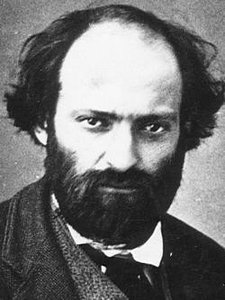
Paul Cézanne
1839 - 1906 , Frankreich
Kurzinfos
- Beeinflusste Künstler:
- Paul Gauguin
- Georges Seurat
- Bemerkenswerte Werke:
- Der Teich in Jas de Bouffan
- Porträt von Émile Zola
- Wald
- Mont Sainte-Victoire
- Geburtsdatum: 19. Januar 1839
- Geburtsort: Aix-en-Provence, Frankreich
- Künstlerische Bewegung: Postimpressionismus
- Nationalität: Französisch
- Sterbedatum: 1906
- Vollständiger Name: Paul Cézanne
- Von Ihm Beeinflusste Künstler:
- Pablo Picasso
- Henri Matisse
- Georges Braque
Ähnliche Artikel

Beyond Impressionism: Exploring the Emotional Depth and Vibrant Mastery of Post-Impressionist Art
Discover the profound evolution of art beyond Impressionism. Explore the emotional depth, vibrant colors, and revolutionary techniques of Post-Impressionist masters like Van Gogh and Cézanne in this expert guide to art history's most expressive movement.


