


 In echtem Maßstab anzeigen
 Versenden als Grußkarte
 Teilen
 Details anzeigen
 Leitfaden öffnen

 Herunterladen
 Ähnliche Objekte
 Röntgenaufnahme
 Diashow
 Besucherstatistiken
Sparse foliage


 Mehr anzeigen
Giclée / Kunstdruck
Giclée- oder Leinwanddruck in Museumsqualität mit schneller Produktion und flexiblen Veredelungsoptionen. ( Handgemalte Reproduktion kaufen Zum digitalen Bild wechseln)




P118B €10

P118H €10

P118W €10

P438Z €10

P508JH €12

P508YH €12

P805H €10

P805Z €10

P919BZ €10

P919G €10

P919XJ €10

P959ZH €10

P968JZ €12

W106C €8

W218G €10

W218JH €8

W218Y €10

W307PJ €10

W316G €10

W316PJ €8

W316Y €10

W398PJ €8

W4111J €10

W500HY €15

W500JH €15

W692G €12

W849H €8

W940BG €15

W953PJ €8




Wählen Sie aus unseren vordefinierten Formaten, die den ursprünglichen Proportionen des Kunstwerks entsprechen.

Geben Sie die Breite und die Höhe an, die Sie benötigen, damit der Druck perfekt in Ihren Rahmen oder an Ihre Wand passt. Ein Druck kann nur beschnitten werden und niemals größer als das Originalbild gemacht werden; daher verliert ein Format mit einer anderen Proportion einen Teil des Bildes. Wir senden Ihnen ein digitales Mockup zur Freigabe, bevor wir den Druck ausführen. Das auf dieser Seite gezeigte Bild zeigt nicht den tatsächlichen Beschnitt – dies ist nur im Mockup ersichtlich.
Weltweiter Versand () innerhalb von 2 Wochen statt der üblichen 4/5 Wochen. (24 Oktober)

Kostenloser weltweiter Expressversand

Hochwertige Leinenleinwand

Vollständiger Versicherungsschutz beim Versand

Zollgebühren-Rückerstattungsgarantie

Garantie für exakte Farbtreue

100-tägiges Rückgaberecht (nur bei Mängeln)

100% Geld-zurück-Garantie

Angebot für Mengenrabatt
 Die Glasoption ist nur für Größen unter 110 cm verfügbar.

Sparse foliage
Giclée / Kunstdruck
Format der Reproduktion
-


Gesamtpreis
€ 56
A Symphony of Color and Texture: Exploring Paul Klee’s “Sparse Foliage”
The painting "Sparse Foliage," created in 1934 by Swiss artist Paul Klee, stands as a testament to his masterful ability to distill complex emotions into deceptively simple visual forms. More than just a depiction of a tree—though it undeniably captures the essence of arboreal beauty—this artwork embodies Klee’s signature style: an exuberant blend of abstraction and lyrical color that invites contemplation and rewards repeated viewing. It's a piece that speaks volumes about his artistic philosophy, rooted in the belief that art should transcend mere representation to communicate feeling directly.The Style and Technique – Embracing Geometric Harmony
Klee’s approach to painting was fundamentally shaped by his fascination with musical principles. He famously described painting as “drawing with color,” prioritizing harmony and balance over meticulous realism. "Sparse Foliage" exemplifies this ethos perfectly. The artist employs a technique characterized by tessellated shapes—geometric forms interlocking to create an overall visual unity—a hallmark of Klee’s oeuvre. These shapes aren't rigidly defined; rather, they possess a fluidity that suggests movement and organic growth, mirroring the natural world it portrays. Thickly applied paint creates textural richness, emphasizing the contours of the tree trunk and branches while layering hues of blue, green, pink, yellow, orange, and red to achieve an astonishing vibrancy. The use of encaustic—a mixture of beeswax and resin—further enhances the painting’s luminosity and durability, ensuring its beauty persists across generations.Historical Context – Amidst Surrealist Influences
“Sparse Foliage” emerged during a pivotal period in Klee's artistic career, coinciding with his immersion in Surrealism. Although he resisted labeling himself as a Surrealist, Klee was undeniably influenced by the movement’s exploration of dreamlike imagery and subconscious associations. The seemingly random placement of dots throughout the composition—a technique frequently employed by Surrealists—adds to the painting’s enigmatic quality. These dots aren't merely decorative; they disrupt the geometric order, introducing an element of chance and inviting viewers to consider alternative interpretations. Furthermore, Klee was grappling with anxieties surrounding the looming threat of World War II, reflecting in his art a preoccupation with fragility and resilience – themes subtly conveyed through the depiction of sparse foliage against a backdrop of muted tones.Symbolism – Beyond Representation: A Meditation on Growth and Transformation
The tree itself serves as a potent symbol—a universal emblem of life, growth, and interconnectedness. However, Klee’s deliberate simplification of its form transcends literal representation. The “sparse” foliage suggests vulnerability yet simultaneously conveys an underlying strength, hinting at the ability to endure hardship while retaining beauty. The varied colors – blues representing tranquility and depth, greens symbolizing vitality and renewal, reds signifying passion and energy – contribute to a complex tapestry of emotional resonance. Each hue is carefully considered, aligning with Klee’s belief that color possesses inherent expressive power.Emotional Impact – An Invitation to Quiet Contemplation
Ultimately, “Sparse Foliage” succeeds in capturing a profound sense of serenity and wonder. Its understated palette—dominated by cool blues and greens—creates an atmosphere conducive to introspection. The textured surface invites tactile engagement, encouraging viewers to linger over the painting’s details and allowing them to absorb its subtle nuances. Like much of Klee's work, this piece isn’t designed to provoke immediate astonishment but rather to foster a deeper appreciation for the beauty of nature and the transformative potential of art itself. It remains an enduring reminder that true artistic achievement lies in communicating emotion with grace and precision—a feat accomplished brilliantly by Paul Klee.Fragen & Antworten
Wie kann ich das Bild von "Sparse foliage" von Paul Klee herunterladen?
Das Bild von "Sparse foliage" von Paul Klee kann auf der Download-Seite des Kunstwerks heruntergeladen werden: ein hochauflösender digitaler Bild-Download.
Darf die Abbildung von "Sparse foliage" von Paul Klee frei reproduziert werden?
Die urheberrechtliche Situation für "Sparse foliage" von Paul Klee: Das Werk ist gemeinfrei – das Urheberrecht ist abgelaufen. Dies bestimmt, ob Reproduktionen des Bildes frei erstellt werden dürfen.
Welche Reproduktionsgröße wird für "Sparse foliage" von Paul Klee empfohlen?
Die empfohlene Druckgröße für "Sparse foliage" von Paul Klee ist Large.
Ähnliche Kunstwerke


Biografie des Künstlers
Paul Klee: Ein Leben in Farbe und Form
Frühes Leben und Ausbildung
- Paul Klee wurde am 18. Dezember 1879 in Münchenbuchsee, Schweiz, geboren.
- Sein Vater war Musiklehrer deutscher Herkunft, seine Mutter eine Schweizer Sängerin, was ihm schon früh eine Wertschätzung für die Künste vermittelte.
- Klee begann zunächst mit dem Zeichnen, gab diese jedoch schließlich auf zugunsten expressiverer Formen auf.
- Er studierte von 1898 bis 1901 an der Akademie der Bildenden Künste in München.
Künstlerische Entwicklung und Einflüsse
- In seinen frühen Werken waren Einflüsse des Jugendstils und Symbolismus zu sehen, aber er begann schnell, seinen einzigartigen Stil zu entwickeln.
- Eine entscheidende Reise nach Tunesien im Jahr 1914 hatte einen tiefgreifenden Einfluss auf seine Verwendung von Farbe und Abstraktion – das Licht und die Atmosphäre inspirierten eine Verschiebung hin zu kräftigeren Farbschemata.
- Er war stark von Bewegungen wie Expressionismus, Kubismus und Surrealismus beeinflusst, obwohl er sich nie vollständig mit einer einzelnen davon identifizierte.
- Sein Interesse an Musik informierte seinen künstlerischen Ansatz stark, indem er oft Malerei als Komponieren musikalischer Stücke verglich.
Die Bauhaus-Jahre und darüber hinaus
- Von 1931 bis 1933 lehrte Klee an der einflussreichen Bauhaus-Schule für Kunst, Design und Architektur neben Wassily Kandinsky.
- Diese Zeit war geprägt von einer Blüte seiner abstrakten Werke, in denen er sich mit Farbtheorie und formalen Beziehungen auseinandersetzte.
- Mit dem Aufstieg des Nationalsozialismus in Deutschland wurde Klee 1933 aufgrund seiner „degenerierten“ Kunst aus der Bauhaus entlassen.
- Er kehrte nach die Schweiz zurück und setzte seine Arbeit als Maler fort, sein Gesundheitszustand verschlechterte sich jedoch während dieser Zeit.
Wichtige Themen und künstlerischer Stil
- Klees Werk ist durch eine spielerische, aber tiefgründige Erforschung von Farbe, Linie und Form gekennzeichnet.
- Er verwendete oft kindliche Bilder und verspielte Kompositionen, die mit symbolischen Bedeutungen aufgeladen waren.
- Wiederkehrende Themen sind Gärten, Landschaften, Porträts und abstrakte Anordnungen.
- Seine „Paul Klee Notizen“, veröffentlicht posthum, enthüllen seine umfangreichen theoretischen Untersuchungen zu Farbe und Design.
Vermächtnis und historische Bedeutung
- Paul Klee starb am 29. Juni 1940 in Muralto, Schweiz.
- Er gilt als einer der wichtigsten Künstler des 20. Jahrhunderts, der die Lücke zwischen figurativer und abstrakter Kunst schloss.
- Seine innovative Verwendung von Farbe und seine theoretischen Schriften inspirieren bis heute Künstler und Designer.
- Klees Werk wird weltweit von Sammlern und Museen begehrt, wodurch er einen festen Platz in der modernen Kunstgeschichte einnimmt.
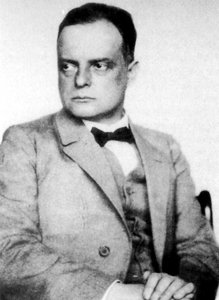
Paul Klee
1879 - 1940 , Schweiz
Eckdaten zum Künstler
- Bemerkenswerte Werke:
- Hamamet (1914)
- Rotgrün und Violett-Gelbe Rhythmen
- Wolken über Bor (1940)
- Geschwister (1930)
- Geburtsdatum: 18. Dezember 1879
- Geburtsort: Münchenbuchsee, Schweiz
- Künstlerische Richtung: Expressionismus, Kubismus, Surrealismus
- Nationalität: Schweizer-Deutscher Künstler
- Todatum: 29. Juni 1940
- Vollständiger Name: Paul Klee
Verwandte Artikel

Expressionist Abstraction: A Procurement Guide to Bold Colors and Emotional Impact for Modern Hotel Interiors
Elevate hospitality spaces with Expressionist Abstraction. A professional procurement guide for hotel designers on sourcing bold, large-scale abstract oil paintings to create impactful, high-end modern interiors through reliable bulk-order art solutions.

Bold Distortion: A Trend Forecast for Impactful Abstract Art in Luxury Commercial and Hotel Interiors
Elevate hospitality design with the Bold Distortion trend. APS provides professional sourcing of large-scale abstract paintings for hotel interiors. Benefit from custom sizing, bulk-order efficiency, and reliable global shipping. High-impact art for high-volume procurement.


