


 In echtem Maßstab anzeigen
 Versenden als Grußkarte
 Teilen
 Details anzeigen
 Leitfaden öffnen

 Herunterladen
 Ähnliche Objekte
 Röntgenaufnahme
 Diashow
 Besucherstatistiken
Evolution
 Acryl auf Leinwand
- Wandkunst
- Fauvist
 1911
1911- Moderne
 178.0 x 85.0 cm
 Mehr anzeigen
Handgefertigte Ölreproduktion
Handgemaltes Ölgemälde auf Leinwand in Ihrer Wunschgröße und mit Rahmen, auf Bestellung von unseren Künstlern angefertigt. ( Zum Druck wechseln Zum digitalen Bild wechseln)




P118B €10

P118H €10

P118W €10

P438Z €10

P508JH €12

P508YH €12

P805H €10

P805Z €10

P919BZ €10

P919G €10

P919XJ €10

P959ZH €10

P968JZ €12

W106C €8

W218G €10

W218JH €8

W218Y €10

W307PJ €10

W316G €10

W316PJ €8

W316Y €10

W398PJ €8

W4111J €10

W500HY €15

W500JH €15

W692G €12

W849H €8

W940BG €15

W953PJ €8




Wählen Sie aus unseren vordefinierten Formaten, die den ursprünglichen Proportionen des Kunstwerks entsprechen.

Geben Sie die Breite und die Höhe an, die Sie für Ihren Rahmen oder Ihre Wand benötigen. Da dieses Werk handgemalt ist, kann der Künstler bei einer anderen Form etwas mehr um das Bild herum malen oder etwas abschneiden – Sie entscheiden. Wir senden Ihnen ein digitales Mockup zur Freigabe, bevor mit dem Malen begonnen wird. Das auf dieser Seite gezeigte Bild stellt nicht das tatsächliche Ergebnis dar – dies tut nur das Mockup.
Nach der Bestellung wird das AllPaintingsStore.com-Team dem Kunden Anweisungen per E-Mail zusenden und eine Mockup-Vorschau bereitstellen.
Weltweiter Versand () in nur 3 bis 4 Wochen statt der üblichen 5 Wochen. (22 Oktober). Keine Kompromisse bei der Qualität.

Kostenloser weltweiter Expressversand

Hochwertige Leinenleinwand

Vollständiger Versicherungsschutz beim Versand

Zollgebühren-Rückerstattungsgarantie

Garantie für exakte Farbtreue

100-tägiges Rückgaberecht (nur bei Mängeln)

100% Geld-zurück-Garantie

Angebot für Mengenrabatt
 Die Glasoption ist nur für Größen unter 110 cm verfügbar.

Evolution
Reproduktionsmedium
Format der Reproduktion
-


Gesamtpreis
€ 226
Evolution by Piet Mondrian
Piet Mondrian’s Evolution, created in 1911, stands as a pivotal moment in the artist's artistic journey—a decisive break from his earlier landscapes and Impressionistic tendencies toward a radical embrace of abstraction. Measuring 178 x 85 cm, this monumental oil painting on canvas exemplifies the Fauvist movement’s bold experimentation with color and form, marking a crucial step towards Mondrian’s groundbreaking Neoplasticist style. It’s more than just pigment on canvas; it's an assertion of geometric harmony against the perceived chaos of the natural world—a visual manifesto reflecting Mondrian’s profound intellectual convictions.Contextualizing Mondrian's Work
Before delving into Evolution itself, it’s vital to understand Mondrian’s formative years. Born Pieter Cornelis Mondriaan in Amersfoort, Netherlands, he initially pursued traditional artistic training under the influence of his uncle, Frits Mondriaan—a respected Hague School painter—and Willem Maris. However, Mondrian quickly recognized the limitations of representational art and sought inspiration from movements like Impressionism and Pointillism, absorbing their techniques while simultaneously harboring a desire for something more profound. His early landscapes captured the beauty of Dutch countryside with meticulous detail, yet they hinted at an underlying restlessness—a yearning to distill nature’s essence into its purest visual elements. This intellectual curiosity would soon propel him toward revolutionary artistic ideas. He was deeply affected by the philosophical currents of his time, particularly Rudolf Steiner’s Anthroposophy, which championed a holistic worldview emphasizing the interconnectedness of humanity and nature—influences that would shape his aesthetic sensibilities for decades to come.The Painting's Composition: A Dialogue Between Color and Geometry
Evolution depicts three women against distinct colored backgrounds – a serene blue, vibrant yellow, and luminous white. Each woman is adorned with a necklace, conveying a sense of elegance and poise, and positioned in varied poses that subtly suggest movement and dynamism. This composition isn’t merely decorative; it’s deliberately structured to explore the relationship between color and geometric abstraction. Mondrian meticulously applied horizontal and vertical lines—the foundational elements of Neoplasticism—creating a grid-like framework that dominates the canvas. The colors chosen aren’t arbitrary; they represent fundamental harmonies, mirroring concepts explored in Eastern philosophy and reflecting Mondrian’s belief in universal order. Critics have interpreted this arrangement as representing stages of spiritual development—the blue symbolizing tranquility and contemplation, while yellow embodies optimism and energy – creating a visual tension that underscores the painting’s thematic concerns. The careful balance between opposing forces is palpable, mirroring Mondrian’s conviction that art could achieve enlightenment through rational harmony.Artistic Influences: Embracing Fauvism and Beyond
Mondrian absorbed these principles, adapting them to his own aesthetic vision. However, Evolution also foreshadows Mondrian’s later explorations into De Stijl, an influential artistic movement founded by Mondrian and Theo van Doesburg that championed pure abstraction and geometric harmony. The influence of Henri Matisse’s Fauvist style—characterized by bold, expressive colors—is undeniable, though Mondrian transformed this vibrant palette into a carefully calibrated system of primary hues. He sought to liberate art from the constraints of illusionism, aiming instead for an objective representation of reality—a concept that resonated deeply with the intellectual climate of his era. The painting’s formal simplicity is itself a deliberate rejection of academic conventions, asserting Mondrian's commitment to a new artistic language rooted in geometric abstraction and philosophical contemplation.Significance in Art History: A Cornerstone of Modernism
Evolution is undeniably a cornerstone of modern art history. Alongside canvases like *The Red Mill* and *Church tower at Domburg*, it solidified Mondrian’s commitment to abstraction, establishing him as one of the foremost figures in the development of Cubism and De Stijl. Its impact extends far beyond the realm of painting, influencing architecture, design, and even fashion—demonstrating Mondrian’s enduring legacy as an innovator who fundamentally reshaped Western artistic sensibilities. Today, AllPaintingsStore.com offers exceptional reproductions of Evolution by Piet Mondrian, meticulously crafted to preserve the vibrancy of color and precision of form—allowing art enthusiasts worldwide to experience the transformative power of this iconic masterpiece.- Piet Mondrian: Evolution
- Piet Mondrian: Church tower at Domburg
- Piet Mondrian: The Gray Tree
- Piet Mondrian: The Red Mill
A Life Unveiled: The Journey of Piet Mondrian
Born Pieter Cornelis Mondriaan in 1872, in the quiet Dutch town of Amersfoort, Piet Mondrian’s artistic path was not one of immediate revelation but a gradual unfolding. His early life was steeped in tradition; his uncle, Frits Mondriaan, was already an established painter, and this familial connection initially steered him towards landscape painting. These formative works, reminiscent of the Hague School and Dutch Impressionism – pieces like *The Red Mill* – reveal a young artist diligently studying nature, mastering technique, yet subtly searching for something beyond mere representation. Even then, a yearning for simplification seemed to tug at his brushstrokes. He wasn’t content simply mirroring the world; he wanted to distill its essence. This early period saw experimentation with Pointillism and Fauvism, each style offering a different lens through which to view color and form, but none fully satisfyiFragen & Antworten
Kann ich "Evolution" von Piët Mondrian unter verschiedenen Lichtverhältnissen sehen?
„Evolution“ kann Schicht für Schicht auf der Röntgenaufnahme-Seite des Kunstwerks untersucht werden – ein Viewer, inspiriert von der Leuchttisch eines Restaurators, mit elf optischen Ebenen des Bildes.
Welche Farbpalette wird in "Evolution" von Piët Mondrian verwendet?
Die Farben von "Evolution" bilden eine Dunkle Farbtöne-Palette. Diese Klassifizierung beschreibt die dominierenden Farbfamilien.
Kann ich "Evolution" von Piët Mondrian vor der Bestellung in einer Vorschau ansehen?
Auf der Vorschau-Seite von „Evolution“ können Sie das Kunstwerk vor der Bestellung in einer Vorschau betrachten.
Ähnliche Kunstwerke


Biografie des Künstlers
**frühes Leben und Karriere in den Niederlanden (1872–1911)**
pieter cornelis mondriaan, bekannt ab 1911 als piet mondrian, war ein niederländischer Maler und Kunsttheoretiker, geboren am 7. März 1872 in Amersfoort, Niederlande. Er begann seine Karriere als Lehrer an der Grundschule und betrieb gleichzeitig Malerei, zunächst im Stil der Haag School des niederländischen Impressionismus.- Sein frühes Werk, das von naturalistischen Landschaften geprägt ist, kann in Gemälden wie the red mill und trees in moonrise zu sehen ist, die im kunstmuseum den haag ausgestellt wurden.
- Mondrians Suche nach einem persönlichen Stil führte ihn dazu, verschiedene künstlerische Bewegungen zu erkunden, darunter Pointillismus und Fauvismus.
- Seine erste Ausstellung im Jahr 1893 markierte den Beginn seiner produktiven Karriere.
**Die Entwicklung des Stils von Mondrian**
Von figurativ zu abstrakt Mondrians künstlerische Richtung verschob sich hin zu einem zunehmend abstrakten Stil, der in eine nicht-repräsentative Form mündete, die er Neoplasticismus nannte. Diese „reine plastische Kunst“ zielte darauf ab, „universelle Schönheit“ zu schaffen und seinen formalen Wortschatz auf Primärfarben (Rot, Blau und Gelb), Werte (Schwarz, Weiß und Grau) und Richtungen (horizontal und vertikal) zu beschränken.- Beispiele für diesen Stil lassen sich in Gemälden wie composition with yellow patch (46 x 46 cm, Neoplasticismus, Öl auf Leinwand) zu sehen sein.
- Mondrians Werk hatte einen enormen Einfluss auf die Kunst des 20. Jahrhunderts und beeinflusste nicht nur die abstrakte Malerei, sondern auch Design, Architektur und Mode.
**Vermächtnis und Einfluss**
Mondrians Vermächtnis erstreckt sich über sein eigenes Werk hinaus und beeinflusst wichtige Stile und Bewegungen wie Farbflächenmalerei, abstrakten Expressionismus und Minimalismus. Kunsthistoriker stephen bayley stellte fest, dass Mondrian zum Totem für alles geworden ist, was der Modernismus zu sein versuchte.- Entdecken Sie mehr von Mondrians Werk unter AllPaintingsStore.com.
- Erfahren Sie mehr über die De Stijl-Bewegung und ihren Einfluss auf die moderne Kunst auf wikipedia.
- Entdecken Sie andere einflussreiche Künstler wie vincent van gogh und ihre Auswirkungen auf die Kunstwelt.
**Wichtige Werke und Ausstellungen**
* piet mondrian: apple blossom (Cubismus) (ansicht auf AllPaintingsStore.com) * piet mondrian: still life with vase of spices ii (Cubismus) (ansicht auf AllPaintingsStore.com) * piet mondrian: passionflower (73 x 48 cm, Kunstmuseum Den Haag, Postimpressionismus, Aquarell) (ansicht auf AllPaintingsStore.com)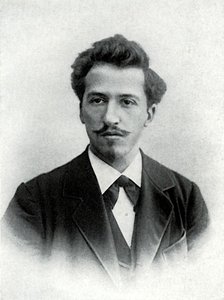
Piët Mondrian
1872 - 1944 , Niederlande
Eckdaten zum Künstler
- Beeinflusste Künstler:
- Hague School
- Pointillismus
- Fauvismus
- Kubismus
- Bemerkenswerte Werke:
- Komposition mit Rot, Gelb und Blau
- Broadway Boogie Woogie
- Tableau Nr. 2 Komposition V
- Rhythmus der schwarzen Linien
- Geburtsdatum: 7. März 1872
- Geburtsort: Amersfoort, Niederlande
- Künstlerische Bewegung: De Stijl, Neoplasticismus
- Nationalität: Niederländisch
- Sterbedatum: 1944
- Vollständiger Name: Piët Mondriaan
- Von Künstlern Beeinflusst:
- Farbfeldmalerei
- Abstrakter Expressionismus
- Minimalismus
Verwandte Artikel

Piet Mondrian: Dekonstruktion der Realität – Eine Studie zu Neo-Plastizismus und universeller Harmonie
Entdecken Sie die faszinierende Welt von Piet Mondrian und dem Neo-Plastizismus! Analysieren Sie mit uns Rasterkunst, Farbenlehre & den Einfluss auf moderne Kunst. Expertenwissen für Kunstliebhaber.
Chromgelb in der Kunstgeschichte: Die 10 berühmtesten Gemälde & ihre Meister
Entdecken Sie die 10 berühmtesten Gemälde, dominiert von der leuchtenden Farbe Chromgelb! Von Van Gogh bis Monet – erfahren Sie Geschichten hinter Meisterwerken & finden Sie Ihre perfekte Kunst-Reproduktion auf AllPaintingsStore.com.

Geometrische Abstraktion: Die 10 Meisterwerke, die Kunstgeschichte prägten | AllPaintingsStore.com
Entdecken Sie die 10 Meisterwerke der geometrischen Abstraktion! Von Kandinsky bis Mondrian – erleben Sie die Geschichte, Farben & Formen dieser revolutionären Kunstrichtung. Hochwertige Kunstreproduktionen auf AllPaintingsStore.com

The Golden Hue: Exploring Symbolism & Emotion in Yellow Art
Explore the rich symbolism & emotional power of yellow in art history! From Van Gogh to Kandinsky, discover how artists used this vibrant hue. Expert analysis & high-quality reproductions at AllPaintingsStore.

Die Top 10 berühmter Gemälde im Gelbocherton – Kunst für Ihr Zuhause |
Entdecken Sie die Top 10 berühmter Gemälde, dominiert von warmen Gelbochtönen! Von Van Gogh bis Monet – erfahren Sie die Geschichten hinter den Meisterwerken und lassen Sie sich für Ihre Wohnraumgestaltung inspirieren. Hochwertige Kunstdrucke auf


