


 In echtem Maßstab anzeigen
 Versenden als Grußkarte
 Teilen
 Details anzeigen
 Leitfaden öffnen

 Herunterladen
 Ähnliche Objekte
 Röntgenaufnahme
 Diashow
 Besucherstatistiken
Komposition 2
 Acryl auf Leinwand
- Wandkunst
- Neoplasticism
 1922
1922 55.0 x 53.0 cm
 Mehr anzeigen
Giclée / Kunstdruck
Giclée- oder Leinwanddruck in Museumsqualität mit schneller Produktion und flexiblen Veredelungsoptionen. ( Handgemalte Reproduktion kaufen Zum digitalen Bild wechseln)




P118B €10

P118H €10

P118W €10

P438Z €10

P508JH €12

P508YH €12

P805H €10

P805Z €10

P919BZ €10

P919G €10

P919XJ €10

P959ZH €10

P968JZ €12

W106C €8

W218G €10

W218JH €8

W218Y €10

W307PJ €10

W316G €10

W316PJ €8

W316Y €10

W398PJ €8

W4111J €10

W500HY €15

W500JH €15

W692G €12

W849H €8

W940BG €15

W953PJ €8




Wählen Sie aus unseren vordefinierten Formaten, die den ursprünglichen Proportionen des Kunstwerks entsprechen.

Geben Sie die Breite und die Höhe an, die Sie benötigen, damit der Druck perfekt in Ihren Rahmen oder an Ihre Wand passt. Ein Druck kann nur beschnitten werden und niemals größer als das Originalbild gemacht werden; daher verliert ein Format mit einer anderen Proportion einen Teil des Bildes. Wir senden Ihnen ein digitales Mockup zur Freigabe, bevor wir den Druck ausführen. Das auf dieser Seite gezeigte Bild zeigt nicht den tatsächlichen Beschnitt – dies ist nur im Mockup ersichtlich.
Weltweiter Versand () innerhalb von 2 Wochen statt der üblichen 4/5 Wochen. (24 Oktober)

Kostenloser weltweiter Expressversand

Hochwertige Leinenleinwand

Vollständiger Versicherungsschutz beim Versand

Zollgebühren-Rückerstattungsgarantie

Garantie für exakte Farbtreue

100-tägiges Rückgaberecht (nur bei Mängeln)

100% Geld-zurück-Garantie

Angebot für Mengenrabatt
 Die Glasoption ist nur für Größen unter 110 cm verfügbar.

Komposition 2
Giclée / Kunstdruck
Format der Reproduktion
-


Gesamtpreis
€ 56
Piet Mondrian’s “Composition 2” – A Symphony of Geometric Harmony
Piet Mondrian's "Composition 2" from 1922 is not merely a painting; it’s an architectural meditation, a distilled essence of form and color. This deceptively simple work, housed within a frame measuring 55 x 53 cm, represents the pinnacle of Mondrian’s Neoplasticist philosophy – his relentless pursuit of universal harmony through the reduction of art to its most fundamental elements: horizontal and vertical lines, primary colors (red, blue, yellow), and their accompanying neutrals. The canvas itself is a pristine white expanse, punctuated by precisely arranged black squares and rectangles, overlaid with bold red blocks. It’s a visual declaration of order, a rejection of the chaotic and illusory nature of traditional representation.
The painting emerged during a pivotal period in Mondrian's artistic development. Following his initial explorations within Impressionism and Fauvism, he sought a more rigorous, objective approach to art. He believed that by stripping away all superfluous detail – the natural world, subjective emotion, even the illusion of depth – he could arrive at a pure, spiritual form. “Composition 2” embodies this quest; it’s an attempt to capture not what *is* seen, but what *should* be seen – a glimpse into a higher, more perfect reality.
The Language of Geometry
Mondrian's geometric abstraction wasn’t arbitrary. Each line and color held profound significance within his system. The black lines represent the underlying structure of the universe, the bones upon which all existence is built. They are not merely outlines; they are active forces, defining space and creating a sense of dynamic equilibrium. The red rectangles, vibrant and assertive, symbolize energy and passion – fundamental aspects of human experience that Mondrian sought to channel into his art. The careful placement of these elements isn’t haphazard; it's dictated by mathematical ratios and principles of harmony, reflecting Mondrian’s belief in a universal order governing all things.
Interestingly, the painting’s composition echoes the principles found in De Stijl, the movement Mondrian co-founded. De Stijl aimed to create a new visual language based on geometric abstraction, advocating for its application across various fields – architecture, design, and even fashion. “Composition 2” serves as a powerful example of this aesthetic philosophy, demonstrating how reductive principles can yield strikingly beautiful and profoundly meaningful results.
Historical Context & Influences
To understand "Composition 2," it’s crucial to consider the broader artistic and intellectual climate of the early 20th century. The rise of modernism was characterized by a rejection of traditional values and a fascination with new technologies, scientific discoveries, and philosophical ideas. Mondrian's work reflects this spirit of innovation, challenging conventional notions of beauty and representation. His exploration of abstraction can also be linked to the influence of Eastern philosophies, particularly Zen Buddhism, which emphasized simplicity, clarity, and the pursuit of enlightenment through meditation – concepts that resonated deeply with Mondrian’s artistic vision.
Furthermore, Mondrian's work was influenced by his engagement with Bauhaus principles. Although he wasn't formally affiliated with the school, the emphasis on functional design and geometric forms shared a common ground with his own aesthetic ideals. The painting’s balanced composition and deliberate use of space align with the Bauhaus’s focus on creating harmonious and efficient designs.
A Timeless Appeal – Reproduction & Interior Design
"Composition 2" transcends its historical context, retaining an enduring appeal that continues to captivate viewers today. Its stark simplicity and powerful geometric forms make it a remarkably versatile addition to any interior space. A hand-painted reproduction from AllPaintingsStore.com offers a stunning way to bring this iconic artwork into your home or office. The meticulous attention to detail in the reproduction faithfully captures Mondrian’s original vision, ensuring that the painting's inherent harmony and dynamism are fully realized. The clean lines and restrained color palette create a sense of calm and sophistication, complementing a wide range of design styles – from minimalist modern to contemporary chic.
Consider how “Composition 2” can serve as a focal point in a room, its geometric precision providing a counterpoint to softer textures and organic forms. Its inherent balance and clarity make it an ideal choice for creating a visually engaging and intellectually stimulating environment.
Fragen & Antworten
Welche Farbe sticht in "Komposition 2" am meisten hervor?
Die Farbe, die in „Komposition 2“ am stärksten hervorsticht, ist Rot (#e5021d). Die dominante Farbe ist hilfreich, um ein Kunstwerk auf eine Inneneinrichtung abzustimmen.
Gibt es einen Leitfaden für "Komposition 2" von Piët Mondrian?
Der Leitfaden zu „Komposition 2“ ist die Leitfaden-Seite des Kunstwerks – ein druckbares Infoblatt, das das Kunstwerk mit seiner Bildunterschrift, dem Urhebervermerk und einer Identifikationstabelle (Künstler, Daten, Medium, Originalgröße, Sammlung) zeigt.
Wo kann ich eine digitale Abbildung von "Komposition 2" von Piët Mondrian kaufen?
Um eine digitale Datei von "Komposition 2" von Piët Mondrian zu erhalten, bestellen Sie ein hochauflösender digitaler Bild-Download auf der Seite Digitales Bild.
Ähnliche Kunstwerke


Biografie des Künstlers
**frühes Leben und Karriere in den Niederlanden (1872–1911)**
pieter cornelis mondriaan, bekannt ab 1911 als piet mondrian, war ein niederländischer Maler und Kunsttheoretiker, geboren am 7. März 1872 in Amersfoort, Niederlande. Er begann seine Karriere als Lehrer an der Grundschule und betrieb gleichzeitig Malerei, zunächst im Stil der Haag School des niederländischen Impressionismus.- Sein frühes Werk, das von naturalistischen Landschaften geprägt ist, kann in Gemälden wie the red mill und trees in moonrise zu sehen ist, die im kunstmuseum den haag ausgestellt wurden.
- Mondrians Suche nach einem persönlichen Stil führte ihn dazu, verschiedene künstlerische Bewegungen zu erkunden, darunter Pointillismus und Fauvismus.
- Seine erste Ausstellung im Jahr 1893 markierte den Beginn seiner produktiven Karriere.
**Die Entwicklung des Stils von Mondrian**
Von figurativ zu abstrakt Mondrians künstlerische Richtung verschob sich hin zu einem zunehmend abstrakten Stil, der in eine nicht-repräsentative Form mündete, die er Neoplasticismus nannte. Diese „reine plastische Kunst“ zielte darauf ab, „universelle Schönheit“ zu schaffen und seinen formalen Wortschatz auf Primärfarben (Rot, Blau und Gelb), Werte (Schwarz, Weiß und Grau) und Richtungen (horizontal und vertikal) zu beschränken.- Beispiele für diesen Stil lassen sich in Gemälden wie composition with yellow patch (46 x 46 cm, Neoplasticismus, Öl auf Leinwand) zu sehen sein.
- Mondrians Werk hatte einen enormen Einfluss auf die Kunst des 20. Jahrhunderts und beeinflusste nicht nur die abstrakte Malerei, sondern auch Design, Architektur und Mode.
**Vermächtnis und Einfluss**
Mondrians Vermächtnis erstreckt sich über sein eigenes Werk hinaus und beeinflusst wichtige Stile und Bewegungen wie Farbflächenmalerei, abstrakten Expressionismus und Minimalismus. Kunsthistoriker stephen bayley stellte fest, dass Mondrian zum Totem für alles geworden ist, was der Modernismus zu sein versuchte.- Entdecken Sie mehr von Mondrians Werk unter AllPaintingsStore.com.
- Erfahren Sie mehr über die De Stijl-Bewegung und ihren Einfluss auf die moderne Kunst auf wikipedia.
- Entdecken Sie andere einflussreiche Künstler wie vincent van gogh und ihre Auswirkungen auf die Kunstwelt.
**Wichtige Werke und Ausstellungen**
* piet mondrian: apple blossom (Cubismus) (ansicht auf AllPaintingsStore.com) * piet mondrian: still life with vase of spices ii (Cubismus) (ansicht auf AllPaintingsStore.com) * piet mondrian: passionflower (73 x 48 cm, Kunstmuseum Den Haag, Postimpressionismus, Aquarell) (ansicht auf AllPaintingsStore.com)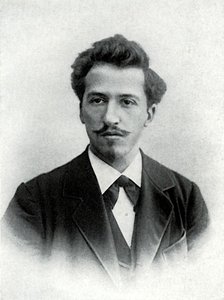
Piët Mondrian
1872 - 1944 , Niederlande
Eckdaten zum Künstler
- Beeinflusste Künstler:
- Hague School
- Pointillismus
- Fauvismus
- Kubismus
- Bemerkenswerte Werke:
- Komposition mit Rot, Gelb und Blau
- Broadway Boogie Woogie
- Tableau Nr. 2 Komposition V
- Rhythmus der schwarzen Linien
- Geburtsdatum: 7. März 1872
- Geburtsort: Amersfoort, Niederlande
- Künstlerische Bewegung: De Stijl, Neoplasticismus
- Nationalität: Niederländisch
- Sterbedatum: 1944
- Vollständiger Name: Piët Mondriaan
- Von Künstlern Beeinflusst:
- Farbfeldmalerei
- Abstrakter Expressionismus
- Minimalismus
Verwandte Artikel

Neoplasticism Explained: A Professional Guide to Geometric Abstraction and Primary Color for Modern Interior Design
Master the use of Neoplasticism in hospitality design. Learn how Piet Mondrian’s geometric forms and primary colors create order and modern sophistication. Expert guidance on sourcing high-quality, large-scale abstract reproductions for professional hotel and corporate interiors.


