In echtem Maßstab anzeigen
 Versenden als Grußkarte
 Teilen
 Details anzeigen
 Leitfaden öffnen

 Herunterladen
 Ähnliche Objekte
 Röntgenaufnahme
 Diashow
 Besucherstatistiken
St. Cecilia mit Heiligen


 Mehr anzeigen
Giclée / Kunstdruck
Giclée- oder Leinwanddruck in Museumsqualität mit schneller Produktion und flexiblen Veredelungsoptionen. ( Handgemalte Reproduktion kaufen Zum digitalen Bild wechseln)




P118B €10

P118H €10

P118W €10

P438Z €10

P508JH €12

P508YH €12

P805H €10

P805Z €10

P919BZ €10

P919G €10

P919XJ €10

P959ZH €10

P968JZ €12

W106C €8

W218G €10

W218JH €8

W218Y €10

W307PJ €10

W316G €10

W316PJ €8

W316Y €10

W398PJ €8

W4111J €10

W500HY €15

W500JH €15

W692G €12

W849H €8

W940BG €15

W953PJ €8




Wählen Sie aus unseren vordefinierten Formaten, die den ursprünglichen Proportionen des Kunstwerks entsprechen.

Geben Sie die Breite und die Höhe an, die Sie benötigen, damit der Druck perfekt in Ihren Rahmen oder an Ihre Wand passt. Ein Druck kann nur beschnitten werden und niemals größer als das Originalbild gemacht werden; daher verliert ein Format mit einer anderen Proportion einen Teil des Bildes. Wir senden Ihnen ein digitales Mockup zur Freigabe, bevor wir den Druck ausführen. Das auf dieser Seite gezeigte Bild zeigt nicht den tatsächlichen Beschnitt – dies ist nur im Mockup ersichtlich.
Weltweiter Versand () innerhalb von 2 Wochen statt der üblichen 4/5 Wochen. (25 Oktober)

Kostenloser weltweiter Expressversand

Hochwertige Leinenleinwand

Vollständiger Versicherungsschutz beim Versand

Zollgebühren-Rückerstattungsgarantie

Garantie für exakte Farbtreue

100-tägiges Rückgaberecht (nur bei Mängeln)

100% Geld-zurück-Garantie

Angebot für Mengenrabatt
 Die Glasoption ist nur für Größen unter 110 cm verfügbar.

St. Cecilia mit Heiligen
Giclée / Kunstdruck
Format der Reproduktion
-


Gesamtpreis
€ 56
Eine Symphonie göttlicher Gnade
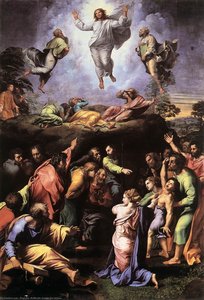
In den geheiligten Hallen der Pinacoteca Nazionale di Bologna existiert ein Meisterwerk, das nicht bloß eine Szene darstellt, sondern eine himmlische Melodie orchestriert. Raffaels „Heilige Cäcilie mit Heiligen“, vollendet zwischen 1516 und 1517, ist weit mehr als ein Altarbild; es ist eine tiefgründige Meditation über die Schnittstelle von menschlicher Kunstfertigkeit und göttlicher Inspiration. Beim Betrachten dieses Triumphs der Hochrenaissance wird der Blick sofort von der friedvollen Präsenz der Heiligen Cäcilie, der Schutzpatronin der Musiker, angezogen. Sie sitzt im Herzen einer spirituellen sacra conversazione, ihr Gesichtsausdruck geprägt von ekstatisch hingebungsvoller Ergriffenheit, gefangen in einem Moment des tiefen Lauschens auf einen Engelschor, der die reine Essenz des Himmels widerzuspiegeln scheint.
Die Komposition ist eine Meisterklasse in Renaissance-Gleichgewicht und Anmut. Raffael arrangiert geschickt eine Versammlung ehrwürdiger Gestalten – den Evangelisten Johannes, den Heiligen Paulus, den Heiligen Augustinus und Maria Magdalena – und schafft so ein Gefühl ewiger Gemeinschaft. Jeder Heilige trägt zur erzählerischen Fülle des Gemäldes bei, und doch sind sie durch eine gemeinsame Atmosphäre kontemplativer Ruhe vereint. Die Fähigkeit des Künstlers, diese individuellen Persönlichkeiten innerhalb einer einzigen, harmonischen Bewegung auszubalancieren, definiert sein Genie und bietet eine visuelle Stabilität, die Sammler und Bewunderer seit Jahrhunderten fesselt.
Die Sprache der Musik und der Symbolik
Über die Gesichter der Heiligen hinaus atmet das Gemälde durch seine symbolischen Objekte, die als Brücke zwischen dem Irdischen und dem Göttlichen dienen. Über den unteren Bildbereich verteilt finden sich Musikinstrumente, die als stille Protagonisten in diesem heiligen Drama agieren. Eine Violine ruht nahe am unteren Rand und repräsentiert die greifbare Schönheit menschlichen Ausdrucks, während die Harfe – das charakteristische Instrument der Cäcilie – als Symbol himmlischer Harmonie steht. Das Vorhandensein mehrerer Harfen punktiert die Szene und verstärkt das Thema eines kosmischen, unendlichen Liedes.
Interessanterweise merken Kunsthistoriker oft an, dass Raffael zwar die große Vision leitete, die komplizierten Details der Musikinstrumente jedoch die feine Handschrift seines talentierten Schülers Giovanni da Udine gewesen sein könnten. Diese Zusammenarbeit verleiht dem Werk eine weitere Ebene der Tiefe und zeigt die lebendige Energie der Renaissance-Werkstatt. Für den anspruchsvollen Dekorateur oder Sammler bieten diese Elemente einen Reichtum an symbolischer Bedeutung, was das Stück zu einem idealen Fokuspunkt für Räume macht, die der Reflexion, der Kreativität oder der Feier klassischer Schönheit gewidmet sind.
Ein zeitloses Erbe für den modernen Sammler
Eine Reproduktion dieses Meisterwerks in ein zeitgenössisches Interieur zu bringen, bedeutet, ein Gefühl von tiefer Ruhe und intellektueller Tiefe einzuladen. Raffaels Meisterschaft der Perspektive, anatomische Genauigkeit und weiche, leuchtende Farbpaletten bieten eine Ästhetik, die die Zeit überdauert. Ob in einer prächtigen Bibliothek, einem anspruchsvollen Wohnraum oder einer kuratierten Galerie platziert – das Gemälde dient als Fenster zu den humanistischen Idealen des 16. Jahrhunderts, einer Epoche, in der das Streben nach Schönheit als Weg zum Verständnis des Göttlichen angesehen wurde.
Für Innenarchitekten, die danach streben, Emotionen und Prestige zu wecken, bietet „Heilige Cäcilie mit Heiligen“ eine unvergleichliche Gelegenheit. Es ist ein Werk, das Aufmerksamkeit durch Subtilität statt durch Lautstärke erregt. Die Fähigkeit des Gemäldes, komplexe Figuren und symbolische Objekte zu harmonisieren, macht es zu einem vielseitigen Eckpfeiler für jede hochwertige Sammlung und verleiht ihr eine zeitlose Eleganz, die die Seele eines jeden Betrachters, der seiner himmlischen Melodie begegnet, weiterhin inspiriert.
Fragen & Antworten
Aus welchem Land stammt das Renaissance-Werk „St. Cecilia mit Heiligen"]?
Das Werk "St. Cecilia mit Heiligen" aus der Epoche des Renaissance wurde von einem Künstler geschaffen, der in Italien geboren wurde.
Wirken die Farben von "St. Cecilia mit Heiligen" eher kräftig oder sanft?
"St. Cecilia mit Heiligen" von Raffael weist eine Ausgewogen Farbintensität auf.
Um welche Art von Kunstwerk handelt es sich bei "St. Cecilia mit Heiligen"?
"St. Cecilia mit Heiligen" von Raffael wird als Wandkunst klassifiziert. Die Kategorie beschreibt die Art des Kunstwerks, um das es sich beim Original handelt.
Biografie des Künstlers
**frühes Leben und Ausbildung**
Raphael (Raffaello Sanzio da Urbino), ein renommierter italienischer Maler und Architekt, wurde zwischen dem 28. März und dem 6. April 1483 in der kleinen, aber kulturell bedeutenden Stadt Urbino geboren. Sein Vater, Giovanni Santi, war Hofmaler des Herzogs und vermittelte Raphael von Anfang an eine frühe Auseinandersetzung mit der künstlerischen Welt. Nach dem Tod seines Vaters im Alter von elf Jahren betrieb Raphael wahrscheinlich die Familienwerkstatt weiter, was seine künstlerische Grundlage festigte.**Künstlerischer Werdegang und Einflüsse**
Raphaels künstlerischer Weg lässt sich in drei verschiedene Phasen einteilen, jede mit einem einzigartigen Stil gekennzeichnet:- Frühe Jahre in Umbrien: Charakterisiert durch den Einfluss seines Vaters und die kulturelle Atmosphäre von Urbino.
- Florentinische Periode (1504-1508): Aufnahme der künstlerischen Traditionen Florenz, die seinen Stil maßgeblich prägte.
- Römische Periode (1508-1520): Arbeitete für zwei Päpste und ihre Mitarbeiter und schuf einige seiner bekanntesten Werke, darunter die Schule der Athene in der Vatikanische Stanza della Segnatura.
**Bekannte Werke und Vermächtnis**
Einige der bekannten Werke von Raphael sind:- Das Urteil des Salomon (ansicht auf AllPaintingsStore)
- Die Esterházy-Madonna (ansicht auf AllPaintingsStore)
- Vatikanische Stanzen - Ansicht der Stanza della Segnatura (ansicht auf AllPaintingsStore)
- St. Sebastian (ansicht auf AllPaintingsStore)
- La Donna Velata (ansicht auf AllPaintingsStore)
**Einfluss und Vermächtnis**
Raphaels Einfluss auf die Kunst ist tiefgreifend, wobei sein Werk ein Eckpfeiler der Hochrenaissance darstellt. Sein ruhiger und harmonischer Stil war ein Vorbild für die neoklassische Malerei, wie von Kunsthistoriker Johann Joachim Winckelmann bemerkt. Trotz des späteren Einflusses von Michelangelos Stil bleibt Raphael einer der verehrtesten Künstler in der Geschichte. ansicht des Profils von Raphael auf AllPaintingsStore
Raffael
1483 - 1520 , Italien
Eckdaten zum Künstler
- Beeinflusste Künstler:
- Giovanni Santi
- Pietro Perugino
- Bemerkenswerte Werke:
- Das Urteil des Salomon
- Esterházy-Madonna
- Die Schule der Athener
- St. Sebastian
- La Donna Velata
- Einfluss Auf Kunst: Neoklassische Malerei
- Geburtsdatum: 1483
- Geburtsort: Urbino, Italien
- Künstlerischer Stil: Hochrenaissance
- Nationalität: Italienisch
- Todatum: 1520
- Vollständiger Name: Raffaello Sanzio da Urbino
- Von Künstlern Beeinflusst:
- Leonardo da Vinci
- Michelangelo
Verwandte Artikel

Italian Baroque Art: A Procurement Guide to Dramatic Masterpieces for High-End Hotel Interiors
Elevate hospitality interiors with Italian Baroque masterpieces. A professional procurement guide for hotel designers sourcing high-quality Caravaggio-style oil reproductions, multi-panel sets, and custom large-scale art with reliable global logistics and bulk order efficiency.