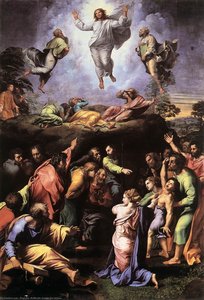
In echtem Maßstab anzeigen
 Versenden als Grußkarte
 Teilen
 Details anzeigen
 Leitfaden öffnen

 Herunterladen
 Ähnliche Objekte
 Röntgenaufnahme
 Diashow
 Besucherstatistiken
St. Sebastian


 Mehr anzeigen
Giclée / Kunstdruck
Giclée- oder Leinwanddruck in Museumsqualität mit schneller Produktion und flexiblen Veredelungsoptionen. ( Handgemalte Reproduktion kaufen Zum digitalen Bild wechseln)




P118B €10

P118H €10

P118W €10

P438Z €10

P508JH €12

P508YH €12

P805H €10

P805Z €10

P919BZ €10

P919G €10

P919XJ €10

P959ZH €10

P968JZ €12

W106C €8

W218G €10

W218JH €8

W218Y €10

W307PJ €10

W316G €10

W316PJ €8

W316Y €10

W398PJ €8

W4111J €10

W500HY €15

W500JH €15

W692G €12

W849H €8

W940BG €15

W953PJ €8




Wählen Sie aus unseren vordefinierten Formaten, die den ursprünglichen Proportionen des Kunstwerks entsprechen.

Geben Sie die Breite und die Höhe an, die Sie benötigen, damit der Druck perfekt in Ihren Rahmen oder an Ihre Wand passt. Ein Druck kann nur beschnitten werden und niemals größer als das Originalbild gemacht werden; daher verliert ein Format mit einer anderen Proportion einen Teil des Bildes. Wir senden Ihnen ein digitales Mockup zur Freigabe, bevor wir den Druck ausführen. Das auf dieser Seite gezeigte Bild zeigt nicht den tatsächlichen Beschnitt – dies ist nur im Mockup ersichtlich.
Weltweiter Versand () innerhalb von 2 Wochen statt der üblichen 4/5 Wochen. (24 Oktober)

Kostenloser weltweiter Expressversand

Hochwertige Leinenleinwand

Vollständiger Versicherungsschutz beim Versand

Zollgebühren-Rückerstattungsgarantie

Garantie für exakte Farbtreue

100-tägiges Rückgaberecht (nur bei Mängeln)

100% Geld-zurück-Garantie

Angebot für Mengenrabatt
 Die Glasoption ist nur für Größen unter 110 cm verfügbar.

St. Sebastian
Giclée / Kunstdruck
Format der Reproduktion
-


Gesamtpreis
€ 56
Raphael’s St Sebastian: A Renaissance Masterpiece
Raphael (Raffaello Sanzio da Urbino), a luminary of the High Renaissance, gifted the world with an extraordinary body of work characterized by grace, harmony, and profound humanism. His *St Sebastian*, painted around 1501-1502, stands as a compelling example of his artistic prowess, currently residing in the Accademia Carrara of Bergamo, Italy. This oil on canvas (43 x 34 cm) is not merely a depiction of a martyred saint; it’s a meditation on faith, suffering, and divine beauty.
The Artist & His Historical Context
Born in Urbino in 1483, Raphael quickly ascended to become one of the most celebrated painters alongside Leonardo da Vinci and Michelangelo. He absorbed influences from his father, Giovanni Santi, and artists like Perugino, but rapidly developed a distinctive style marked by clarity of form, balanced composition, and an idealized representation of the human figure. The High Renaissance—a period of artistic flourishing centered in Italy during the late 15th and early 16th centuries—emphasized classical ideals, anatomical accuracy, and harmonious proportions. Raphael embodied these principles perfectly, creating works that resonated with both spiritual devotion and intellectual refinement.
Decoding the Image: Subject & Symbolism
The painting portrays St Sebastian, an early Christian martyr renowned for his endurance of suffering. Legend recounts how he was bound to a post and pierced with arrows, yet miraculously survived multiple times before ultimately being clubbed to death. Raphael doesn’t depict the brutality of the martyrdom itself; instead, he presents a moment of quiet contemplation *before* the final blow. St Sebastian stands serene, almost melancholic, his gaze directed slightly downward.
The symbolism is rich and layered. The arrows represent not only physical torment but also spiritual trials and temptations. St Sebastian was often invoked as a protector against plagues and epidemics, making him a particularly relevant figure during times of crisis. His youthful beauty and athletic physique embody the Renaissance ideal of human perfection, even in the face of suffering.
Technique & Artistic Style
Raphael’s mastery is evident in every brushstroke. He employs subtle *sfumato* – a technique pioneered by Leonardo da Vinci involving soft, blurred outlines – to create a sense of atmospheric depth and ethereal beauty. The composition is carefully balanced, with St Sebastian centrally positioned and the landscape providing a tranquil backdrop. The use of light and shadow delicately models the figure’s anatomy, highlighting his musculature and conveying a sense of vulnerability.
- Composition: A pyramidal structure lends stability and focus to the image.
- Color Palette: A harmonious blend of warm tones—reds, browns, and golds—creates a visually pleasing effect.
- Perspective: Raphael’s understanding of linear perspective creates a convincing illusion of depth.
Emotional Impact & Lasting Legacy
*St Sebastian* evokes a complex range of emotions. It is simultaneously beautiful and sorrowful, serene and poignant. The painting invites viewers to contemplate themes of faith, sacrifice, and the human condition. Raphael’s ability to imbue his figures with such psychological depth is what sets him apart as one of history's greatest artists.
This artwork continues to inspire awe and admiration centuries after its creation. Its enduring appeal lies in its timeless beauty, technical brilliance, and profound spiritual resonance. A reproduction of *St Sebastian* offers a unique opportunity to bring the elegance and emotional power of the High Renaissance into your home or office—a testament to Raphael’s genius and a celebration of artistic excellence.
Photo Description: --Overall Impression--
The artwork is a portrait of a young man, likely depicting Saint Sebastian, rendered in the style of Renaissance painting. It exhibits classical composition with the subject centrally positioned and framed by a golden halo. The image utilizes sfumato technique to create soft transitions between colors and forms, characteristic of Leonardo da Vinci’s work. The background depicts a hazy landscape with rolling hills and distant buildings, providing depth and context. The figure is draped in rich red robes adorned with intricate gold embroidery, contrasting sharply with his pale skin.
He holds a guitar, an unexpected modern element juxtaposed against the historical setting, adding a surreal quality to the piece. The lighting is diffused and warm, emanating from an unseen source, highlighting the subject’s face and clothing while casting subtle shadows. Lines are used subtly to define the form of the figure and landscape, with careful attention paid to anatomical accuracy. Shapes are predominantly organic – flowing hair, rounded features, and naturalistic forms in the background.
The texture is rich and layered, achieved through meticulous brushwork and glazing techniques.
Size: Unknown
Date: Unknown
Fragen & Antworten
Wie stellt "St. Sebastian" von Raffael eine Verbindung zwischen Hochrenaissance und dem Heimatland des Künstlers her?
"St. Sebastian" wurde von Raffael geschaffen, der in Italien geboren wurde, und ist der Hochrenaissance-Bewegung zuzuordnen. Die Herkunft des Künstlers verbindet das Werk mit der Hochrenaissance, wie sie von Künstlern aus Italien praktiziert wird.
Welche Farbe dominiert in "St. Sebastian" von Raffael?
Die dominante Farbe von "St. Sebastian" von Raffael ist Von Bernstein bis Safran. Dieser Farbton bildet die Grundlage der Palette.
Wo kann ich eine Vorschau von „St. Sebastian“ sehen?
Auf der Vorschau-Seite von „St. Sebastian“ können Sie das Kunstwerk vor der Bestellung in einer Vorschau betrachten.
Ähnliche Kunstwerke


Biografie des Künstlers
**frühes Leben und Ausbildung**
Raphael (Raffaello Sanzio da Urbino), ein renommierter italienischer Maler und Architekt, wurde zwischen dem 28. März und dem 6. April 1483 in der kleinen, aber kulturell bedeutenden Stadt Urbino geboren. Sein Vater, Giovanni Santi, war Hofmaler des Herzogs und vermittelte Raphael von Anfang an eine frühe Auseinandersetzung mit der künstlerischen Welt. Nach dem Tod seines Vaters im Alter von elf Jahren betrieb Raphael wahrscheinlich die Familienwerkstatt weiter, was seine künstlerische Grundlage festigte.**Künstlerischer Werdegang und Einflüsse**
Raphaels künstlerischer Weg lässt sich in drei verschiedene Phasen einteilen, jede mit einem einzigartigen Stil gekennzeichnet:- Frühe Jahre in Umbrien: Charakterisiert durch den Einfluss seines Vaters und die kulturelle Atmosphäre von Urbino.
- Florentinische Periode (1504-1508): Aufnahme der künstlerischen Traditionen Florenz, die seinen Stil maßgeblich prägte.
- Römische Periode (1508-1520): Arbeitete für zwei Päpste und ihre Mitarbeiter und schuf einige seiner bekanntesten Werke, darunter die Schule der Athene in der Vatikanische Stanza della Segnatura.
**Bekannte Werke und Vermächtnis**
Einige der bekannten Werke von Raphael sind:- Das Urteil des Salomon (ansicht auf AllPaintingsStore)
- Die Esterházy-Madonna (ansicht auf AllPaintingsStore)
- Vatikanische Stanzen - Ansicht der Stanza della Segnatura (ansicht auf AllPaintingsStore)
- St. Sebastian (ansicht auf AllPaintingsStore)
- La Donna Velata (ansicht auf AllPaintingsStore)
**Einfluss und Vermächtnis**
Raphaels Einfluss auf die Kunst ist tiefgreifend, wobei sein Werk ein Eckpfeiler der Hochrenaissance darstellt. Sein ruhiger und harmonischer Stil war ein Vorbild für die neoklassische Malerei, wie von Kunsthistoriker Johann Joachim Winckelmann bemerkt. Trotz des späteren Einflusses von Michelangelos Stil bleibt Raphael einer der verehrtesten Künstler in der Geschichte. ansicht des Profils von Raphael auf AllPaintingsStore
Raffael
1483 - 1520 , Italien
Eckdaten zum Künstler
- Beeinflusste Künstler:
- Giovanni Santi
- Pietro Perugino
- Bemerkenswerte Werke:
- Das Urteil des Salomon
- Esterházy-Madonna
- Die Schule der Athener
- St. Sebastian
- La Donna Velata
- Einfluss Auf Kunst: Neoklassische Malerei
- Geburtsdatum: 1483
- Geburtsort: Urbino, Italien
- Künstlerischer Stil: Hochrenaissance
- Nationalität: Italienisch
- Todatum: 1520
- Vollständiger Name: Raffaello Sanzio da Urbino
- Von Künstlern Beeinflusst:
- Leonardo da Vinci
- Michelangelo
Verwandte Artikel

Oil on Canvas: The Professional Guide to Durable, High-Quality Art Reproductions for Hospitality and Large-Scale Interior Projects
A professional guide for hotel designers and procurement managers on selecting durable, high-quality oil on canvas reproductions. Learn about material longevity, custom multi-panel layouts, and efficient bulk ordering solutions for large-scale hospitality projects.