In echtem Maßstab anzeigen
 Versenden
 Teilen
 Details anzeigen

 Herunterladen
 Ähnliche Objekte
 Röntgenaufnahme
 Diashow starten
Landscape
 Acrylic On Canvas
- WallArt
- Surrealist Manifestation
 1920
1920- Modern
 83.0 x 64.0 cm
 Mehr anzeigen
Giclée / Kunstdruck
Giclée- oder Leinwanddruck in Museumsqualität mit schneller Produktion und flexiblen Veredelungsoptionen. ( Zur handgemalten Reproduktion wechseln Zum Bild wechseln)




P118B $10

P118H $10

P118W $10

P438Z $10

P508JH $12

P508YH $12

P805H $10

P805Z $10

P919BZ $10

P919G $10

P919XJ $10

P959ZH $10

P968JZ $12

W106C $8

W218G $10

W218JH $8

W218Y $10

W307PJ $10

W316G $10

W316PJ $8

W316Y $10

W398PJ $8

W4111J $10

W500HY $15

W500JH $15

W692G $12

W849H $8

W940BG $15

W953PJ $8




Wählen Sie aus unseren vordefinierten Formaten, die den ursprünglichen Proportionen des Kunstwerks entsprechen.

Sie können Ihre eigenen Maße eingeben, um ein bestimmtes Format oder einen speziellen Platz einzupassen. Wenn das von Ihnen gewählte Format nicht den Proportionen des Originalbildes entspricht, werden wir das Kunstwerk entweder beschneiden oder das Bild mit einem gespiegelten oder einfarbigen Rand erweitern. Ein digitaler Entwurf wird Ihnen zur Genehmigung zugesandt, bevor die Produktion beginnt.
Bitte beachten Sie, dass die Vorschau auf dem Bildschirm nicht den tatsächlichen Zuschnitt oder die Erweiterung widerspiegelt. Nur der Entwurf zeigt die endgültige Komposition präzise an.
Obwohl Sondermaße verfügbar sind, empfehlen wir die Auswahl eines Maßes aus der vordefinierten Liste, um die ursprünglichen Proportionen zu bewahren.
Weltweiter Versand () innerhalb von 2 Wochen statt der üblichen 4/5 Wochen. (4 August)

Kostenloser weltweiter Expressversand

Hochwertige Leinenleinwand

Vollumfänglicher Versicherungsschutz beim Versand

Zollgebühren-Rückerstattungsgarantie

Garantie für exakte Farbtreue

60 Tage Rückgaberecht (nur bei Mängeln)

100% Geld-zurück-Garantie

Angebot für Mengenrabatt
 Die Glasoption ist nur in Größen unter 110 cm verfügbar.

Landscape
Giclée / Kunstdruck
Format der Reproduktion
-


Gesamtpreis
$ 64
Objektbeschreibung
A Haunting Reverie: René Magritte’s ‘Landscape’
René Magritte's “Landscape,” painted in 1920, is not merely a depiction of a scene; it’s an immersion into the subconscious, a meticulously crafted puzzle designed to challenge our very understanding of reality. Measuring 83 x 64 cm, this intimate work embodies the nascent surrealism that would define Magritte's career and profoundly influence generations of artists. The painting immediately arrests the viewer with its unsettling juxtaposition: a nude figure emerges from a dark, almost oppressive background, their back intertwined with the gnarled branches of trees that possess distinctly human faces. These arboreal figures, rendered in meticulous detail, are not simply decorative elements; they represent a potent symbol of memory and perhaps, the lingering presence of trauma – a direct echo of Magritte’s own childhood experience following his mother's death.
- Subject Matter: The central figure, seemingly emerging from nature itself, is a classic surrealist motif—a representation of the self dissolving into the landscape.
- Technique: Magritte employs a precise and controlled technique, characteristic of his early work. The brushstrokes are deliberate and smooth, contributing to the painting’s unsettling realism.
- Color Palette: Dominated by dark browns, greens, and blacks, the palette evokes a sense of mystery and foreboding, intensifying the emotional impact of the scene.
The Seeds of Surrealism – A Personal Narrative
Painted in 1920, “Landscape” represents a crucial moment in Magritte’s artistic development, firmly establishing his interest in exploring the realms beyond rational perception. The year coincides with his move to Brussels and his increasing engagement with avant-garde movements. However, this work transcends simple categorization; it's deeply rooted in personal experience. The image of his mother’s corpse, recovered from the Sambre River, became a recurring motif, symbolizing not just grief but also the impossibility of truly knowing or representing the past. This early trauma fueled Magritte’s lifelong preoccupation with illusion and deception – the idea that what we perceive is often far removed from objective reality. The two birds subtly placed within the composition—one at the top left, one at the bottom right—add another layer of ambiguity, perhaps symbolizing fleeting thoughts or lost opportunities.
Symbolism and Interpretation
The symbolism within “Landscape” is layered and deliberately ambiguous. The naked figure can be interpreted as a representation of vulnerability, mortality, or even the artist himself confronting his own subconscious. The trees with faces are arguably the most compelling element, representing memory, judgment, or perhaps the silent witnesses to human suffering. Magritte’s masterful use of dark tones amplifies this sense of unease and invites viewers to confront uncomfortable questions about perception, identity, and the nature of reality. The overall effect is profoundly unsettling, prompting a deep engagement with the artwork's emotional core.
Historical Context and Legacy
“Landscape” stands as an early example of Magritte’s mature style, foreshadowing his later explorations of surrealist themes. Created during a period of significant artistic experimentation—with movements like Dadaism and Futurism challenging traditional notions of art—Magritte's work quickly distinguished itself through its intellectual rigor and unsettling imagery. This painting demonstrates the artist's early commitment to disrupting conventional representations and inviting viewers to question their assumptions about the world around them. Its meticulous detail and haunting atmosphere continue to captivate audiences today, solidifying Magritte’s place as one of the 20th century’s most influential artists.
Ähnliche Kunstwerke


Künstlerbiografie
frühes Leben und künstlerische Anfänge
René François Ghislain Magritte, ein renommierter belgischer Surrealist, wurde am 21. November 1898 in Lessines, Provinz Hainaut, Belgien, geboren. Sein frühes Leben ist bisweilen rätselhaft und wenig bekannt. Es ist jedoch dokumentiert, dass er 1910 Zeichenunterricht nahm.Künstlerische Entwicklung und Einflüsse
Magrittes künstlerischer Stil entwickelte sich im Laufe der Jahre erheblich weiter und wurde von verschiedenen Strömungen wie Impressionismus, Futurismus und Kubismus beeinflusst. Seine frühesten Gemälde, die aus etwa 1915 stammen, waren **im Stil des Impressionismus**. Von 1916 bis 1918 studierte er an der Académie Royale des Beaux-Arts in Brüssel unter Constant Montald.Surrealistische Periode und bemerkenswerte Werke
Im Jahr 1926 schuf Magritte seine erste surrealistische Malerei, "Der verlorene Jockey (Le jockey perdu)", das den Beginn seiner Verbindung mit der Surrealistenbewegung markierte. Seine Werke sind durch nachdenkliche Bilder gekennzeichnet, die oft alltägliche Gegenstände in ungewöhnlichen Kontexten darstellen und Betrachter dazu auffordern, ihre Wahrnehmung von Realität zu hinterfragen.- "Les Amants" (1927-1928), eine Reihe von Gemälden mit Personen, deren Gesichter durch Stoffe verhüllt sind, wird vermutet, von der Geschichte des Todes seiner Mutter inspiriert zu sein.
- "Die Liebenden", ein weiteres ikonisches Werk, zeigt ein Paar, das sich küsst, wobei ihre Gesichter von weißen Stoffen bedeckt sind, und lädt den Betrachter ein, über Liebe und Identität nachzudenken. (Verfügbar als handgefertigte Ölgemälde-Reproduktion oder Druck auf Leinwand unter AllPaintingsStore.com)
Spätere Jahre und Vermächtnis
Magrittes Werke wurden in den Vereinigten Staaten 1936 und erneut in zwei retrospektiven Ausstellungen, eine im Museum of Modern Art im Jahr 1965 und die andere im Metropolitan Museum of Art im Jahr 1992, gezeigt. Er blieb dem politischen Linken verpflichtet, befürwortete aber die künstlerische Autonomie. Bekannte Museen, in denen Magrittes Werke ausgestellt sind:- Musées royaux des beaux-arts de Belgique, Brüssel, Belgien (Entdecken Sie die Meisterwerke der Musées royaux des beaux-aarts de belgique unter AllPaintingsStore.com)
- Magritte Museum, Teil der Musées royaux des beaux-arts de Belgique, das die weltweit größte Sammlung von Magrittes Werken beherbergt.
Fazit
René Magrittes Vermächtnis als surrealistischer Meister hält an, wobei seine nachdenklichen Bilder weiterhin inspirieren und faszinieren. Seine Werke, die durch ihre einzigartige Mischung aus Gewöhnlichem und Unerwartetem gekennzeichnet sind, gelten als Eckpfeiler der Surrealistenkunst. Mehr über René Magritte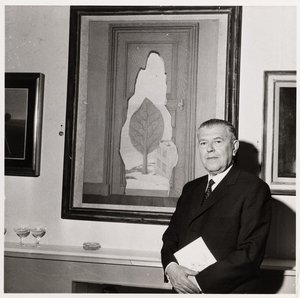
René Magritte
1898 - 1967 , Belgien
Eckdaten zum Künstler
- Beeinflusste Künstler:
- Impressionismus
- Futurismus
- Kubismus
- Bemerkenswerte Werke:
- Der verlorene Jockey
- Les Amants
- Die menschliche Bedingung
- Zeit erstarrt
- Geburtsdatum: 21. November 1898
- Geburtsort: Lessines, Belgien
- Künstlerischer Stil: Surrealismus
- Nationalität: Belgisch
- Sterbedatum: 1967
- Vollständiger Name: René Magritte
Verwandte Artikel
René Magritte: Die 25 Meisterwerke des Surrealismus für Ihr Zuhause | AllPaintingsStore
Entdecken Sie die 25 ikonischsten Gemälde von René Magritte! Tauchen Sie ein in die surreale Welt des belgischen Künstlers – von 'Der verlorene Jockey' bis 'Golconda'. Hochwertige Reproduktionen & Kunst für Ihr Zuhause auf AllPaintingsStore.com.
Die 25 Meisterwerke des Metropolitan Museum of Art: Kunst für Ihr Zuhause | AllPaintingsStore
Entdecken Sie die 25 berühmtesten Kunstwerke des Metropolitan Museum of Art, New York! Von Van Gogh bis Monet – erleben Sie Geschichten hinter Meisterwerken. Hochwertige Reproduktionen & Inspiration für Ihr Zuhause auf AllPaintingsStore.com.

Katsushika Hokusai: Die 25 Meisterwerke des Ukiyo-e – Kunst für Ihr Zuhause | AllPaintingsStore
Entdecken Sie die 25 Meisterwerke von Katsushika Hokusai! Tauchen Sie ein in die Welt des Ukiyo-e, berühmte Holzschnitte wie 'Die große Welle' & Fuji-Ansichten. Hochwertige Kunstdrucke für Ihr Zuhause – jetzt auf AllPaintingsStore.com!
Die 25 Meisterwerke der National Gallery Washington: Kunst für Ihr Zuhause | AllPaintingsStore
Entdecken Sie die 25 ikonischsten Meisterwerke der National Gallery Washington! Von Cézanne bis Picasso – erfahren Sie die Geschichten hinter berühmten Gemälden, Kunststilen & Farbpaletten. Hochwertige Kunstdrucke online bei AllPaintingsStore.com.

John Constable: Die 25 Meisterwerke des englischen Landschaftsgenies – AllPaintingsStore
Entdecken Sie die 25 Meisterwerke von John Constable! Erleben Sie englische Landschaftsmalerei vom Hay Wain bis zur Stour Valley. Hochwertige Reproduktionen & Kunst für Ihr Zuhause auf AllPaintingsStore.com.