


 Vorschau anzeigen
 Versenden
 Teilen
 Details anzeigen
 Leitfaden

 Herunterladen
 Ähnliche Objekte
 Röntgenaufnahme
 Diashow
 Q&A
Q&A Statistiken
Scupstoel


 Weiterlesen
Giclée / Kunstdruck
Giclée- oder Leinwanddruck in Museumsqualität mit schneller Produktion und flexiblen Veredelungsoptionen. ( Handgemalte Reproduktion bestellen Zum digitalen Bild wechseln)




P118B €10

P118H €10

P118W €10

P438Z €10

P508JH €12

P508YH €12

P805H €10

P805Z €10

P919BZ €10

P919G €10

P919XJ €10

P959ZH €10

P968JZ €12

W106C €8

W218G €10

W218JH €8

W218Y €10

W307PJ €10

W316G €10

W316PJ €8

W316Y €10

W398PJ €8

W4111J €10

W500HY €15

W500JH €15

W692G €12

W849H €8

W940BG €15

W953PJ €8




Wählen Sie aus unseren vordefinierten Formaten, die den ursprünglichen Proportionen des Kunstwerks entsprechen.

Geben Sie die benötigte Breite und Höhe an, damit der Druck perfekt in Ihren Rahmen oder an Ihre Wand passt. Ein Druck kann nur beschnitten, aber niemals größer als das Originalbild angefertigt werden; daher verliert ein Format mit anderen Proportionen einen Teil des Bildes. Wir senden Ihnen ein digitales Mockup zur Freigabe, bevor wir den Druck ausführen. Das auf dieser Seite gezeigte Bild zeigt nicht den tatsächlichen Beschnitt – dies ist nur im Mockup ersichtlich.
Weltweiter Versand () innerhalb von 2 Wochen statt der üblichen 4/5 Wochen. (29 Oktober)

Kostenloser weltweiter Expressversand

Hochwertige Leinenleinwand

Umfassender Versicherungsschutz beim Versand

Zollgebühren-Rückerstattungsgarantie

Garantie für exakte Farbtreue

100 Tage Rückgaberecht (nur bei Mängeln)

100% Geld-zurück-Garantie

Mengenrabatt verfügbar
 Die Glasoption ist nur für Größen unter 110 cm verfügbar.

Scupstoel
Giclée / Kunstdruck
Format der Reproduktion
-


Endpreis
€ 56
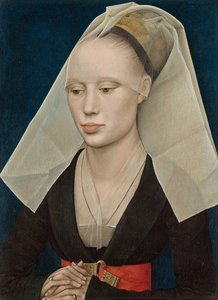
A Study in Quiet Intensity: Examining Rogier van der Weyden’s ‘Scupstoel’
Rogier van der Weyden’s “Scupstoel,” completed around 1448, stands as a remarkable testament to the burgeoning artistic spirit of Early Netherlandish painting. More than just a depiction of a man seated upon a pile of chairs—a seemingly simple subject matter—the artwork embodies profound emotional depth and meticulous craftsmanship that cemented Van der Weyden’s reputation as one of the era's foremost masters.
Style & Technique: The piece exemplifies the stylistic hallmarks of its time, firmly rooted in the Northern Renaissance tradition. Characterized by a restrained palette dominated by muted browns, ochres, and reds—a deliberate choice reflecting the solemnity of religious contemplation—the painting prioritizes naturalistic detail over flamboyant ornamentation. Van der Weyden’s mastery is evident in his painstaking rendering of textures: the worn fabric of the chairs, the subtle creases in the man's clothing, and even the delicate folds of drapery convey a palpable sense of realism.
Historical Context: Created during a period marked by significant religious fervor—the Burgundian Netherlands experienced a fervent devotion to saints and biblical narratives—‘Scupstoel’ speaks directly to this cultural milieu. The artwork likely served as a preparatory sketch or study for a larger altarpiece, reflecting the prevailing artistic practice of exploring compositional ideas before committing them to monumental canvases.
Symbolism & Emotion: While the precise symbolism embedded within ‘Scupstoel’ remains debated by scholars, its central figure—a man seated amidst the chairs—is interpreted as representing contemplation and humility. The arrangement itself suggests a deliberate effort to convey inner turmoil balanced by serene composure. Van der Weyden's ability to capture such nuanced psychological states was revolutionary for his time, marking him as a pioneer in portraying human emotion with unprecedented sensitivity.
Interior Design Inspiration: “Scupstoel”’s understated elegance and masterful execution offer valuable insights into the aesthetic sensibilities of the fifteenth century. Its muted tones and textured surfaces can inspire designers seeking to create spaces imbued with warmth, tranquility, and intellectual curiosity—a timeless reminder that beauty resides not merely in grandeur but also in profound emotional resonance.
Fragen & Antworten
Welche Emotion vermittelt "Scupstoel" von Rogier van der Weyden?
Die für "Scupstoel" von Rogier van der Weyden festgelegte emotionale Stimmung ist Reflective. Sie fasst das Gefühl zusammen, das das Werk ausdrückt.
Wie fügt sich „Scupstoel“ in die Themen und den Stil von Rogier van der Weyden ein?
"Scupstoel" gehört zu Rogier van der Weydens Werk der Early Netherlandish Renaissance-Epoche, dessen dokumentierte Themen unter anderem religious emotion, human expression, medieval tradition, psychological insight, artist legacy umfassen.
Inwiefern steht das Sujet von „Scupstoel“ in Beziehung zu den üblichen Themen von Rogier van der Weyden?
Unter den dokumentierten Themen von Rogier van der Weyden – religious emotion, human expression, medieval tradition, psychological insight, artist legacy – setzt „Scupstoel“ einen ganz eigenen Fokus auf religious painting, human figure, chair arrangement, psychological depth, medieval art, detail rendering, symbolism.
Ähnliche Kunstwerke


Künstlerbiografie
Leben und Karriere
Rogier van der Weyden, auch bekannt als Roger de la Pasture, war ein bedeutender niederländischer Maler des frühen 15. Jahrhunderts. Er wurde um 1400 in Belgien geboren und entwickelte sich zu einem der einflussreichsten Künstler seiner Zeit, wobei seine Werke in den Niederlanden, Italien und Spanien großen Anklang fanden.Künstlerischer Stil und Technik
Van der Weydens künstlerischer Stil war durch eine reiche Farbgebung, mitfühlende Ausdrucksweise und einen einzigartigen Ansatz für Pathos und Naturalismus geprägt. Seine Figuren wirkten oft statuarisch, insbesondere in seinen Altäfern, die detaillierte Ausarbeitungen und idealisierte Gesichtszüge aufwiesen. Er setzte ein vielfältiges Farbspektrum ein, um sicherzustellen, dass kein einzelner Ton wiederholt wurde, was Tiefe und Komplexität zu seinen Kompositionen hinzufügte.Bekannte Werke
* St. Lukas zeichnet ein Porträt der Jungfrau Maria (Museum of Fine Arts, Boston): Dieses Gemälde zeigt Van der Weydens Meisterschaft in der Ölmalerei auf Holz mit einer beeindruckenden Darstellung von St. Lukas. * Lamentation (Musée des Beaux-Arts Tournai, Belgien): Dieses kleine, aber kraftvolle Gemälde demonstriert Van der Weydens Fähigkeit, durch Chiaroscuro emotionale Intensität auszudrücken.Museen und Sammlungen
* Musée des Beaux-Arts Tournai, Belgien: Bietet eine beeindruckende Sammlung von Werken van der Weydens, darunter das Porträtdiptychon von Jean de Gros. * Musées royaux des Beaux-Arts (Brüssel, Belgien): Beherbergt eine bedeutende Sammlung früher niederländischer Gemälde, darunter Werke von van der Weyden und anderen namhaften Künstlern.Vermächtnis
Van der Weydens Einfluss auf den nördlichen Renässanz ist unbestreitbar. Er stand zusammen mit Robert Campin und Jan van Eyck als einer der drei großen frühen flämischen Künstler, bekannt für seinen innovativen Stil und seine Technik. Obwohl sein Ruhm im 17. Jahrhundert nachließ, wurden seine Werke im 19. Jahrhundert wiederentdeckt, und er gilt heute als eine wichtige Figur in der Geschichte der frühen niederländischen Malerei.- Weitere Werke von Rogier van der Weyden auf AllPaintingsStore.com ansehen
- Die Sammlung des Musée des Beaux-Arts Tournai entdecken unter Entdecken Sie die Meisterwerke des Musée des Beaux-Arts Tournai, Belgien
- Mehr über frühe niederländische Malerei auf Wikipedia erfahren
Rogier van der Weyden
1400 - 1464 , Belgien
Kurzinfos
- Beeinflusste Künstler: ['Goswijn van der Weyden']
- Bemerkenswerte Werke:
- St. Lukas malt Maria
- Lamentation
- Deposition
- Bladelin Triptychon
- Einfluss Auf Künstler: ['Italienische Renaissance']
- Geburtsdatum: ca. 1400
- Geburtsort: Tournai, Belgien
- Künstlerischer Stil: Frühflämische Malerei
- Nationalität: Belgisch
- Sterbedatum: 1464
- Vollständiger Name: Rogier van der Weyden
Ähnliche Artikel

Early Netherlandish Renaissance: A Professional Guide to Mastering Detail and Realism for Luxury Interior Design
Expert guide for hotel designers on sourcing Early Netherlandish Renaissance reproductions. Discover how the hyper-realism of Jan van Eyck can elevate hospitality interiors through high-quality, large-scale oil paintings and custom multi-panel installations.


