In echtem Maßstab anzeigen
 Versenden
 Teilen
 Details anzeigen

 Herunterladen
 Ähnliche Objekte
 Röntgenaufnahme
 Diashow starten
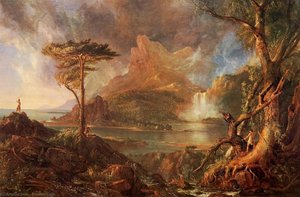
Tree in the Catskills
 Öl auf Leinwand
- Wandkunst
- Hudson River School
 1844
1844- 19. Jahrhundert
 33.0 x 42.0 cm
 Mehr anzeigen
Giclée / Kunstdruck
Giclée- oder Leinwanddruck in Museumsqualität mit schneller Produktion und flexiblen Veredelungsoptionen. ( Zur handgemalten Reproduktion wechseln Zum Bild wechseln)




P118B $10

P118H $10

P118W $10

P438Z $10

P508JH $12

P508YH $12

P805H $10

P805Z $10

P919BZ $10

P919G $10

P919XJ $10

P959ZH $10

P968JZ $12

W106C $8

W218G $10

W218JH $8

W218Y $10

W307PJ $10

W316G $10

W316PJ $8

W316Y $10

W398PJ $8

W4111J $10

W500HY $15

W500JH $15

W692G $12

W849H $8

W940BG $15

W953PJ $8




Wählen Sie aus unseren vordefinierten Formaten, die den ursprünglichen Proportionen des Kunstwerks entsprechen.

Sie können Ihre eigenen Maße eingeben, um ein bestimmtes Format oder einen speziellen Platz einzupassen. Wenn das von Ihnen gewählte Format nicht den Proportionen des Originalbildes entspricht, werden wir das Kunstwerk entweder beschneiden oder das Bild mit einem gespiegelten oder einfarbigen Rand erweitern. Ein digitaler Entwurf wird Ihnen zur Genehmigung zugesandt, bevor die Produktion beginnt.
Bitte beachten Sie, dass die Vorschau auf dem Bildschirm nicht den tatsächlichen Zuschnitt oder die Erweiterung widerspiegelt. Nur der Entwurf zeigt die endgültige Komposition präzise an.
Obwohl Sondermaße verfügbar sind, empfehlen wir die Auswahl eines Maßes aus der vordefinierten Liste, um die ursprünglichen Proportionen zu bewahren.
Weltweiter Versand () innerhalb von 2 Wochen statt der üblichen 4/5 Wochen. (5 August)

Kostenloser weltweiter Expressversand

Hochwertige Leinenleinwand

Vollumfänglicher Versicherungsschutz beim Versand

Zollgebühren-Rückerstattungsgarantie

Garantie für exakte Farbtreue

60 Tage Rückgaberecht (nur bei Mängeln)

100% Geld-zurück-Garantie

Angebot für Mengenrabatt
 Die Glasoption ist nur in Größen unter 110 cm verfügbar.

Tree in the Catskills
Giclée / Kunstdruck
Format der Reproduktion
-


Gesamtpreis
$ 64
Objektbeschreibung
The Melancholy Majesty of Nature's Cycle
Thomas Cole’s Tree in the Catskills is not merely a depiction of a forest; it is a profound meditation on endurance, decay, and the sublime power inherent in the natural world. Painted in 1844, this oil on canvas captures the very breath of Romanticism—a movement that elevated emotion and the overwhelming grandeur of nature above all else. Standing at 33 x 42 cm, the painting draws the viewer into a shadowed, atmospheric wilderness where beauty and sorrow coexist in perfect harmony. The central focus is undeniably the ancient, perhaps dying tree, its form commanding attention against the backdrop of lush, enveloping foliage.
A Masterclass in Romantic Technique
Cole’s technique here speaks to his mastery of the landscape genre. One can almost feel the texture beneath the paint; the impasto application lends a palpable weight and volume to the gnarled trunk and surrounding rocks. The light, which seems diffused as if filtered through an overcast sky or a dense canopy, plays across the scene with dramatic subtlety. Cole utilizes color—a rich tapestry of warm browns, deep greens, and muted golds—to build an earthy yet emotionally charged atmosphere. His brushwork is visible, loose, and confident, allowing the viewer to appreciate the hand of the master while simultaneously being enveloped by the illusion of depth that pulls the eye into the shadowed depths.
Symbolism Woven into the Wilderness
The symbolism within Tree in the Catskills is as rich as its palette. The prominent, aged tree serves as a potent symbol—it speaks to wisdom accumulated over decades, to resilience tested by time. Surrounded by rocks and hints of flowing water, it embodies the cyclical nature of life itself: the necessary passing from bloom to decay that ultimately sustains new growth. The few birds flitting in the background are delicate counterpoints to this central contemplation, suggesting that even amidst melancholy, life persists.
A Window into American Identity
Historically, this piece situates itself within the burgeoning movement of American landscape painting, a genre deeply intertwined with the nation's self-discovery. For Cole, these landscapes were never just pretty views; they were allegories for the American spirit—untamed, magnificent, and capable of both breathtaking beauty and profound struggle. Owning a reproduction of this work allows one to connect directly with that pioneering vision, bringing a piece of 19th-century romantic idealism into a modern space. It is an object that invites quiet contemplation, transforming any room into a sanctuary echoing the grandeur of the American wilderness.
Ähnliche Kunstwerke


Künstlerbiografie
Frühes Leben und Karriere
Thomas Cole, ein in Großbritannien geborener amerikanischer Künstler, wurde am 1. Februar 1801 in Bolton le Moors, Lancashire geboren. Im Jahr 1818 wanderte er mit seiner Familie in die Vereinigten Staaten aus und ließ sich in Steubenville, Ohio, nieder. Mit 22 Jahren zog Cole nach Philadelphia und später im Jahr 1825 nach Catskill, New York, wo er bis 1847 mit seiner Frau und seinen Kindern lebte.Künstlerischer Stil und Einflüsse
Coles Werk zeichnet sich durch seine romantische Darstellung der amerikanischen Wildnis aus. Er war weitgehend Autodidakt als Maler und stützte sich auf Bücher und das Studium der Werke anderer Künstler. Im Jahr 1822 begann Cole als Porträtmaler zu arbeiten und verlagerte später seinen Schwerpunkt auf die Landschaftsmalerei. Seine Gemälde zeigten oft das Catskill Mountain House, den berühmten Kaaterskill Falls und zwei Ansichten von Cold Spring.Bemerkenswerte Werke
- The Course of Empire, eine fünfteilige Gemäldereihe, die Cole in den Jahren 1833-36 schuf, ist bemerkenswert dafür, dass sie beliebte amerikanische Gefühle der damaligen Zeit widerspiegelt.
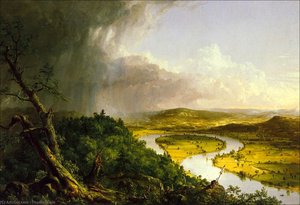
- Eine Ansicht vom Mount Etna aus Taormina (78 x 120 Zoll Öl auf Leinwand) zeigt Coles Faszination für den höchsten aktiven Vulkan Europas.
- The Oxbow (1836), das eine friedliche Landschaft zeigt, ist ein weiteres Beispiel für Coles Meisterschaft in der Landschaftsmalerei.
Museen und Sammlungen
Viele von Coles Werken finden sich in den folgenden Museen:- New York Historical Society: beherbergt Coles The Course of Empire-Reihe.
- National Gallery in Washington, D.C.: zeigt eine Version von The Voyage of Life.
- Munson-Williams-Proctor Arts Institute in Utica, New York: beherbergt eine weitere Version von The Voyage of Life.
- Allen Memorial Art Museum: zeigt Lake with Dead Trees (1825).
Vermächtnis und Einfluss
Coles Einfluss auf die amerikanische Kunst ist tiefgreifend. Er gilt als der Gründer der Hudson River School, einer Bewegung der amerikanischen Kunst des mittleren 19. Jahrhunderts, die im Hudson River Valley in New York entstand. Seine Arbeit hat Generationen von Künstlern inspiriert, darunter Asher B. Durand und Frederic Edwin Church. Empfohlene Lektüre: Weitere Werke von Thomas Cole:- Frederic Edwin Churchs Schoodic Peninsula from Mount Desert at Sunrise (zum Vergleich mit Coles Stil)
- Winslow Homers Kanus in Rapids, Saguenay River (Beispiel eines anderen amerikanischen Landschaftsmalers)

Thomas Cole
1801 - 1848 , Vereinigtes Königreich
Eckdaten zum Künstler
- Bemerkenswerte Kunstwerke:
- Der Bogen
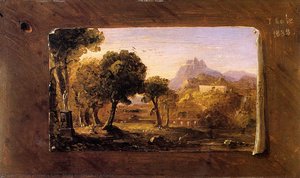
- Studie für Traum von Arcadia
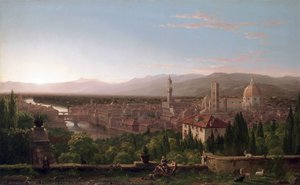
- Ansicht von Florenz
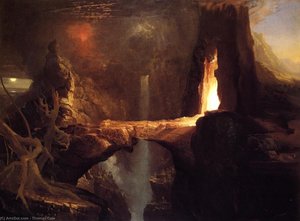
- Vertreibung. Mond und Kerzenschein
- Lake with Dead Trees
- The Course of Empire
- Geburtsdatum: 1. Februar 1801
- Geburtsort (Stadt Und Land): Bolton, Vereinigtes Königreich
- Künstler Oder Bewegungen, Die Von Diesem Künstler Beeinflusst Wurden:
- Asher B. Durand
- Frederic Edwin Church
- Künstlerische Bewegung Oder Stil: Hudson River School, Romantik
- Nationalität: Britisch-Amerikanisch
- Sterbedatum: 1848
- Vollständiger Name: Thomas Cole
Verwandte Artikel

Die 10 Meisterwerke der Hudson River School: Kunst für Ihr Zuhause | AllPaintingsStore
Entdecken Sie die 10 prägendsten Meisterwerke der Hudson River School! Erfahren Sie mehr über Thomas Cole, Frederic Church & Co. und ihre atemberaubenden Landschaftsbilder. Hochwertige Kunstdrucke für Ihr Zuhause – jetzt auf AllPaintingsStore.com!

The Sublime Landscape: Exploring the Hudson River School Movement
Explore the captivating world of the Hudson River School! Discover the history, artists, and defining characteristics of this iconic American art movement. Learn about Romanticism's influence & find inspiration for your collection.

Robert Spencer: Luminism, Narrative & the American Landscape Tradition
Explore the captivating world of Luminism & the Hudson River School with our expert analysis. Discover the history, artists, and enduring beauty of 19th-century American landscape painting. Find museum-quality reproductions at AllPaintingsStore.

Claude Monet: Die 25 Meisterwerke des Impressionismus für Ihr Zuhause | AllPaintingsStore
Entdecken Sie die 25 Meisterwerke von Claude Monet! Tauchen Sie ein in die Welt des Impressionismus, erleben Sie Seerosen, Sonnenaufgänge & Kathedralen. Hochwertige Reproduktionen für Ihr Zuhause – exklusiv auf AllPaintingsStore.com.

Thomas Worthington Whittredge und die Erfassung des amerikanischen Pastoralideals im Luminismus
Entdecken Sie das Werk von Thomas Worthington Whittredge und die Faszination des Luminismus! Analysieren Sie mit uns seine Gemälde, den Einfluss der Hudson River School und das amerikanische Pastoralideal. Expertenwissen & Hintergrundinformationen.