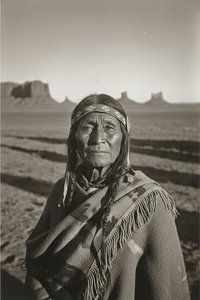
The Nomadic Vision of Sameer Makarius
The life of Sameer Makarius was a profound journey across borders, much like the layered and textured canvases he created. Born in Egypt in 1924, his early years were shaped by the shifting tides of mid-century Europe. Moving between Egypt, Germany, and Hungary during the turbulent decades of the 1930s and 1940s, Makarius developed a cosmopolitan perspective that would later define his artistic identity. It was in Budapest, amidst the shadows of World War II, that he truly found his voice as a painter. By 1944, he had emerged as a significant figure in the non-figurative movement, participating in the city's first exhibitions of abstract art and establishing himself as a founding member of the Hungarian Concrete Art Group. This period of intense experimentation within the European School instilled in him a lifelong commitment to the avant-garde, blending the precision of geometric abstraction with a deep, subconscious exploration of form.
In 1953, a pivotal chapter began when Makarius settled in Buenos Aires, a move that would forever intertwine his Egyptian roots with Argentine culture. This transition marked more than just a change in geography; it was an immersion into a burgeoning scene of abstract experimentation. In Argentina, his work expanded to encompass not only the canvas but also the lens. As a photographer and historian, he became one of the most prolific chroniclers of Buenos Aires during the 1950s and 60s. Carrying his Leica and Olympus cameras through the bustling streets, he sought to capture the soul of his new home, treating photography not merely as documentation but as a high art form. His dedication to this medium led him to co-found the Grupo Forum, a collective dedicated to elevating photography's status within the artistic hierarchy.
A Synthesis of Abstraction and Identity
The aesthetic language of Makarius is a captivating dialogue between structure and emotion. His paintings are often characterized by complex, layered geometric forms that seem to emerge from and recede into textured surfaces. This technique creates a sense of depth and mystery, inviting the viewer to look beyond the surface into a realm of symbolic resonance. Influenced heavily by the Surrealist principles of André Breton and Joan Miró, his work often evokes dreamlike landscapes that grapple with themes of memory, identity, and the human psyche. There is a palpable tension in his oeuvre between the rigid discipline of Concrete Art and the fluid, evocative nature of his more atmospheric compositions.
Beyond his personal practice, Makarius was a vital architect of the Argentine art scene. He was a co-founder of the influential Otra Figuración group, working alongside luminaries such as Jorge de la Vega, Ernesto Deira, Rómulo Macció, and Luis Felipe Noé. This involvement placed him at the heart of a movement that sought to redefine visual aesthetics through a more expressive, often visceral approach to painting. His scholarly contributions were equally significant; he authored essential texts on the history of Argentine photography, documenting the evolution of the medium from 1840 to 1981, and published works like Buenos Aires y su gente that captured the cultural pulse of his adopted city.
The legacy of Sameer Makarius is preserved in some of the world's most prestigious institutions, ensuring that his nomadic spirit continues to inspire. His work serves as a bridge between the European avant-garde and Latin American modernism, representing a unique intersection of history and art. To study his life is to witness the power of movement and adaptation, seeing how an artist can take the fragments of a displaced life and weave them into a cohesive, enduring masterpiece of global significance.
- Key Artistic Movements: Concrete Art, Surrealism, Abstract Avant-Garde, Otra Figuración.
- Major Contributions: Co-founder of Grupo Forum and Otra Figuración; Author of foundational texts on Argentine photography.
- Notable Collections: The Museum of Modern Art (New York), Tate Modern (London), Centre Pompidou (Paris), and Museo Reina Sofía (Madrid).
Fragen & Antworten
Aus welcher Epoche stammte Sameer Makarius?
Sameer Makarius war in der Epoche der Modern tätig. Diese Periode ordnet das künstlerische Schaffen historisch ein.
Wo kann ich alle Kunstwerke von Sameer Makarius entdecken?
Alle Werke von Sameer Makarius auf diese Webseite können auf der Alle Kunstwerke-Seite des Künstlers durchstöbert werden.
Wo kann ich das Farbprofil des Gesamtwerks von Sameer Makarius einsehen?
Die Verwendung von Farbe in den Werken von Sameer Makarius, die auf diese Webseite zu finden sind, lässt sich auf der Farbpalette des Künstlers-Seite des Künstlers entdecken.