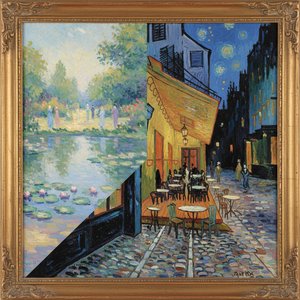
Sidney Starr: A Visionary of Urban Impressionism
Born in Kingston-upon-Hull, England, in 1857, Sidney Starr emerged as a significant figure within the late 19th and early 20th centuries—a period marked by rapid industrialization and shifting artistic sensibilities. His career, spanning nearly five decades, is characterized by a remarkable evolution from early academic training to a distinctly Impressionistic style deeply rooted in the urban landscapes of both Britain and America. Starr’s work offers a poignant glimpse into a world grappling with modernity, capturing not just the physical appearance of cities but also their inherent atmosphere and social dynamics.
Starr's formal artistic education began at the Slade School of Fine Art under Edward John Poynter, a prominent figure in the Royal Academy. This initial training instilled in him a solid understanding of traditional techniques and compositional principles. However, it was his association with James Abbott McNeill Whistler that proved to be a pivotal influence. Whistler’s emphasis on color, light, and atmosphere—a radical departure from the prevailing academic style—resonated profoundly with Starr, shaping his artistic approach for years to come. He even won a Slade Scholarship in 1874, further solidifying his position within the established art world.
The Whistlerian Influence and Early Works
Following his time at the Slade, Starr spent considerable periods studying in Europe, absorbing the techniques of Impressionist masters like Monet and Renoir. Returning to England, he became a member of the Society of British Artists (SBA) in 1886, aligning himself with a group that sought to modernize artistic practices. Crucially, Starr’s early works—particularly those produced during the late 1870s and 1880s—bear a striking resemblance to Whistler's style: muted palettes, atmospheric effects, and a focus on capturing fleeting moments of light and shadow. Notable examples from this period include depictions of London streets and interiors, rendered with a delicate sensitivity to color and texture.
A defining moment in Starr’s career occurred in 1889 when he joined forces with Whistler and other like-minded artists—Frances Bate, Frederick Brown, Francis James, Paul Maitland, Theodore Roussel, Philip Wilson Steer, and George Thomson—to form a breakaway group known as ‘The London Impressionists.’ This collective challenged the established norms of the Royal Academy and sought to establish their own independent exhibition space. This period saw Starr’s artistic experimentation intensify, pushing beyond mere imitation and developing his own unique visual language.
“The City Atlas” and a Shift Towards Urban Realism
Perhaps Starr's most celebrated work is “The City Atlas” (circa 1890-1892), a monumental canvas depicting the bustling streets of London. This painting exemplifies his evolving style, moving beyond purely atmospheric effects to incorporate a more detailed and realistic portrayal of urban life. The composition is complex, layering multiple figures and architectural elements within a dynamic framework of light and shadow. “The City Atlas” isn’t simply a depiction of a street scene; it's an exploration of the energy, chaos, and social interactions inherent in the modern metropolis.
Following his move to New York in 1892, Starr continued to produce works reflecting the changing landscape of American cities. He found work as a decorative painter, creating murals for public buildings and designing stained-glass windows for institutions like Lafayette College. His later paintings often retained elements of Impressionism while incorporating a greater degree of realism and a keen awareness of his surroundings.
Legacy and Historical Significance
Sidney Starr’s contribution to the development of British and American art is significant, bridging the gap between academic tradition and modern Impressionism. His early association with Whistler profoundly shaped his artistic vision, while his later work demonstrated an ability to capture the essence of urban life with sensitivity and insight. Although he may not be as widely recognized as some of his contemporaries—such as Monet or Renoir—Starr’s paintings offer a valuable window into a pivotal period of artistic innovation and social transformation.
His work is often considered part of the New English Art Club movement, reflecting a broader shift in British art towards greater experimentation and independence. Starr's legacy endures through his evocative depictions of urban landscapes—testaments to a keen eye for detail and a profound understanding of the human experience within the rapidly changing world of the late 19th and early 20th centuries.
Fragen & Antworten
In welcher historischen Epoche war Sidney Starr tätig?
Sidney Starr war in der Epoche der 19th Century tätig. Diese Periode ordnet das künstlerische Schaffen historisch ein.
Wo sind die nach Themen sortierten Kunstwerke von Sidney Starr zu finden?
Die Werke von Sidney Starr können nach Themen auf der Themenatlas-Seite des Künstlers erkundet werden.
Wo kann ich die Kunstwerke von Sidney Starr nach Stimmung sortiert sehen?
Die Seite Stimmungswelt des Künstlers zeigt die Kunstwerke von Sidney Starr, sortiert nach ihrer Atmosphäre.