Ramon Casas i Carbó: A Catalan Modernisme Pioneer
Ramon Casas i Carbó (January 4, 1866 – February 5, 1932) was a prominent Spanish painter and decorator of the Modernisme movement. Born in Barcelona, Spain, he is celebrated for his portraits, genre scenes, and depictions of Catalan life, blending elements of Realism and Impressionism into a distinctive style.
Early Life, Training, and Artistic Beginnings
- Birth and Family: Casas was born into a wealthy family; his father had amassed considerable fortune in Cuba, while his mother hailed from a well-established Catalan lineage.
- Artistic Education: Recognizing his artistic inclinations early on, at the age of 11 (in 1877), Casas abandoned formal schooling to study art under Joan Vicens, marking the commencement of his dedicated artistic journey.
- Early Works and Recognition: His initial works primarily focused on portraits and caricatures of members of the Catalan, Spanish, and French elite. The painting Self-portrait as a Flamenco Dancer (1883) garnered significant attention, leading to an invitation for him to join the Societé d'Artistes Français.
- Early Successes: Corrida de Toros (1884), showcasing his ability to capture dynamic crowd scenes, further solidified his reputation. His work Intérieur du Moulin de la Galette (1891) earned him a medal at the Berlin International Exposition, demonstrating his growing artistic maturity.
Development and Key Artistic Themes
- Influence of Impressionism and Realism: Casas’s style was heavily influenced by both Impressionist techniques – evident in his use of light and color – and Realistic portrayals of everyday life and individuals.
- Catalan Identity: A recurring theme in Casas' work was the depiction of Catalan culture, society, and landscapes. He frequently portrayed scenes of daily life, festivals, and portraits of prominent figures within Catalonia.
- Collaboration with Santiago Rusiñol: In 1889, Casas embarked on a significant artistic journey alongside fellow artist Santiago Rusiñol, traveling through Catalonia and documenting their experiences in sketches and paintings. This collaboration fostered his understanding of Catalan identity and rural life.
- Association with the Societé d'Artistes Français: Becoming an associate of this prestigious society allowed Casas to exhibit his work at their salon without undergoing jury selection, providing him with greater exposure and recognition within the Parisian art world.
Major Achievements and Notable Works
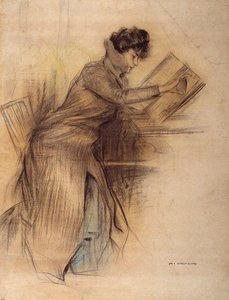
- Portraits: Casas was renowned for his insightful and expressive portraits, capturing not only physical likeness but also the character and personality of his subjects. Examples include Portrait of Mr. Domínguez (1899) which showcases his skill in pencil drawing.
- Genre Scenes: His genre paintings offered vivid glimpses into Catalan life, depicting scenes from bullfights (Corrida de Toros), cafes, and social gatherings.
- Self-portrait as a Flamenco Dancer (1883): This early work established his unique style and demonstrated his ability to blend portraiture with theatrical flair.
- Depictions of Celebrated Figures: Casas created portraits of prominent figures such as composer Isaac Albéniz, poet Jaume Massó, and writer Albert Bernís, solidifying his reputation as a sought-after portraitist.
Legacy and Historical Significance
Ramon Casas i Carbó left an indelible mark on Catalan art and the broader Modernisme movement. His work is celebrated for its vibrant depictions of Catalan life, insightful portraits, and skillful blending of Realism and Impressionism. Today, his paintings are housed in prestigious museums including the Cau Ferrat Museum (Sitges) and the Museu d'Art Contemporani de Barcelona, ensuring that his artistic legacy continues to inspire and captivate audiences.