Garantía de devolución · 100 días Envío gratuito a todo el mundo
449 582obras de arte 30 616artistas 4 660museos 32Idiomas
Moneda
    Idioma
      Atelier · Est. 2015 · París, Francia
      AllPaintingsStore
      allpaintingsstore.com
      Vista previa Vista previa en RA Cambiar a formato impreso Ver versión en imagen digital Compartir
      Ver detalles Guía Añadir a favoritos Descargar Ver artículos similares Radiografía Presentación de diapositivas Estadísticas

      Panic

      Experience 'Panic' by André Masson – a surrealist etching of swirling chaos and raw emotion. Explore the artist’s automatic drawing style & delve into themes of anxiety & primal energy.

      Descubre a André Masson: pionero surrealista y creador de dibujos automáticos e innovadoras pinturas con arena. ¡Su legado inspira el arte moderno!

      La obra de arte que se muestra en esta página está protegida por las leyes de propiedad intelectual, lo que significa que no podemos crear ni vender legalmente una reproducción idéntica. Esta protección se hace cumplir en virtud de acuerdos internacionales como el Convenio de Berna y por las leyes nacionales, incluidas aquellas establecidas por el Ley de derechos de autor de los EE. UU. - Título 17.

      Como una alternativa respetuosa y legal, ofrecemos obras de arte personalizadas y pintadas a mano inspiradas en la original. Nuestros expertos y profesionales del arte estudian cuidadosamente el estilo, el sentimiento y la esencia artística de la obra original para crear una pieza nueva y única que evoque la misma sensación, siendo al mismo tiempo una creación original por derecho propio.

      Este método cumple plenamente con las normativas de derechos de autor, ya que no implica la copia ni la duplicación de la obra protegida. En su lugar, se trata de una reinterpretación creativa: una nueva pintura influenciada por la original, pero que no es idéntica a ella.

      Reproducción al óleo hecha a mano

      Óleo sobre lienzo pintado a mano en el tamaño y marco de su elección, realizado por encargo por nuestros artistas. ( Cambiar a formato impreso Ver versión en imagen digital)

      Corner sample of the P118B picture frame: poliestireno moldeado, 5 cm wide and 3 cm thick
      P118B 10
      Corner sample of the P118H picture frame: poliestireno moldeado, 5 cm wide and 3 cm thick
      P118H 10
      Corner sample of the P118W picture frame: poliestireno moldeado, 5 cm wide and 3 cm thick
      P118W 10
      Corner sample of the P438Z picture frame: poliestireno moldeado, 5.5 cm wide and 3.5 cm thick
      P438Z 10
      Corner sample of the P508JH picture frame: poliestireno moldeado, 7 cm wide and 3.5 cm thick
      P508JH 12
      Corner sample of the P508YH picture frame: poliestireno moldeado, 7 cm wide and 3.5 cm thick
      P508YH 12
      Corner sample of the P805H picture frame: poliestireno moldeado, 5 cm wide and 3.5 cm thick
      P805H 10
      Corner sample of the P805Z picture frame: poliestireno moldeado, 5 cm wide and 3.5 cm thick
      P805Z 10
      Corner sample of the P919BZ picture frame: poliestireno moldeado, 7 cm wide and 3.5 cm thick
      P919BZ 10
      Corner sample of the P919G picture frame: poliestireno moldeado, 7 cm wide and 3.5 cm thick
      P919G 10
      Corner sample of the P919XJ picture frame: poliestireno moldeado, 7 cm wide and 3.5 cm thick
      P919XJ 10
      Corner sample of the P959ZH picture frame: poliestireno moldeado, 5 cm wide and 3 cm thick
      P959ZH 10
      Corner sample of the P968JZ picture frame: poliestireno moldeado, 6 cm wide and 4 cm thick
      P968JZ 12
      Corner sample of the W106C picture frame: madera maciza, 5 cm wide and 3 cm thick
      W106C 8
      Corner sample of the W218G picture frame: madera maciza, 5 cm wide and 3 cm thick
      W218G 10
      Corner sample of the W218JH picture frame: madera maciza, 5 cm wide and 3 cm thick
      W218JH 8
      Corner sample of the W218Y picture frame: madera maciza, 5 cm wide and 3 cm thick
      W218Y 10
      Corner sample of the W307PJ picture frame: madera maciza, 6 cm wide and 3 cm thick
      W307PJ 10
      Corner sample of the W316G picture frame: madera maciza, 6 cm wide and 3 cm thick
      W316G 10
      Corner sample of the W316PJ picture frame: madera maciza, 6 cm wide and 3 cm thick
      W316PJ 8
      Corner sample of the W316Y picture frame: madera maciza, 6 cm wide and 3 cm thick
      W316Y 10
      Corner sample of the W398PJ picture frame: madera maciza, 5 cm wide and 3 cm thick
      W398PJ 8
      Corner sample of the W4111J picture frame: madera maciza, 6.5 cm wide and 3.5 cm thick
      W4111J 10
      Corner sample of the W500HY picture frame: madera maciza, 7 cm wide and 5 cm thick
      W500HY 15
      Corner sample of the W500JH picture frame: madera maciza, 7 cm wide and 5 cm thick
      W500JH 15
      Corner sample of the W692G picture frame: madera maciza, 8 cm wide and 4 cm thick
      W692G 12
      Corner sample of the W849H picture frame: madera maciza, 5 cm wide and 3 cm thick
      W849H 8
      Corner sample of the W940BG picture frame: madera maciza, 7.5 cm wide and 4.5 cm thick
      W940BG 15
      Corner sample of the W953PJ picture frame: madera maciza, 6 cm wide and 3.5 cm thick
      W953PJ 8

      Estándar
      personalizado
      CM
      INCH

      Elija entre nuestros tamaños predefinidos que respetan las proporciones originales de la obra.

      ancho
      altura

      Escriba el ancho y el alto que necesite para adaptarse a su marco o a su pared. Al ser una obra pintada a mano, para un tamaño con una forma distinta, el artista puede pintar un poco más alrededor de la imagen o recortar un poco; usted elige. Le enviaremos una maqueta digital para su aprobación antes de comenzar la pintura. La imagen que se muestra en esta página no refleja el resultado real; solo la maqueta lo hace.

      Ejemplos de lo que se puede personalizar: Reemplace el rostro con una foto del cliente; Agregue una mascota (por ejemplo, cambie un gato por un perro); Incluya un mensaje oculto en el fondo; Cambie el paisaje o los elementos del fondo.
      Tras realizar el pedido, el equipo de AllPaintingsStore.com enviará un correo electrónico al cliente para solicitar instrucciones y proporcionarle una vista previa del boceto.

      Envío a todo el mundo () en 3-4 semanas en lugar de las 5 semanas estándar. (21 octubre). Sin comprometer la calidad.

      Envío exprés gratuito a todo el mundo
      Lienzo de lino de alta calidad
      Seguro de envío completo
      Garantía de reembolso de impuestos aduaneros
      Garantía de fidelidad cromática exacta
      Política de devolución de 100 días (solo por defectos)
      Garantía de devolución del 100% del dinero
      Oferta por volumen

      Precio total

      € 225

      Panic

      Técnica de reproducción

      Tamaño de la reproducción

      -

      Precio total

      € 225

      Datos clave

      • Medium: Etching
      • Dimensions: 6.1 x 28.4 cm
      • Notable elements: Biomorphic shapes
      • Movement: Surrealism
      • Artistic style: Abstract Expressionism
      • Influences: Automatic Drawing

      Cuestionario de arte

      Cada pregunta tiene una única respuesta correcta.

      Pregunta 1:
      What is the primary emotion conveyed by André Masson’s ‘Panic’?
      Pregunta 2:
      Which artistic movement is most closely associated with André Masson’s style in ‘Panic’?
      Pregunta 3:
      The swirling lines and shapes in ‘Panic’ are most likely intended to represent:
      Pregunta 4:
      What year was André Masson’s ‘Panic’ created?
      Pregunta 5:
      The color palette of ‘Panic’, featuring teal and purple, contributes to the artwork’s overall effect by:

      The Raw Nerve of Anxiety: Unpacking André Masson’s “Panic”

      André Masson's "Panic," created in 1955, isn’t merely a painting; it’s an excavation. A visceral plunge into the turbulent depths of the human psyche, rendered with a frenetic energy that both unsettles and compels. This etching, executed on paper, captures a moment suspended between chaos and control, reflecting the anxieties simmering beneath the surface of post-war Europe – a period Masson himself deeply inhabited through his pioneering work in Surrealism and Automatism.

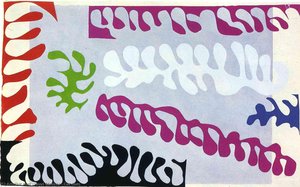
      The composition immediately assaults the senses. A dominant teal background—a shade suggestive of both twilight and unease—is fractured by swirling, violently intertwined lines in shades of purple and magenta. These aren’t neat, controlled strokes; they are a deliberate act of disruption, mirroring the feeling of being overwhelmed by internal turmoil. The lack of a clear focal point forces the viewer's eye to dart across the surface, mimicking the restless, fragmented experience of panic itself. The overall effect is less about depicting a specific scene and more about conveying an intense emotional state – a raw, unfiltered expression of anxiety.

      Automatism: A Journey Beyond Conscious Control

      Masson’s technique—Automatism—was central to his artistic practice. Rejecting the constraints of rational thought and deliberate planning, he sought to tap into the unconscious mind through spontaneous action. In “Panic,” this manifests as a seemingly chaotic outpouring of lines, yet beneath the surface lies a carefully orchestrated process. Masson would often begin with sand drawings, allowing the subconscious to dictate the initial forms, then translate these images onto paper using various tools – in this case, etching techniques—to create the final image. This method aimed to bypass conscious control and reveal hidden emotions and associations.

      The influence of Surrealism is undeniable, but Masson’s approach extends beyond simple dream imagery. He was deeply interested in primal emotions, exploring themes of violence, eroticism, and metamorphosis – all powerfully represented within the swirling forms of “Panic.” The piece echoes the work of artists like André Breton and Joan Miró, yet possesses a uniquely personal intensity, reflecting Masson's own struggles with psychological turmoil.

      Symbolic Echoes: Violence, Repression, and the Unconscious

      The imagery within "Panic" is rich in symbolic potential. The tangled lines can be interpreted as representing repressed emotions struggling to surface, a visual manifestation of internal conflict. The use of dark teal and vibrant purples and magentas creates a dramatic contrast, suggesting a battle between opposing forces – perhaps order versus chaos, reason versus instinct. Some viewers have noted the resemblance to organic forms—twisted limbs or distorted figures—suggesting a sense of fragmentation and loss of control.

      Interestingly, Masson’s work frequently engaged with themes of violence, reflecting anxieties prevalent in post-war Europe. The piece can be seen as an exploration of the destructive potential within the human psyche – a warning against succumbing to overwhelming fear and losing oneself in the chaos of internal struggle. The title itself—"Panic"—underscores this central theme, encapsulating the feeling of being trapped within one’s own anxieties.

      A Legacy of Raw Emotion: Masson's Enduring Impact

      “Panic” stands as a powerful testament to André Masson’s innovative approach to art. It’s not a comfortable piece; it demands engagement and invites introspection. His exploration of Automatism, combined with his unflinching portrayal of psychological turmoil, cemented his place as a key figure in the Surrealist movement and beyond. Reproductions of this work continue to resonate today, offering a glimpse into the complexities of the human experience – a reminder that beneath the surface of everyday life, there often lies a turbulent landscape of anxieties and unresolved emotions.

      Preguntas y respuestas

      ¿Cómo equilibra la luz y la sombra "Panic"?

      "Panic" tiene un brillo general de brilliant y su luminancia es Luminous.

      ¿Cuándo y con qué materiales se realizó "Panic"?

      "Panic" fue creada en 1955 mediante la técnica de Ink On Paper. El material y la fecha describen cómo y cuándo se realizó la obra original.

      ¿Qué paleta y qué color predominante definen a "Panic"?

      "Panic" se define por una paleta de Neutrals liderada por White (#f6f0e1).


      Biografía del artista

      André Masson: Una Vida en el Arte

      • Nacido: Balagny-sur-Thérain, Francia (4 de enero de 1896)
      • Fallecido: 1987

      Primeros Años y Formación Artística

      • Masson comenzó su viaje artístico a la edad de once años, estudiando en la Académie Royale des Beaux-Arts en Bruselas bajo Constant Montald. Esta formación temprana proporcionó una base para sus posteriores experimentos con varios estilos.
      • Su trabajo inicial mostró interés en el Cubismo, demostrando un compromiso temprano con los movimientos artísticos modernos.

      El Período Surrealista y el Dibujo Automático

      • Masson se convirtió en una figura clave dentro del movimiento surrealista, abrazando con entusiasmo el dibujo automático como técnica. Esto implicaba crear obras de arte sin control consciente, permitiendo que el subconsciente guiara la mano.
      • Colaboró con otras figuras destacadas de la época como Antonin Artaud, Michel Leiris, Joan Miró, Georges Bataille, Jean Dubuffet y Georges Malkine, fomentando una comunidad artística vibrante.
      • Técnicas Notables:
        • Dibujos Automáticos: Numerosas obras en tinta y pluma que muestran su innovador enfoque del arte.
        • Arena y Pegamento sobre Lienzo: Experimentación con la proyección de arena y pegamento sobre lienzo, creando pinturas al óleo únicas basadas en las formas resultantes.
      • Su trabajo durante este período a menudo exploraba temas violentos o eróticos, reflejando una ruptura con las convenciones artísticas tradicionales.

      Evolución y Obras Posteriores

      • A fines de la década de 1920, Masson se alejó del surrealismo, desarrollando un estilo más estructurado influenciado por artistas como André Derain. Esto es evidente en sus pinturas de paisajes.
      • Durante la Segunda Guerra Mundial, su trabajo fue condenado como "degenerado" por los nazis. Escapó a los Estados Unidos con la ayuda de Varian Fry, impactando significativamente a los expresionistas abstractos estadounidenses como Jackson Pollock.
      • Después de regresar a Francia, Masson se instaló en Aix-en-Provence y se centró en la pintura de paisajes, demostrando un cambio hacia temas más naturalistas.

      Legado e Influencia

      • El trabajo pionero de André Masson en el surrealismo y el dibujo automático dejó un legado duradero en el mundo del arte.
      • Su influencia se puede ver a través de varios movimientos artísticos, desde el cubismo hasta el expresionismo abstracto, lo que solidifica su posición como una figura clave en la historia del arte moderno.
      • La exploración de Masson de las imágenes subconscientes y las técnicas innovadoras continúan inspirando a los artistas hoy en día.
      André Masson

      André Masson

      1896 - 1987 , Francia

      Datos clave

      • Artistas O Movimientos Influenciados Por Este Artista:
        • Jackson Pollock
        • Expresionismo abstracto
      • Artistas Que Influyeron En Este Artista: ['André Derain']
      • Fecha De Fallecimiento: 28 de octubre de 1987
      • Fecha De Nacimiento: 4 de enero de 1896
      • Lugar De Nacimiento: Balagny-sur-Thérain, Francia
      • Movimiento Artístico O Estilo:
        • Surrealismo
        • Cubismo
      • Nacionalidad: Francesa
      • Nombre Completo: André Aimé René Masson
      • Obras Notables:
        • Más allá
        • Paisaje con rocas
        • La metamorfosis de los amantes
        • Pigmaleón
      Explore obras de arte organizadas por temas, estilos y características.