


 Ver en contexto
 Enviar
 Compartir
 Detalles
 Guía
Guía

 Descargar
 Similares
 Radiografía
 Presentación de diapositivas
 Q&A
Q&A Estadísticas
Panic


 Ver más
La obra de arte que se muestra en esta página está protegida por las leyes de propiedad intelectual, lo que significa que no podemos crear ni vender legalmente una reproducción idéntica. Esta protección se hace cumplir en virtud de acuerdos internacionales como el Convenio de Berna y por las leyes nacionales, incluidas aquellas establecidas por el Ley de derechos de autor de los EE. UU. - Título 17.
Este método cumple plenamente con las normativas de derechos de autor, ya que no implica la copia ni la duplicación de la obra protegida. En su lugar, se trata de una reinterpretación creativa: una nueva pintura influenciada por la original, pero que no es idéntica a ella.
Giclée / Impresión de arte
Impresiones giclée o en lienzo de calidad de museo con producción rápida y opciones de acabado flexibles. ( Comprar pintura hecha a mano Cambiar a imagen digital)




P118B €10

P118H €10

P118W €10

P438Z €10

P508JH €12

P508YH €12

P805H €10

P805Z €10

P919BZ €10

P919G €10

P919XJ €10

P959ZH €10

P968JZ €12

W106C €8

W218G €10

W218JH €8

W218Y €10

W307PJ €10

W316G €10

W316PJ €8

W316Y €10

W398PJ €8

W4111J €10

W500HY €15

W500JH €15

W692G €12

W849H €8

W940BG €15

W953PJ €8




Elija entre nuestros tamaños predefinidos que respetan las proporciones originales de la obra.

Introduzca el ancho y el alto que necesite para adaptarse a su marco o pared. Una impresión solo puede recortarse, nunca hacerse más grande que la imagen original, por lo que un tamaño con una forma distinta perderá parte de la obra. Le enviaremos una maqueta digital para su aprobación antes de realizar cualquier impresión. La imagen que se muestra en esta página no refleja el recorte real; solo la maqueta lo hace.
Envío a todo el mundo () en 2 semanas en lugar de las 4/5 semanas estándar. (2 noviembre)

Envío exprés gratuito a todo el mundo

Lienzo de lino de alta calidad

Seguro de envío total

Garantía de reembolso de aranceles aduaneros

Garantía de fidelidad cromática exacta

Política de devolución de 100 días (solo por defectos)

Garantía de devolución del 100% del dinero

Descuento por cantidad
 La opción de vidrio solo está disponible en tamaños inferiores a 110 cm.

Panic
Giclée / Impresión de arte
Dimensiones de la reproducción
-


Precio total final
€ 57
The Raw Nerve of Anxiety: Unpacking André Masson’s “Panic”
André Masson's "Panic," created in 1955, isn’t merely a painting; it’s an excavation. A visceral plunge into the turbulent depths of the human psyche, rendered with a frenetic energy that both unsettles and compels. This etching, executed on paper, captures a moment suspended between chaos and control, reflecting the anxieties simmering beneath the surface of post-war Europe – a period Masson himself deeply inhabited through his pioneering work in Surrealism and Automatism.
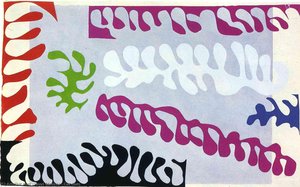
The composition immediately assaults the senses. A dominant teal background—a shade suggestive of both twilight and unease—is fractured by swirling, violently intertwined lines in shades of purple and magenta. These aren’t neat, controlled strokes; they are a deliberate act of disruption, mirroring the feeling of being overwhelmed by internal turmoil. The lack of a clear focal point forces the viewer's eye to dart across the surface, mimicking the restless, fragmented experience of panic itself. The overall effect is less about depicting a specific scene and more about conveying an intense emotional state – a raw, unfiltered expression of anxiety.
Automatism: A Journey Beyond Conscious Control
Masson’s technique—Automatism—was central to his artistic practice. Rejecting the constraints of rational thought and deliberate planning, he sought to tap into the unconscious mind through spontaneous action. In “Panic,” this manifests as a seemingly chaotic outpouring of lines, yet beneath the surface lies a carefully orchestrated process. Masson would often begin with sand drawings, allowing the subconscious to dictate the initial forms, then translate these images onto paper using various tools – in this case, etching techniques—to create the final image. This method aimed to bypass conscious control and reveal hidden emotions and associations.
The influence of Surrealism is undeniable, but Masson’s approach extends beyond simple dream imagery. He was deeply interested in primal emotions, exploring themes of violence, eroticism, and metamorphosis – all powerfully represented within the swirling forms of “Panic.” The piece echoes the work of artists like André Breton and Joan Miró, yet possesses a uniquely personal intensity, reflecting Masson's own struggles with psychological turmoil.
Symbolic Echoes: Violence, Repression, and the Unconscious
The imagery within "Panic" is rich in symbolic potential. The tangled lines can be interpreted as representing repressed emotions struggling to surface, a visual manifestation of internal conflict. The use of dark teal and vibrant purples and magentas creates a dramatic contrast, suggesting a battle between opposing forces – perhaps order versus chaos, reason versus instinct. Some viewers have noted the resemblance to organic forms—twisted limbs or distorted figures—suggesting a sense of fragmentation and loss of control.
Interestingly, Masson’s work frequently engaged with themes of violence, reflecting anxieties prevalent in post-war Europe. The piece can be seen as an exploration of the destructive potential within the human psyche – a warning against succumbing to overwhelming fear and losing oneself in the chaos of internal struggle. The title itself—"Panic"—underscores this central theme, encapsulating the feeling of being trapped within one’s own anxieties.
A Legacy of Raw Emotion: Masson's Enduring Impact
“Panic” stands as a powerful testament to André Masson’s innovative approach to art. It’s not a comfortable piece; it demands engagement and invites introspection. His exploration of Automatism, combined with his unflinching portrayal of psychological turmoil, cemented his place as a key figure in the Surrealist movement and beyond. Reproductions of this work continue to resonate today, offering a glimpse into the complexities of the human experience – a reminder that beneath the surface of everyday life, there often lies a turbulent landscape of anxieties and unresolved emotions.
Preguntas y respuestas
¿A qué etapa de la trayectoria de André Masson pertenece "Panic"?
"Panic" representa el Surrealist Automatic Drawing de André Masson.
¿Puedo usar la realidad aumentada para ver "Panic" de André Masson en mi habitación?
"Panic" cuenta con una vista previa en realidad aumentada: la página de Vista previa en RA de la obra permite visualizarla en su propio espacio mediante un dispositivo compatible.
¿Cuál es el tono predominante de "Panic" de André Masson?
Un tono Green to Violet Spectrum recorre "Panic" de André Masson.
Obras relacionadas



Biografía del artista
André Masson: Una Vida en el Arte
- Nacido: Balagny-sur-Thérain, Francia (4 de enero de 1896)
- Fallecido: 1987
Primeros Años y Formación Artística
- Masson comenzó su viaje artístico a la edad de once años, estudiando en la Académie Royale des Beaux-Arts en Bruselas bajo Constant Montald. Esta formación temprana proporcionó una base para sus posteriores experimentos con varios estilos.
- Su trabajo inicial mostró interés en el Cubismo, demostrando un compromiso temprano con los movimientos artísticos modernos.
El Período Surrealista y el Dibujo Automático
- Masson se convirtió en una figura clave dentro del movimiento surrealista, abrazando con entusiasmo el dibujo automático como técnica. Esto implicaba crear obras de arte sin control consciente, permitiendo que el subconsciente guiara la mano.
- Colaboró con otras figuras destacadas de la época como Antonin Artaud, Michel Leiris, Joan Miró, Georges Bataille, Jean Dubuffet y Georges Malkine, fomentando una comunidad artística vibrante.
- Técnicas Notables:
- Dibujos Automáticos: Numerosas obras en tinta y pluma que muestran su innovador enfoque del arte.
- Arena y Pegamento sobre Lienzo: Experimentación con la proyección de arena y pegamento sobre lienzo, creando pinturas al óleo únicas basadas en las formas resultantes.
- Su trabajo durante este período a menudo exploraba temas violentos o eróticos, reflejando una ruptura con las convenciones artísticas tradicionales.
Evolución y Obras Posteriores
- A fines de la década de 1920, Masson se alejó del surrealismo, desarrollando un estilo más estructurado influenciado por artistas como André Derain. Esto es evidente en sus pinturas de paisajes.
- Durante la Segunda Guerra Mundial, su trabajo fue condenado como "degenerado" por los nazis. Escapó a los Estados Unidos con la ayuda de Varian Fry, impactando significativamente a los expresionistas abstractos estadounidenses como Jackson Pollock.
- Después de regresar a Francia, Masson se instaló en Aix-en-Provence y se centró en la pintura de paisajes, demostrando un cambio hacia temas más naturalistas.
Legado e Influencia
- El trabajo pionero de André Masson en el surrealismo y el dibujo automático dejó un legado duradero en el mundo del arte.
- Su influencia se puede ver a través de varios movimientos artísticos, desde el cubismo hasta el expresionismo abstracto, lo que solidifica su posición como una figura clave en la historia del arte moderno.
- La exploración de Masson de las imágenes subconscientes y las técnicas innovadoras continúan inspirando a los artistas hoy en día.

André Masson
1896 - 1987 , Francia
Datos clave
- Artistas O Movimientos Influenciados Por Este Artista:
- Jackson Pollock
- Expresionismo abstracto
- Artistas Que Influyeron En Este Artista: ['André Derain']
- Fecha De Fallecimiento: 28 de octubre de 1987
- Fecha De Nacimiento: 4 de enero de 1896
- Lugar De Nacimiento: Balagny-sur-Thérain, Francia
- Movimiento Artístico O Estilo:
- Surrealismo
- Cubismo
- Nacionalidad: Francesa
- Nombre Completo: André Aimé René Masson
- Obras Notables:
- Más allá
- Paisaje con rocas
- La metamorfosis de los amantes
- Pigmaleón
Artículos relacionados

Expressionist Abstraction: A Procurement Guide to Bold Colors and Emotional Impact for Modern Hotel Interiors
Elevate hospitality spaces with Expressionist Abstraction. A professional procurement guide for hotel designers on sourcing bold, large-scale abstract oil paintings to create impactful, high-end modern interiors through reliable bulk-order art solutions.

Contemporary Abstract Art: A Professional Buyer's Guide to Large-Scale Modern Decor for Hospitality and Corporate Interiors
A professional procurement guide for hotel designers and architects. Discover how to integrate large-scale contemporary abstract art into hospitality projects through high-volume, custom-sized oil reproductions, multi-panel layouts, and reliable global logistics.

