


 Ver en contexto
 Enviar
 Compartir
 Detalles
 Guía
Guía

 Descargar
 Similares
 Radiografía
 Presentación de diapositivas
 Q&A
Q&A Estadísticas
El Prelado

- 107.0 x 90.0 cm


 Ver más
Giclée / Impresión de arte
Impresiones giclée o en lienzo de calidad de museo con producción rápida y opciones de acabado flexibles. ( Comprar pintura hecha a mano Cambiar a imagen digital)




































Elija entre nuestros tamaños predefinidos que respetan las proporciones originales de la obra.

Introduzca el ancho y el alto que necesite para adaptarse a su marco o pared. Una impresión solo puede recortarse, nunca hacerse más grande que la imagen original, por lo que un tamaño con una forma distinta perderá parte de la obra. Le enviaremos una maqueta digital para su aprobación antes de realizar cualquier impresión. La imagen que se muestra en esta página no refleja el recorte real; solo la maqueta lo hace.
Envío a todo el mundo () en 2 semanas en lugar de las 4/5 semanas estándar. (2 noviembre)

Envío exprés gratuito a todo el mundo

Lienzo de lino de alta calidad

Seguro de envío total

Garantía de reembolso de aranceles aduaneros

Garantía de fidelidad cromática exacta

Política de devolución de 100 días (solo por defectos)

Garantía de devolución del 100% del dinero

Descuento por cantidad
 La opción de vidrio solo está disponible en tamaños inferiores a 110 cm.

El Prelado
Giclée / Impresión de arte
Dimensiones de la reproducción
-


Precio total final
€ 57
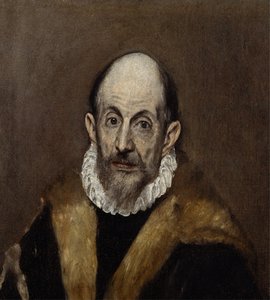
A Prelate: An Exploration of Mannerist Drama and Spiritual Reflection
Doménikos Theotokópoulos, universally known as El Greco – “the Greek” – stands apart from his contemporaries as a painter whose artistic vision transcended the conventions of his time. Born in Crete around 1541, amidst the turbulent currents of Venetian rule, El Greco embarked on an extraordinary journey that propelled him through Venice and Rome before establishing himself definitively in Toledo, Spain—a city steeped in religious fervor and serving as the crucible for his most profound artistic achievements. He wasn’t merely responding to stylistic trends; he fundamentally reshaped them, forging a style that foreshadowed the expressive power of Expressionism and anticipating the fragmented forms characteristic of Cubism centuries later. His formative years spent studying Byzantine iconography instilled within him an unwavering dedication to meticulous detail and a deep understanding of religious symbolism—a foundation that would nevertheless liberate him from rigid artistic constraints. He famously signed his canvases in Greek, appending “Krḗs” – Cretan – as a defiant assertion of his heritage, even as he embraced new artistic horizons. The genesis of El Greco’s distinctive aesthetic resided in the interplay between Byzantine tradition and Renaissance innovation, resulting in an oeuvre that remains perpetually captivating.- Subject Matter: This portrait depicts a prelate—likely a high-ranking ecclesiastical official—seated at a table with an open book. The deliberate positioning underscores themes of intellect, piety, and authority, reflecting the societal values prevalent during El Greco’s era.
- Style & Technique: El Greco's artistic approach embodies Mannerism, a stylistic movement that prioritized dramatic lighting, elongated figures, and expressive brushwork. He achieved this effect through layering paint with visible strokes, creating a textured surface that conveys both physicality and spiritual depth.
- Color Palette: Doménikos employed a muted color palette dominated by blacks, browns, and creams. The bold juxtaposition between the black robe and white collar highlights the figure’s solemn dignity while emphasizing the flesh tones of his face—a subtle yet impactful element of visual storytelling.
- Composition & Perspective: The composition adheres to a three-quarter pose, maximizing detail in the subject's facial expression and upper body. Distortion of perspective—a hallmark of Mannerist art—further enhances the painting’s dramatic impact, creating an illusion of depth that contributes to its ethereal quality.
Preguntas y respuestas
¿Cuáles son las dimensiones reales de "El Prelado" de El Greco?
La obra original "El Prelado" de El Greco mide 107 x 90 cm.
¿Para qué se recomienda una reproducción de "El Prelado" de El Greco?
Se recomienda una reproducción de "El Prelado" de El Greco para Acento cromático, basándose en el tema, la atmósfera y los colores de la obra.
¿De qué manera el estilo de "El Prelado" se relaciona con la época de su creador?
En "El Prelado" de El Greco, el movimiento Mannerist Style se funde con la era Renacimiento.
Obras relacionadas


Biografía del artista
**vida temprana y formación**
El Greco (Doménikos Theotokopoulos), un pintor, escultor y arquitecto griego reconocido, nació en 1541 en Creta, entonces bajo gobierno veneciano. Su nombre de nacimiento era Doménikos Theotokopoulos. La formación temprana de El Greco como pintor de iconos de la escuela cretense, un centro líder del arte bizantino post-byzantino, sentó las bases para sus futuras empresas artísticas.**evolución artística e influencias**
El estilo artístico de El Greco se vio moldeado por sus viajes a Venecia y Roma, donde absorbió estilos manieristas y renacentistas, influenciado notablemente por Tintoretto y Tiziano. Su traslado a Toledo, España en 1577 marcó un período de creación prolífica, resultando en obras maestras como Vista de Toledo y La apertura del quinto sello.**obras notables y estilo**
* La alegoría de la orden de los Camaldoleses (manierismo, óleo) - un testimonio de la mezcla única de El Greco entre las tradiciones bizantinas y los elementos estilísticos occidentales. * Fábulas (manierismo, óleo) – demuestra su uso de coloridos y poco comunes. * Giacomo Bosio (manierismo, óleo) – muestra la maestría de El Greco en el estilo manierista.**legado e influencia**
El estilo dramático y expresionista de El Greco, caracterizado por figuras alargadas y pigmentación fantástica, ha sido una fuente de inspiración para poetas y escritores. Se le considera un precursor del expresionismo y cubismo. Para más información sobre la vida y obra de El Greco, visite [https://AllPaintingsStore.com/@/el-greco-(domenikos-theotokopoulos)](https://AllPaintingsStore.com/@/el-greco-(domenikos-theotokopoulos)).- **visualice las pinturas de El Greco** en [https://AllPaintingsStore.com/@@/85fr95-el-greco-(domenikos-theotokopoulos)-allegory-of-the-camaldolite-order](https://AllPaintingsStore.com/@@/85fr95-el-greco-(domenikos-theotokopoulos)-allegory-of-the-camaldolite-order)
- **aprenda más sobre la vida y obra de El Greco** en [https://en.wikipedia.org/wiki/el_greco](https://en.wikipedia.org/wiki/el_greco)
- **explore el Instituto Helénico de Estudios Bizantinos y Post-Bizantinos**, que presenta una amplia gama de artefactos que reflejan la rica herencia artística del bizantismo, en /es/art/show/art-d3b8bv-es/
El Greco
1541 - 1614 , Grecia
Datos clave
- Artistas Que Influyeron:
- Tintoretto
- Tiziano
- Estilo Artístico: Manierismo, Renacimiento Español
- Fecha De Muerte: 1614
- Fecha De Nacimiento: 1541
- Influencia En Artistas:
- Expresionismo
- Cubismo
- Lugar De Nacimiento: Creta, Grecia
- Nacionalidad: Griego-Español
- Nombre Completo: El Greco (Doménikos Theotokópulos)
- Obras Notables:
- Vista de Toledo
- El entierro del Conde Orgaz
- Alegoría de la Orden Camaldulense
Artículos relacionados

Dominando lo Divino: Las 25 Obras Maestras más Icónicas de El Greco
Explora las 25 obras maestras de El Greco y su luz manierista. Descubre reproducciones de museo en AllPaintingsStore.com.

El Greco: Spirituality, Style & Innovation – A Renaissance Master's Legacy
Explore the captivating world of El Greco! Discover his unique style, spiritual intensity, and lasting impact on art history. Learn about this Renaissance master's life, iconic paintings & legacy.

Mannerism Unveiled: The Dramatic Evolution of Renaissance Art and the Visionary Legacy of El Greco
Explore the dramatic transition from High Renaissance harmony to Mannerist tension. Discover how masters like El Greco redefined art through distortion and spiritual intensity. An expert guide for art enthusiasts seeking deep historical context and museum-quality inspiration.

José Gutiérrez Solana: A Chronicle of Spanish Society Through Expressionist Vision
Explore the captivating world of José Gutiérrez Solana, a pivotal Spanish Expressionist painter. Discover his haunting depictions of early 20th-century Spain, influenced by Goya & El Greco. Learn about his key works and lasting legacy.

The Golden Age Reforged: Dramatic Realism & Religious Zeal in Spanish Baroque Art
Explore the dramatic world of Spanish Baroque art! Discover masters like Zurbarán & the powerful influence of religious zeal on painting techniques – a guide for collectors and enthusiasts.


