


 Ver en contexto
 Enviar
 Compartir
 Detalles
 Guía
Guía

 Descargar
 Similares
 Radiografía
 Presentación de diapositivas
 Q&A
Q&A Estadísticas
st. augustine


 Ver más
Giclée / Impresión de arte
Impresiones giclée o en lienzo de calidad de museo con producción rápida y opciones de acabado flexibles. ( Comprar pintura hecha a mano Cambiar a imagen digital)




P118B €10

P118H €10

P118W €10

P438Z €10

P508JH €12

P508YH €12

P805H €10

P805Z €10

P919BZ €10

P919G €10

P919XJ €10

P959ZH €10

P968JZ €12

W106C €8

W218G €10

W218JH €8

W218Y €10

W307PJ €10

W316G €10

W316PJ €8

W316Y €10

W398PJ €8

W4111J €10

W500HY €15

W500JH €15

W692G €12

W849H €8

W940BG €15

W953PJ €8




Elija entre nuestros tamaños predefinidos que respetan las proporciones originales de la obra.

Introduzca el ancho y el alto que necesite para adaptarse a su marco o pared. Una impresión solo puede recortarse, nunca hacerse más grande que la imagen original, por lo que un tamaño con una forma distinta perderá parte de la obra. Le enviaremos una maqueta digital para su aprobación antes de realizar cualquier impresión. La imagen que se muestra en esta página no refleja el recorte real; solo la maqueta lo hace.
Envío a todo el mundo () en 2 semanas en lugar de las 4/5 semanas estándar. (31 octubre)

Envío exprés gratuito a todo el mundo

Lienzo de lino de alta calidad

Seguro de envío total

Garantía de reembolso de aranceles aduaneros

Garantía de fidelidad cromática exacta

Política de devolución de 100 días (solo por defectos)

Garantía de devolución del 100% del dinero

Descuento por cantidad
 La opción de vidrio solo está disponible en tamaños inferiores a 110 cm.

st. augustine
Giclée / Impresión de arte
Dimensiones de la reproducción
-


Precio total final
€ 57
A Vision of Devotion: The Soul of St. Augustine
In the quiet, luminous depths of Sandro Botticelli’s St. Augustine, we encounter more than a mere portrait; we enter a sanctuary of profound spiritual contemplation. Painted during the twilight of the Quattrocento, this masterpiece serves as an evocative window into the Early Renaissance, capturing the moment where human intellect meets divine grace. The subject, the venerable Bishop of Hippo, is depicted not as a distant icon, but as a man caught in a moment of intense, inward reflection. As he sits at his table, his hands resting gently upon his chest, the viewer is invited to share in his stillness. The presence of a book nearby suggests a life dedicated to the pursuit of wisdom, bridging the gap between the earthly study of scripture and the celestial understanding of faith.
Botticelli’s mastery of technique breathes life into the very fabric of the panel. Utilizing the traditional method of tempera on panel, the artist achieved a breathtaking luminosity that seems to radiate from within the figure itself. Through the meticulous application of thin, translucent glazes, he creates a skin tone that possesses an ethereal glow, a hallmark of his Florentine training. Here, we see an early and masterful adoption of sfumato—the subtle blurring of edges—which softens the contours of Augustine’s face, imbuing him with a sense of gentle serenity. This is further heightened by the use of chiaroscuro, where the dramatic interplay of light and shadow sculpts the saint's form, lending a physical weight to his presence while simultaneously highlighting the spiritual lightness of his expression.
Symbolism and the Florentine Spirit
Every element within this composition is steeped in the humanist ideals that defined Botticelli’s era. The rich, crimson hue of Augustine’s robes is not merely a display of pigment but a symbol of his ecclesiastical authority and the passion of his faith. The arrangement of figures in the periphery—shadowy, observant presences—adds a layer of narrative complexity, suggesting that while the saint is lost in private prayer, he remains an integral part of the communal religious fabric. This tension between the individual soul and the wider world reflects the burgeoning Renaissance fascination with the dignity of man and his capacity for reason.
For the discerning collector or interior designer, this work offers a profound emotional resonance that transcends time. It is a piece that commands attention through its quietude rather than through clamor. Whether placed in a library, a study, or a formal living space, a high-quality reproduction of this Botticelli classic brings an atmosphere of intellectual depth and timeless elegance to any environment. It serves as a poignant reminder of the beauty found in introspection, making it an ideal centerpiece for those who seek to surround themselves with art that inspires both thought and peace.
Preguntas y respuestas
¿Puedo ver "st. augustine" de Sandro Botticelli bajo diferentes luces?
La página Radiografía de "st. augustine" de Sandro Botticelli es un visor interactivo que permite explorar once capas ópticas de la obra, incluyendo una vista de estilo radiografía.
¿A qué corriente artística pertenece "st. augustine" de Sandro Botticelli?
"st. augustine" es una obra de Early Renaissance Early Renaissance. El movimiento indica la tradición artística a la que pertenece la obra.
¿Qué emoción transmite "st. augustine" de Sandro Botticelli?
"st. augustine" se asocia con un sentimiento Reflective. El tono emocional describe la impresión que transmite la obra.
Obras relacionadas


Biografía del artista
vida temprana y formación
Sandro Botticelli, nacido Alessandro di Mariano di Vanni Filipepi alrededor de 1445, fue una figura clave en el Renacimiento temprano de la pintura italiana. Inicialmente eclipsado post mortem, la obra de Botticelli fue revitalizada a finales del siglo XIX por los pre-rafaelitas, lo que llevó a una reevaluación de sus contribuciones artísticas. Botticelli nació en Florencia, Italia, y vivió toda su vida en el mismo barrio. Su familia, incluyendo a su padre Mariano di Vanni d'Amadeo Filipepi, estuvo involucrada en diversas profesiones, lo que les permitió entrar en contacto con artistas. Giorgio Vasari informó que Botticelli fue inicialmente entrenado como joyero.Estilo artístico y obras notables
La obra de Botticelli se caracteriza por una elegante linealidad, que conecta el gótico tardío italiano con el Renacimiento temprano. Sus obras más famosas, El nacimiento de Venus y Primavera, se exhiben en la Galería Uffizi en Florencia, que alberga una importante colección de su arte. * El nacimiento de Venus (ver en AllPaintingsStore) * Primavera (explorar el arte de Sandro Botticelli en AllPaintingsStore) * La natividad mística (Galería Nacional, Londres), fechada en 1501, es la única obra de Botticelli con una fecha clara.Legado e influencia
El estilo de Botticelli evolucionó hacia un enfoque más personal en la década de 1490, divergente de sus contemporáneos como Leonardo da Vinci y el estilo del Alto Renacimiento emergente. Su obra ha sido reconocida como una contribución significativa al movimiento artístico del Renacimiento italiano. * El movimiento artístico del Renacimiento italiano * Sandro Botticelli en Wikipedia- Artistas notables del Renacimiento italiano incluyen a Sandro Botticelli, Leonardo da Vinci, Miguel Ángel y Tiziano.
- La Galería Uffizi de Florencia alberga una importante colección de arte de Botticelli.
- La obra de Botticelli ha sido reconocida como una figura clave en el Renacimiento temprano de la pintura italiana.
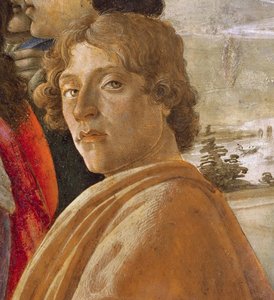
Sandro Botticelli
1445 - 1510 , Italia
Datos clave
- Artistas Que Influyeron:
- Fra Angelico
- Paolo Uccello
- Estilo Artístico: Renacimiento Temprano
- Fecha De Muerte: 1510
- Fecha De Nacimiento: c. 1445
- Influenciado A Artistas: ['Pre-Rafaelitas']
- Lugar De Nacimiento: Florencia, Italia
- Nacionalidad: Italiana
- Nombre Completo: Sandro Botticelli
- Obras Notables:
- El Nacimiento de Venus
- Primavera
- Natividad Mística
Artículos relacionados

Saint George in Art: A Scholarly Exploration of Iconic Masterpieces and Eternal Legends
Delve into the profound legacy of Saint George through art history. Explore iconic masterpieces by Raphael and Dürer, decoding the iconography of the dragon legend. Discover scholarly insights and bring these timeless tales to life with our museum-quality, hand-painted oil reproductions.

Discover the Divine: Inspiring Saint Anthony Artworks to Elevate Your Home Decor
Transform your home with the profound beauty of Saint Anthony artworks. Explore exquisite Baroque reproductions by Murillo and Zurbarán, hand-painted on 100% cotton canvas to bring divine serenity and timeless elegance to your interior design.

Las 25 mejores obras de Sandro Botticelli: Guía definitiva del maestro del Renacimiento
Explora las 25 obras maestras de Sandro Botticelli y el Renacimiento. ¡Descubre toda la colección en AllPaintingsStore.com!

Las 25 obras maestras imprescindibles de la Galería Uffizi en Florencia
Explora 25 joyas del Renacimiento en la Galería Uffizi, de Botticelli a Da Vinci. ¡Descubre estas obras maestras en AllPaintingsStore.com!
Los 10 Maestros del Renacimiento Temprano: Arte que Transformó el Mundo |
Descubre los 10 maestros del Renacimiento Temprano: Botticelli, Leonardo da Vinci y más. Explora la historia, técnica y belleza de obras icónicas italianas. Reproducciones de arte exclusivas en .


