Ver en contexto
 Enviar
 Compartir
 Detalles
 Guía
Guía

 Descargar
 Similares
 Radiografía
 Presentación de diapositivas
 Preguntas y respuestas
 Estadísticas
The actor (12)

 Ver más
Giclée / Impresión de arte
Impresiones giclée o en lienzo de calidad de museo con producción rápida y opciones de acabado flexibles. ( Comprar pintura hecha a mano Cambiar a imagen digital)




P118B €10

P118H €10

P118W €10

P438Z €10

P508JH €12

P508YH €12

P805H €10

P805Z €10

P919BZ €10

P919G €10

P919XJ €10

P959ZH €10

P968JZ €12

W106C €8

W218G €10

W218JH €8

W218Y €10

W307PJ €10

W316G €10

W316PJ €8

W316Y €10

W398PJ €8

W4111J €10

W500HY €15

W500JH €15

W692G €12

W849H €8

W940BG €15

W953PJ €8




Elija entre nuestros tamaños predefinidos que respetan las proporciones originales de la obra.

Introduzca el ancho y el alto que necesite para adaptarse a su marco o pared. Una impresión solo puede recortarse, nunca hacerse más grande que la imagen original, por lo que un tamaño con una forma distinta perderá parte de la obra. Le enviaremos una maqueta digital para su aprobación antes de realizar cualquier impresión. La imagen que se muestra en esta página no refleja el recorte real; solo la maqueta lo hace.
Envío a todo el mundo () en 2 semanas en lugar de las 4/5 semanas estándar. (8 noviembre)

Envío exprés gratuito a todo el mundo

Lienzo de lino de alta calidad

Seguro de envío total

Garantía de reembolso de aranceles aduaneros

Garantía de fidelidad cromática exacta

Política de devolución de 100 días (solo por defectos)

Garantía de devolución del 100% del dinero

Descuento por cantidad
 La opción de vidrio solo está disponible en tamaños inferiores a 110 cm.

The actor (12)
Giclée / Impresión de arte
Dimensiones de la reproducción
-


Precio total final
€ 58
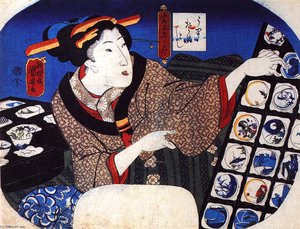
A Window Into Edo Japan: Kuniyoshi's "The Actor" – A Symphony of Color and Drama
Utagawa Kuniyoshi’s “The Actor,” executed in 1847, stands as a quintessential example of *shunga*, the Japanese erotic woodblock print genre that flourished during the Edo period (1603-1868). More than just a depiction of theatrical performance, this triptych delves into themes of beauty, masculinity, and fleeting moments captured in exquisite detail—a testament to Kuniyoshi’s mastery of technique and his profound understanding of Japanese aesthetics. Produced by Ichimura Uzaemon XII for the prestigious Gobuji Chūshingura series, commissioned to commemorate the heroic tale of samurai loyalists defending Edo Castle against Tokugawa forces, “The Actor” embodies the spirit of its time—a fascination with idealized figures and a celebration of artistic virtuosity.- Subject Matter: The print portrays Ichimura Uzaemon XII as Tada Kurodo Yukitsuna, a prominent Kabuki actor known for his dramatic performances and captivating stage presence. Kuniyoshi meticulously captures Yukitsuna’s posture—a deliberate pose designed to convey nobility and strength—emphasizing the importance of gesture and expression within Japanese theater traditions.
- Style & Technique: Kuniyoshi employed a bold, expressive style characteristic of *shunga*, utilizing thick black outlines and vibrant colors achieved through multiple blocks of pigment applied to the wood surface. The artist’s masterful use of tonal gradation—particularly in the background—creates depth and atmosphere, transporting viewers into the theatrical space depicted.
- Historical Context: “The Actor” reflects the Edo period's obsession with idealized beauty and heroic narratives. Gobuji Chūshingura itself was a popular tale celebrating samurai loyalty and courage, mirroring broader societal values during this era. Kuniyoshi’s inclusion of tattoos—a symbol of honor and warrior identity—further reinforces these themes, demonstrating his awareness of cultural conventions.
- Symbolism: The intricate patterns adorning Yukitsuna's kimono serve as visual metaphors for status and refinement—elements central to Edo society’s hierarchical structure. Furthermore, Kuniyoshi’s careful composition directs the viewer’s gaze towards Yukitsuna’s face, highlighting the importance of facial expression in conveying emotion and embodying character within Kabuki performances.
- Emotional Impact: Despite its erotic undertones—a common feature of *shunga*— “The Actor” transcends mere sensuality to evoke feelings of admiration for beauty and contemplation on the ephemeral nature of human experience. Kuniyoshi’s artistic vision captures a moment frozen in time, inviting viewers to appreciate the artistry and cultural significance of Edo Japan.
Preguntas y respuestas
¿A qué estilo pertenece "The actor (12)"?
"The actor (12)" es una obra de Ukiyo-e. El movimiento indica la tradición artística a la que pertenece la obra.
¿Dónde se recomienda exhibir el formato Square de "The actor (12)"?
Con su formato Square, se sugiere una reproducción de "The actor (12)" para un Living Room.
¿Qué sensación transmiten los colores de "The actor (12)" de Utagawa Kuniyoshi?
"The actor (12)" de Utagawa Kuniyoshi combina una paleta de Neutrals con un tono Reflective.
Obras relacionadas


Biografía del artista
Biografía y Contribuciones Artísticas
Utagawa Kuniyoshi, un renombrado artista japonés, nació el 1 de enero de 1798 en Japón y falleció el 14 de abril de 1861. Fue uno de los últimos grandes maestros del estilo japonés ukiyo-e de grabados xilográficos y pintura, y miembro de la escuela Utagawa.Primeros Años y Formación
Kuniyoshi pasó sus primeros años ayudando en el negocio de tintorería de seda de su padre, donde desarrolló un ojo para el color y los patrones textiles. A la edad de siete u ocho años, quedó impresionado por los grabados guerreros ukiyo-e y las imágenes de artesanos, lo que más tarde influyó en su propio trabajo.Carrera Artística
El talento artístico de Kuniyoshi fue reconocido a la edad de 12 años, lo que llevó a su aprendizaje con el famoso maestro de grabado ukiyo-e Utagawa Toyokuni. Se convirtió en uno de los principales alumnos de Toyokuni y recibió el nombre de "Kuniyoshi" en 1811. Su primer trabajo publicado, las ilustraciones para kusazōshi gōkan gobuji chūshingura, una parodia de la historia original de Chūshingura, marcó su debut como artista independiente.Obras Notables y Contribuciones
- Cien y ocho héroes del popular Suikoden: Esta serie, basada en el relato chino Shuihu Zhuan, mostró el estilo único de Kuniyoshi y se volvió extremadamente popular en Edo.
- El fantasma de Taira no Tomomori en la bahía de Daimotsu: Este trabajo demostró la capacidad de Kuniyoshi para invocar una sensación efectiva de intensidad de acción en su descripción del combate.
- El puente Gōjō: Este tríptico de 1839 mostró el estilo temático de Kuniyoshi, que satisfizo el interés público por lo espeluznante, emocionante y bizarro.
Influencia y Legado
El arte de Kuniyoshi incorporó aspectos de la representación occidental en la pintura de paisajes y la caricatura. Su influencia en el arte ukiyo-e es evidente en su mezcla única de elementos japoneses tradicionales con técnicas occidentales.- vea el autorretrato de Kuniyoshi del álbum shunga (ukiyo-e) en AllPaintingsStore.
- explore más obras de Utagawa Kuniyoshi en AllPaintingsStore.
- lea más sobre Utagawa Kuniyoshi en Wikipedia.
Conclusión
Utagawa Kuniyoshi sigue siendo una figura significativa en el arte ukiyo-e japonés, conocido por sus diversos temas y su innovadora mezcla de técnicas tradicionales y occidentales. Su legado continúa inspirando a artistas y entusiastas del arte por igual. Importante: Este artículo se basa en la información proporcionada por AllPaintingsStore.com y wikipedia.org, centrándose en la biografía de Kuniyoshi, su carrera artística, sus obras notables, su influencia y su legado.
Utagawa Kuniyoshi
1797 - 1861 , Japón
Datos clave
- Artistas Influyentes: ['Utagawa Toyokuni']
- Estilo Artístico: Ukiyo-e
- Fecha De Fallecimiento: 14 de abril de 1861
- Fecha De Nacimiento: 1 de enero de 1798
- Lugar De Nacimiento: Tokio, Japón
- Nacionalidad: Japonés
- Nombre Completo: Utagawa Kuniyoshi
- Obras Notables:
- Cien héroes del Suikoden
- El fantasma de Taira no Tomomori
- El puente Gōjō
Artículos relacionados

Ukiyo-e: The Art of the Floating World and the Legacy of Japanese Woodblock Masters
Explore the profound history of Ukiyo-e, from Hokusai's iconic waves to the vibrant culture of Edo Japan. Discover the intricate craft of woodblock printing and the enduring legacy of these Japanese masterpieces through our expert art history guide.

El Arte del Grabado en Madera: Historia, Técnica y la Tradición del Ukiyo-e
Descubre la fascinante historia y técnica del grabado Ukiyo-e. Explora el legado de Hokusai y el arte japonés ahora.

Utagawa Kuniyoshi: A Master of Japanese Ukiyo-e – Narrative Innovation & the Fusion of Tradition with Popular Culture
Explore the captivating world of Utagawa Kuniyoshi, a master of Japanese ukiyo-e woodblock prints. Discover his innovative warrior scenes, vibrant landscapes & lasting legacy in 19th-century art history.

Floating Worlds: A Definitive Guide to the Mastery and Philosophy of Japanese Ukiyo-e Woodblock Prints
Explore the profound beauty of Ukiyo-e. Discover the history, philosophy, and legendary masters of Japanese woodblock prints, from Hokusai to Kuniyoshi, in this expert guide to the 'Floating World'.

Dominando la Gran Ola: Las 25 Obras Maestras de Katsushika Hokusai
Explora las 25 obras maestras de Hokusai y el alma del ukiyo-e. Descubre reproducciones de museo en AllPaintingsStore.com.