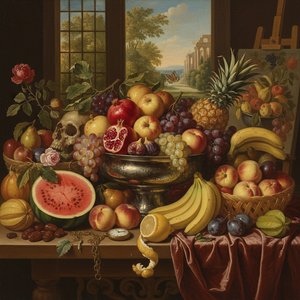
Oil On Canvas.

§ 1Catalogue data


§ 2Abstract
Kogumisobjekti kirjeldus
James Ensor’s unsettling still life, Les Peches, depicts a dark and ominous arrangement of fruit and vases, reflecting the artist's signature style and exploring themes of sin and decay from the early 20th century. Discover or own this captivating masterpiece.
 Loe lähemalt
Kunstniku elulugu
James Ensor oli Belgia maalikunstnik ja graafik, kes tunnetaan erityisesti häikäisevästä groteskista kuvastuksestaan sekä karnevaalimaskeista että luurangosta. Hän oli ekspressionismi ja surrealismi liikkeen varhainen pioneeri ning jätkus kunstilinnakena maailmale suurteoseksi.
§ 3Commentary
James Ensor's *Les Peches*: A Descent into Shadowed Symbolism
James Ensor’s *Les Peches* (The Deadly Sins) is not merely a still life; it’s a profoundly unsettling exploration of human nature, rendered with the artist’s signature blend of meticulous observation and deeply personal symbolism. Painted around 1904, this work exemplifies Ensor's unique approach to depicting everyday objects – in this case, a collection of fruit – as vehicles for psychological and spiritual commentary. The composition immediately draws the viewer into a space of quiet unease, dominated by the dark palette and the subtly distorted forms that characterize much of Ensor’s oeuvre. The arrangement of the apples, oranges, and bananas, seemingly casually placed on the table, feels deliberately staged, hinting at a narrative beyond simple representation.
- Subject Matter: The painting focuses on a still life featuring various fruits – apples, oranges, and bananas – arranged within a bowl.
- Artist: James Ensor (1860-1949), a prominent Belgian Symbolist painter known for his dark and often disturbing imagery.
- Date: Circa 1904
A Palette of Anxiety and the Symbolism of Decay
Ensor’s masterful use of color contributes significantly to the painting's emotional impact. The dominant tones are muted browns, greens, and blacks, creating a sense of gloom and decay. This somber palette is not accidental; it reflects Ensor’s preoccupation with themes of mortality, sin, and psychological distress. The fruit itself – particularly the slightly bruised apple – can be interpreted as a symbol of temptation and corruption, echoing the biblical reference to “the deadly sins.” The arrangement of the fruits isn't naturalistic; instead, they seem deliberately positioned to heighten the sense of unease and foreboding. Notice the subtle distortions in their forms, adding to the overall feeling of disquiet.
Technique and Influences: Ensor’s Unique Vision
Ensor employed a meticulous technique, evident in the detailed rendering of each fruit and the careful construction of the composition. His brushwork is precise yet expressive, conveying both realism and emotional intensity. While influenced by Impressionism's focus on light and color, Ensor quickly moved beyond its limitations, developing his own intensely personal style. He was also deeply affected by the work of Gustave Moreau, another Symbolist painter known for his opulent and dreamlike imagery. However, unlike Moreau’s often fantastical scenes, Ensor’s work is grounded in a palpable sense of anxiety and psychological realism. The inclusion of vases and a potted plant adds to the overall composition, suggesting a domestic setting that feels strangely sterile and unsettling.
Historical Context and Legacy
*Les Peches* stands as a pivotal work within James Ensor’s artistic trajectory. Created during a period of significant social and intellectual upheaval in Europe – marked by anxieties surrounding industrialization, urbanization, and the decline of traditional values – the painting reflects these concerns through its exploration of darker themes. Ensor's unflinching portrayal of human vulnerability and his willingness to confront uncomfortable truths cemented his reputation as one of the most important and influential artists of the Symbolist movement. His work continues to resonate with viewers today, offering a powerful meditation on the complexities of the human condition.
Korduvad küsimused
Milline palett ja domineeriv värv määravad teose "Les Peches"?
Teose "Les Peches" värvigamma on määratud Neutrals paletiga, mille domineeriv värv on Espresso (#513f30).
Mis on soovitatav trükkimõõt teosele „Les Peches“, autor James Ensor?
Teosele „Les Peches“, autor James Ensor on soovitatav printida suuruses Large. Suurust saab muuta, säilitades samal ajal proportsioonid.
Kuidas teose "Les Peches" motiiv seobub James Ensor tavalistega teemadega?
James Ensor dokumenteeritud teemade — masks, shadows, symbolism, guilt, belgian morbid culture, religion, ensor’s recurring motifs, dark — seas paneb teos "Les Peches" erilist tähelepanu teemadel still life, fruit bowl, james ensor, apples oranges, vases plants, dark palette, deadly sins.


 Lülita trükkitoodetele


 Kunstiteoste või reproduktsioonide puhul, mille üks külg on üle 105 cm (umbikmolt 41 tolli), saadetakse raam kirjal asendis, la Dismantlitud komplektina. See meetod tagab ohutuse kohaletoimetamisel ja väldib transpordil tekkivaid kahjustusi.