


 Katso seinällä
 Lähetä
 Jaa
Jaa
 Tarkemmat tiedot
 Opas
Opas

 Lataa kuva
 Samanlaisia kohteita
 Röntgenkuvaus
 Diaesitys
 Tilastot
David Hartley

 Lue lisää
Giclée- ja taideprintit
Museolaatuisia giclée- tai kankaitaulun tulosteita nopealla tuotannolla ja joustavilla viimeistelyvaihtoehdoilla. ( Tilaa käsinmaalattu jäljennös Siirry digitaaliseen kuvaan)




P118B €10

P118H €10

P118W €10

P438Z €10

P508JH €12

P508YH €12

P805H €10

P805Z €10

P919BZ €10

P919G €10

P919XJ €10

P959ZH €10

P968JZ €12

W106C €8

W218G €10

W218JH €8

W218Y €10

W307PJ €10

W316G €10

W316PJ €8

W316Y €10

W398PJ €8

W4111J €10

W500HY €15

W500JH €15

W692G €12

W849H €8

W940BG €15

W953PJ €8




Valitse valmiista mitoistamme sellaiset, jotka vastaavat teoksen alkuperäisiä mittasuhteita.

Kirjoita tarvitsemasi leveys ja korkeus, jotta tuloste sopii kehyskokoon tai seinällesi. Tulostetta voidaan vain leikata, sitä ei voi koskaan tehdä suuremmaksi kuin alkuperäinen kuva, joten eri muotoinen koko aiheuttaa osan kuvasta katoamisen. Lähetämme sinulle digitaalisen mallikuvan hyväksyttäväksi ennen kuin aloitamme tulostuksen. Tällä sivulla näkyvä kuva ei näytä lopullista leikkausta — vain mallikuva näyttää sen.
Maailmanlaajuinen toimitus () 2 viikossa tavallisen 4–5 viikon sijaan. (26 lokakuu)

Ilmainen pikatoimitus ympäri maailman

Korkealaatuinen pellavakangas

Kattava kuljetusvakuutus

Tulliveron palautustakuu

Takuu täydellisestä värien vastaavuudesta

100 päivän palautusoikeus valmistusvirhetapauksissa

100% rahat takaisin -takuu

Määräalennus saatavilla
 Lasivaihtoehto on saatavilla vain alle 110 cm kokoisille teoksille

David Hartley
Giclée- ja taideprintit
Replikaatin koko
-


Kokonaishinta
€ 56
David Hartley: A Portrait of Enlightenment
William Blake’s engraving, “David Hartley,” stands as a testament to the Romantic preoccupation with intellect and moral contemplation—a striking visual representation of a pivotal figure in British scientific thought. Executed around 1791, this monochrome print captures Hartley's solemn gaze and dignified posture within an oval frame, reflecting the formal conventions of portraiture prevalent during his era.
- Subject Matter: David Hartley (1760-1822) was a British physician and philosopher renowned for his contributions to neuroscience. He championed the concept of “neuralgia,” arguing that pain could be produced by irritation of nerves, a radical notion that challenged prevailing humoral theories.
- Style & Technique: Blake’s masterful use of engraving demonstrates an unparalleled command of printmaking. The meticulous hatching and cross-hatching employed to render Hartley's facial features—particularly the forehead, nose, and chin—reveal a dedication to realism achieved through painstaking detail. These techniques are further enhanced by subtle tonal variations that convey depth and texture.
- Historical Context: Produced during the Enlightenment, “David Hartley” embodies the intellectual fervor of its time. Blake’s artistic choices align with the Romantic movement's emphasis on emotion and imagination alongside reason, presenting Hartley not merely as a scientist but as an embodiment of moral virtue and contemplative seriousness.
The oval frame serves as a deliberate stylistic device, harking back to classical portraiture traditions while simultaneously isolating Hartley’s image—creating a visual focus that underscores his importance. The artist's careful consideration of lighting—primarily from above—highlights key anatomical landmarks and casts shadows beneath Hartley’s eyes, adding to the portrait’s dramatic impact.
Beyond its technical brilliance, “David Hartley” resonates with profound symbolic significance. Blake’s deliberate monochrome palette reinforces the image’s solemn mood, mirroring Hartley's intellectual pursuits and conveying a sense of inner contemplation. The engraving’s precise lines symbolize clarity of thought and unwavering conviction—qualities that define Hartley’s legacy as one of the pioneers of neuroscience.
This artwork continues to inspire admiration for its artistic merit and intellectual depth. A reproduction offers an opportunity to appreciate Blake's extraordinary skill in capturing a moment of profound contemplation, preserving the spirit of Enlightenment within a timeless visual form.
Kysymykset ja vastaukset
Mihin tyylisuuntaan "David Hartley" kuuluu?
Teoksen William Blake:n "David Hartley" tyylisuunta on Romantic Portraiture. Tämä luokittelu sijoittaa teoksen muiden samankaltaisten taiteilijoiden ja teosten joukkoon.
Onko teos "David Hartley" yleisvaikutelmaltaan enemmän vaalea vai tumma?
Teoksen William Blake:n "David Hartley" mitatut arvot ovat: kirkkaus brilliant, luminanssi Luminous.
Onko William Blake teos "David Hartley" tekijänoikeudeltaan vapaa (public domain), ja miksi?
William Blake:n "David Hartley" on tekijänoikeusvapaa – sen tekijänoikeussuoja on päättynyt. Tekijänoikeuden voimassaolo lasketaan taiteilijan kuolinvuodesta, joka oli 1827.
Samankaltaisia teoksia


Taiteilijan elämäkerta
William Blake – Visionary’s Journey: The Life and Art of William Blake
William Blake, born in London on November 28, 1757, was a figure perpetually out of step with his time, yet destined to become one of the most celebrated artists and poets of the Romantic Age. His life unfolded against the backdrop of a rapidly changing England—a world grappling with industrialization, political upheaval, and shifting spiritual beliefs. From humble beginnings as the son of a hosier, Blake’s early years were marked by an intensely vivid imagination and a propensity for visionary experiences that would profoundly shape his artistic trajectory. Though largely self-taught in formal academics, he received drawing instruction at a young age, quickly revealing a talent that hinted at the extraordinary path ahead. His apprenticeship with engraver James Basire proved pivotal, providing him not only with technical mastery but also an understanding of printmaking techniques he would later revolutionize. These early influences—the Gothic grandeur of Westminster Abbey, the classical forms of Raphael and Michelangelo—served as foundational elements in his developing aesthetic, though Blake was never one to remain bound by convention.Early Life and Artistic Training
Blake’s formative years instilled within him a deep fascination with mythology and folklore, alongside an acute sensitivity to visual beauty. Despite lacking formal artistic education, he possessed an innate ability to capture the essence of observed subjects—a gift that would prove invaluable in his subsequent endeavors. His apprenticeship under James Basire honed his engraving skills, equipping him with precision and technical proficiency while simultaneously exposing him to the intricacies of printmaking processes. This experience fostered a critical awareness of prevailing artistic trends—particularly the idealized depictions favored by Neoclassical painters—which Blake deliberately rejected as sterile and lacking in spiritual depth. He sought inspiration from sources beyond the mainstream, immersing himself in the writings of philosophers like Erasmus Darwin and Milton, whose imaginative visions mirrored his own inner landscape.Illuminated Printing: A Revolutionary Technique
Blake’s artistic innovation wasn't merely about subject matter; it resided fundamentally in *how* he created. Dissatisfied with conventional engraving methods—which he considered reductive and incapable of conveying the subtleties of emotion—he developed a unique process known as “illuminated printing.” This involved etching both text and illustrations onto copper plates, then painstakingly hand-coloring the resulting prints—a laborious but deeply personal approach that allowed for complete artistic control. This wasn’t simply illustration accompanying poetry; it was an integrated art form where image and verse were inextricably linked, each enhancing the meaning of the other. He achieved this remarkable feat by combining etching with watercolor pigments, creating images imbued with luminous color and textural richness—a technique that stood apart from prevailing artistic practices of his era. This revolutionary method enabled Blake to express his visionary ideas in a way that transcended the limitations of traditional printmaking, forging a path toward a new aesthetic dimension.Major Works and Artistic Style
Blake’s oeuvre encompasses poetry, engravings, watercolors, and illuminated books—each reflecting his distinctive artistic vision. Among his most celebrated works are *Songs of Innocence & Experience* (1789), a dual collection exploring themes of childhood innocence and adult corruption; *The Marriage of Heaven & Hell* (1793), a provocative prose poem challenging moral conventions; and *Jerusalem*, an ambitious epic poem celebrating the spiritual redemption of Albion—the ancient name for Britain. His engravings, particularly those inspired by Dante’s *Divine Comedy*, demonstrate his mastery of printmaking techniques and his ability to translate complex narratives into powerful visual imagery. Blake's artistic style is characterized by a deliberate rejection of linear perspective in favor of flattened planes and symbolic representations—a stylistic choice that prioritized emotional impact over realistic depiction. He favored tempera paints for certain canvases, reflecting his admiration for the Renaissance aesthetic, and employed watercolor pigments with exceptional skill to achieve luminous effects and capture fleeting impressions.Legacy and Influence
William Blake’s artistic legacy extends far beyond his own lifetime, profoundly influencing subsequent generations of artists and writers. The Pre-Raphaelites embraced him as a kindred spirit—a champion of imaginative vision and symbolic expression—drawing inspiration from his groundbreaking technique and thematic concerns. Later movements—Symbolism and Modernism—recognized in Blake's work an affirmation of subjectivity and spiritual exploration—values that resonated deeply with the anxieties and aspirations of their time. Today, William Blake is revered as a pivotal figure in Romantic art and literature—an artist whose uncompromising commitment to creative freedom continues to inspire artists and thinkers worldwide. His enduring influence testifies to the transformative power of imagination and the importance of questioning conventional dogma—a testament to Blake’s timeless relevance as a visionary voice within the history of art.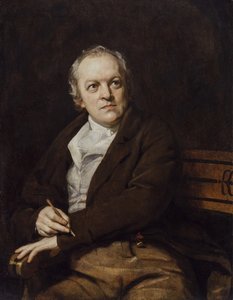
William Blake
1757 - 1827 , Englanti
Tietoa taiteilijasta
- Artistic Movement Or Style: Romantiikka
- Artists Who Influenced This Artist:
- Raphael
- Michelangelo
- Date Of Birth: 1757
- Full Name: William Blake
- Nationality: Englanti
- Notable Artworks:
- Songs of Innocence & Exp.
- The Tyger
- Jerusalem
- Place Of Death: Londoo
Aiheeseen liittyvät artikkelit

William Blake: Romantic Visionary & Mystical Genius of the Imagination
Explore the mystical art & poetic genius of William Blake (1757-1827). Discover his revolutionary illuminated printing, rich symbolism, and lasting influence on Romanticism. Find handmade reproductions at AllPaintingsStore.

Engraving: A Historical Survey of Technique, Artistic Expression & Enduring Legacy
Explore the rich history of engraving with AllPaintingsStore. Discover techniques, iconic artists like Dürer & Callot, collecting tips, and expert guidance for preserving your art investment. Learn about intaglio printing & more!

Romantic Realism's Finest: 10 Masterpieces for Your Home | AllPaintingsStore
Explore 10 defining masterpieces of Romantic Realism! Discover Courbet, Millet & Daumier's powerful paintings—capturing emotion and social realities. Find museum-quality reproductions for your home at AllPaintingsStore.com.

10 legendaarista mestariprinttiä, jotka mullistivat taiteen – AllPaintingsStore.com
Tutustu 10 legendaariseen mestariprinttiin, jotka muuttivat taiteen suuntaa! Albrecht Dürerin, Rembrandtin ja Goyan teoksia – tarinat, tekniikat & inspiraatio sisustukseen. Löydä kaikki mestariteokset AllPaintingsStore.com:sta.

The Intricate World of Engraving: A Historical Survey of Technique, Artistic Expression & Enduring Legacy
Explore the rich history of engraving with AllPaintingsStore. Discover techniques, iconic artists like Dürer & Callot, collecting tips, and expert guidance for preserving your art investment. Learn about intaglio printing & more!


