


 Katso seinällä
 Lähetä
 Jaa
Jaa
 Tarkemmat tiedot
 Opas
Opas

 Lataa kuva
 Samanlaisia kohteita
 Röntgenkuvaus
 Diaesitys
 Tilastot
Melancholy


 Lue lisää
Käsinmaalattu öljyvärinen jäljennös
Käsinmaalattu öljyväri kankaalle haluamassasi koossa ja kehyksissä, taiteilijoidemme valmistamana tilauksesta. ( Vaihda tulosteeseen Siirry digitaaliseen kuvaan)




P118B €10

P118H €10

P118W €10

P438Z €10

P508JH €12

P508YH €12

P805H €10

P805Z €10

P919BZ €10

P919G €10

P919XJ €10

P959ZH €10

P968JZ €12

W106C €8

W218G €10

W218JH €8

W218Y €10

W307PJ €10

W316G €10

W316PJ €8

W316Y €10

W398PJ €8

W4111J €10

W500HY €15

W500JH €15

W692G €12

W849H €8

W940BG €15

W953PJ €8




Valitse valmiista mitoistamme sellaiset, jotka vastaavat teoksen alkuperäisiä mittasuhteita.

Kirjoita tarvitsemasi leveys ja korkeus, jotta teos sopii kehyskehyksiisi tai seinällesi. Koska kyseessä on käsinmaalattu teos, taiteilija voi maalata hieman enemmän kuvan ympärille tai rajata sitä hieman, jos haluat eri muotoisen koon — valinta on sinun. Lähetämme sinulle digitaalisen mallikuvan hyväksyttäväksi ennen kuin maalaus alkaa. Tällä sivulla näkyvä kuva ei vastaa lopullista tulosta — vain mallikuva näyttää sen.
Tilauksen jälkeen AllPaintingsStore.com -tiimi lähettää asiakkaalle sähköpostitse ohjeet ja esikatselukuvan.
Maailmanlaajuinen toimitus () 3–4 viikossa tavallisen 5 viikon sijaan. (27 lokakuu). Laadusta ei tingitä.

Ilmainen pikatoimitus ympäri maailman

Korkealaatuinen pellavakangas

Kattava kuljetusvakuutus

Tulliveron palautustakuu

Takuu täydellisestä värien vastaavuudesta

100 päivän palautusoikeus valmistusvirhetapauksissa

100% rahat takaisin -takuu

Määräalennus saatavilla
 Lasivaihtoehto on saatavilla vain alle 110 cm kokoisille teoksille

Melancholy
Reproduktiotapa
Replikaatin koko
-


Kokonaishinta
€ 227
A Visionary Descent into Sorrow and Spirit
In the hauntingly beautiful Melancholy, attributed to the visionary English master William Blake, we are invited to step beyond the veil of the material world and into a realm where the boundaries between the human soul and the divine are perpetually thin. Created around 1820, this profound meditation on sorrow and faith serves as a breathtaking testament to the Romantic spirit. At its heart, the composition centers upon a woman—often identified as Mary Magdalene—whose presence anchors a celestial tableau of quiet contemplation. Surrounded by figures that suggest both angelic beings and mortal observers, the scene unfolds against a backdrop of lush, ethereal foliage and shimmering stars, establishing an atmosphere where the serenity of the heavens meets the palpable weight of human sadness.
The emotional resonance of this piece lies in its ability to find sublime beauty within suffering. Blake directs the viewer's gaze upward, utilizing a masterful arrangement of figures to emphasize a spiritual dimension that transcends earthly grief. There is a delicate balance achieved here; despite the pervasive sense of introspection and melancholy conveyed through the subjects' expressions, the composition maintains a celestial harmony. For the collector or the interior designer, this artwork offers more than mere decoration; it provides a window into a cosmic architecture of symbols, making it a profound focal point for spaces dedicated to reflection, peace, and deep intellectual engagement.
The Alchemy of Etching and Watercolor
Technically, Melancholy represents the revolutionary spirit of Blake’s approach to printmaking and painting. The work is characterized by a unique dual-medium technique, where the structural precision of etching meets the atmospheric fluidity of watercolor washes. This method allows for an extraordinary textural depth and luminosity that is rare in the works of his era. The intricate, fine linework of the etching provides a rigorous framework, capturing the delicate details of the celestial figures and the organic textures of the surrounding nature. Over this, Blake applied subtle gradations of watercolor, imbuing the scene with a soft, glowing light that seems to emanate from within the paper itself.
This interplay of sharp detail and ethereal color creates a sense of movement and life, as if the stars themselves are pulsing with a quiet energy. The way the light interacts with the translucent washes allows for a dreamlike quality, essential for capturing the "prophetic" nature of Blake's vision. To possess a high-quality reproduction of such a piece is to bring this luminous, textured complexity into one's own environment, allowing the subtle shifts in color and the precision of the line to captivate the eye through every change in light throughout the day.
A Romantic Echo of the Infinite
Emerging from the height of the Romantic era, Melancholy stands as a reaction against the rigid rationalism of the Enlightenment, favoring instead the power of imagination and the intensity of emotion. Blake, working in London, was a man who saw through the industrial soot of his age to witness the whispers of angels and the raw pulse of existence. This painting is a quintessential example of that vision—a landscape where the physical and spiritual realms dissolve into one another. The symbolism of the celestial bodies and the divine figures serves as a reminder of the eternal struggle between innocence and experience, a theme that remains strikingly modern in its clarity.
For those seeking to curate an environment of depth and narrative, this artwork offers an unparalleled opportunity. It is a piece that demands a second, third, and fourth look, revealing new layers of symbolic meaning with every encounter. Whether placed in a private study or a grand living space, Melancholy acts as a silent interlocutor, prompting the viewer to contemplate the profound beauty found in the most tender and sorrowful corners of the human experience.
Kysymykset ja vastaukset
Mihin käyttöön William Blake:n "Melancholy" on suositeltu?
Suositeltu käyttötapa teoksen "Melancholy" painosteelle on Mood.
Onko teoksesta "Melancholy" saatavilla korkearesoluutioinen lataus?
"Melancholy" on saatavilla muodossa korkearesoluutioinen digitaalinen kuvalataus, ja sen voi ostaa suoraan sivulta Digitaalinen kuva.
Missä ja mihin tarkoitukseen "Melancholy" suositellaan?
William Blake:n "Melancholy" on suositeltava Mood, mieluiten Living Room-tilassa. Käyttötarkoitus ja tila auttavat päättämään, mihin reproduktio sopii parhaiten.
Samankaltaisia teoksia


Taiteilijan elämäkerta
William Blake – Visionary’s Journey: The Life and Art of William Blake
William Blake, born in London on November 28, 1757, was a figure perpetually out of step with his time, yet destined to become one of the most celebrated artists and poets of the Romantic Age. His life unfolded against the backdrop of a rapidly changing England—a world grappling with industrialization, political upheaval, and shifting spiritual beliefs. From humble beginnings as the son of a hosier, Blake’s early years were marked by an intensely vivid imagination and a propensity for visionary experiences that would profoundly shape his artistic trajectory. Though largely self-taught in formal academics, he received drawing instruction at a young age, quickly revealing a talent that hinted at the extraordinary path ahead. His apprenticeship with engraver James Basire proved pivotal, providing him not only with technical mastery but also an understanding of printmaking techniques he would later revolutionize. These early influences—the Gothic grandeur of Westminster Abbey, the classical forms of Raphael and Michelangelo—served as foundational elements in his developing aesthetic, though Blake was never one to remain bound by convention.Early Life and Artistic Training
Blake’s formative years instilled within him a deep fascination with mythology and folklore, alongside an acute sensitivity to visual beauty. Despite lacking formal artistic education, he possessed an innate ability to capture the essence of observed subjects—a gift that would prove invaluable in his subsequent endeavors. His apprenticeship under James Basire honed his engraving skills, equipping him with precision and technical proficiency while simultaneously exposing him to the intricacies of printmaking processes. This experience fostered a critical awareness of prevailing artistic trends—particularly the idealized depictions favored by Neoclassical painters—which Blake deliberately rejected as sterile and lacking in spiritual depth. He sought inspiration from sources beyond the mainstream, immersing himself in the writings of philosophers like Erasmus Darwin and Milton, whose imaginative visions mirrored his own inner landscape.Illuminated Printing: A Revolutionary Technique
Blake’s artistic innovation wasn't merely about subject matter; it resided fundamentally in *how* he created. Dissatisfied with conventional engraving methods—which he considered reductive and incapable of conveying the subtleties of emotion—he developed a unique process known as “illuminated printing.” This involved etching both text and illustrations onto copper plates, then painstakingly hand-coloring the resulting prints—a laborious but deeply personal approach that allowed for complete artistic control. This wasn’t simply illustration accompanying poetry; it was an integrated art form where image and verse were inextricably linked, each enhancing the meaning of the other. He achieved this remarkable feat by combining etching with watercolor pigments, creating images imbued with luminous color and textural richness—a technique that stood apart from prevailing artistic practices of his era. This revolutionary method enabled Blake to express his visionary ideas in a way that transcended the limitations of traditional printmaking, forging a path toward a new aesthetic dimension.Major Works and Artistic Style
Blake’s oeuvre encompasses poetry, engravings, watercolors, and illuminated books—each reflecting his distinctive artistic vision. Among his most celebrated works are *Songs of Innocence & Experience* (1789), a dual collection exploring themes of childhood innocence and adult corruption; *The Marriage of Heaven & Hell* (1793), a provocative prose poem challenging moral conventions; and *Jerusalem*, an ambitious epic poem celebrating the spiritual redemption of Albion—the ancient name for Britain. His engravings, particularly those inspired by Dante’s *Divine Comedy*, demonstrate his mastery of printmaking techniques and his ability to translate complex narratives into powerful visual imagery. Blake's artistic style is characterized by a deliberate rejection of linear perspective in favor of flattened planes and symbolic representations—a stylistic choice that prioritized emotional impact over realistic depiction. He favored tempera paints for certain canvases, reflecting his admiration for the Renaissance aesthetic, and employed watercolor pigments with exceptional skill to achieve luminous effects and capture fleeting impressions.Legacy and Influence
William Blake’s artistic legacy extends far beyond his own lifetime, profoundly influencing subsequent generations of artists and writers. The Pre-Raphaelites embraced him as a kindred spirit—a champion of imaginative vision and symbolic expression—drawing inspiration from his groundbreaking technique and thematic concerns. Later movements—Symbolism and Modernism—recognized in Blake's work an affirmation of subjectivity and spiritual exploration—values that resonated deeply with the anxieties and aspirations of their time. Today, William Blake is revered as a pivotal figure in Romantic art and literature—an artist whose uncompromising commitment to creative freedom continues to inspire artists and thinkers worldwide. His enduring influence testifies to the transformative power of imagination and the importance of questioning conventional dogma—a testament to Blake’s timeless relevance as a visionary voice within the history of art.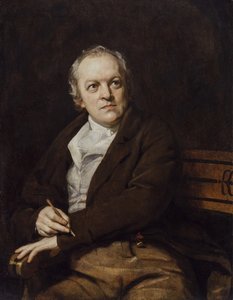
William Blake
1757 - 1827 , Englanti
Tietoa taiteilijasta
- Artistic Movement Or Style: Romantiikka
- Artists Who Influenced This Artist:
- Raphael
- Michelangelo
- Date Of Birth: 1757
- Full Name: William Blake
- Nationality: Englanti
- Notable Artworks:
- Songs of Innocence & Exp.
- The Tyger
- Jerusalem
- Place Of Death: Londoo
Aiheeseen liittyvät artikkelit

William Blake: Romantic Visionary & Mystical Genius of the Imagination
Explore the mystical art & poetic genius of William Blake (1757-1827). Discover his revolutionary illuminated printing, rich symbolism, and lasting influence on Romanticism. Find handmade reproductions at AllPaintingsStore.

Celestial Messengers: Angels in Painting – A Historical & Artistic Exploration
Explore the captivating history of angels in painting! Discover symbolism, iconic Renaissance & Byzantine masterpieces, and renowned artists. Expert insights for art lovers & collectors at AllPaintingsStore.

Romantic Realism's Finest: 10 Masterpieces for Your Home | AllPaintingsStore
Explore 10 defining masterpieces of Romantic Realism! Discover Courbet, Millet & Daumier's powerful paintings—capturing emotion and social realities. Find museum-quality reproductions for your home at AllPaintingsStore.com.

Divine Beauty: A Curated Guide to the Celestial Majesty of Angelic Figures in Art History
Explore the profound beauty of angelic figures in art history. From Renaissance masterpieces to celestial symbolism, our expert guide offers a sophisticated journey through the divine imagery of the Old Masters for discerning collectors and art enthusiasts.

Celestial Messengers: A Comprehensive Exploration of Angelic Representation in Art History
Explore the captivating history of angels in art! Discover symbolism, iconic Renaissance masterpieces & renowned artists. Expert insights for art lovers & collectors at AllPaintingsStore.


