Rahat takaisin -takuu · 100 päivää Ilmainen toimitus ympäri maailman
449 564teokset 30 613taiteilijat 4 660museot 32kielet
Catalogue entry

Resurkatseminen

Hiili.

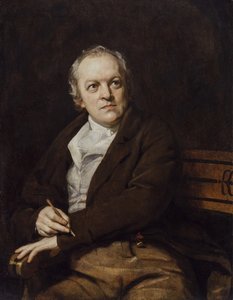
Fig. 1. William Blake, Resurkatseminen. Shown as the reproduction you are specifying: , .

§ 1Catalogue data

§ 2Abstract

Keräilykohteen kuvaus

Tutki William Blake’n ”Resurkatseminen” -dramaattista grafiikkaa hengellisen nousun ja tuomiosta. Täynnä symboleja ja tekstuuria, tämä romanttinen mestariteos tuo esiin Blake’n näkemyksen.

Taiteilijan elämäkerta

William Blake’n mystinen Hekate-kuva: kolmifacesinen jumalatar, joka symboloi muodonmuutosta ja salattua tietoa. Romantiikan aikaisen taideteoksen syvälliset symbolit herättävät ajatuksia.

§ 3Commentary

William Blake’s “The Resurrection”: A Vision of Spiritual Awakening

William Blake's "The Resurrection" stands as a cornerstone of Romantic art—a testament to the era’s fervent belief in emotion, imagination, and transcendence. Created during a period marked by societal upheaval and burgeoning religious questioning, this pencil drawing transcends mere depiction; it embodies Blake’s profound engagement with existential themes and his unwavering conviction that art could illuminate the deepest recesses of human experience. Unlike many artistic endeavors of its time focused on meticulous realism, “The Resurrection” prioritizes expressive force over precise detail, mirroring Blake's rejection of academic conventions in favor of a deeply personal vision.

Subject & Composition: Chaos and Divine Intervention

The drawing plunges viewers into a whirlwind of figures rendered with dynamic poses that convey both anguish and anticipation. Blake meticulously captures the visceral reaction to divine revelation—faces contorted in expressions of fear, hope, and awe as they grapple with the enormity of resurrection’s promise. The composition deliberately eschews traditional perspective, immersing the audience within the overwhelming sensory experience of spiritual rebirth. This isn't a serene ascension into paradise; it’s a raw, unflinching confrontation with mortality and faith—a deliberate antithesis to prevailing artistic sensibilities. Blake’s aim wasn’t simply to record an event but to convey its emotional core: the struggle for belief amidst uncertainty.

Technique & Style: Masterful Lines and Dramatic Shadows

Blake's mastery of drawing technique is immediately apparent. He employs hatching and cross-hatching with exceptional precision, building form and generating a remarkable textural richness that elevates the artwork beyond mere representation. These lines aren’t merely descriptive; they pulsate with energy—restless, urgent, mirroring the turbulent emotions depicted within the scene. Blake skillfully manipulates light and shadow, highlighting key figures and intensifying their expressive power. This technique draws inspiration from luminists like Rembrandt and Caravaggio, adapting their dramatic chiaroscuro style to Blake's uniquely imaginative vision. The resulting surface possesses a palpable physicality—a testament to Blake’s dedication to capturing the essence of his subject matter.

Symbolism & Spiritual Meaning: Light as Revelation

Light occupies central importance in “The Resurrection,” functioning as a potent symbol of divine illumination and spiritual awakening. Blake utilizes this element not merely for visual effect but as a conduit for conveying profound theological ideas—the triumph over darkness, both literal and metaphorical. The figure proclaiming the divine message is positioned prominently, bathed in radiant light, representing Christ or an angelic messenger – embodying hope amidst despair. Furthermore, the chaotic composition itself symbolizes the disruption of established order, mirroring Blake’s belief that true understanding requires confronting uncomfortable truths. The horn held aloft by the central figure serves as a visual emblem of God's proclamation—a forceful assertion of divine authority and grace.

Historical Context & Legacy

Created in 1824, “The Resurrection” reflects the broader Romantic preoccupation with themes of mortality, faith, and transcendence – responding to the intellectual ferment of the time. Blake’s work stands apart from its contemporaries due to its uncompromising emotional honesty and its rejection of academic conventions. It anticipates later artistic movements exploring psychological depth and symbolic representation. Today, "The Resurrection" continues to inspire artists and collectors alike—a timeless masterpiece that encapsulates the enduring power of Romantic idealism and Blake's unparalleled ability to translate spiritual yearning into visual form. Its textured surface and dramatic chiaroscuro technique resonate with a visceral immediacy that captivates viewers centuries later.

Kysymykset ja vastaukset

Mihin taidesuuntaukseen ja mihin aikakauteen William Blake:n "Resurkatseminen" kuuluu?

Teoksessa William Blake:n "Resurkatseminen" Romantic Expressionism-suuntaus ja Varhaismodernismi-aikakausi kohtaavat.

Onko William Blake:n "Resurkatseminen" tunnettu teos?

Teoksella William Blake:n "Resurkatseminen" on Ikoninen suosioaste. Tämä luokitus heijastaa teoksen tunnettuutta.

Mihin käyttöön "Resurkatseminen"-teoksen painos on suositeltava?

William Blake:n "Resurkatseminen"-teoksen suositeltu käyttötarkoitus on Seloste. Se soveltuu kuitenkin myös muihin tarkoituksiin.

§ 4The artist

William Blake

William Blake

1757 - 1827, Englanti

Quick facts about William Blake

  • Artistic Movement Or Style: Romantiikka
  • Artists Who Influenced This Artist:
    • Raphael
    • Michelangelo
  • Date Of Birth: 1757
  • Full Name: William Blake
  • Nationality: Englanti
  • Notable Artworks:
    • Songs of Innocence & Exp.
    • The Tyger
    • Jerusalem
  • Place Of Death: Londoo

Taiteilijan elämäkerta

William Blake – Visionary’s Journey: The Life and Art of William Blake

William Blake, born in London on November 28, 1757, was a figure perpetually out of step with his time, yet destined to become one of the most celebrated artists and poets of the Romantic Age. His life unfolded against the backdrop of a rapidly changing England—a world grappling with industrialization, political upheaval, and shifting spiritual beliefs. From humble beginnings as the son of a hosier, Blake’s early years were marked by an intensely vivid imagination and a propensity for visionary experiences that would profoundly shape his artistic trajectory. Though largely self-taught in formal academics, he received drawing instruction at a young age, quickly revealing a talent that hinted at the extraordinary path ahead. His apprenticeship with engraver James Basire proved pivotal, providing him not only with technical mastery but also an understanding of printmaking techniques he would later revolutionize. These early influences—the Gothic grandeur of Westminster Abbey, the classical forms of Raphael and Michelangelo—served as foundational elements in his developing aesthetic, though Blake was never one to remain bound by convention.

Early Life and Artistic Training

Blake’s formative years instilled within him a deep fascination with mythology and folklore, alongside an acute sensitivity to visual beauty. Despite lacking formal artistic education, he possessed an innate ability to capture the essence of observed subjects—a gift that would prove invaluable in his subsequent endeavors. His apprenticeship under James Basire honed his engraving skills, equipping him with precision and technical proficiency while simultaneously exposing him to the intricacies of printmaking processes. This experience fostered a critical awareness of prevailing artistic trends—particularly the idealized depictions favored by Neoclassical painters—which Blake deliberately rejected as sterile and lacking in spiritual depth. He sought inspiration from sources beyond the mainstream, immersing himself in the writings of philosophers like Erasmus Darwin and Milton, whose imaginative visions mirrored his own inner landscape.

Illuminated Printing: A Revolutionary Technique

Blake’s artistic innovation wasn't merely about subject matter; it resided fundamentally in *how* he created. Dissatisfied with conventional engraving methods—which he considered reductive and incapable of conveying the subtleties of emotion—he developed a unique process known as “illuminated printing.” This involved etching both text and illustrations onto copper plates, then painstakingly hand-coloring the resulting prints—a laborious but deeply personal approach that allowed for complete artistic control. This wasn’t simply illustration accompanying poetry; it was an integrated art form where image and verse were inextricably linked, each enhancing the meaning of the other. He achieved this remarkable feat by combining etching with watercolor pigments, creating images imbued with luminous color and textural richness—a technique that stood apart from prevailing artistic practices of his era. This revolutionary method enabled Blake to express his visionary ideas in a way that transcended the limitations of traditional printmaking, forging a path toward a new aesthetic dimension.

Major Works and Artistic Style

Blake’s oeuvre encompasses poetry, engravings, watercolors, and illuminated books—each reflecting his distinctive artistic vision. Among his most celebrated works are *Songs of Innocence & Experience* (1789), a dual collection exploring themes of childhood innocence and adult corruption; *The Marriage of Heaven & Hell* (1793), a provocative prose poem challenging moral conventions; and *Jerusalem*, an ambitious epic poem celebrating the spiritual redemption of Albion—the ancient name for Britain. His engravings, particularly those inspired by Dante’s *Divine Comedy*, demonstrate his mastery of printmaking techniques and his ability to translate complex narratives into powerful visual imagery. Blake's artistic style is characterized by a deliberate rejection of linear perspective in favor of flattened planes and symbolic representations—a stylistic choice that prioritized emotional impact over realistic depiction. He favored tempera paints for certain canvases, reflecting his admiration for the Renaissance aesthetic, and employed watercolor pigments with exceptional skill to achieve luminous effects and capture fleeting impressions.

Legacy and Influence

William Blake’s artistic legacy extends far beyond his own lifetime, profoundly influencing subsequent generations of artists and writers. The Pre-Raphaelites embraced him as a kindred spirit—a champion of imaginative vision and symbolic expression—drawing inspiration from his groundbreaking technique and thematic concerns. Later movements—Symbolism and Modernism—recognized in Blake's work an affirmation of subjectivity and spiritual exploration—values that resonated deeply with the anxieties and aspirations of their time. Today, William Blake is revered as a pivotal figure in Romantic art and literature—an artist whose uncompromising commitment to creative freedom continues to inspire artists and thinkers worldwide. His enduring influence testifies to the transformative power of imagination and the importance of questioning conventional dogma—a testament to Blake’s timeless relevance as a visionary voice within the history of art.

§ 5Comparanda

§ 6Questions

Pikaista tietoa

  • Notable elements or techniques: Tugevad kujud ja dramaattiline varjotus
  • Movement: Romantiikka
  • Artist: William Blake
  • Artistic style: Expressiiv realism
  • Location: Ei määrätty

Taidevisat

Jokaisessa kysymyksessä on vain yksi oikea vastaus.

Kysymys 1:
Mikä on William Blake’n "Resurrection" maalauksen pääteema?
Kysymys 2:
Blake käytti mitä tekniikkaa maalauksessa luodakseen syvyyttä ja tekstuuria?
Kysymys 3:
Blake’n tyyliin vaikutti erityisesti:
Kysymys 4:
Maalauksessa käytetty valo symboloi mitä?
Kysymys 5:
Miksi Blake käytti täysin kontrastista värien käyttöä maalauksessa?

§ 7Cite this entry

AllPaintingsStore.com, “William Blake, Resurkatseminen”, https://allpaintingsstore.com/fi/art/william-blake-resurkatseminen-8XZ729-fi/ArtistReproduction/ (accessed 5 lokakuu 2026).

§ 8The reproduction

Käsinmaalattu öljyvärinen jäljennös

Käsinmaalattu öljyväri kankaalle haluamassasi koossa ja kehyksissä, taiteilijoidemme valmistamana tilauksesta. ( Vaihda tulosteeseen Siirry digitaaliseen kuvaan)

It is specified on the order sheet in the margin; the present state of that sheet reads as follows.

Resurkatseminen

Reproduktiotekniikka

Replikaatin koko

-

Kokenut huipputaiteilija

Lisää yksityiskohtia, hienostuneisuutta ja enemmän aikaa tuotantoon

-

Reproduktion kehystysvaihtoehdot

-

-

Teoksille tai reproduktioille, joiden mikä tahansa sivu on suurempi kuin 105 cm (noin 41 tuumaa), kehys toimitetaan osina purettuna sarjana. Tämä menetelmä varmistaa turvallisen toimituksen ja ehkäisee vaurioita kuljetuksen aikana.

Vaatii ammattimaista kokoamista – kyseessä ei ole tee-se-itse-tuote.
Sarja on koottava ja kangas kiristettävä kokeneen kehystysammattilaisen toimesta käyttäen puuliimaa (ei sisälly pakkaukseen), kangaspinnetteitä ja puristimia, jotta kehyksen kulmat pysyvät suorina liiman kuivuessa. Virheellinen kokoaminen tai epätasainen kankaan kiristys voi vaurioittaa teosta pysyvästi, eikä tällaiset vauriot ala takuun piiriin.

  • Kaikki massiivipuupalat sisältyvät, tarkasti mittojen mukaan leikattuina.

  • Kootaan mukana tulevilla ruuveilla sekä kulmaliitoksia varten tarvittavalla puuliimalla, jota ei toimiteta, joten se on hankittava kehystäjältä.

  • Vaatii ammattilaisvälineitä, jotka eivät sisälly pakkaukseen: kankaan venytyspihdit (kiristin) ja puristimet, joilla pidetään kehyksen puut suorassa liiman kuivuessa.

Tärkeää:
Kulmaliitoksissa tarvitaan puuliimaa, kehyksien osat on pidettävä puristimilla, kunnes liima on täysin kuivunut, ja koottuun kehykseen jännitettävän kankaan kiristämiseen tarvitaan kangaspenssipihti. Mikään näistä ei sisälly pakkaukseen. Suosittelemme varmistamaan kokeneen kehystäjän saatavuuden ennen tämän kokoisen kehyksen tilaamista.

Nimilaatta

-

-

Suojalakkaus

Kiiltävä lakka (syventää värejä, suojaa valolta ja kosteudelta)

-

Mukauta taideteokseni

Esimerkkejä muokattavista asioista: Vaihda kasvot asiakkaan omaan valokuvaan; Lisää lemmikki (esim. vaihda kissa koiraan); Lisää taustalle piilotettu viesti; Muuta taustan maisemaa tai elementtejä.

-

Pikatoimitus

Maailmanlaajuinen toimitus () 3–4 viikossa tavallisen 5 viikon sijaan. (3 marraskuu). Laadusta ei tingitä.

-

Pikatoimitus

Maailmanlaajuinen toimitus () 5 viikon kuluessa. (10 marraskuu).

Sisältyy hintaan

Kokonaishinta

€ 429

Included with every order

  • Ilmainen pikatoimitus ympäri maailman
  • Korkealaatuinen pellavakangas
  • Kattava kuljetusvakuutus
  • Tulliveron palautustakuu
  • Takuu täydellisestä värien vastaavuudesta
  • 100 päivän palautusoikeus (vain valmistusvirheet)
  • 100% rahat takaisin -takuu
  • Määräalennus tarjolla
Order sheet